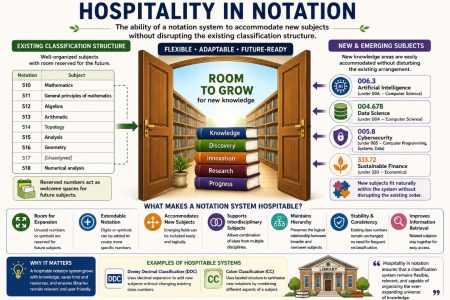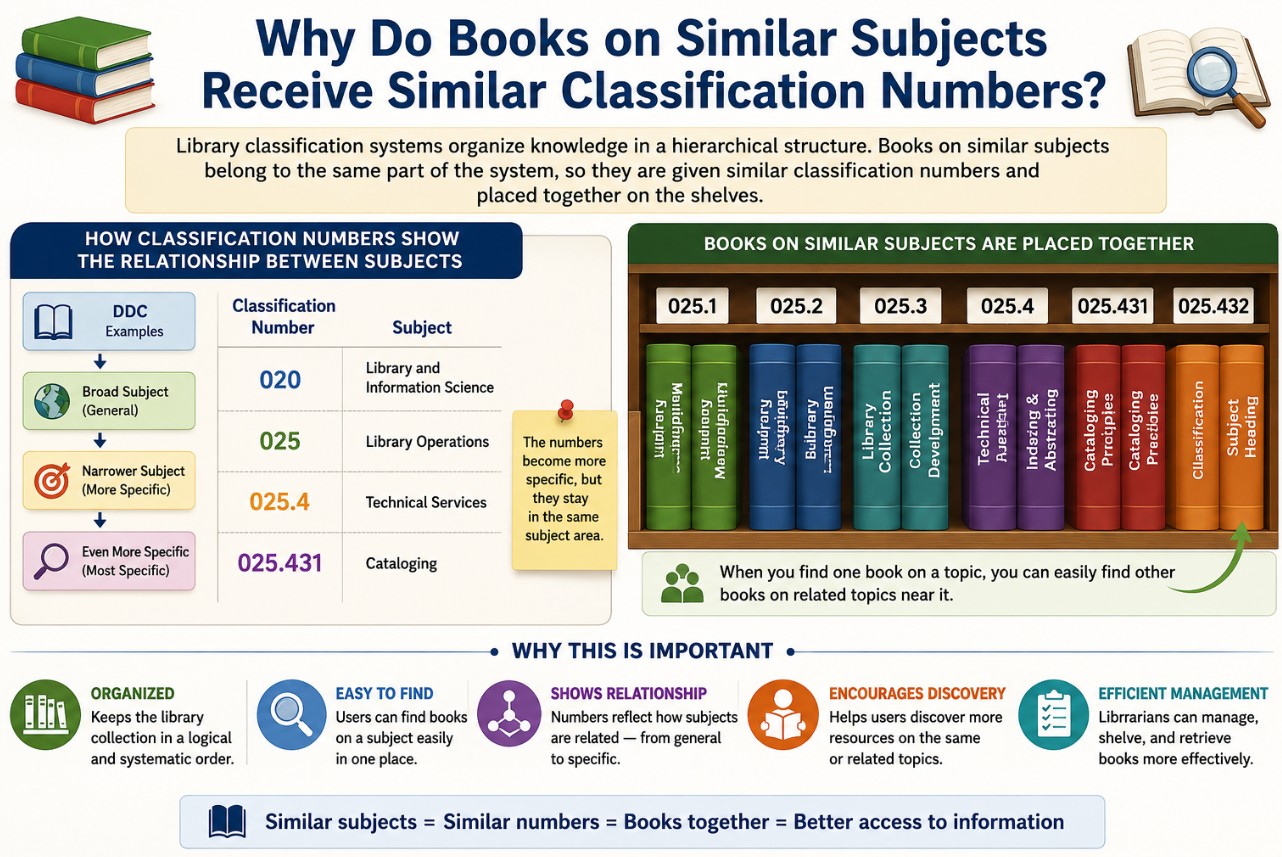
Books on similar subjects receive similar classification numbers because library classification systems are designed to organize knowledge in a logical and systematic way. The primary purpose of these classification systems is to group together materials that address the same or closely related topics, making it easier for users to locate and access relevant information. Systems such as the Dewey Decimal Classification (DDC) and the Library of Congress Classification (LCC) arrange subjects in a hierarchical structure, with broad subjects divided into increasingly specific topics. As a result, books covering related subjects are assigned classification numbers that are similar in form and sequence.
For instance, in the DDC system, the number 020 stands for Library and Information Sciences, 025 represents library operations, and 025.431 refers to cataloging. Since these topics fall under the same subject area, their classification numbers are closely related. Similarly, books on general education may be classified under 370, while those specifically about higher education may be assigned 378, indicating that higher education is a more specialized branch of the broader field of education. This numerical relationship reflects the intellectual connections between the subjects.
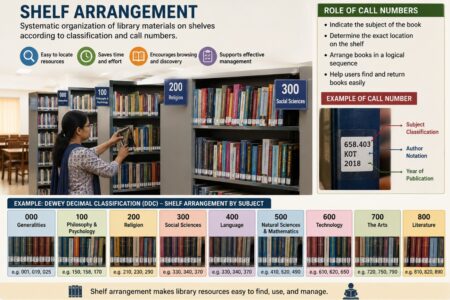
The use of similar classification numbers also helps libraries arrange materials on shelves so that related resources are placed near each other. When a user finds a book on a particular topic, they are likely to discover additional books on classification, indexing, or library management nearby. This arrangement encourages browsing and supports research by allowing users to explore a subject area in depth.
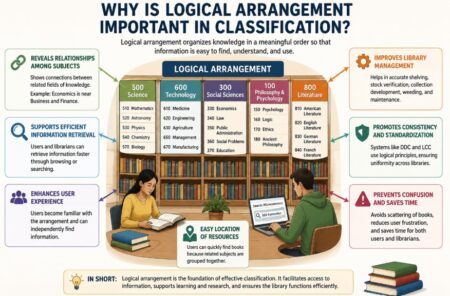
Assigning similar classification numbers to related subjects promotes consistency and efficiency in library management. Librarians can organize, shelve, and retrieve materials more effectively, while users can navigate collections with greater ease. Therefore, books on similar subjects receive similar classification numbers because these systems are designed to reflect the relationships among subjects, group related materials together, and facilitate efficient access to information. This subject-based organization is one of the key principles that makes library collections organized, accessible, and user-friendly.