Information Ethics is a field that examines the moral principles, values, and responsibilities involved in the creation, management, and use of information. As society becomes increasingly dependent on digital technologies, the methods of collecting, storing, accessing, and sharing information raise important ethical questions.
This field focuses on various topics, including privacy, data protection, intellectual property, digital rights, and the fair and responsible dissemination of knowledge. It encourages individuals and organizations to critically consider how information is handled, ensuring that decisions are guided by fairness, transparency, and respect for human dignity.
In academic and professional settings, particularly in libraries, universities, and information-intensive institutions, Information Ethics is essential for promoting accountability, safeguarding user trust, and ensuring equitable access to information. The rise of artificial intelligence, big data analytics, and social media has further increased the relevance of Information Ethics, making it essential for understanding the challenges and responsibilities associated with managing information in our rapidly evolving digital world.
What is Information Ethics?
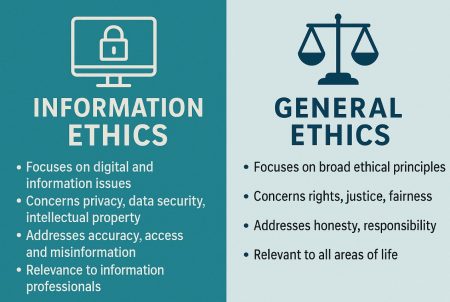
Information Ethics is a branch of applied ethics that focuses on the moral issues arising from the creation, organization, use, and management of information in both digital and traditional environments. It examines how information is produced, who has access to it, how it is shared, and what responsibilities individuals and institutions have when handling it. For example, when a social media platform collects user data without clear permission, or when a library protects a patron’s borrowing history from unauthorized access, both situations raise ethical questions related to privacy and data protection. As modern society increasingly relies on digital platforms, artificial intelligence, social media, and data-driven decision-making, ethical concerns about accuracy, intellectual property, equitable access, and the potential misuse of information have become more significant. For instance, spreading misinformation during a health crisis, downloading copyrighted books without permission, or restricting access to online educational resources can all create ethical challenges.
Information Ethics provides a framework for addressing these concerns by promoting fairness, transparency, accountability, and respect for human rights. It urges individuals, especially information professionals, librarians, educators, and technology developers, to consider the consequences of their actions when dealing with information. A librarian deciding whether to reveal a student’s research history, a researcher properly citing sources to avoid plagiarism, or a software developer ensuring an AI system does not discriminate are all examples of ethical decision-making in practice.
Why Information Ethics Matters in Today’s Digital World
Information Ethics is crucial in today’s digital world because the way information is created, shared, and consumed has changed dramatically with the rise of advanced technologies. Every online activity, such as browsing websites, using mobile apps, or interacting on social media, generates data that can be collected, analyzed, and used by organizations. This raises serious concerns about privacy, surveillance, data security, and consent. For example, when companies track user behavior to create targeted advertisements without clearly informing users, or when personal data is exposed in a cyberattack, ethical issues immediately arise. Information Ethics helps guide how such data should be handled responsibly, ensuring that individuals’ rights and freedoms are respected.
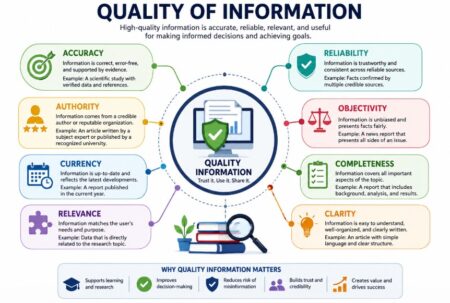
Additionally, the widespread availability of digital platforms has facilitated the rapid spread of misinformation, fake news, and harmful content. Ethical principles encourage users and information professionals to verify information, promote accuracy, and prevent the manipulation of public opinion. Issues related to intellectual property have also intensified, as people can easily copy, share, or download digital content without permission. Moreover, the rapid growth of artificial intelligence and automation presents new ethical challenges, such as algorithmic bias, unfair decision-making, and a lack of transparency. Information Ethics provides the guidance needed to respond to these challenges thoughtfully and responsibly.
In a world where information influences education, healthcare, government, communication, and even personal relationships, Information Ethics ensures that information is used in ways that uphold fairness, accountability, and human dignity. By adhering to ethical principles, individuals and institutions can foster trust, safeguard user rights, and cultivate a safer, more equitable digital environment for all.
How Information Ethics Addresses Issues of User Privacy
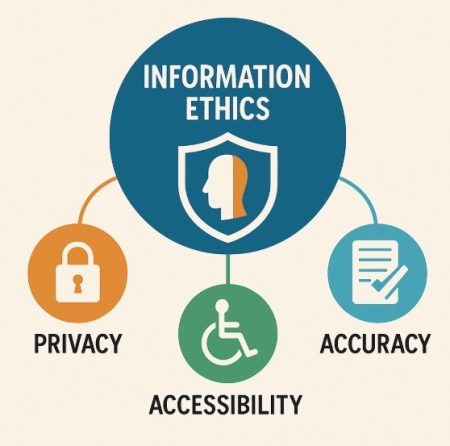
Information Ethics addresses issues of user privacy by offering a clear moral framework for how personal information should be collected, used, and protected in the digital environment. As people increasingly rely on online platforms, mobile applications, and digital services, vast amounts of personal data are generated with every interaction. This creates both opportunities and risks, making privacy a central ethical concern. Information Ethics emphasizes that individuals have the right to autonomy over their personal information, meaning organizations must obtain clear and informed consent before collecting any data. When a website requests permission to use cookies or an app requests access to a user’s location, it demonstrates respect for user autonomy. Transparency is also a key principle, requiring organizations to openly communicate their data practices, explain how information will be used, and avoid hidden tracking or unauthorized sharing of data. Clear privacy policies and timely notifications help users understand and control their digital footprint.
Another critical aspect of Information Ethics is data minimization, which encourages collecting only the information strictly necessary for a service. This prevents unnecessary intrusions into users’ personal lives and reduces the potential for misuse. For example, a library system that only asks for essential identification details rather than extensive personal data is acting ethically. Information Ethics also underscores the importance of strong data security. Organizations are responsible for protecting user information from hacking, unauthorized access, and accidental leaks through encryption, secure storage systems, and controlled access. Libraries, for instance, protect users’ borrowing records to maintain confidentiality and intellectual freedom.
Accountability further strengthens ethical data management. Organizations must take responsibility for the information they collect and provide users with options to update, correct, or delete their personal data. In the event of a data breach, users should be informed immediately so they can take necessary precautions. Finally, Information Ethics discourages the misuse of personal data, such as selling it to third parties, conducting surveillance, or engaging in manipulative profiling without consent. Altogether, these ethical principles, autonomy, transparency, minimization, security, and accountability, ensure that user privacy is protected in a rapidly evolving digital world, helping maintain trust between users and the organizations that handle their information.
Acknowledgements:
- Brey, P. (2007). Ethical Aspects of Information Security and Privacy. In M. Petković & W. Jonker (Eds.), Security, Privacy, and Trust in Modern Data Management (pp. 21–36). Springer. https://doi.org/10.1007/978-3-540-69861-6_3
- Burgess, J. T. F., & Knox, E. J. M. (2019). Foundations of Information Ethics. American Library Association.
- Capurro, R. (2000). Ethical Challenges of the Information Society in the 21st Century. The International Information & Library Review, 32(3), 257–276. https://doi.org/10.1006/iilr.2000.0137
- Doyle, T. (2010). A Critique of Information Ethics. Knowledge, Technology & Policy, 23(1), 163–175. https://doi.org/10.1007/s12130-010-9104-x
- Floridi, L. (2010). The Cambridge Handbook of Information and Computer Ethics. Cambridge University Press.
- Floridi, L. (2013). The Ethics of Information. OUP Oxford.
- Mathiesen, K. (2004a). What is Information Ethics? SIGCAS Comput. Soc., 34(1), 6. https://doi.org/10.1145/1050305.1050312
- Mathiesen, K. (2004b). What is Information Ethics? SIGCAS Comput. Soc., 34(1), 6. https://doi.org/10.1145/1050305.1050312
- Moore, A. D. (2005). Information Ethics: Privacy, Property, and Power. University of Washington Press.
- Stahl, B. C. (2004). Responsibility for Information Assurance and Privacy: A Problem of Individual Ethics? Journal of Organizational and End User Computing (JOEUC), 16(3), 59–77. https://doi.org/10.4018/joeuc.2004070104