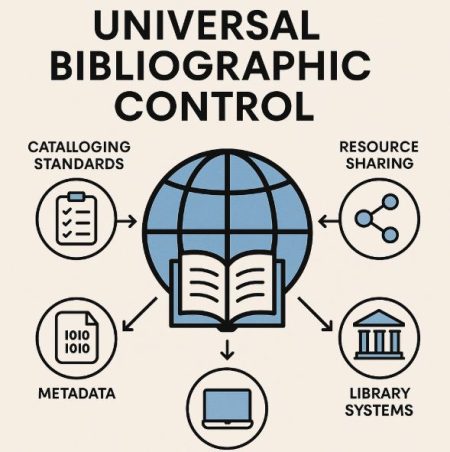
Bibliographic control is a critical concept in library science that refers to the systematic organization and management of bibliographic records, ensuring that library materials are accurately described, classified, and easily accessible. It encompasses the processes by which libraries catalogue, organize, and standardize information about books, articles, and other resources, enabling efficient retrieval and management. The primary goal of bibliographic control is to provide a consistent and reliable framework for accessing materials, allowing users to find, identify, and use resources effectively.
Historically, bibliographic control has been achieved through the use of cataloguing rules and standards, such as the Anglo-American Cataloguing Rules (AACR), Resource Description and Access (RDA), and the Machine-Readable Cataloging (MARC) format. These tools guide the creation of bibliographic records that describe the essential details of a resource, including its title, author, publication date, and format, among others. In addition to these standards, authority control plays a vital role in ensuring consistency across bibliographic records, especially with regard to names, subjects, and titles, reducing ambiguity and ensuring that records are linked to the correct resources.
With the rise of digital technology and online catalogues, bibliographic control has evolved to include the management of electronic resources, digital repositories, and databases. The integration of metadata, which provides structured information about digital content, further enhances bibliographic control by facilitating better organization and more precise searches in digital environments. As a result, bibliographic control not only aids librarians in organizing collections but also helps users navigate vast information landscapes, ensuring that they can find the resources they need in a timely and efficient manner.
What is Bibliographic Control?
Bibliographic control is a foundational principle in library science that ensures the organized, accurate, and systematic cataloguing of resources within a library or information system. It involves the creation and management of detailed records that describe the content, authorship, and characteristics of various materials, ranging from books and journals to digital resources. The purpose of bibliographic control is to facilitate the easy identification, retrieval, and management of these resources, allowing library users to find relevant materials quickly and effectively.
At the core of bibliographic control is cataloguing, which entails assigning metadata to each resource, including its title, author, publisher, and other pertinent details. This metadata is standardized to provide consistency, which is critical for both physical and digital resources. Cataloguing standards, such as the MARC (Machine-Readable Cataloging) format and the Anglo-American Cataloguing Rules (AACR2), have long been used to guide this process. These standards ensure that records are uniform and adhere to internationally recognized conventions, thereby improving interoperability and reducing confusion when accessing materials across different systems. Furthermore, bibliographic control includes classification, which involves organizing resources according to subject matter using classification systems like the Dewey Decimal Classification or the Library of Congress Classification. This systematization allows users to locate materials based on their content rather than merely their title or author.
A key aspect of bibliographic control is authority control, which standardizes the names of authors, subjects, and titles to prevent duplication and ambiguity. Authority control ensures that records consistently refer to the correct entity, even if there are variations in how names or terms are used in different contexts.
In today’s digital era, bibliographic control extends to electronic resources and databases, where the use of metadata becomes even more vital for organizing and retrieving digital content. As libraries expand their digital collections, bibliographic control has evolved to incorporate tools and practices that manage both physical and electronic materials seamlessly.
The Importance of Bibliographic Control in Libraries
Bibliographic control is a fundamental aspect of library management that ensures resources are organized, accessible, and consistently described. It plays a pivotal role in facilitating efficient information retrieval by systematically cataloguing materials, ranging from books to electronic journals and digital databases. Through standardized cataloguing practices, such as the use of metadata that includes descriptive details like title, author, publisher, and format, bibliographic control ensures that library resources are properly indexed. This allows users to quickly locate the materials they need, whether they are searching for a specific book or scholarly article. The importance of bibliographic control lies not only in its ability to streamline the search process but also in its contribution to the overall user experience by reducing confusion and saving time.
Moreover, bibliographic control ensures consistency across library systems through standardized cataloguing rules like the MARC format, RDA, and AACR2. These standards create a uniform system for cataloguing resources, which is essential when libraries share records or collaborate through interlibrary loan systems. Authority control, another aspect of bibliographic control, ensures that names, subjects, and titles are standardized, reducing ambiguity and preventing duplication in bibliographic data. This uniformity helps maintain a cohesive and reliable system for cataloguing, making it easier for users to search for and access materials across various institutions.
In addition to improving access and consistency, bibliographic control is vital for effective resource management within libraries. By cataloguing resources systematically, libraries can track holdings, monitor usage patterns, and make informed decisions about acquisitions and deaccessions. As libraries expand their collections to include digital resources, bibliographic control helps integrate these materials into traditional cataloguing systems, creating a unified approach to managing both physical and electronic resources. Furthermore, bibliographic control supports interoperability between libraries, enabling them to share resources and collaborate more effectively. Standardized formats and protocols ensure that bibliographic records can be exchanged seamlessly between institutions, enhancing access to materials through interlibrary loan systems and digital repositories.
Historical Developments That Have Shaped Bibliographic Control
Bibliographic control has evolved significantly over the years, influenced by advancements in technology, changes in library practices, and the growing complexity of information management. From its origins in the earliest forms of library cataloguing to the digital age, bibliographic control has undergone key transformations that have shaped the way libraries organize, manage, and retrieve information. Here are the historical developments that have influenced bibliographic control, focusing on the key milestones that have helped shape modern library practices.
>> Early Cataloging Practices
The history of bibliographic control can be traced back to the origins of libraries themselves. In ancient civilizations, libraries were established to preserve and organize texts, primarily for religious or scholarly purposes. Early cataloguing systems were rudimentary, often consisting of simple lists or manuscripts detailing the contents of a library’s holdings. These early cataloguing practices were limited by the available resources and the scale of collections, which were typically small.
The first significant advancement in bibliographic control came with the development of written cataloguing systems in the medieval period. Monastic libraries, for example, developed hand-written catalogues to document their collections, and the use of subject headings, albeit rudimentary, started to emerge. However, these systems remained highly localized and were largely dependent on the individual practices of the library’s curators.
>> The Birth of Modern Cataloging: The Card Catalog
The modern era of bibliographic control began to take shape in the 19th century with the advent of printed catalogues and the development of standardized cataloguing systems. In the mid-1800s, library cataloguing underwent a significant transformation thanks to Charles Ammi Cutter, an American librarian who is often credited with developing the first systematic rules for cataloguing. His Cutter Expansive Classification (1876) was one of the first efforts to create a standardized approach to organizing library materials, particularly in relation to author names, titles, and subjects.
As libraries grew in size and complexity during the 19th and early 20th centuries, the need for more efficient cataloguing systems became apparent. The development of the card catalogue in the late 19th century revolutionized bibliographic control. The card catalogue allowed for the systematic organization of bibliographic records on individual index cards, each representing a single library item. The card catalogue became the backbone of bibliographic control for nearly a century, providing a physical, searchable system that allowed users to find library materials by author, title, subject, or other criteria.
>> The Influence of Cataloging Rules and International Standards
A key development in the history of bibliographic control was the establishment of standardized cataloguing rules, which provided a universal framework for organizing library resources. The creation of the Anglo-American Cataloguing Rules (AACR) in the 1960s was one of the most significant milestones in this regard. AACR was developed to bring uniformity to cataloguing practices, with an emphasis on consistency across libraries. These rules, which were updated over time and eventually replaced by Resource Description and Access (RDA) in 2010, helped to standardize bibliographic descriptions and improve consistency in cataloguing.
In addition to AACR, another major development in bibliographic control was the introduction of the Machine-Readable Cataloging (MARC) format in the early 1960s. MARC, developed by the Library of Congress, was designed to encode bibliographic records into a machine-readable format, enabling the rapid exchange of bibliographic data between libraries and institutions. This format revolutionized library cataloguing by allowing libraries to share and store bibliographic records electronically, thus making it easier for users to access materials across multiple institutions.
The establishment of international cataloguing standards, such as the International Federation of Library Associations and Institutions (IFLA) rules, and the adoption of MARC on a global scale helped libraries worldwide collaborate more effectively, paving the way for interlibrary loan systems and resource sharing across institutions.
>> The Digital Age and the Rise of Metadata
The late 20th and early 21st centuries brought about the most significant transformation in bibliographic control, with the rise of digital libraries and the proliferation of electronic resources. The introduction of online catalogues and digital repositories has radically changed the way bibliographic data is managed, making traditional card catalogues obsolete. Metadata, or data that describes digital resources, has become a central aspect of bibliographic control, providing structured information about electronic content.
The development of digital object identifiers (DOIs), persistent links, and digital preservation standards has further facilitated the management and retrieval of digital resources. Libraries now use sophisticated metadata standards such as Dublin Core and PREMIS to catalogue digital content, ensuring that electronic resources are discoverable and accessible in a consistent and reliable way. These standards ensure that metadata associated with digital resources is structured and can be used to facilitate search and discovery in digital libraries and repositories.
>> The Emergence of Linked Data and the Semantic Web
As the internet has continued to evolve, bibliographic control has entered the era of linked data and the Semantic Web. Linked data refers to a method of structuring data that allows it to be interlinked across various systems, providing richer, more connected information. The adoption of linked data technologies, such as the Resource Description Framework (RDF) and SPARQL query language, has transformed the way bibliographic data is organized and accessed. These technologies enable libraries to link bibliographic records with external data sources, creating an interconnected web of information that enhances searchability and access.
In this new landscape, bibliographic control is no longer confined to traditional catalogues but is expanding into a more dynamic and interoperable web of knowledge. The integration of Library Linked Data and other semantic technologies is allowing libraries to provide richer, more detailed information about resources and improve user experience by offering more precise search results and related content.
The historical development of bibliographic control reflects the ongoing efforts to adapt to changing technologies and expanding collections. From the early cataloguing systems used by ancient libraries to the machine-readable formats and linked data technologies of today, bibliographic control has continuously evolved to meet the needs of both libraries and their users. As we look to the future, the development of advanced metadata standards and the continued integration of digital and physical resources promise to further enhance bibliographic control, ensuring that libraries can continue to provide efficient access to a vast and ever-growing body of knowledge.
The Primary Objectives of Bibliographic Control in Library Science
Bibliographic control is a fundamental principle in library science that focuses on organizing, categorizing, and managing library resources to facilitate efficient access and retrieval. It involves the use of cataloguing systems, classification methods, and standardization practices to ensure that library materials are described in a consistent and accessible way. The primary objectives of bibliographic control go beyond merely organizing resources- they aim to improve the efficiency of information retrieval, support resource management, foster collaboration among libraries, and ensure the preservation of knowledge for future generations. Here are some of the core objectives of bibliographic control and how they contribute to the overall functioning of libraries.
- Efficient Information Retrieval: One of the primary objectives of bibliographic control is to ensure the efficient retrieval of library resources. Libraries maintain vast collections of materials, from books and journals to digital resources, all of which need to be organized systematically for easy access. Bibliographic control facilitates this process by creating detailed and standardized catalogue records for each resource, which include key information such as the author, title, publisher, publication date, and subject.
By implementing consistent cataloging practices, such as those defined by MARC (Machine-Readable Cataloging) and RDA (Resource Description and Access), bibliographic control ensures that materials can be searched effectively through library catalogues. These records enable users to locate materials quickly and accurately based on their search criteria, whether it’s a specific author, subject, or title. Standardized classification systems like the Dewey Decimal Classification (DDC) or Library of Congress Classification (LCC) further support this objective by grouping similar materials together in subject categories, making it easier for users to browse related items.
In addition to these cataloguing practices, authority control plays a significant role in improving information retrieval. By standardizing the names of authors, subjects, and titles, authority control minimizes ambiguity and ensures that all related records are connected, allowing users to find the correct material regardless of variations in terminology. - Promoting Standardization and Consistency: Another key objective of bibliographic control is to promote consistency and standardization in the way library resources are described and catalogued. Standardized practices are essential in ensuring that bibliographic records are uniform across different libraries and information systems. This is particularly important in the context of collaborative networks, resource sharing, and interlibrary loan systems, where consistency is necessary for seamless access to materials across institutions.
The development of international cataloguing standards, such as AACR2 (Anglo-American Cataloguing Rules) and RDA, helps libraries maintain uniformity in their cataloguing practices. These standards provide guidelines on how to describe and format bibliographic information, ensuring that records are created consistently across libraries, regardless of their geographical location. This consistency makes it easier for users to access materials across multiple libraries and institutions, as the same rules apply to the creation of bibliographic records.
Authority control, which is part of the standardization process, ensures that names, titles, and subjects are consistently represented in the catalogue. This prevents discrepancies that could arise from variations in spelling, transliteration, or naming conventions, helping users to find materials without confusion. - Supporting Resource Management: Bibliographic control is also crucial for supporting the management and maintenance of library resources. Libraries need to track their collections, monitor the use of materials, and make informed decisions about acquisitions, deaccessions, and replacements. Through standardized cataloging practices, bibliographic control allows librarians to efficiently manage their holdings and monitor their collections’ status.
By maintaining accurate and up-to-date bibliographic records, libraries can assess the circulation and usage of materials. For instance, librarians can identify high-demand resources that may need additional copies or materials that are rarely used and could be deaccessioned. Bibliographic records also help libraries track the condition of resources, allowing them to replace or preserve materials that are worn out or damaged.
Additionally, bibliographic control plays an important role in the management of digital resources. As libraries increasingly integrate electronic books, journals, and databases into their collections, bibliographic control ensures that these materials are catalogued and managed in the same way as physical resources. This allows libraries to offer a cohesive and well-maintained collection of both physical and digital resources. - Enhancing Collaboration and Interoperability: In an increasingly interconnected world, bibliographic control supports collaboration and interoperability between libraries and information systems. With the advent of digital libraries and global networks, libraries must be able to share bibliographic data seamlessly to provide users with access to a broader range of materials.
By adopting standardized cataloguing formats like MARC and OAI-PMH (Open Archives Initiative Protocol for Metadata Harvesting), libraries can share their bibliographic records with other institutions, enabling resource sharing and interlibrary loans. These standardized formats ensure that bibliographic data can be easily exchanged across different library systems, improving the efficiency of resource sharing and expanding the reach of library collections.
Moreover, the increasing use of linked data and semantic web technologies in libraries has further enhanced the ability to share and link bibliographic records across systems. By using technologies like RDF (Resource Description Framework) and SPARQL (Query Language for Databases), libraries can link bibliographic data to external resources and databases, providing users with richer and more interconnected search results. - Preserving and Archiving Knowledge: Another critical objective of bibliographic control is to ensure the long-term preservation and archiving of knowledge. Libraries play a key role in preserving cultural, historical, and scholarly materials, and bibliographic control is essential for ensuring that these materials remain accessible for future generations. Through proper cataloguing, libraries can ensure that resources are well-documented and can be easily found and accessed in the future. Bibliographic control also plays an important role in the preservation of digital resources by providing persistent identifiers, such as DOIs (Digital Object Identifiers), to ensure that electronic materials remain accessible over time. As the landscape of information access continues to evolve, bibliographic control remains an essential practice for ensuring the longevity of library collections and safeguarding knowledge.
Bibliographic control plays a central role in library science by ensuring that library materials are organized, accessible, and preserved for future use. Its primary objectives—facilitating efficient information retrieval, promoting standardization and consistency, supporting resource management, enhancing collaboration and interoperability, and preserving knowledge—are essential for the smooth functioning of libraries. As libraries continue to adapt to the digital age and integrate new technologies, bibliographic control will remain a vital practice for maintaining organized, efficient, and user-friendly collections.
Tools and Standards Used in Bibliographic Control
Bibliographic control is a crucial aspect of library science that ensures the efficient organization, description, and retrieval of library materials. To achieve consistency and facilitate resource discovery across diverse collections, libraries use a variety of tools and standards. These tools and standards help create and maintain bibliographic records that are accurate, standardized, and interoperable. Let’s explore the key tools and standards used in bibliographic control, including MARC, AACR2, and RDA, and their impact on library practices.
- MARC (Machine-Readable Cataloging): One of the most widely used tools in bibliographic control is MARC (Machine-Readable Cataloging), a format for encoding bibliographic records in a machine-readable way. Developed by the Library of Congress in the 1960s, MARC was designed to facilitate the electronic exchange of bibliographic data between libraries. The MARC format allows libraries to encode information about resources—such as authors, titles, publication dates, and subjects—into a standardized, machine-readable format that can be easily shared, stored, and retrieved.
MARC is widely adopted by libraries around the world, especially for cataloguing print materials. It includes a variety of fields, each dedicated to specific bibliographic information, and each field has a predefined format. For example, the field for the author might include the name, while the field for the publication date would include the date in a specific format. MARC records are now used not only for print books but also for a wide range of materials, including digital resources, audiovisual items, and serial publications.
In addition to its use in cataloguing, MARC facilitates interoperability between libraries, enabling them to share records, cooperate in interlibrary loan systems, and create centralized databases like WorldCat. Although MARC remains a staple in bibliographic control, it is being gradually integrated with more modern technologies, such as linked data. - AACR2 (Anglo-American Cataloguing Rules, 2nd Edition): AACR2 was developed in the 1960s as a set of cataloguing rules designed to standardize the description of library materials. It was developed jointly by the American Library Association (ALA), the Canadian Library Association (CLA), and the British Library. AACR2 set guidelines for cataloguing various types of resources, including books, journals, maps, and sound recordings. The rules provided a consistent framework for the description of bibliographic information, including the format of author names, titles, publication dates, and subject headings.
AACR2 was widely used by libraries for several decades and became one of the most influential cataloguing standards in the library world. It helped ensure uniformity in cataloguing practices across libraries and was an essential tool in the development of MARC records. One of the primary strengths of AACR2 was its comprehensive approach to cataloguing, which covered both descriptive cataloguing (providing details about the material) and subject cataloguing (helping to organize materials by topic).
However, as digital resources began to proliferate and the needs of libraries evolved, AACR2 faced limitations. It was primarily designed for print materials, and its rules did not fully address the complexities of digital resources, multimedia materials, and modern access requirements. In response to these challenges, RDA (Resource Description and Access) was developed as an updated cataloguing standard. - RDA (Resource Description and Access): RDA (Resource Description and Access) was introduced in 2010 as the successor to AACR2. It was designed to be a more flexible, user-friendly standard that could accommodate the needs of modern libraries, particularly in relation to digital resources and the evolving landscape of information access. RDA is based on the FRBR (Functional Requirements for Bibliographic Records) and FRAD (Functional Requirements for Authority Data) models, which emphasize the relationships between resources, entities, and their attributes.
One of the key objectives of RDA is to provide a standard that can describe not only traditional library materials, such as books and journals, but also digital resources, multimedia materials, and even complex digital objects like websites and databases. RDA is built on the concept of resource description and access based on the needs and expectations of users. It emphasizes clarity, flexibility, and consistency in cataloguing practices, ensuring that records are more accurate and useful for contemporary users.
RDA also supports linked data and interoperability by using formats like RDF (Resource Description Framework), which makes it easier to connect bibliographic records with other data sources and systems. This makes RDA especially relevant in the age of digital and online resources, as it provides a structure for integrating physical and digital collections into a cohesive system. - Dewey Decimal Classification (DDC): While cataloguing standards like MARC, AACR2, and RDA address the descriptive aspects of bibliographic control, classification systems like the Dewey Decimal Classification (DDC) system play a crucial role in organizing resources by subject. Developed by Melvil Dewey in the late 19th century, DDC is one of the most widely used classification systems in libraries worldwide. It assigns numerical codes to books and other resources based on their subject matter, allowing for an organized structure where materials on similar topics are grouped together.
DDC has been continuously updated and expanded to accommodate new areas of knowledge, ensuring its relevance to modern libraries. It provides a flexible system for organizing materials across disciplines, including the sciences, humanities, and social sciences, making it easier for users to locate resources on specific subjects. - Library of Congress Classification (LCC): Another important classification system is the Library of Congress Classification (LCC) system, used predominantly in academic and research libraries. LCC is a more complex system than DDC and is designed to provide a detailed and hierarchical classification of materials, particularly those in specialized subjects like law, literature, and the social sciences. LCC divides knowledge into 21 broad classes, each represented by a letter of the alphabet, with further subdivisions for more specific topics.
LCC is commonly used in North American libraries, especially those with large academic collections, and provides a more refined system for organizing materials. Like DDC, LCC aids in the efficient organization and retrieval of materials, ensuring that related resources are grouped together in a logical and systematic manner. - Other Tools and Standards: In addition to the major tools and standards mentioned above, several other resources are used in bibliographic control to enhance the accuracy and consistency of cataloging practices. These include Authority Files, such as the LC Name Authority File (LCNAF) and VIAF (Virtual International Authority File), which ensure consistent naming conventions for authors, subjects, and other entities. These authority files help maintain consistency across bibliographic records, reducing the potential for errors or ambiguities.
ISBD (International Standard Bibliographic Description) is another international standard that provides guidelines for the layout and structure of bibliographic records. ISBD is used in conjunction with MARC and other cataloging systems to ensure that bibliographic records are presented in a standardized format.
Bibliographic control relies on a variety of tools and standards to ensure that library materials are consistently described, organized, and accessible to users. Tools like MARC, AACR2, and RDA, along with classification systems such as DDC and LCC, play essential roles in maintaining efficient cataloguing practices. As libraries continue to evolve in the digital age, these tools and standards provide the foundation for managing both traditional and digital collections, ensuring that users can easily find and access the resources they need.
How Cataloging Standards Like MARC21 and RDA Enhance Bibliographic Control
Cataloguing standards like MARC21 and RDA are pivotal in enhancing bibliographic control by providing structured frameworks that ensure the accurate organization, description, and retrieval of library materials. These standards promote standardization and consistency across libraries and institutions worldwide, making it possible to maintain uniform cataloguing practices regardless of geographic location or technological platform. MARC21, through its machine-readable format, ensures that bibliographic data is consistently encoded, enabling seamless sharing and retrieval of information across library systems. This consistency is key to the global interoperability of library catalogues, allowing for efficient resource sharing through systems like WorldCat and interlibrary loan programs.
Both MARC21 and RDA significantly improve information retrieval by organizing bibliographic data into standardized fields, making it easier for users to find the resources they need. MARC21’s structured encoding allows libraries to catalogue materials efficiently, enabling users to perform detailed searches based on specific criteria such as author, title, subject, or keyword. RDA, on the other hand, enhances retrieval by focusing on the relationships between entities, such as works, authors, and editions, ensuring that all related materials are linked and easily discoverable. RDA’s design, which incorporates FRBR (Functional Requirements for Bibliographic Records), ensures that even complex resources are accurately described and connected, improving user access to both traditional and digital materials.
The ability of these standards to support interoperability is another key benefit. MARC21 has long been adopted globally, allowing libraries to exchange bibliographic data smoothly, whether the resources are in print, audiovisual formats, or digital files. RDA, with its emphasis on linked data and digital resources, complements this by allowing for integration into modern technological frameworks. Its flexibility ensures that cataloguing practices can adapt to the evolving landscape of media, from physical books to multimedia and online databases. As both standards provide the foundation for libraries to manage diverse types of content, they foster greater resource sharing and collaboration across global networks.
In addition to these practical benefits, MARC21 and RDA also enhance the user experience by making catalogued resources more accessible and understandable. MARC21’s consistent use of predefined fields makes it easier for catalogers to create accurate, well-organized records, which translates into more precise and relevant search results for users. RDA further refines this process by providing clearer and more intuitive descriptions, particularly with its relational approach that links related editions, versions, or formats of a resource. This ensures that users can easily identify and access all materials associated with a particular work, improving the overall experience when searching through library catalogues.
Challenges Libraries Face in Maintaining Effective Bibliographic Control
Maintaining effective bibliographic control is crucial for libraries, ensuring that resources are accurately catalogued, organized, and easily accessible to users. However, libraries face a variety of challenges in achieving and sustaining effective bibliographic control, especially in an era of rapidly changing technology, diverse resource formats, and increasing amounts of digital content. These challenges can impact the efficiency of resource management, the accessibility of information, and the overall user experience. Here are some of the key challenges libraries face in maintaining effective bibliographic control and the strategies employed to overcome them.
- Adapting to Rapid Technological Change: One of the most significant challenges libraries face is adapting to rapid technological advancements. As libraries increasingly manage both physical and digital resources, bibliographic control must evolve to accommodate new formats, platforms, and technologies. Traditional cataloging systems were designed primarily for print materials, and the proliferation of electronic resources, multimedia, and digital content has forced libraries to update their cataloging practices to reflect these new formats.
The transition from traditional MARC21 records to newer standards such as RDA (Resource Description and Access), which is more suited to digital and multimedia materials, has been a major challenge. While RDA provides a more flexible approach to describing complex digital resources, it requires librarians to learn new cataloguing practices and adapt their existing systems. Furthermore, as libraries integrate linked data and semantic technologies into their systems, they face the challenge of ensuring interoperability between traditional and modern cataloging standards, which can create a gap in consistency and accuracy. - Managing Diverse Formats and Resources: Academic and public libraries today manage a wide variety of resources, including books, journals, digital archives, multimedia content, and e-books. The diverse formats and types of materials present a unique challenge for bibliographic control. Each format has different cataloguing requirements, and ensuring that these resources are organized and described consistently across formats requires significant effort and expertise.
For instance, digital resources such as e-books, online journals, databases, and websites require cataloguing systems that differ from those used for physical materials. While traditional cataloguing standards like MARC work well for print resources, they are not always suited to the unique needs of digital content. This has led to the development of new metadata standards, such as Dublin Core for digital materials, but integrating these diverse standards into a cohesive system remains a significant challenge for libraries. As more materials become digital, the need for cataloging systems that can manage both physical and electronic content seamlessly grows, requiring constant updates and the adaptation of new technologies. - Ensuring Consistency and Standardization: Bibliographic control relies heavily on consistency and standardization across cataloguing records to ensure efficient information retrieval. However, maintaining consistency across a large, constantly evolving collection is difficult, especially when dealing with multiple contributors, differing standards, and evolving cataloguing practices.
Authority control, which ensures the consistent use of names, titles, and subjects across records, is a key tool in maintaining consistency. However, challenges arise when dealing with variations in names, transliterations, and naming conventions in different languages. Similarly, discrepancies between cataloguing standards (e.g., AACR2 vs RDA) can create inconsistencies in bibliographic records, especially when libraries transition from one standard to another. When a library adopts a new cataloguing rule or format, it must ensure that existing records are updated to maintain consistency across the collection, which can be time-consuming and resource-intensive. - Handling Metadata Quality and Accuracy: One of the foundational elements of bibliographic control is the quality of metadata associated with each resource. High-quality metadata ensures that users can easily find, identify, and access resources. However, maintaining the accuracy and completeness of metadata is a constant challenge. Libraries often rely on a mix of automated systems and manual cataloguing, and errors in either process can lead to inaccurate or incomplete bibliographic records.
The quality of metadata can be compromised when resources are incorrectly described, or when outdated cataloging rules are applied. Additionally, new resource formats may not have well-established metadata standards, leading to discrepancies in how information is recorded. For instance, electronic resources often require more detailed and specific metadata than print materials, and inconsistencies in metadata can hinder users’ ability to search and discover relevant materials. - Integration of Linked Data and Interoperability: As the web of data continues to expand, linked data and semantic web technologies have become increasingly important for bibliographic control. Linked data allows bibliographic records to be connected to other sources of information across the internet, creating a richer and more interconnected cataloging system. However, the integration of linked data into existing bibliographic control systems presents significant challenges.
For one, linked data requires libraries to adopt new technologies and metadata standards, such as RDF (Resource Description Framework) and SPARQL. This transition can be difficult, as it requires libraries to not only update their cataloguing systems but also ensure that the new systems can communicate with older, traditional formats like MARC21. Additionally, ensuring the interoperability of library systems with external databases, repositories, and platforms is complex and requires careful planning, collaboration, and technical expertise. - Preserving and Archiving Digital Content: With the increasing reliance on digital content, libraries face the added challenge of preserving and archiving digital resources. Unlike physical materials, digital content can be easily lost or corrupted due to technological changes, obsolescence, or data degradation. As a result, bibliographic control must extend to digital preservation efforts, ensuring that electronic resources remain accessible over time.
Preserving digital content involves creating persistent identifiers (such as DOIs for journal articles or PURLs for web resources), ensuring the longevity of metadata, and adopting robust strategies for maintaining access to digital resources. However, digital preservation is a complex and evolving field, and libraries must continuously update their strategies to keep pace with changing technologies and formats. - Training and Professional Development: Maintaining effective bibliographic control requires skilled personnel who are familiar with cataloguing standards, classification systems, and metadata practices. However, libraries often face the challenge of ensuring that catalogers and library staff are adequately trained and up-to-date with the latest cataloging practices and technologies.
As cataloguing standards evolve—such as the transition from AACR2 to RDA—libraries must invest in ongoing professional development for staff members. The adoption of new technologies, such as linked data and digital preservation tools, also requires continuous training. This can be particularly challenging in an era of budget cuts and limited resources, as libraries may not always have the funding to provide adequate training programs.
Libraries face a range of challenges in maintaining effective bibliographic control, from adapting to technological changes and managing diverse formats to ensuring consistency and accuracy in metadata. The integration of new cataloging standards, the preservation of digital content, and the adoption of linked data technologies require libraries to constantly update their systems and practices. Despite these challenges, libraries are increasingly finding innovative ways to overcome obstacles and continue providing accurate, accessible, and organized collections to meet the needs of users. As the information landscape continues to evolve, the ability of libraries to manage bibliographic control will remain crucial in ensuring efficient information retrieval and resource management.
Reference Articles:
- Akidi, J. (2020). Bibliographic Control Practices in the Digital Age: Conceptual and Theoretical Framework Perspective.
- Bibliographic Control | PDF | Social Science. (n.d.). Retrieved June 17, 2025, from https://www.scribd.com/document/462177096/Bibliographic-Control
- Charles Ammi Cutter. (2025). In Wikipedia. https://en.wikipedia.org/w/index.php?title=Charles_Ammi_Cutter&oldid=1294413660
- Clark, R. (n.d.). Research Guides: INF 6120 – Access to Information: Bibliographic Control. Retrieved June 17, 2025, from https://guides.lib.wayne.edu/c.php?g=1110135&p=8092986
- Cutter Expansive Classification. (2025). In Wikipedia. https://en.wikipedia.org/w/index.php?title=Cutter_Expansive_Classification&oldid=1269522121
- DCMI: Home. (n.d.). Retrieved June 17, 2025, from https://www.dublincore.org/
- GUY A . MARCO. (1983). Bibliographic Control of Library and Information Science Literature. Libri, 33(1), 45–60. https://doi.org/10.1515/LIBR.1983.33.1.45
- Hjorland, B. (2023). Bibliographic control [Text]. https://www.isko.org/cyclo/control
- IMC 451: Organization of Information: Topic 5 Bibliographic Control: Purpose and Level of Bibliographic Control | PDF | Cataloging | Bibliography. (n.d.). Scribd. Retrieved June 17, 2025, from https://www.scribd.com/presentation/467241490/IMC451-TOPIC-5-pptx
- Maxwell, R. L. (2009). Bibliographic Control. In Encyclopedia of Library and Information Sciences (3rd ed.). CRC Press.
- PREMIS: Preservation Metadata Maintenance Activity (Library of Congress). (n.d.). Retrieved June 17, 2025, from https://www.loc.gov/standards/premis/
- Priyo, A. K. K., & Hazra, U. (2021). Understanding digital divide in online class experiences during Covid-19 lockdown in Bangladesh. https://repository.northsouth.edu/handle/123456789/326
- Purpose Of Bibliographic Control (IMD124)—Access to Information—UiTM – Studocu. (n.d.). Retrieved June 17, 2025, from https://www.studocu.com/my/document/universiti-teknologi-mara/access-to-information/purpose-of-bibliographic-control-imd124/19714409
- Resource Description and Access (RDA): Information and Resources in Preparation for RDA (Aquisitions and Bibliographic Control, Library of Congress). (n.d.). Retrieved June 17, 2025, from https://www.loc.gov/aba/rda/
- [Solved] what is bibliographic control and types—Public international law (law 201)—Studocu. (n.d.). Retrieved June 17, 2025, from https://www.studocu.com/row/messages/question/5386455/what-is-bibliographic-control-and-types
- Stalberg, E., & Cronin, C. (2011). Assessing the Cost and Value of Bibliographic Control. https://doi.org/10.6082/M17M05WX
- (2024, March 12). Functions of Bibliographic Control. https://underwaterbook.club/2024/03/12/functions-of-bibliographic-control/
- What is bibliographical control? (n.d.). Quora. Retrieved June 17, 2025, from https://www.quora.com/What-is-bibliographical-control
- What Is RDF? | Ontotext Fundamentals. (n.d.). Retrieved June 17, 2025, from https://www.ontotext.com/knowledgehub/fundamentals/what-is-rdf/
- What Is SPARQL? | Ontotext Fundamentals. (n.d.). Retrieved June 17, 2025, from https://www.ontotext.com/knowledgehub/fundamentals/what-is-sparql/