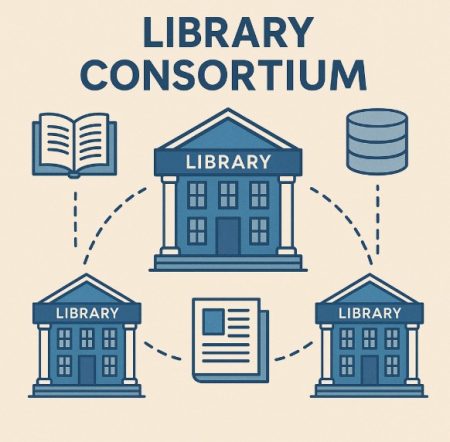
A library consortium is essentially a cooperative arrangement where libraries, often from similar or diverse institutions, unite with the common purpose of sharing resources, services, and expertise. The idea stems from the recognition that no single library-whether academic, public, or special-can meet the ever-expanding information needs of its users in isolation. With the rapid growth of scholarly publications, digital resources, and technological innovations, libraries face challenges of rising costs and limited budgets. By joining together in a consortium, libraries can overcome these barriers and collectively provide broader access to resources while reducing duplication of effort.
The value of such partnerships is visible worldwide. For example, the Library Consortium of Bangladesh (LiCoB) helps universities and research institutions gain affordable access to world-class scholarly databases, which would be far too expensive for individual libraries to subscribe to independently. Similarly, the OCLC (Online Computer Library Center) in the United States exemplifies how a global network of libraries can work together to offer cataloging services, interlibrary loans, and digital content sharing across thousands of member libraries. In India, the INFLIBNET Centre’s e-ShodhSindhu Consortium has been instrumental in providing higher educational institutions with affordable access to electronic journals and e-books, significantly boosting academic and research activities.
Beyond cost savings, consortia foster innovation and technological growth. Many library consortia develop shared digital repositories, union catalogs, and cooperative interlibrary loan systems, ensuring that resources flow freely across institutions. They also serve as platforms for professional development, offering librarians opportunities to collaborate, share best practices, and conduct joint training programs. For instance, the Research4Life program, an international consortium, enables institutions in developing countries to access scientific and technical information that supports education, healthcare, and sustainable development goals.
In essence, library consortia are formed not only as a practical solution to economic and technological challenges but also as a visionary approach to democratizing knowledge. By leveraging collective strength, libraries enhance their relevance in a digital era where information access is both a right and a necessity. These alliances embody the belief that collaboration expands opportunities: when libraries work together, they multiply the impact of their services, empower their users, and contribute more effectively to the advancement of education, research, and society at large.
What is a Library Consortium?
A library consortium is a formal collaboration among libraries that join together to achieve common goals, primarily focused on sharing resources, reducing costs, and expanding access to information. It operates on the principle of cooperation, where each member contributes to and benefits from the collective arrangement. In simple terms, a consortium allows libraries to extend their services beyond their individual capacities by leveraging the collective strength of the group. For example, a university library on its own may struggle to subscribe to a wide range of costly academic databases, but by being part of a consortium, it can access those same resources at a reduced cost through collective negotiation. Similarly, consortia often provide interlibrary loan services, where a user in one library can borrow materials from another within the network, significantly enhancing user satisfaction. In addition to resource sharing, library consortia also foster joint technological initiatives such as shared online catalogs, digital repositories, and staff training programs. Thus, a library consortium is not just a cost-saving mechanism but also a platform for innovation, professional collaboration, and knowledge democratization, making libraries more efficient, user-centered, and future-ready.
Objectives of Forming Library Consortia
A library consortium is formed with the aim of maximizing access to resources, reducing costs, and strengthening the overall role of libraries in supporting education and research. In today’s knowledge-driven environment, no single library can meet all the needs of its users because of the ever-expanding range of publications, databases, and digital content. The soaring costs of scholarly materials and the demand for advanced technologies make it increasingly difficult for individual institutions to operate in isolation. By joining together in a consortium, libraries pool their financial, technological, and human resources to achieve shared objectives that would otherwise be unattainable.
One of the primary objectives of forming a library consortium is resource sharing. Through collective agreements, libraries can give their users access to books, journals, databases, and digital repositories far beyond their own holdings. For example, an interlibrary loan system within a consortium allows a student or researcher to obtain materials from any member library, thereby breaking down barriers of limited access. Closely linked to this is the objective of reducing costs and ensuring economic efficiency. Since subscription fees for electronic journals and academic databases are often prohibitively expensive, consortia negotiate on behalf of their members to secure bulk discounts and favorable licensing terms. A good example is the Library Consortium of Bangladesh (LiCoB), which provides universities with access to international resources at a fraction of the cost.
Another important objective is to strengthen collective bargaining power. While a single library has little influence in negotiations with publishers, a group of libraries united under a consortium can demand better prices, wider access rights, and flexible licensing conditions. Beyond financial considerations, consortia also focus on technological collaboration and innovation. They create shared union catalogs, digital repositories, and cloud-based platforms that make information easier to access across institutions. The OCLC (Online Computer Library Center) demonstrates this on a global scale, linking thousands of libraries worldwide through a unified technological platform for cataloging and interlibrary loans.
Library consortia are equally important for supporting research and academic excellence. By providing access to a wide range of journals, databases, and e-resources, they enable students, faculty, and researchers to pursue advanced studies and produce high-quality research. India’s e-ShodhSindhu Consortium, for instance, has played a major role in boosting research output across universities. Alongside research support, consortia also foster professional collaboration. They offer training, workshops, and seminars that keep librarians updated on new technologies, cataloging standards, and management practices, while also creating opportunities for knowledge exchange and networking.
Another significant objective of library consortia is promoting equitable access to information. By uniting libraries of various sizes and capacities, consortia reduce disparities in resource availability. Smaller institutions or rural libraries can provide their users with the same high-quality academic content that wealthier institutions enjoy. Global initiatives such as Research4Life highlight this objective by offering institutions in developing countries access to scientific and technical literature at little or no cost. In addition, consortia often engage in sustainable practices such as digital preservation, cooperative digitization of rare collections, and the development of open-access repositories, ensuring that knowledge is preserved for future generations.
In essence, the objectives of forming library consortia are broad and interconnected. They include resource sharing, cost reduction, bargaining strength, technological innovation, research support, professional development, equitable access, and sustainability. Together, these objectives strengthen the capacity of libraries to overcome financial and technological challenges while ensuring that knowledge is more widely and fairly distributed. A library consortium, therefore, is not only an economic arrangement but also a visionary approach that ensures the long-term growth and relevance of libraries in a rapidly changing information landscape.
Why Are Library Consortia Formed?
Libraries have long served as essential gateways to knowledge, but the rapid expansion of information resources, particularly in digital form, has created challenges that no single library can address alone. The high cost of scholarly publications, growing demand for electronic resources, and the need for advanced technological systems have made collaboration a necessity. Library consortia have emerged as a powerful solution, enabling institutions to work together to overcome these challenges. Understanding why consortia are formed is crucial to appreciating their role in the modern knowledge ecosystem.
- Economic Necessity and Cost Reduction: One of the strongest motivations behind the formation of library consortia is economic necessity and the need for cost reduction. Over the past few decades, the cost of scholarly journals, databases, and e-books has increased sharply, a phenomenon often referred to as the “serials crisis.” Large commercial publishers dominate the academic publishing market, and their subscription fees frequently rise at rates much higher than inflation. This puts immense financial pressure on libraries, particularly in universities and research institutions where access to current scholarly content is essential. For smaller or less-funded libraries, maintaining subscriptions to even a handful of high-impact journals or specialized databases can become unsustainable.
Consortia provide a solution by allowing libraries to pool their financial resources and negotiate with publishers as a collective body. Instead of each institution subscribing separately at a high cost, members of a consortium contribute to a joint fund and benefit from bulk purchasing agreements that drastically reduce per-institution expenses. Publishers are often more willing to offer discounts and favorable terms when approached by a large group rather than individual libraries. This collective bargaining ensures that even modestly funded libraries can access critical academic resources without exhausting their budgets.
For example, the Library Consortium of Bangladesh (LiCoB) has enabled Bangladeshi universities to access international scholarly databases at affordable prices. Without this cooperative model, many smaller institutions in the country would have been excluded from vital research content. Similarly, consortia like INFLIBNET’s e-ShodhSindhu in India or OCLC globally demonstrate how joint subscriptions to electronic resources bring down costs significantly while increasing accessibility.
Another economic benefit of consortia lies in avoiding duplication of expenditure. If each library attempted to subscribe independently, the collective cost would be much higher, and smaller institutions would likely be left out. By sharing subscriptions, consortia ensure fair distribution of resources while minimizing wasteful spending. Beyond direct savings, libraries also benefit from reduced administrative overhead, as licensing and negotiations are managed centrally.
Thus, economic necessity is not just about saving money—it is about ensuring sustainability and equity in information access. By reducing costs through collective action, consortia empower libraries of all sizes to remain effective in their mission, prevent knowledge gaps between institutions, and create a more balanced and inclusive academic environment. - Access to a Wider Range of Resources: Another vital reason for the formation of library consortia is the need for access to a wider range of resources. Even the largest and most well-funded libraries cannot purchase every book, journal, database, or digital collection needed by their users. Academic research today is increasingly multidisciplinary, requiring information that spans fields as diverse as medicine, engineering, social sciences, and the humanities. A single institution’s collection is inevitably limited, and researchers may struggle when critical materials are unavailable. By joining a consortium, however, libraries effectively break down these barriers, as members can share resources and extend access well beyond their individual holdings.
Consortia achieve this expanded access through several mechanisms. One is the development of interlibrary loan systems, where a patron of one library can borrow or request copies of materials from another within the network. This means that even if a library does not own a particular book or journal, its users are not deprived of the material as long as it exists somewhere in the consortium. Another mechanism is the creation of union catalogs, which compile the holdings of all member libraries into a single searchable database. Union catalogs not only make it easier for users to discover resources but also reduce duplication in acquisitions, ensuring that funds are spent more efficiently across institutions.
A key driver of wider access in the digital era is collective licensing of e-resources. Instead of subscribing individually, libraries within a consortium purchase bundled access to databases and electronic journals. This ensures that each member institution, regardless of its size, can provide its users with access to the same high-quality academic resources. For example, the OCLC (Online Computer Library Center) connects thousands of libraries across the world, allowing them to share catalog records and provide users with global access to information. Similarly, INFLIBNET’s e-ShodhSindhu Consortium in India and LiCoB in Bangladesh have enabled universities to expand their academic offerings by providing access to thousands of e-journals and e-books that would otherwise have been beyond their reach.
The benefits of such shared access are immense. Students gain exposure to a much broader spectrum of knowledge, researchers can consult specialized resources that their home institutions cannot afford, and faculty members can enrich their teaching materials with diverse sources. Moreover, access to a wider pool of resources enhances the academic reputation of institutions by enabling more comprehensive research output. - Collective Bargaining and Negotiation Power: Another major reason libraries form consortia is to strengthen their collective bargaining and negotiation power with publishers and vendors. When acting alone, a single library—especially a small or underfunded one—has limited influence in negotiating subscription prices or licensing terms. Publishers often dictate conditions, and libraries are left with little choice but to accept high costs and restrictive access rights. However, when libraries come together as a consortium, their collective demand becomes far more significant, giving them a stronger voice in negotiations. This combined leverage allows them to secure lower subscription fees, favorable licensing conditions, and broader access rights that would not be possible for an individual institution. For instance, academic consortia often negotiate “site licenses” or “multi-user licenses” that enable all member institutions to access digital resources at a reduced per-institution cost. In many cases, publishers are more willing to offer bundled packages, discounts, or flexible usage policies to a group of libraries than to a single buyer. An example can be seen in national-level consortia such as India’s e-ShodhSindhu, which has successfully negotiated access to thousands of scholarly journals for universities across the country. By pooling their financial resources and standing united, libraries not only save money but also ensure equitable access for all members.
- Technological Collaboration and Innovation: Another important reason for forming library consortia is the opportunity for technological collaboration and innovation. In the digital age, libraries are no longer just repositories of physical books; they are increasingly dependent on advanced technologies to provide seamless access to electronic resources, online catalogs, digital repositories, and remote services. However, developing and maintaining such systems requires substantial financial investment, technical expertise, and continuous upgrades—resources that individual libraries often struggle to manage. By joining a consortium, libraries can share technological infrastructure, reduce duplication of effort, and work collectively to introduce innovative services that benefit all members.
One common outcome of technological collaboration is the creation of union catalogs, which integrate the holdings of multiple libraries into a single platform. This allows users to search and access resources from several institutions at once, making discovery easier and more efficient. Consortia also establish digital repositories where member institutions can store and showcase research outputs such as theses, dissertations, and publications, thereby enhancing visibility and accessibility. Many consortia engage in digitization projects to preserve rare, fragile, or culturally significant materials and make them available online to a wider audience.
Beyond resource discovery and preservation, consortia play a key role in developing shared authentication and remote access systems, which enable users to access subscribed e-resources securely from anywhere in the world. Collaborative initiatives also support the adoption of international standards for cataloging, metadata, and interoperability, ensuring that information systems remain compatible across institutions. A notable global example is the OCLC (Online Computer Library Center), which connects thousands of libraries worldwide through a shared cataloging and interlibrary loan platform, demonstrating the power of collective technological solutions. - Supporting Research and Academic Excellence: Another significant reason behind the formation of library consortia is their ability to support research and promote academic excellence. Access to reliable, up-to-date, and diverse scholarly resources is the backbone of higher education and research. However, no single library can meet the ever-growing demands of researchers, especially in today’s globalized academic environment where knowledge production spans countless disciplines and subfields. By joining a consortium, libraries can ensure that their students, faculty, and researchers gain access to a broader range of high-quality resources than any individual institution could provide alone.
Consortia play a critical role in giving researchers access to international scholarly databases, e-journals, and digital collections that form the foundation of advanced research. For instance, the e-ShodhSindhu Consortium in India, managed by INFLIBNET, provides universities with access to thousands of e-journals, e-books, and databases, thereby enriching the academic landscape and fostering world-class research output. Similarly, global initiatives like Research4Life supply developing countries with access to health, agriculture, and environment-related research materials, empowering scholars to contribute to global knowledge production despite financial constraints.
Beyond access, consortia also create a collaborative environment for knowledge exchange and innovation. When libraries unite, they not only share resources but also share expertise, research tools, and services that directly enhance academic productivity. For example, consortia may develop institutional repositories where research outputs such as theses, dissertations, and articles are stored and made accessible worldwide, thereby increasing the visibility and impact of member institutions’ scholarship. Moreover, access to a wide variety of resources through consortia helps students and faculty improve the quality of teaching and learning. Faculty can integrate diverse materials into their courses, while students can base their assignments and theses on broader, more comprehensive research. This directly contributes to the intellectual growth of academic communities and strengthens institutional reputations. - Promoting Equity and Democratization of Knowledge: A central reason libraries form consortia is to promote equity and democratization of knowledge, ensuring that access to information is not limited by geography, institutional wealth, or resource constraints. In many parts of the world, smaller or rural institutions struggle to provide their students and researchers with the same level of scholarly resources available in larger, well-funded universities. This creates a significant imbalance in opportunities for learning, teaching, and research. Library consortia help to bridge this gap by pooling resources and negotiating agreements that allow all member institutions, regardless of size or financial capacity, to enjoy access to similar collections of books, journals, and databases.
The idea of democratizing knowledge is rooted in the belief that information is a public good and should be accessible to all. Through consortia, libraries make this vision a reality. By eliminating barriers of exclusivity, consortia enable students in smaller colleges or researchers in underfunded institutions to access the same high-quality academic content as those in prestigious universities. This creates a level playing field in education and research, empowering individuals to reach their full academic potential irrespective of where they study or work.
Global initiatives provide powerful examples of this objective in action. Research4Life, for instance, gives institutions in developing countries free or low-cost access to thousands of scientific journals and e-books in health, agriculture, and environmental sciences. Without such consortial arrangements, many researchers in these countries would be excluded from the global knowledge economy. Similarly, national and regional consortia, such as the Library Consortium of Bangladesh (LiCoB), extend the benefits of international scholarly resources to institutions that could not afford them independently.
Promoting equity through consortia also enhances social and educational justice. By reducing information disparities, consortia ensure that opportunities for learning and research are not determined by institutional privilege or national wealth. This democratization contributes to more inclusive education systems, strengthens research in developing regions, and ensures that voices from diverse contexts can contribute to global scholarship. - Professional Development and Networking: Another important reason for forming library consortia is the opportunity they create for professional development and networking among librarians and information specialists. Libraries are not only about collections and resources; they also depend heavily on the knowledge, skills, and expertise of their staff. In an era of rapid technological change, shifting publishing models, and evolving user needs, librarians must constantly update their skills to remain effective. A consortium provides an ideal platform for collaborative training, professional exchange, and the sharing of best practices across institutions.
Consortia often organize workshops, seminars, webinars, and conferences for member institutions, focusing on topics such as digital library management, metadata standards, information literacy programs, research support services, and emerging technologies. These training opportunities allow librarians to learn from one another, stay current with international trends, and acquire new skills that they can apply in their own institutions. For example, many national-level consortia conduct annual training sessions on managing electronic resources, negotiating licenses, or using open-source software for library automation. Such initiatives reduce skill gaps among institutions and raise the overall standard of library services.
In addition to training, consortia promote knowledge sharing and peer-to-peer collaboration. Librarians within a consortium can consult one another on common challenges, develop joint guidelines, or collaborate on projects such as digitization, institutional repositories, or information literacy programs. This culture of cooperation not only strengthens individual libraries but also enhances the collective efficiency of the consortium. Networking also fosters mentorship opportunities, where experienced professionals can guide early-career librarians, creating a sustainable cycle of professional growth.
Beyond professional skills, consortia build a sense of community and solidarity among library professionals. Working together on shared projects and negotiating with publishers as a unified group strengthens inter-institutional relationships. This professional community often extends beyond the consortium, connecting librarians to national, regional, or even global networks such as OCLC, which facilitates collaboration on an international scale.
Library consortia are formed as a response to financial, academic, and technological challenges faced by libraries in the modern era. They enable resource sharing, reduce costs, strengthen bargaining power, and ensure equitable access to knowledge. Beyond these practical reasons, they also promote research, foster innovation, and enhance professional development. At their core, consortia embody the principle that collaboration is more powerful than isolation. By working together, libraries are able to overcome limitations and provide their users with the resources and services they need to thrive in an increasingly knowledge-based society.
Examples of Some Library Consortium
Library consortia are collaborative partnerships where multiple libraries join forces to share resources, reduce costs, and enhance services for their users. These collaborations have become increasingly significant as libraries navigate budgetary constraints, the rising costs of digital content, and the growing demand for seamless access to information. Across the globe, diverse models of consortia have emerged, ranging from regional networks to national and thematic collaborations, each tailored to the unique needs of its member institutions. Below are some notable examples that illustrate the variety and impact of library consortia.
- CW MARS (Central/Western Massachusetts Automated Resource Sharing): Founded in 1982, CW MARS is one of the earliest and most successful examples of a regional library consortium in the United States. With more than 150 member libraries and 175 branches across Massachusetts, it provides access to over nine million items through a shared integrated library system. Its democratic governance model ensures that decisions are made collectively by the member libraries. CW MARS exemplifies how regional collaborations can expand access while maintaining local autonomy.
- Old Colony Library Network (OCLN): Established in 1984, OCLN serves the South Shore region of Massachusetts. Comprising 27 libraries-26 public and one academic-OCLN allows its members to access shared catalogs, interlibrary loans, and collective services that would otherwise be unaffordable for individual libraries. By pooling resources, the consortium enables smaller libraries to provide users with services comparable to much larger institutions.
- SAILS Library Network: The Southeastern Automated Integrated Library Services (SAILS) consortium was created in 1995 through the merger of two earlier networks. Today, it encompasses around 70 libraries across 39 communities in Massachusetts. SAILS provides a shared catalog, interlibrary loan system, digital collections, and staff training programs. It is well known for its strong embrace of digital resources, including ebooks and audiobooks, making it a valuable model for other regional networks seeking to modernize their services.
- CLAMS (Cape Libraries Automated Materials Sharing): Formed in 1988, CLAMS unites 35 libraries across Cape Cod, Martha’s Vineyard, and Nantucket. It operates a shared catalog and delivery system powered by Koha ILS and Aspen Discovery. CLAMS was an early adopter of digital lending services, partnering with OverDrive in 2008 to provide ebooks and audiobooks to its patrons. The consortium demonstrates how geographically distributed libraries can overcome physical barriers through resource sharing and technology.
- MOBIUS: MOBIUS, originally established in 1998 under the University of Missouri system, has grown into a nonprofit serving multiple Midwestern states. It includes 66 academic libraries, public libraries, and special institutions, with a shared union catalog of over 29 million items. MOBIUS highlights the power of large-scale collaboration that extends beyond state boundaries, offering robust interlibrary loan services and collective purchasing.
- Minuteman Library Network (MLN): Formed in 1983, the Minuteman Library Network links over 40 public and academic libraries in the MetroWest region of Massachusetts. With more than 680,000 cardholders and a combined collection of over six million items, MLN provides one of the most extensive shared borrowing systems in the U.S. Its services also include access to a shared OverDrive digital collection, further extending the range of materials available to patrons.
- Library Speakers Consortium (LSC): A more recent example is the Library Speakers Consortium, launched around 2022. Unlike traditional consortia focused on collections, LSC is dedicated to offering affordable, high-quality virtual author and speaker events. With over 500 member library systems across the U.S., Canada, and New Zealand, LSC allows even small libraries to host internationally recognized authors. This innovative approach illustrates how library consortia are evolving to meet cultural and educational needs beyond resource sharing.
- PALCI (Partnership for Academic Library Collaboration & Innovation): Originally established in 1996 as the Pennsylvania Academic Library Consortium, PALCI rebranded in 2021 to reflect its broader mission. It now includes over 70 libraries across several U.S. states and offers collaborative purchasing, shared digital resources, and innovative collection development strategies. PALCI’s emphasis on innovation shows how academic libraries can reimagine consortia for the digital age.
- SANLiC (South African National Library and Information Consortium): Founded in 2011 as the successor to COSALC, SANLiC represents universities, research councils, and other public institutions in South Africa. It negotiates national licenses for databases and electronic resources, ensuring equitable access across the region. SANLiC demonstrates the importance of consortia in developing countries, where collective negotiation ensures access to information that individual institutions could not afford.
- LOUIS: The Louisiana Library Network: Formed in 1992, LOUIS is a statewide consortium serving 47 higher education libraries across Louisiana. Supported by the Louisiana Board of Regents, LOUIS coordinates shared digital access, open educational resources initiatives, and professional development for library staff. It has played a vital role in strengthening the state’s academic information infrastructure and reducing the cost of educational materials.
The examples above demonstrate the diversity of library consortia in terms of size, focus, and geography. From regional networks like CLAMS and SAILS to international collaborations like the Library Speakers Consortium, each reflects a unique response to the challenges of access, affordability, and innovation. Library consortia are more than just cost-saving measures; they represent collective strength, community building, and a commitment to expanding knowledge access for all. As libraries face the continuing challenges of the digital era, the consortium model will remain a vital strategy for ensuring equitable and sustainable information services worldwide.