As artificial intelligence (AI) continues to transform various sectors of society, including healthcare, education, business, and daily life, the need for individuals to understand and critically engage with AI technologies has never been more crucial. AI literacy, the ability to comprehend, interact with, and evaluate AI systems effectively, is becoming an essential skill for navigating today’s increasingly automated world. Libraries, traditionally bastions of knowledge and learning, are uniquely positioned to play a pivotal role in fostering AI literacy within their communities.
Libraries have long been at the forefront of promoting digital literacy, and as AI technology becomes more prevalent, they are extending their mission to include the education and empowerment of users in the realm of AI. By providing access to resources, offering educational programs, and facilitating discussions about the ethical implications of AI, libraries can help demystify complex technologies and promote responsible engagement. In doing so, they ensure that individuals, regardless of background or expertise, can use AI tools effectively and understand the broader societal, ethical, and cultural impacts of AI. Through their commitment to inclusive education, libraries are critical in bridging the gap between technology and the public, fostering a society that is not only literate in AI but also capable of navigating its challenges and opportunities with critical thinking and ethical awareness.
The Importance of AI Literacy for Library Professionals in the Digital Age
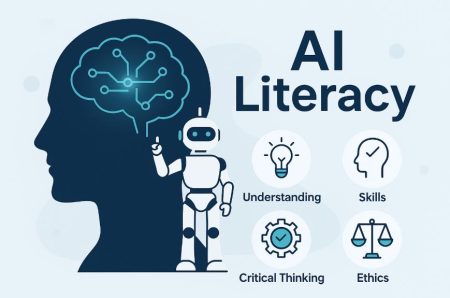
The role of libraries is expanding beyond traditional book lending and reference services to include a broad range of technology-driven support for their communities. Artificial Intelligence (AI) is at the heart of many of these changes, from smart library systems to AI-driven research tools and personalized services. In this context, AI literacy, the ability to understand, use, and evaluate AI technologies, has become an essential competency for library professionals. AI literacy is critical for several reasons as the digital age continues to reshape how libraries operate.
First, AI technologies are already transforming the way libraries function. AI-powered automated systems can streamline various operational tasks such as cataloging, circulation management, and customer service. AI-based recommendation systems, for example, can personalize library users’ experiences by suggesting books, articles, and other resources based on their reading habits. Chatbots, which use natural language processing (NLP), are increasingly used to assist library patrons with frequently asked questions, simplifying administrative processes and providing 24/7 service. AI-literate library professionals can better leverage these technologies to improve the efficiency of library services, allowing staff to focus on more complex tasks such as user engagement and research support.
AI literacy is also crucial for supporting research and information access. AI is revolutionizing research by providing tools for data mining, text analysis, and machine learning, which assist researchers in identifying patterns, conducting literature reviews, and analyzing vast amounts of data. Library professionals, especially those in research support roles, need to be familiar with these AI technologies to help patrons navigate and maximize these tools effectively. For instance, AI-based search engines used in academic databases help library users find the most relevant articles, journals, or research papers by using algorithms that assess content relevance and quality. Librarians with AI literacy can guide researchers on how to utilize such systems to enhance their information retrieval, ensuring that users find the most valuable sources for their work.
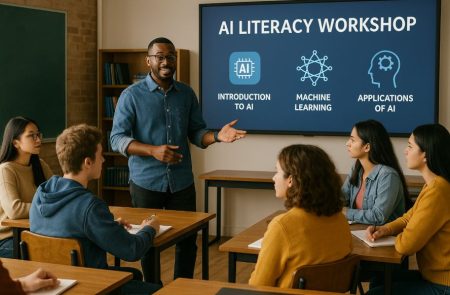
As libraries become more focused on education, AI literacy is essential for library professionals to create and facilitate AI education programs for users, especially students and young professionals. Libraries can host workshops, webinars, or tutorials on AI fundamentals, machine learning, and ethical considerations in AI. By being AI-literate, library staff can educate their communities about these complex technologies, helping them understand the impact of AI on personal and professional lives. Moreover, libraries can collaborate with schools, universities, and tech organizations to offer coding programs or AI literacy courses, further contributing to the development of a tech-savvy society.
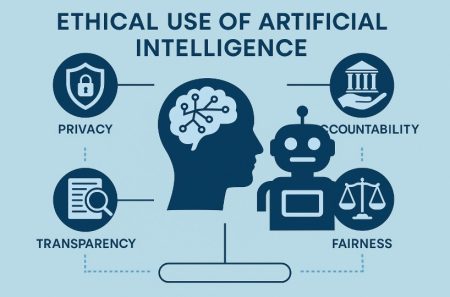
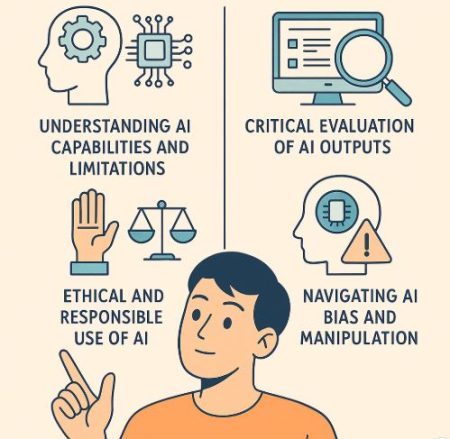
AI also raises several ethical issues, including bias in algorithms, privacy concerns, and the implications of automation. Library professionals, as stewards of information, must understand these ethical dilemmas to guide patrons accordingly. AI literacy enables librarians to critically evaluate AI systems, recognize potential biases, and raise awareness about the ethical implications of these technologies. For example, AI-driven hiring processes or predictive policing algorithms may perpetuate social inequalities, and librarians can play a key role in helping users navigate and question such systems. In addition, AI literacy helps ensure that library professionals can promote equitable access to AI resources for all community members. Libraries are at the forefront of addressing the digital divide, and AI literacy is crucial for ensuring that underrepresented groups, such as marginalized communities or individuals with disabilities, have equal access to the digital world. By being AI-literate, library professionals can make AI technologies more accessible, helping users from diverse backgrounds engage with and benefit from these tools. This inclusivity is a cornerstone of the library’s mission to provide equal access to information and technology.
Finally, as AI becomes more integrated into library services, AI literacy prepares library professionals to stay ahead of technological advancements. AI-powered systems are expected to play an even greater role in future library operations, from automating cataloging and curation to personalizing learning environments for users. Library professionals who are not AI-literate may struggle to keep up with these changes, hindering their ability to provide effective services. Being AI-literate enables library staff to anticipate and adapt to these changes, ensuring that libraries remain relevant and innovative in an increasingly automated world.
How Can Libraries Integrate AI Literacy into Their Training Programs for Staff and Patrons?
As Artificial Intelligence (AI) becomes increasingly pervasive in various sectors of society, libraries must adapt to this technological revolution by ensuring that both staff and patrons are equipped with the knowledge and skills necessary to understand and interact with AI effectively. Integrating AI literacy into library training programs is vital for enhancing the library’s role as a community educational hub and is essential for promoting informed, ethical engagement with AI technologies. Let’s explore how libraries can integrate AI literacy into their training programs for staff and patrons, ensuring that libraries continue to play a critical role in fostering digital literacy and empowerment in the AI age.
- Incorporating AI Literacy into Staff Development Programs: Library professionals are the cornerstone of AI literacy initiatives within libraries. Therefore, integrating AI literacy into staff development programs is the first step in ensuring that libraries can effectively serve their communities. AI literacy training for staff should focus on three key areas: understanding AI technologies, developing practical skills for utilizing AI tools, and addressing ethical and societal issues surrounding AI.
- Understanding AI Technologies: Library staff should first develop a foundational understanding of what AI is and how it operates. This includes familiarity with common AI applications, such as machine learning, natural language processing, and data mining. Staff can be introduced to AI through workshops, webinars, or online courses, focusing on topics such as the basics of AI algorithms, data-driven decision-making, and the impact of AI on various industries. These sessions could feature expert-led discussions or partnerships with tech organizations that specialize in AI education.
- Practical Skills for Using AI Tools: Staff should be trained to use AI-powered tools relevant to library operations, such as AI-based recommendation systems for personalized book suggestions, chatbots for customer service, or machine learning algorithms for data analysis. Offering hands-on training on these tools ensures that staff members are proficient in leveraging AI to improve library services. For example, library staff might learn to use AI-powered cataloging systems or predictive analytics tools to streamline inventory management and enhance the user experience.
- Ethical Considerations and AI Literacy: An essential component of AI literacy is understanding the ethical implications of AI technologies. Library staff should be trained to recognize biases in AI algorithms, as well as the potential risks of automation and data privacy violations. Staff should also be prepared to guide patrons on the ethical use of AI, encouraging critical discussions about AI’s societal impacts. Libraries can organize sessions on the ethical use of AI in library services, ensuring staff understand the balance between technological advancement and responsible usage.
- Integrating AI Literacy into Patron Training Programs: Libraries are also responsible for empowering their patrons with AI literacy to ensure that community members can navigate the increasingly AI-driven world. Offering AI literacy programs for patrons enhances their ability to understand, use, and critically engage with AI technologies. Here are several ways libraries can integrate AI literacy into their patron training programs:
- AI Education for All Ages: AI literacy programs can be tailored to different age groups, ensuring that library patrons of all ages, from children to adults, have access to AI-related educational content. For children and young adults, libraries could introduce basic AI concepts through coding workshops or interactive programs. For instance, programs like Scratch, a visual programming language, can introduce younger users to the concepts of AI and coding through fun, hands-on projects. Teenagers and university students can explore more advanced topics, such as machine learning algorithms and data science, through specialized workshops and courses hosted by libraries in collaboration with educational institutions.
- Workshops and Seminars for Adults: For adult patrons, libraries can offer AI literacy seminars focusing on the practical applications of AI in daily life and work. These workshops could cover topics such as how AI is used in business, healthcare, and education, helping participants understand AI’s role in various industries. Additionally, patrons can learn about AI-powered tools like Google Assistant or Siri, helping them see how AI can enhance their personal lives. These workshops could also feature case studies or guest speakers from the tech industry, allowing patrons to learn from real-world applications of AI.
- AI and Ethical Awareness: Libraries can offer sessions specifically focused on the ethical implications of AI. These programs would allow patrons to engage with discussions about the potential harms and benefits of AI in society, such as concerns over privacy, security, and bias. Libraries could host panel discussions or debates on controversial AI topics, such as the use of AI in policing or hiring practices, to foster critical thinking and ethical awareness among patrons. These discussions will help individuals navigate the complexities of AI in a way that encourages ethical and responsible engagement.
- Providing Access to AI Tools: Access to AI tools is another important aspect of patron AI literacy programs. Libraries can provide access to AI-powered platforms and coding tools, such as Python programming, TensorFlow, or Google’s AI Experiments. Offering these resources allows patrons to experiment with AI, gain practical experience, and explore how AI can be used in problem-solving or creative projects. For instance, patrons might learn how to create a basic machine learning model or experiment with AI in art and design, fostering creativity while also building technical skills.
- Building Partnerships with Educational and Tech Organizations: To enhance the quality and depth of AI literacy programs, libraries can form strategic partnerships with educational institutions, tech companies, and non-profit organizations. Collaborations with universities or local tech organizations can help libraries gain access to specialized resources, guest speakers, and expertise in AI education. These partnerships can also lead to joint events or programs that bring together experts, library staff, and patrons to discuss and explore AI topics.
- Online Resources and Self-Paced Learning: In addition to in-person training, libraries can integrate online learning platforms into their AI literacy programs. Platforms like Coursera, edX, or Udacity offer free or low-cost courses on AI and related topics. Libraries can guide patrons to these resources, helping them access high-quality AI education at their own pace. Furthermore, libraries can create curated lists of online resources, articles, and videos, enabling patrons to learn more about AI on their own time.
- Creating an AI Literacy Community: Libraries can foster a community of AI learners through AI clubs or interest groups. These groups can meet regularly to discuss the latest AI trends, share knowledge, and collaborate on projects. Libraries encourage lifelong learning and innovation by creating a supportive environment where people can learn from each other and experiment with AI. This community-building approach can ensure patrons stay engaged with AI topics and continue developing their AI literacy over time.
Integrating AI literacy into library training programs for both staff and patrons is a crucial step in empowering communities to thrive in an increasingly AI-driven world. By providing foundational knowledge, hands-on experience, and ethical guidance, libraries can help individuals not only understand AI but also navigate its complexities and implications. With the right training, libraries can transform into hubs of AI knowledge, ensuring that their communities are equipped with the skills needed to engage with and critically evaluate AI technologies in their personal and professional lives. By fostering AI literacy, libraries continue to fulfill their mission as inclusive, forward-thinking institutions dedicated to lifelong learning and community empowerment.
Strategies Libraries Can Implement to Promote AI Literacy Among Their Patrons
In the digital age, libraries have always been instrumental in promoting literacy and knowledge across various domains. With the rapid advancement of Artificial Intelligence (AI) technologies, it has become increasingly important for libraries to equip their patrons with the tools and knowledge to navigate this new landscape. AI literacy is no longer just a skill for computer scientists or tech enthusiasts; it has become an essential competency for everyone, whether they are engaging with AI in their personal lives, workplaces, or academic pursuits. By promoting AI literacy, libraries can ensure their communities remain informed, empowered, and ethically engaged with the evolving role of AI in society. Libraries can implement several effective strategies to promote AI literacy among their patrons.
- Offer AI Education Programs for All Ages and Skill Levels: One of the most impactful strategies libraries can adopt to promote AI literacy is the creation of AI education programs that cater to a wide range of ages and skill levels. These programs should be designed to introduce AI concepts in an engaging and accessible way, ensuring that both younger and older patrons can develop a foundational understanding of AI and its applications.
- For Children and Teens: Libraries can introduce basic AI concepts through coding workshops, robotics classes, and interactive learning tools. Programs like Scratch or Tynker, which offer visual programming languages, can be used to teach young learners about the logic behind AI and machine learning algorithms. Robotics workshops that allow children to build and program robots provide an engaging way to teach AI principles in a hands-on environment. AI for Kids is an example of a program that can help demystify AI by teaching children about the technology behind smart devices and AI-powered systems in a fun, age-appropriate manner.
- For Adults and Senior Patrons: Libraries can offer beginner-level courses that introduce the basics of AI, such as its uses in everyday technology (e.g., smart assistants like Siri or Alexa, AI in healthcare, or AI in personalized shopping experiences). As patrons progress, libraries can offer intermediate programs on more advanced topics like machine learning algorithms, data analysis, and ethics in AI. For more specialized audiences, libraries could host workshops on AI tools such as TensorFlow, Python programming, or AI-driven data analytics.
- Host AI Awareness and Ethics Workshops: Understanding the ethical implications of AI is an essential part of AI literacy. As AI technologies increasingly influence decision-making processes in areas such as hiring, criminal justice, and healthcare, it is critical for patrons to understand the potential ethical dilemmas they may encounter. Libraries can host workshops and seminars that focus on the ethical aspects of AI.
These workshops can cover topics such as AI bias, data privacy, algorithmic fairness, and the societal implications of AI. For example, AI bias has been a major issue in technologies like facial recognition and hiring algorithms, which can disproportionately affect marginalized groups. Libraries can facilitate discussions on these issues, enabling patrons to critically evaluate how AI systems impact social justice, privacy rights, and equality. By introducing these topics, libraries can foster a more ethically conscious community that is better equipped to understand and engage with AI technologies responsibly.
Additionally, libraries can invite guest speakers from AI ethics research centers or tech companies to provide insights into the evolving relationship between AI and society. These expert-led discussions can help patrons understand how AI works and its broader social, ethical, and cultural impacts. - Provide Access to AI Tools and Platforms: To foster AI literacy, it is essential that libraries provide patrons with access to AI tools and platforms that allow them to experiment with AI firsthand. These tools can range from programming environments to AI-based software that patrons can use to build, test, and explore AI systems.
Libraries can provide access to platforms like Google AI, IBM Watson, and Microsoft Azure, which offer user-friendly tools for building AI models and applications. For those interested in coding, libraries can offer resources such as Python programming and R for data science tutorials, as these languages are often used in AI development. Offering cloud-based platforms for AI experimentation ensures that patrons can engage with AI tools without the need for specialized hardware, making these technologies accessible to a broader audience.
To enhance hands-on learning, libraries can host AI hackathons, where patrons can collaborate in teams to solve problems using AI tools. These events foster creativity and collaboration, allowing participants to experiment with real-world applications of AI. Additionally, libraries can provide access to online courses and tutorials that guide patrons through creating their own AI projects, helping them build practical skills they can use in their professional and academic lives. - Develop AI-Focused Online Resources and Learning Portals: As online learning becomes increasingly popular, libraries should develop and curate a comprehensive collection of online resources for AI literacy. These resources can be in the form of self-paced courses, e-books, videos, and tutorials that patrons can access from anywhere. Libraries can partner with platforms like Coursera, edX, and Khan Academy, which offer free or low-cost AI courses, and provide patrons with easy access to these platforms through library websites or digital catalogs.
By creating a centralized learning portal for AI, libraries can allow patrons to explore various materials tailored to their needs. For example, a beginner might be directed to introductory articles or videos, while an advanced user could access detailed case studies or research papers on machine learning algorithms. These resources could also include interactive tools, such as AI simulators that allow patrons to see the direct effects of different AI models in action. - Collaborate with Educational Institutions and Tech Industry Experts: To stay at the forefront of AI developments and ensure their patrons receive high-quality education, libraries can collaborate with universities, tech companies, and AI professionals. These partnerships can lead to joint workshops, speaker events, and collaborative projects that enrich the library’s AI literacy offerings.
For instance, libraries can partner with local universities to host AI lecture series or panel discussions on current AI research and its real-world applications. Collaborations with AI tech companies can also provide patrons with direct access to cutting-edge AI tools and expertise, ensuring that library programs remain up-to-date with the latest trends and innovations in AI.
Moreover, inviting AI experts to offer guest lectures or webinars allows patrons to hear firsthand from professionals who are working in the field of AI, providing valuable insights into the practical applications and challenges of AI technologies. - Foster AI Communities for Peer Learning and Collaboration: Creating a community around AI learning is essential for fostering continuous engagement and collaboration among library patrons. Libraries can set up AI clubs, interest groups, or forums where patrons can share their knowledge, work on AI-related projects together, and discuss AI topics of interest. These communities can meet regularly to discuss the latest AI trends, share project ideas, or collaborate on solving real-world problems using AI tools.
Such communities encourage peer-to-peer learning, where individuals of varying skill levels can contribute and learn from one another. Libraries can also organize AI project showcases or competitions, where community members can present their AI projects and ideas, creating a sense of accomplishment and motivation to continue learning.
Promoting AI literacy in libraries is essential for ensuring that all patrons, regardless of their background, have the opportunity to engage with and understand the rapidly evolving world of AI. By implementing a combination of education programs, access to tools, ethical awareness workshops, and community-building strategies, libraries can play a pivotal role in empowering their patrons with the knowledge and skills needed to navigate the AI-driven future. Through these efforts, libraries foster digital literacy and ensure their communities remain informed, responsible, and innovative in the face of technological change.
How Libraries Can Collaborate with Schools, Universities, and Technology Companies to Enhance AI Literacy Education
Libraries play a pivotal role in fostering AI literacy within their communities, and collaborating with schools, universities, and technology companies can significantly enhance their efforts. By partnering with local schools, libraries can introduce AI concepts to children and young adults early on, creating programs such as after-school AI workshops or summer camps that teach coding, robotics, and basic machine learning. These partnerships allow libraries to engage students with interactive tools like Scratch or LEGO Mindstorms, which help demystify AI and make learning fun. By collaborating with school educators, libraries can also help design curricula that integrate AI concepts, ensuring that students are exposed to fundamental topics like algorithmic thinking and problem-solving. This early engagement helps cultivate interest in STEM fields, preparing students for more advanced AI topics as they progress in their education.
Collaboration with universities allows libraries to offer more advanced AI literacy programs for older students and adults. By working with university departments such as computer science, engineering, and data science, libraries can host guest lectures, workshops, and seminars on specialized AI topics. These university partnerships also open opportunities to offer AI certification courses or continuing education programs, providing patrons with the opportunity to deepen their understanding of topics like machine learning, data analysis, and AI ethics. Universities often have access to cutting-edge research and resources, which libraries can incorporate into their programs, ensuring that patrons stay informed about the latest trends and developments in AI.
Partnering with technology companies is another effective strategy for enhancing AI literacy in libraries. Technology companies are at the forefront of AI innovation, and their collaboration can provide libraries with access to state-of-the-art tools, platforms, and expertise. Through these partnerships, libraries can offer patrons hands-on experience with AI development kits and cloud-based platforms, such as Google AI, IBM Watson, or Microsoft Azure. Libraries can organize AI-focused hackathons or innovation challenges, where patrons can collaborate with tech experts to solve real-world problems using AI technologies. This collaboration provides community members with the tools and support necessary to explore AI in a practical, applied context.
In addition to technical education, libraries can partner with online educational technology providers such as Coursera, edX, or Udacity to offer AI courses and virtual learning resources to patrons. These platforms provide self-paced learning opportunities that cater to individuals at various skill levels. By providing access to these online courses, libraries can ensure that AI education is accessible to all patrons, regardless of their location or schedule. Library professionals can guide patrons through these online learning experiences, helping them select the right courses and track their progress, thus enhancing the overall learning experience.
Creating AI learning spaces within libraries is another way to enhance AI literacy. Libraries can collaborate with universities, tech companies, and other community organizations to establish innovation hubs equipped with AI software, advanced computing tools, and coding environments. These spaces provide patrons with a collaborative environment where they can experiment with AI technologies, share ideas, and work on projects together. By fostering such community-driven networks, libraries create a supportive ecosystem for AI education, where individuals can learn from experts, engage with peers, and stay up-to-date with the latest advancements in AI. Furthermore, libraries can collaborate with universities and technology companies to focus on the ethical implications of AI. With the growing concerns around AI bias, data privacy, and the societal impacts of automation, it is crucial for library programs to include discussions on AI ethics. Partnerships with academic institutions specializing in AI ethics, as well as technology companies committed to responsible AI development, can help libraries create programs that explore these critical issues. These discussions encourage patrons to think critically about the ethical use of AI, preparing them to engage with these technologies in a responsible and informed manner.
By collaborating with schools, universities, and technology companies, libraries can provide their communities with enhanced AI literacy programs that are diverse, accessible, and relevant. These partnerships open doors to educational opportunities, hands-on experiences, and the latest AI tools, all of which contribute to building an AI-literate society. Libraries can empower their patrons to understand, navigate, and ethically engage with AI, ensuring that AI education remains inclusive, innovative, and socially responsible. Through these collaborations, libraries solidify their role as vital institutions in preparing communities for an AI-driven future.