Information is the foundation of education and lifelong learning, playing a crucial role in acquiring, disseminating, and applying knowledge. In education, information serves as the primary resource for teaching and learning, encompassing data, facts, and insights that are essential for academic growth. For instance, textbooks, academic journals, and online databases provide students with the information needed to understand various subjects, from mathematics to history. Information is also critical in shaping teaching strategies, such as using multimedia presentations, interactive platforms, and digital tools to enhance learning experiences. A practical example is the integration of educational apps like Khan Academy or Duolingo, which provide learners with instant access to information, enabling them to learn at their own pace.
In the context of lifelong learning, information transcends formal education, continuing to be a vital tool for personal and professional development throughout an individual’s life. For example, professionals in fields like healthcare, technology, and business rely on information to stay updated on industry trends, new technologies, and best practices. Access to online resources like research papers, webinars, and online courses allows individuals to continually enhance their knowledge and skills. Platforms such as Coursera, LinkedIn Learning, and edX provide opportunities for people to pursue certification courses, even long after they have completed formal education, demonstrating the role of information in fostering ongoing development.
As the world becomes increasingly interconnected and information-driven, the ability to access, process, and apply information has become a key determinant of success. For example, during the COVID-19 pandemic, the rapid spread of information regarding health guidelines and remote working tools allowed individuals to adapt to new realities, underscoring the importance of accessible and reliable information. With the rapid advancements in technology, learners can now access vast amounts of information beyond traditional classroom settings, fostering a culture of continuous learning. Online libraries, educational platforms, and podcasts are just a few examples of how information is continuously accessible, encouraging individuals to engage in self-directed learning and stay informed.
Thus, information is pivotal in formal education and empowering individuals to engage in self-directed learning, adapt to new environments, and stay relevant in an ever-changing world. Whether through academic resources, professional development platforms, or daily news, the role of information in education and lifelong learning remains indispensable.
The Role of Information in Education
Information is the cornerstone of education, serving as the medium and the foundation upon which knowledge is built, shared, and applied. In every stage of education, from early learning to higher education, the role of information remains central in shaping the learning experience. It facilitates the transmission of knowledge, fosters intellectual development, and equips students with the skills necessary to engage critically with the world. As educational landscapes evolve, particularly with the rise of digital technologies, the role of information continues to expand, presenting new opportunities and challenges for educators and learners alike.
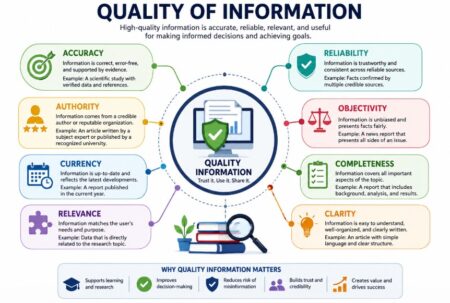
- Information in Curriculum Development: At the heart of every educational institution is the curriculum, which serves as a guide for students’ learning journeys. Information plays a pivotal role in shaping curriculum content, ensuring that it remains relevant, accurate, and comprehensive. Curriculum developers and educators rely on up-to-date information from various sources, such as textbooks, research papers, and databases, to design courses that meet the needs of students and align with academic standards. For example, in science education, current research findings inform the topics and methods taught, ensuring that students are exposed to the most recent developments in the field. Likewise, in history and social studies, educators draw on historical data and contemporary analysis to ensure that students understand the past and its implications for the present.
The role of information in curriculum development extends beyond content; it also influences the structure and pedagogical approaches employed in the classroom. Educators must decide how to present information in a way that aligns with the diverse learning needs of students. This may involve choosing between traditional methods, such as lectures and textbooks, and more modern approaches, such as digital platforms or experiential learning. - Information in Instructional Strategies: Instruction is the process through which information is transmitted to students. How this information is presented is as important as the information itself. The effective use of information in education relies on varied instructional strategies tailored to diverse learning styles and technological advancements. Traditional face-to-face instruction remains a common method, where teachers deliver content through lectures, discussions, and activities. However, with the integration of technology into classrooms, instructional strategies have evolved significantly. Online learning platforms like Moodle, Google Classroom, and Blackboard have revolutionized how information is shared, allowing for more interactive, flexible, and accessible learning experiences.
Digital tools and multimedia resources—such as videos, simulations, and educational apps—are also playing an increasingly important role in education. These tools allow students to interact with information in innovative ways, deepening their understanding of complex concepts. For instance, in a biology class, students may watch a 3D video that visualizes the process of cellular division, offering a more engaging and interactive way of learning than traditional methods. Similarly, interactive platforms like Khan Academy or Duolingo provide learners with personalized access to information, allowing them to progress at their own pace while receiving instant feedback. - Information and Assessment in Education: Assessments are a critical component of education, providing insight into students’ understanding, abilities, and areas for improvement. Information is integral to both the design and evaluation of assessments. From multiple-choice tests to open-ended assignments, each assessment is built upon the information that has been taught throughout the course. For example, a mathematics exam might test students’ ability to apply formulas and concepts learned in class, while a literature test might assess students’ critical analysis of themes and character development in a novel. Moreover, the analysis of assessment results provides valuable feedback for educators and students. For instance, formative assessments—such as quizzes and peer reviews—allow educators to gauge how well students are understanding the material and make adjustments to instruction if necessary. This dynamic exchange of information between educator and student ensures that the learning process is not one-directional but a continuous cycle of feedback and improvement.
- Information in Promoting Critical Thinking and Problem-Solving: Beyond the acquisition of knowledge, one of the most vital roles of information in education is in fostering critical thinking and problem-solving skills. As students interact with information, they are encouraged not only to absorb facts but also to analyze, evaluate, and synthesize them. In the classroom, students are often presented with complex problems or scenarios where they must apply their knowledge to come up with solutions. For example, a science student might conduct an experiment to test a hypothesis, while a history student might analyze primary sources to draw conclusions about historical events.
This process of engaging with and manipulating information helps students develop the cognitive skills needed for real-world problem solving. In fact, the ability to navigate and apply information critically is becoming increasingly important in the modern world, where access to vast amounts of information is ubiquitous, but the ability to discern accurate and relevant content is essential. - The Evolving Role of Information in Education: As technology advances, the role of information in education is evolving. The internet has made vast amounts of information readily available to students, transforming traditional educational practices. Today, students can access academic journals, research databases, and even entire courses online, expanding the learning experience beyond the physical classroom. The rise of open educational resources (OER) has also democratized access to information, allowing students worldwide to benefit from high-quality, freely available educational content.
However, this shift presents challenges as well. The sheer volume of information available online can overwhelm students, making it essential for them to develop the skills to filter, evaluate, and use information effectively. This highlights the importance of teaching information literacy skills that enable students to navigate, assess, and utilize information responsibly. Moreover, educators must stay abreast of new technologies and pedagogical approaches to ensure that they use information in the most effective and ethical ways possible.
Information is the lifeblood of education, influencing everything from curriculum development to instructional strategies, assessments, and critical thinking. It is the tool that enables students to learn, grow, and apply their knowledge in various contexts. As education continues to adapt to the challenges and opportunities presented by technology, the role of information will remain central to the learning process. By ensuring that students have access to accurate, relevant, and engaging information, educators empower them to become lifelong learners, equipped with the skills necessary to thrive in a rapidly changing world.
The Role of Information in Lifelong Learning
Lifelong learning refers to the continuous, voluntary pursuit of knowledge and skills throughout an individual’s life, and information plays a central role in this process. Unlike formal education, which typically occurs within a set period, lifelong learning is an ongoing, self-motivated journey that spans across various stages of life. It can take place in formal, non-formal, or informal settings, and the role of information in facilitating this journey is crucial. Whether for personal growth, career advancement, or intellectual enrichment, information is the fuel that drives lifelong learning. Let’s explore the different ways in which information supports and enhances lifelong learning.
- Access to Knowledge and Resources: The most obvious role of information in lifelong learning is providing access to knowledge. The availability of information has expanded exponentially in recent years, particularly with the advent of the internet and digital technology. Today, learners of all ages can access a vast array of educational materials online, from scholarly articles and research papers to instructional videos and MOOCs (Massive Open Online Courses). Platforms such as Coursera, Khan Academy, and edX have made it possible for individuals to learn from top universities and instructors across the globe, regardless of their geographical location or financial resources.
For example, a professional seeking to advance in their career can access specialized knowledge in fields such as business, technology, or healthcare through online courses and certification programs. Similarly, individuals interested in personal growth or hobbies can learn new skills such as cooking, photography, or foreign languages through easily accessible online resources. - Flexibility and Personalization: Information enables lifelong learners to pursue their educational goals in a flexible, self-directed manner. One of the key advantages of lifelong learning is the ability to tailor the learning process to individual needs and interests. Learners can choose the types of information they want to engage with, the pace at which they learn, and the methods they use to access that information.
This flexibility is especially important for adults who may have other responsibilities, such as work or family commitments. Information allows them to learn at their own pace, often using digital platforms that provide on-demand content. For example, an individual can take an online course on data analysis at their own convenience, progressing through the material as time allows, without the need to adhere to rigid class schedules. Furthermore, many digital learning platforms and resources offer personalized learning experiences. Adaptive learning technologies, powered by artificial intelligence, can analyze a learner’s progress and provide tailored content or quizzes to help reinforce weak areas. This personalization ensures that learners receive the most relevant and effective information for their needs. - Skill Development and Career Advancement: The role of information in lifelong learning is also pivotal for professional development and career advancement. As the job market becomes increasingly competitive and technology-driven, individuals need to update their skills and knowledge to stay relevant continuously. Information is the tool that allows learners to keep pace with these changes.
For instance, professionals in fields like information technology, healthcare, and finance must stay updated on industry trends, new tools, and regulations. Online resources, webinars, and industry-specific databases provide them with the most current information needed to maintain and enhance their expertise. A software developer might regularly take online courses to learn new programming languages, while a healthcare professional might access the latest research on medical treatments through online journals and academic databases. Moreover, many career advancement opportunities depend on acquiring specific knowledge or certifications. Information is crucial in preparing for exams, completing certifications, or developing competencies that enhance employability. By accessing online study guides, practice exams, and instructional materials, learners can successfully meet the qualifications required for career growth. - Information and Critical Thinking Skills: Lifelong learning encourages individuals to develop knowledge, critical thinking, and problem-solving skills. Information plays a crucial role in fostering these cognitive abilities. By interacting with various types of information, learners are required to analyze, evaluate, and synthesize content, which enhances their ability to think critically.
For example, when engaging with news articles or research papers, learners must assess the sources’ credibility, evaluate the arguments’ validity, and consider the broader implications of the information. This process of analyzing and synthesizing information promotes deeper understanding and empowers learners to make informed decisions in various areas of life, from personal choices to professional endeavors.
Critical thinking and problem-solving are increasingly valuable skills in a rapidly changing world, and information helps individuals develop these competencies. For instance, a manager may use data and information to solve complex problems in the workplace, while a community leader might analyze social trends to develop effective policies for their constituents. - Information as a Tool for Self-Directed Learning: One of the key characteristics of lifelong learning is that it is largely self-directed. Learners take responsibility for their educational paths, selecting the topics they wish to explore, setting their own learning goals, and determining how to achieve those goals. Information is a crucial tool in this self-directed learning process.
Through self-directed learning, individuals actively seek out information that is relevant to their personal or professional objectives. For example, someone interested in starting a business may seek out information on entrepreneurship, business planning, marketing, and finance. This might involve reading books, watching tutorials, attending webinars, or joining online communities. By curating and organizing information based on their personal learning objectives, lifelong learners can create a tailored educational experience that fits their specific needs. Moreover, information empowers learners to explore various subjects beyond their formal education, from philosophy to art, technology to history, fostering a lifelong love of learning and intellectual curiosity. - The Role of Social Learning and Collaboration: In addition to individual learning, information also plays a key role in social learning and collaboration. Lifelong learning often involves interaction with others, whether in formal groups, online communities, or professional networks. Through these interactions, learners exchange information, share experiences, and collaborate on projects, further enhancing the learning process.
Online discussion forums, social media platforms, and collaborative tools such as Google Docs allow individuals to engage with others, discuss ideas, and solve problems together. For example, an online forum dedicated to writers might allow individuals to share information about writing techniques, offer feedback on each other’s work, or discuss literary trends. This social aspect of learning ensures that lifelong learners benefit from diverse perspectives and collective knowledge, enriching their learning experience. - Overcoming Barriers to Information Access: Despite the vast availability of information, barriers to access still exist for many lifelong learners. These barriers might include a lack of internet access, digital literacy issues, or the overwhelming amount of information available online. However, organizations and educational institutions are working to address these challenges by providing more equitable access to information. Libraries, non-profit organizations, and online platforms are working to bridge the digital divide, ensuring that learners from all backgrounds can access the information they need.
In addition, information literacy programs help individuals develop the skills to search for, evaluate, and use information effectively. These programs equip learners with the tools they need to navigate complex information landscapes, enabling them to make informed decisions and engage with content critically.
The role of information in lifelong learning is profound and multifaceted. It provides individuals with the resources to continue their education outside traditional classroom settings, offering the flexibility to pursue personal and professional growth at any stage of life. Information enables skill development, career advancement, and critical thinking, empowering learners to stay relevant in a rapidly changing world. As technology continues to evolve, the role of information in lifelong learning will only become more integral, offering new opportunities for individuals to access knowledge, develop competencies, and engage in the ongoing pursuit of self-improvement.
The Impact of Information Technology on Education and Lifelong Learning
Information technology (IT) has profoundly impacted education and lifelong learning, transforming how knowledge is accessed, shared, and applied. In the past, education was primarily confined to physical classrooms and traditional methods, but the integration of IT has expanded access to education, making it more flexible, personalized, and accessible. One of the most significant contributions of IT to education is the democratization of knowledge. Platforms such as Coursera, edX, and Khan Academy have made high-quality education available to anyone with an internet connection, breaking down barriers related to geography, socioeconomic status, and access to physical educational institutions. Students in remote or underserved areas can now take courses from prestigious universities, opening up opportunities that were previously inaccessible to them.
In addition to expanding access, IT has made education more flexible and personalized. Digital platforms like Google Classroom, Moodle, and Blackboard allow learners to engage with content at their own pace and on their own schedule, making education more adaptable to individual needs. For example, a working professional can take an online course in data science or business management, progressing through the material at a pace that suits their schedule. These platforms also provide adaptive learning tools, which adjust the difficulty of content based on the learner’s progress, ensuring that each individual receives an appropriate level of challenge. This personalized approach to learning caters to different learning styles, whether through visual aids, text-based content, or interactive simulations, enhancing the overall educational experience.
IT has revolutionized collaboration and networking opportunities, particularly in the context of global learning. Online forums, discussion boards, and social media platforms allow students and lifelong learners to communicate, share ideas, and collaborate with peers and experts worldwide. For instance, learners can work together on research projects using tools like Google Docs or participate in online discussion groups that offer diverse perspectives. This sense of community extends beyond formal education settings and fosters continuous professional development. Professionals in various fields can join global networks, attend webinars, and engage in online discussions, enabling them to stay up-to-date with industry trends and exchange knowledge with others in their field.
Additionally, IT has facilitated the real-world application of knowledge through digital tools such as simulations, virtual labs, and interactive case studies. These technologies allow students to practice skills in safe, controlled environments before applying them in real-world situations. Medical students, for example, can use virtual anatomy tools to study the human body, while engineering students can design and test prototypes using computer-aided design (CAD) software. These hands-on experiences, made possible by IT, provide valuable learning opportunities that help students deepen their understanding of complex concepts and develop practical skills they can use in their careers.
The global reach of IT also enhances cultural exchange and collaboration. Through online courses and digital platforms, learners can engage with content created by instructors from different countries, gaining insights into different educational systems and cultural perspectives. This exposure to diverse viewpoints enriches the learning experience and promotes cross-cultural understanding. Furthermore, the ability to access information in multiple languages enables learners to broaden their horizons and learn from a global pool of knowledge.
Despite the many benefits, there are challenges associated with the use of IT in education. One of the primary issues is the digital divide, where unequal access to technology creates disparities in educational opportunities. Learners in rural or underdeveloped areas may face difficulties accessing the internet or acquiring the necessary devices to participate in digital learning. Additionally, the vast amount of information available online can overwhelm learners, making it difficult to discern credible sources from unreliable ones. This highlights the need for digital literacy programs that teach learners how to effectively search for, evaluate, and use information. Furthermore, the abundance of information available online can lead to information overload, requiring learners to develop skills for filtering and focusing on the most relevant material.
Looking ahead, the future of IT in education and lifelong learning holds even more promise. Emerging technologies such as artificial intelligence (AI), machine learning, and virtual reality (VR) are set to further transform the learning experience. AI-powered platforms can provide even more personalized learning pathways, adjusting content based on real-time data about a learner’s progress and preferences. Virtual and augmented reality technologies offer immersive learning experiences that allow students to interact with complex subjects in ways that were once impossible. For example, students can virtually explore historical sites or participate in interactive science experiments, gaining a deeper understanding of the material through experience.