In libraries, classification plays a crucial role in organizing and managing vast amounts of information. It serves as the foundation for structuring knowledge in a way that makes it easily accessible to library users. Without an effective classification system, finding a specific book or resource amidst thousands of others would be a daunting and time-consuming task. The primary goal of library classification is to group materials based on their subjects and topics, ensuring that related works are placed together in an organized manner. This systematic organization of knowledge allows users to quickly locate information on any given subject, streamlining the search process.
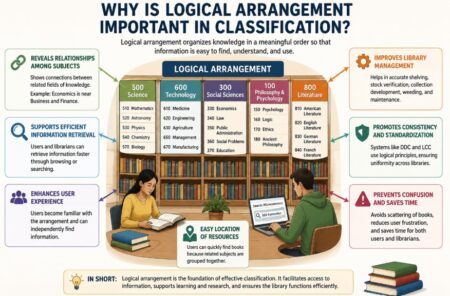
A well-structured classification system ensures that resources are arranged logically, using consistent rules that support the smooth retrieval of information. It minimizes confusion by offering a clear and standardized method of categorization, regardless of the size or complexity of the library collection. Moreover, classification aids in preserving the integrity and coherence of library collections as new resources are continuously added. It is essential for libraries to implement such a system to maintain order, enhance the user experience, and foster efficient information discovery.
What is Library Classification?
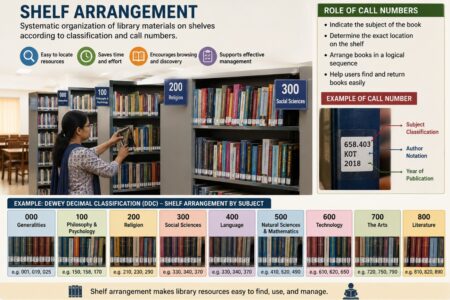
Library classification is a method used to organize and arrange library materials based on their subject matter. It involves grouping similar materials together in a logical and systematic manner to make it easier for library users to locate and access information. The primary goal of library classification is to assign each item in the library a unique place according to its topic, which ensures that related resources are stored together, reducing confusion and facilitating efficient retrieval.
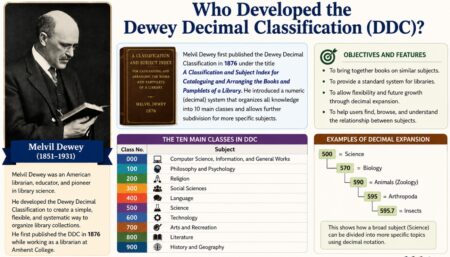
In a library, classification systems typically use a set of predefined categories or classes, which are organized hierarchically from broad topics to more specific subcategories. Examples of popular classification systems include the Dewey Decimal Classification (DDC) and the Library of Congress Classification (LCC). Each classification system employs its own set of rules and notations to ensure that resources are consistently organized across various libraries, making it possible for users to find information quickly and accurately.
The Core Principles of Library Classification
Library classification is an essential process in organizing vast collections of knowledge, enabling users to easily find the materials they seek. A classification system serves as the backbone of a library’s organizational framework, arranging books, journals, and other resources in a structured manner. This process ensures that related materials are grouped together, making information retrieval efficient and user-friendly. The principles of library classification provide the guidelines that govern how library resources should be categorized. Below are the core principles of library classification:
- Principle of Enumeration: The Principle of Enumeration refers to the process of dividing knowledge into a finite set of categories or classes. This is the starting point for any library classification system. These categories represent the major subjects or disciplines of knowledge, and each class is assigned a specific number or label. For example, in the Dewey Decimal Classification (DDC), the main categories range from general works (000) to specific subjects like technology (600) and the arts (700). By enumerating the various fields of knowledge, the system ensures that there is a clear and consistent framework for organizing library resources.
- Principle of Hierarchy: Library classification follows a hierarchical structure, with general subjects at the top and specific subtopics beneath them. This principle allows for the breakdown of broader subjects into more detailed categories. For instance, the class “Science” can be subdivided into major fields like “Physics,” “Chemistry,” and “Biology,” and further divided into narrower areas within each field. This hierarchical organization reflects the relationship between different topics and helps users navigate the classification system by guiding them from general concepts to more specific areas of knowledge.
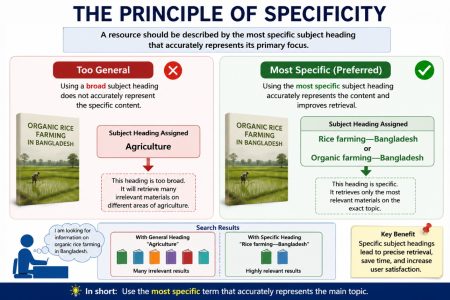
- Principle of Specificity: The Principle of Specificity stresses that classification should aim for the most specific categorization possible. Each subject should be placed in the category that best describes its content. This helps avoid ambiguity and ensures that users find materials that are relevant to their search. For example, a book on “Human Anatomy” would be classified under “Biology,” and further refined to its more specific topic, like “Human Physiology,” ensuring that users can find exactly what they are looking for.
- Principle of Universality: This principle holds that a library classification system should strive to cover all areas of knowledge. No subject should be left out, and every resource in the library should have a place within the classification system. Whether it’s a new field of study or a niche topic, the system should be broad and inclusive enough to accommodate all types of knowledge. This universality ensures that the classification system is comprehensive and adaptable to future changes, providing a place for both current and emerging fields of study.
- Principle of Consistency: For a classification system to function properly, it must be consistent in its application. This principle emphasizes the importance of applying the same set of rules across all subjects and resources within the system. Consistency enables library staff to classify materials in a uniform way, making it easier for users to find what they need. A consistent classification system also makes it easier to maintain and update the library’s collection over time, ensuring that new materials are categorized according to the same set of standards.
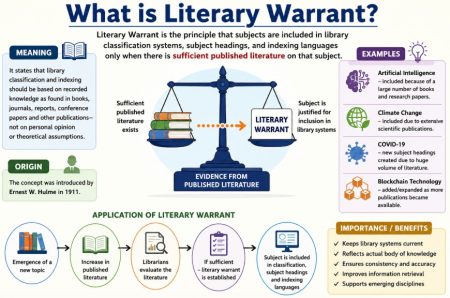
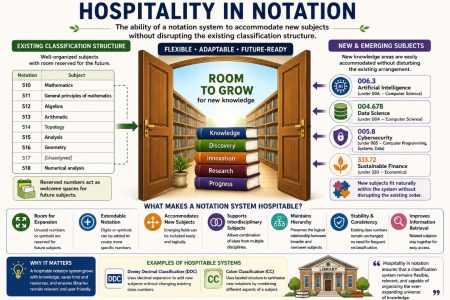
- Principle of Continuity: The Principle of Continuity ensures that a classification system remains flexible and adaptable. As new knowledge emerges, the system must allow for the inclusion of new subjects or categories without disrupting the existing structure. This principle is especially important as libraries continually grow and new areas of research and study are introduced. For example, the rise of digital technologies has created the need for new classification categories, and the system should be able to accommodate such developments without causing confusion or disorganization.
- Principle of Independence: The Principle of Independence suggests that the classification system should be independent of the physical arrangement of materials in the library. Classification should be based solely on subject matter rather than on where materials are physically located within the library. This allows for flexibility in how materials are stored and rearranged. Whether books are placed on shelves, in digital archives, or in online databases, the classification system ensures that the subject matter remains the key determinant for grouping resources.
- Principle of Practicality: Library classification should be practical and functional. The system should be easy to use for both library staff and users. For librarians, the classification system must be straightforward to apply and maintain, while for users, it should be intuitive and clear. The practical aspect of classification also includes considerations for space management within the library. The system must allow for materials to be stored efficiently while ensuring easy access for patrons.
- Principle of Grouping and Subgrouping: This principle focuses on grouping related materials together in a way that makes sense for users. It involves organizing subjects into larger categories and further subdividing them into more specific topics. For example, within the category of “Literature,” materials might be further divided into “Poetry,” “Drama,” and “Fiction,” and each of these subgroups may have additional subdivisions. Grouping related topics ensures that users can quickly find all resources related to a particular area of study without having to search through unrelated materials.
The principles of library classification are crucial in ensuring that knowledge is organized in a way that is logical, efficient, and accessible. By following these core principles—enumeration, hierarchy, specificity, universality, consistency, continuity, independence, practicality, and grouping—libraries can create classification systems that make it easier for users to find the materials they need. These principles provide a clear framework that supports the effective organization of knowledge and ensures that libraries remain relevant and efficient in meeting the informational needs of their communities.
Challenges in Implementing Principles of Library Classification
Library classification is fundamental to the efficient organization of knowledge, enabling users to find the resources they need quickly and accurately. However, implementing the core principles of library classification in real-world libraries can be challenging due to a variety of factors. While these principles provide a clear framework for organizing knowledge, practical obstacles often arise in ensuring their effective application. Here are some of the key challenges faced by libraries in implementing the principles of classification and the potential solutions to overcome them.
- Challenge of Keeping Classification Systems Updated: One of the biggest challenges in implementing the Principle of Continuity is ensuring that classification systems remain relevant as new knowledge emerges. As academic fields evolve and new disciplines develop, classification systems must adapt to accommodate these changes. For example, the rise of fields like Artificial Intelligence, Digital Media, and Environmental Studies has led to the need for new categories and subcategories within existing systems.
However, updating classification systems can be a complex and time-consuming process. Libraries may need to revise or expand their classification codes, which can be a resource-intensive task. Furthermore, changes to classification systems can lead to confusion among users who are accustomed to the previous system. Balancing the need for continuous updates with maintaining stability in the system is a delicate challenge for library professionals.
Solution: Libraries can adopt flexible, modular systems that allow for gradual changes. In addition, digital and online catalogs can make updates and expansions easier to manage, as they can be modified with less effort than physical collections. - The challenge of Maintaining Consistency Across Libraries: The Principle of Consistency requires that library materials are classified according to the same rules and methods, ensuring uniformity across libraries. However, different libraries may use different classification systems, such as Dewey Decimal Classification (DDC), Library of Congress Classification (LCC), or Colon Classification (CC). This can lead to inconsistencies in the way materials are categorized, especially when users access resources from multiple libraries or institutions.
Libraries that share resources or collaborate on research face additional challenges when their classification systems don’t align. For example, academic libraries in different regions or countries may use different systems, making it difficult for students and researchers to navigate between libraries or access materials remotely.
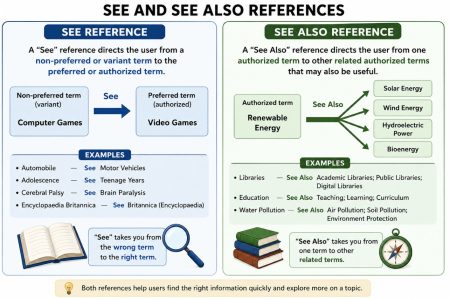
Solution: The development of universal standards or guidelines for classification could help mitigate this problem. Libraries can also invest in systems that enable cross-referencing between different classification systems or provide users with training on navigating various systems. - The challenge of Subjectivity in Classification: The Principle of Specificity emphasizes that materials should be classified under the most specific category possible, but this can often be subjective. For instance, a book on “Psychology and Neuroscience” could be classified under multiple categories, such as “Psychology,” “Neuroscience,” or even “Medicine.” The decision on which category to place the material in can be influenced by the librarian’s understanding of the subject, which can vary between individuals.
This subjectivity can lead to inconsistencies and errors in classification, especially when multiple librarians are involved in cataloging materials. Over time, this can create confusion for library users, who may have difficulty finding a book if it is placed in an unexpected or incorrect category.
Solution: To address this challenge, libraries can establish clear guidelines for classification and encourage collaboration among librarians when making classification decisions. Librarians can also be trained to have a deep understanding of various subjects, reducing the chances of misclassification. - Challenge of Overcoming Ambiguity in Categories: Despite efforts to create a universal and specific classification system, ambiguity can still exist within categories, especially in interdisciplinary subjects. For instance, a book that explores both “Philosophy” and “Political Science” may not fit neatly into one category. Similarly, a resource on “Biotechnology” may encompass aspects of biology, medicine, and ethics, making it difficult to classify.
The lack of clear boundaries between disciplines can result in materials being placed in the wrong category or being categorized in multiple places, which can confuse users and lead to inefficient information retrieval.
Solution: One solution is to use a multi-faceted classification approach that allows for cross-referencing or tagging materials with multiple categories. This way, materials related to multiple fields can be easily found, regardless of the primary subject. - Challenge of Space and Organizational Constraints: The Principle of Practicality stresses that the classification system should be easy to use and implement. However, libraries face logistical challenges in ensuring that classification systems are both practical and efficient. In physical libraries, space constraints often mean that shelves must be organized in a way that prioritizes space-saving over perfect logical arrangement. While classification systems are designed to be comprehensive and consistent, the physical limitations of a library can sometimes prevent perfect adherence to the system.
For example, a library might struggle to accommodate a growing collection of materials that don’t fit neatly into existing shelf spaces, requiring modifications to the classification system that may not be optimal for users. - Solution: Libraries can employ flexible shelving systems that allow for rearrangements and expansions. In addition, digital libraries and online catalogs can help alleviate physical space constraints by providing access to resources in digital formats that do not require physical shelving.
- Challenge of Resource Constraints: Implementing a well-organized classification system often requires significant resources in terms of time, labor, and financial investment. Libraries must dedicate staff to cataloging and classifying materials, updating classification codes, and providing user training. The financial burden of purchasing new materials, expanding classifications, and maintaining technological systems can be challenging, especially for libraries with limited budgets.
In some cases, libraries may not have the manpower or funding to maintain an up-to-date and efficient classification system, leading to delayed updates, inconsistent application of classification rules, or reliance on outdated systems.
Solution: To overcome resource constraints, libraries can seek partnerships with other institutions, share resources, or leverage technology to automate parts of the classification process. Open-source classification systems and shared online databases can also help reduce costs and improve resource allocation.
Implementing the principles of library classification presents a variety of challenges for libraries, from keeping systems updated to managing inconsistencies across institutions. Despite these obstacles, libraries continue to adapt and evolve their classification systems to meet the needs of their users. By leveraging technology, establishing clear guidelines, and collaborating with other libraries, libraries can overcome many of the challenges they face in implementing these principles and continue to provide efficient, user-friendly access to knowledge. The effective application of these principles remains essential for libraries to function as organized, accessible repositories of information.