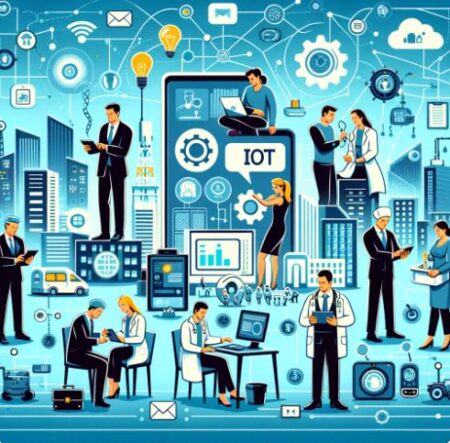
The Internet of Things (IoT) has revolutionized business operations and the broader economy, creating a transformative impact that continues to grow exponentially. IoT refers to the interconnected network of devices that collect and exchange data, enabling smarter, more efficient processes. In the business realm, IoT has led to significant advancements in various sectors, including manufacturing, retail, healthcare, and logistics.
One of IoT’s most profound impacts on businesses is enhancing operational efficiency. By integrating IoT devices into production lines, companies can monitor equipment in real time, predict maintenance needs, and reduce downtime, ultimately saving substantial costs. For instance, IoT-driven predictive maintenance can reduce maintenance costs by up to 30% and decrease equipment downtime by nearly 50%. The retail industry has also seen a major shift with the adoption of IoT technologies. Smart shelves and inventory management systems use IoT sensors to track product levels and automatically reorder stock when necessary, reducing both overstock and stockouts. This improves the customer experience and increases the efficiency of supply chain management. According to a report by Forbes, 70% of retail executives are planning to invest in IoT technologies to enhance their operations.
Healthcare is another sector in which IoT has had a substantial impact. Connected medical devices enable continuous patient monitoring, improving patient outcomes and more personalized care. The global healthcare IoT market is projected to reach $534.3 billion by 2025, growing at a compound annual growth rate (CAGR) of 19.9% from 2020 to 2025 (Businesswire). From an economic perspective, the IoT market is experiencing rapid growth, contributing significantly to global GDP. The global IoT market size was valued at $381.30 billion in 2021 and is expected to reach $1,854.76 billion by 2028, growing at a CAGR of 25.4% (Fortune Business Insights). This growth is driven by increasing investments in IoT infrastructure, rising adoption of cloud computing, and the proliferation of connected devices.
The concept of the Internet of Things (IoT)
The Internet of Things (IoT) is a transformative concept involving a vast network of interconnected physical objects, or “things,” embedded with sensors, software, and other technologies to communicate and exchange data. These objects range from everyday household items like refrigerators and thermostats to advanced industrial machinery and smart city infrastructures. IoT’s core is the ability to collect, transmit, and analyze data from the physical environment, enabling devices to interact with each other and with centralized systems. This connectivity allows for automation and smarter decision-making across various domains.
In a smart home, for instance, IoT devices such as smart lights, security systems, and thermostats can be controlled remotely, learn user preferences, and optimize energy use. IoT enables predictive machinery maintenance in the industrial sector, significantly reducing downtime and increasing efficiency by alerting technicians to potential issues before they cause failures. The healthcare industry benefits from IoT through connected medical devices that provide continuous patient monitoring, improving personalized care and early detection of health issues.
Agriculture also leverages IoT, where sensors monitor soil moisture, weather conditions, and crop health, leading to more efficient farming practices and increased yields. Despite its numerous advantages, IoT also presents challenges, particularly in terms of security and privacy. The extensive data collection and connectivity required by IoT devices create potential vulnerabilities to cyber-attacks and raise concerns about personal data privacy. Moreover, ensuring interoperability among various devices and managing the complexity of data analysis are significant hurdles.
IoT and its Relevance in the Business Context.
The Internet of Things (IoT) has become increasingly relevant in business, offering transformative potential across various industries. By embedding sensors, software, and connectivity into physical objects, IoT enables businesses to collect and analyze data in real time, leading to enhanced operational efficiency, cost savings, and new business opportunities.
- Operational Efficiency:
IoT significantly boosts operational efficiency by automating processes and providing real-time monitoring and analytics. For instance, in manufacturing, IoT devices monitor equipment performance and predict maintenance needs, reducing downtime and maintenance costs. This predictive maintenance can lower maintenance costs by up to 30% and cut downtime by nearly 50% (McKinsey & Company). Similarly, in logistics, IoT-enabled fleet management systems track vehicle locations and conditions, optimizing routes and improving delivery times. - Cost Savings: Businesses can achieve substantial cost savings by implementing IoT solutions. Smart energy management systems, for example, adjust lighting and heating based on occupancy and usage patterns, leading to significant reductions in energy consumption. Smart energy systems could reduce global energy consumption by 10% to 15%. Additionally, automated inventory management systems in retail reduce the costs associated with overstocking and stockouts, improving inventory turnover and customer satisfaction.
- Enhanced Customer Experience: IoT enhances the customer experience by enabling more personalized and responsive services. In retail, IoT technologies such as smart shelves and beacons can provide personalized promotions and real-time product information to shoppers, improving engagement and satisfaction. Wearable devices and connected health applications in the healthcare sector offer patients tailored health insights and remote monitoring, leading to better health outcomes and more proactive care management.
- New Business Models and Opportunities: IoT opens up new business models and revenue streams. For instance, the data collected from IoT devices can be analyzed to offer valuable insights and services. Companies can leverage this data to develop new products, optimize existing services, and enter new markets. In agriculture, IoT-enabled precision farming allows farmers to optimize resource usage and increase crop yields, creating opportunities for higher profitability and sustainability.
- Challenges and Considerations: While the benefits of IoT are substantial, businesses must also address several challenges. Security is a primary concern, as the proliferation of connected devices increases the risk of cyber-attacks. Ensuring robust security measures and data privacy protections is crucial. Additionally, integrating IoT devices and systems can be complex, requiring significant investment in infrastructure and expertise. Businesses must also navigate interoperability and standardization issues to ensure that different IoT systems and devices can work seamlessly together.
In conclusion, IoT is highly relevant in business, offering numerous advantages that can drive efficiency, cost savings, and new opportunities. Businesses can stay competitive and innovate continuously by harnessing the power of connected devices and real-time data. However, they must also proactively address the associated challenges to realize the potential of IoT fully. As technology continues to evolve, the impact of IoT on business operations and strategies is likely to grow, making it an essential component of the modern business landscape.
How IoT Technologies are Integrated into Business Operations.
The Internet of Things (IoT) has emerged as a game-changer in the business landscape, offering unprecedented opportunities for efficiency, innovation, and growth. By connecting physical objects with sensors, software, and connectivity, IoT enables businesses to collect and analyze data in real time, leading to smarter decision-making and enhanced operational performance. Let’s explore how IoT technologies are integrated into business operations, outlining the key steps and considerations for successful implementation.
- Identifying Business Needs and Objectives: Integrating IoT begins with thoroughly assessing the business’s needs and objectives. Businesses must identify specific problems that IoT can solve or opportunities it can create. This involves evaluating current operations to pinpoint areas where real-time data and automation can provide substantial benefits. For example, a manufacturing firm may focus on reducing machine downtime, while a retailer may aim to enhance customer engagement through personalized services.
- Selecting Appropriate IoT Solutions: Once the objectives are clear, the next step is selecting the appropriate IoT devices and sensors that align with these goals. These could range from temperature sensors and motion detectors to smart meters and industrial equipment sensors. The choice of devices depends on the specific data required to meet the business objectives.
Connectivity options are another critical consideration. Businesses must choose the best connectivity solutions for their IoT devices, such as Wi-Fi, Bluetooth, cellular networks, or specialized IoT networks like LoRaWAN. The selection depends on factors like range, power consumption, and data transfer requirements. - Infrastructure and Platform Setup: A robust IoT infrastructure is essential for supporting IoT devices. This involves upgrading network capabilities, ensuring reliable data storage solutions, and setting up cloud services for data processing and analytics. Cloud platforms are often favored for their scalability and ease of integration with other business systems.
Implementing an IoT platform is also crucial. These platforms provide a software framework to connect, manage, and analyze data from IoT devices. Popular options include AWS IoT, Microsoft Azure IoT, and Google Cloud IoT. These platforms facilitate device management, data collection, and integration with existing enterprise systems. - Data Management and Analytics: With IoT devices operational, they continuously collect data, which is transmitted to central storage systems, often in the cloud. The collected data is then processed and analyzed to extract actionable insights. Advanced analytics and machine learning algorithms can be employed to predict trends, detect anomalies, and inform decision-making processes.
For instance, predictive maintenance algorithms analyze data from machinery to forecast potential failures before they occur, reducing downtime and maintenance costs. Real-time analytics enable businesses to respond swiftly to changing conditions, enhancing agility and efficiency. - Integration with Business Processes: Integrating IoT insights into existing business workflows is vital for maximizing the benefits of IoT. This might involve automating processes based on real-time data. In a smart factory, for example, IoT data can trigger automatic adjustments in production lines to optimize performance.
System integration is also necessary to ensure seamless information flow across the organization. IoT systems should be integrated with other enterprise systems, such as ERP (Enterprise Resource Planning), CRM (Customer Relationship Management), and SCM (Supply Chain Management). This integration enhances overall efficiency and decision-making.] - Ensuring Security and Compliance: Security is a primary concern when integrating IoT into business operations. The proliferation of connected devices increases the risk of cyber-attacks. Businesses must implement robust security measures, including securing device endpoints, encrypting data, and ensuring secure access controls.
Compliance with relevant regulations and standards, such as GDPR for data protection, is also essential to avoid legal issues and protect consumer trust. Ensuring that IoT solutions adhere to these regulations helps maintain the integrity and privacy of data. - Continuous Monitoring and Improvement: Continuous monitoring of IoT systems is crucial to ensure they function correctly and securely. This involves regular maintenance, updates, and patches to both hardware and software components. Businesses should also regularly evaluate the performance of IoT systems against their objectives, identifying areas for improvement and scaling the solutions as needed.
Example of IoT Integration: Smart Retail
Consider a retail chain integrating IoT through smart shelves equipped with RFID tags to monitor inventory in real time. IoT sensors track customer foot traffic and analyze purchasing patterns. This data feeds into an analytics platform, providing insights into stock levels and customer preferences. The system automatically reorders popular items and adjusts staffing levels based on predicted store traffic, optimizing inventory management and customer service.
Integrating IoT technologies into business operations involves a comprehensive approach that starts with identifying business needs and objectives and ends with continuous monitoring and improvement. By carefully selecting IoT solutions, setting up the necessary infrastructure, and ensuring robust security, businesses can leverage IoT to enhance efficiency, reduce costs, and drive innovation. As technology continues to evolve, the impact of IoT on business operations and strategies is likely to grow, making it an essential component of the modern business landscape.
Impact of IoT on Business and the Economy
The Internet of Things (IoT) is having a transformative impact on businesses and the economy as a whole. Here’s a breakdown of its influence:
A. The Economic Impact of IoT
The Internet of Things (IoT) has emerged as a revolutionary force in the global economy, driving significant changes across multiple sectors. By connecting everyday objects and industrial devices to the internet, IoT facilitates data collection, exchange, and analysis, leading to improved efficiency, innovation, and economic growth. Here, the economic impact of IoT and its potential to reshape industries and drive global economic transformation is explored.
- Trillion-Dollar Opportunity: The economic potential of IoT is vast. According to the McKinsey Global Institute, IoT could generate an economic impact of $3.9 trillion to $11.1 trillion annually by 2025 across various sectors. This staggering figure underscores the transformative power of IoT, highlighting its ability to create new markets, drive innovation, and stimulate economic growth on a massive scale.
- Enhanced Efficiency and Productivity: IoT technologies enhance operational efficiency and productivity by automating processes and enabling real-time monitoring and decision-making. In manufacturing, IoT-enabled predictive maintenance systems monitor machinery performance and predict failures before they occur, reducing downtime and maintenance costs by up to 30% and nearly 50%, respectively (McKinsey & Company). In logistics, IoT devices track the location and condition of goods in real-time, optimizing supply chain operations and reducing costs.
- Cost Savings and Resource Management: IoT can lead to substantial cost savings for businesses and economies by optimizing resource usage and reducing waste. Smart energy management systems, for example, adjust lighting, heating, and cooling based on occupancy and usage patterns, significantly reducing energy consumption. According to the International Energy Agency, smart energy systems could cut global energy consumption by 10% to 15%. In agriculture, IoT-enabled precision farming techniques optimize the use of water, fertilizers, and pesticides, increasing crop yields and reducing environmental impact.
- Innovation and New Business Models: IoT drives innovation by enabling the development of new products, services, and business models. Companies can leverage real-time data to offer personalized and responsive services, gaining a competitive edge. For example, in the automotive industry, IoT technologies enable connected car services such as real-time traffic information, remote diagnostics, and over-the-air updates, creating new revenue streams and enhancing the customer experience.
Moreover, the data generated by IoT devices can be analyzed to gain valuable insights, leading to the development of data-driven business models. These models can create additional value by offering predictive analytics, customer insights, and operational optimizations.
- Job Creation and Workforce Transformation: The growth of the IoT sector is driving job creation and transforming the workforce. As IoT technologies become more prevalent, there is an increasing demand for professionals with skills in IoT development, data analysis, cybersecurity, and system integration. This demand creates new job opportunities and necessitates workforce transformation, focusing on continuous learning and adaptation to new technologies.
- Economic Growth and Investment: The rapid expansion of the IoT market is attracting significant investments, driving economic growth. The global IoT market size was valued at $381.30 billion in 2021 and is expected to reach $1,854.76 billion by 2028, growing at a compound annual growth rate (CAGR) of 25.4% (Fortune Business Insights). Investments in IoT infrastructure, research and development, and the proliferation of connected devices fuel this growth.
The Internet of Things is poised to have a transformative impact on the global economy, driving significant changes across various sectors. By enhancing efficiency, enabling innovation, and creating new economic opportunities, IoT is set to be a powerful engine for economic growth. However, businesses and governments must address security, privacy, and integration challenges to harness its potential fully. As these issues are resolved, the economic impact of IoT will become even more pronounced, solidifying its role as a cornerstone of the modern digital economy.
IoT’s Impact on Business:
The Internet of Things (IoT) is revolutionizing the business landscape, driving significant changes in operations, customer engagement, and innovation. By connecting everyday objects and industrial equipment to the internet, IoT enables seamless data collection and exchange, leading to smarter decision-making and enhanced efficiency.
- Enhancing Operational Efficiency: One of the most profound impacts of IoT on business is enhancing operational efficiency. IoT devices and sensors collect real-time data, allowing businesses to continuously monitor and optimize their processes. In manufacturing, for instance, IoT-enabled predictive maintenance systems can monitor machinery performance and predict failures before they occur, significantly reducing downtime and maintenance costs. According to McKinsey & Company, predictive maintenance can reduce maintenance costs by up to 30% and decrease equipment downtime by nearly 50%.
Similarly, in logistics, IoT devices track the location and condition of goods in transit, providing real-time insights that optimize supply chain operations. This real-time tracking helps reduce delays, minimize losses, and improve overall supply chain efficiency, leading to cost savings and better resource management. - Driving Innovation and New Business Models: IoT is a catalyst for innovation, enabling the development of new products, services, and business models. Companies can leverage the data collected from IoT devices to offer personalized and responsive services, gaining a competitive edge in the market. For example, in the retail industry, IoT technologies such as smart shelves and beacons provide customers with personalized promotions and real-time product information, enhancing their shopping experience.
Moreover, IoT enables the creation of new business models based on data-driven insights. Businesses can analyze the vast amounts of data IoT devices generate to identify trends, optimize operations, and develop new revenue streams. In the automotive industry, IoT technologies have given rise to connected car services, such as real-time traffic information, remote diagnostics, and over-the-air updates, creating additional value for customers and generating new revenue opportunities. - Improving Customer Experience: IoT significantly enhances the customer experience by enabling businesses to offer more personalized and responsive services. In the healthcare sector, wearable devices and connected health applications allow for continuous monitoring of patients, providing real-time health data that can be used for preventative care and personalized treatment plans. This not only improves patient outcomes but also enhances the overall patient experience.
In the hospitality industry, IoT-enabled smart rooms allow guests to control lighting, temperature, and entertainment systems through smartphones, providing a more convenient and personalized stay. Such innovations enhance customer satisfaction and build brand loyalty. - Facilitating Data-Driven Decision Making: IoT empowers businesses to make data-driven decisions by providing real-time insights into their operations. The data collected from IoT devices can be analyzed to identify inefficiencies, optimize processes, and inform strategic decisions. For instance, IoT-enabled precision farming techniques in agriculture allow farmers to monitor soil conditions, weather patterns, and crop health, enabling them to make informed decisions about planting, irrigation, and harvesting.
In retail, data from IoT devices can be used to analyze customer behavior and preferences, informing inventory management and marketing strategies. This data-driven approach helps businesses stay agile and responsive to market demands, enhancing their competitiveness. - Workforce Transformation: Integrating IoT technologies necessitates new skill sets for managing and analyzing the vast amounts of data generated. This drives workforce transformation, creating opportunities for specialized roles in IoT development, data analysis, cybersecurity, and system integration. Businesses must invest in training and development programs to equip their workforce with the necessary skills to harness the full potential of IoT.
The Internet of Things is transforming the business landscape, driving significant changes in operational efficiency, customer engagement, and innovation. By enabling real-time data collection and analysis, IoT empowers businesses to make smarter decisions, optimize processes, and develop new products and services. However, to fully harness its potential, businesses must address security, privacy, and integration challenges. As these issues are resolved, the transformative impact of IoT on business will continue to grow, solidifying its role as a cornerstone of modern business strategy and operations.