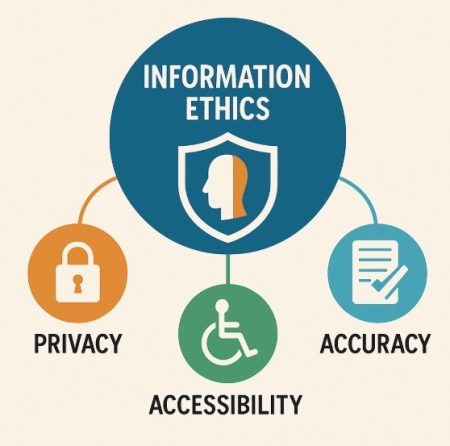
Information Ethics stands apart from general ethics because it addresses the unique moral challenges that arise in a digital, data-driven world. While general ethics focuses on broad principles of right and wrong in human behavior, Information Ethics concentrates specifically on how information is created, accessed, stored, shared, and used, areas where traditional ethical frameworks often fall short. For example, issues such as digital privacy require decisions about whether it is ethical for organizations to collect user data, track browsing habits, or store personal information without explicit consent. Similarly, intellectual property rights raise questions about whether downloading copyrighted material without permission is morally acceptable, something that general ethics does not fully address.
In the modern environment, where information moves at incredible speed through social media, cloud systems, and global networks, new ethical dilemmas arise. For instance, the rapid spread of misinformation online can influence public opinion and cause social harm, making accuracy and responsibility in information sharing crucial aspects of Information Ethics. Likewise, cybersecurity concerns, such as protecting library user data, securing digital archives, or preventing hacking, require specialized ethical thinking beyond common moral rules.
Information professionals, including librarians and researchers, face additional responsibilities. A librarian, for example, must decide how to balance user privacy with institutional policies, such as not revealing what books a user has borrowed unless required to do so by law. Another example is ensuring fair access to digital resources, where professionals must consider whether limiting database access based on subscription costs creates inequalities among users. These real-world challenges demonstrate why Information Ethics is a specialized field: it applies general ethical principles to the complex realities of digital information, making it essential for navigating the moral landscape of today’s technology-driven society.
How Does Information Ethics Differ from General Ethics?
Information Ethics differs from general ethics because it addresses highly specialized moral issues that arise from the creation, use, and management of information in a digital environment. While general ethics provides broad moral principles such as honesty, fairness, and justice to guide human behavior, Information Ethics focuses specifically on how information is collected, stored, shared, and protected. In a world where digital technologies shape almost every aspect of communication and decision-making, these information-centered issues have become too complex for traditional ethical frameworks alone. For example, general ethics may question whether invading someone’s privacy is morally wrong, whereas Information Ethics deals with more complex situations, such as whether websites should track user behavior, store cookies, or share personal data with third parties without consent.
A major difference arises from the unique nature of digital information, which can be copied, modified, and disseminated instantly without compromising quality. This creates ethical challenges that general ethics does not address, such as intellectual property rights, plagiarism, unauthorized downloading of digital content, and fair use of online materials. The speed and scale at which information travels today also distinguish Information Ethics. A single misleading post on social media can reach millions within minutes, spreading misinformation or damaging reputations before the truth can emerge. While general ethics emphasizes honesty and responsibility, Information Ethics considers platform accountability, content moderation, and strategies for reducing harm in digital spaces.
The rise of artificial intelligence, algorithms, and big data further expands the gap between these two ethical domains. Technologies that analyze personal data, predict behavior, or automate decision-making introduce new ethical dilemmas, such as ensuring transparency, preventing bias, and safeguarding user privacy. These issues require specialized guidelines, as found within Information Ethics, rather than general moral principles. Additionally, professionals who work directly with information, such as librarians, archivists, IT specialists, and database administrators, face responsibilities that general ethics cannot fully guide. They must protect user confidentiality, secure data systems, ensure equitable access to digital resources, and address the digital divide. For instance, a librarian must keep patron borrowing records confidential, even in the face of external pressure to disclose them.
Information Ethics also pays particular attention to equitable access to information. While general ethics values fairness, Information Ethics emphasizes the moral obligation to ensure that individuals from all backgrounds can obtain accurate and reliable information, especially in academic, professional, and public settings. Ultimately, information flows freely across national and cultural boundaries, presenting global ethical challenges that traditional ethics, rooted in local traditions and norms, may not fully address. Differences in privacy laws, censorship, and cultural expectations all influence how information should be managed responsibly.