
A library catalogue is a comprehensive and organized listing of all the materials available within a library’s collection. It serves as a key tool for library users and staff, providing a means to access, search, and manage library resources efficiently. Traditionally, catalogues were maintained using physical card systems, where each item in the collection was represented by a card that provided essential details such as the title, author, and subject. However, with the development of digital technology, most libraries now use Online Public Access Catalogues (OPACs), which offer users the ability to search and browse the library’s holdings electronically from anywhere, using a computer or mobile device.
The primary function of a library catalogue is to enable users to locate library materials quickly and easily. It organizes resources using classification systems like the Dewey Decimal Classification (DDC) or the Library of Congress Classification (LCC), which categorize books and other resources by subject, allowing for logical grouping and easy retrieval. Through the catalogue, users can search for items by various criteria, such as title, author, subject, or keywords, ensuring that they can find exactly what they need without having to manually sift through the entire collection. In addition to resource discovery, a library catalogue plays an important role in collection management. It helps library staff track new acquisitions, manage item circulation, and monitor the availability of materials, such as whether an item is checked out, reserved, or available on the shelf. Modern library catalogues often include additional features, such as summaries, publication details, and links to electronic versions of resources, providing more comprehensive information to users.
Functions of Library Catalogues.
Library catalogues are essential tools that organize and provide access to a library’s vast collection of resources, including books, journals, multimedia, and digital materials. These catalogues are designed to make it easier for users to find and retrieve library materials efficiently while supporting library staff in managing and maintaining the library’s holdings. The primary functions of library catalogues go beyond merely listing available materials; they serve several critical purposes that facilitate research, access, and management within the library environment.
- Resource Discovery and Access: The most fundamental function of a library catalogue is to facilitate resource discovery and access. A library catalogue allows users to search for materials based on various criteria such as title, author, subject, publisher, and keywords. This means that users can quickly locate specific items within the library collection, whether it’s a book, journal, or audiovisual resource. The use of standard cataloguing practices ensures that information is easily retrievable, which is especially important in larger libraries where the sheer volume of materials can make manual searching impractical. For instance, a student looking for academic papers on climate change can use the catalogue to search for the latest books, journal articles, and other resources on the topic.
- Organization of Resources: A library catalogue is an important tool for the organization of library resources. Libraries utilize classification systems like the Dewey Decimal Classification (DDC) or Library of Congress Classification (LCC) to group materials by subject or field of knowledge. This classification system helps to create a structured, easy-to-navigate environment where related resources are grouped together. Whether in a physical library or an online system, this organization ensures that users can find related materials in one place, making it easier to explore a particular topic or field in-depth. For example, books on biology might be grouped under a specific section in the catalogue, making it easier for researchers and students to locate all relevant texts on the subject.
- Providing Bibliographic Information: Library catalogues provide comprehensive bibliographic details about each item in the collection. These details include the title, author, publisher, publication date, edition, and other relevant information. For digital resources, catalogues may also include metadata such as file format, access restrictions, and URL links for online content. This bibliographic information helps users assess the relevance and availability of materials before they decide to access or borrow them. For example, a researcher searching for a specific article can quickly view the bibliographic details, such as the journal name, issue number, and page range, to determine if it meets their needs.
- Tracking Item Availability: Another critical function of a library catalogue is to track the availability of materials within the library. Catalogues provide real-time information on whether a resource is available for checkout, currently on loan, or reserved by another user. This helps users manage their library visits more effectively and avoid the inconvenience of attempting to access an unavailable resource. For instance, if a book is currently checked out, the catalogue will indicate the due date or provide the option for users to place a hold, ensuring that they will be notified when the book becomes available.
- Facilitating Interlibrary Loan and Resource Sharing: Library catalogues play a crucial role in facilitating interlibrary loan (ILL) services by identifying materials that are available in other libraries. If a particular item is not available in the local library, users can search the catalogue to see if it is held by another institution. This feature broadens access to a wider range of materials and ensures that users are not limited to their own library’s collection. For example, if a book on a specialized topic is only available in a distant library, the catalogue will allow the user to request it through ILL, making it available for borrowing from another library.
- Supporting Collection Development: Library catalogues are integral to collection development by providing insights into the use and availability of resources within the library. The data collected from catalogue searches allows librarians to monitor the frequency with which materials are accessed and to make informed decisions about acquiring new resources, renewing subscriptions, or adding digital resources. By analyzing catalogue usage patterns, libraries can identify gaps in the collection and make adjustments to meet the changing needs of their users. For example, if there is high demand for textbooks on a particular subject, the library may consider purchasing additional copies or related resources to meet user needs.
- Enabling Keyword and Advanced Search Functions: Modern library catalogues, particularly Online Public Access Catalogues (OPACs), offer a variety of search functionalities that enhance the user experience. In addition to basic searches by title, author, or subject, users can perform advanced searches using Boolean operators, filters (such as date range or material type), and keywords to narrow down results. These advanced search capabilities allow users to find exactly what they are looking for, even when dealing with large and complex collections. For instance, a researcher looking for articles on machine learning in healthcare can use keywords like “artificial intelligence” and “healthcare” in their search, which helps pinpoint the most relevant resources in the catalogue.
- Providing Access to Digital and Electronic Resources: In the modern digital age, library catalogues are increasingly used to manage both physical and digital resources. Many libraries use their catalogues to list e-books, online journals, databases, and other electronic resources. Users can directly access digital materials via the catalogue, either by downloading e-books or accessing full-text articles through links provided in the catalogue entries. This integration of digital resources into the catalogue makes it a central hub for users to find both physical and online materials in one place, providing seamless access to information.
- Supporting User Services: Modern library catalogues integrate with user accounts to provide personalized services. Users can reserve materials, renew borrowed items, track their borrowing history, and check due dates through the catalogue. This functionality helps improve the overall user experience by offering convenient options for managing library materials online. Additionally, users can be notified of overdue items or new arrivals through email alerts or notifications, enhancing user engagement and helping to ensure the timely return of materials.
The functions of library catalogues go far beyond simply listing available resources. They facilitate resource discovery, organization, and access while supporting collection development, user services, and interlibrary loan. The digitalization of catalogues has further expanded their role by integrating digital resources and providing advanced search functionalities. As libraries continue to evolve, the catalogue remains an indispensable tool for managing resources and supporting users in their research, learning, and information-seeking needs. Library catalogues play a critical role in the modern information ecosystem by ensuring efficient access to physical and digital materials.
Essential Elements of a Library Catalogue
A library catalogue is an indispensable tool for organizing and managing the vast array of resources available within a library. It serves as a structured system that allows library users to efficiently locate, access, and utilize the materials they need. A well-designed catalogue not only ensures the proper organization of materials but also supports user searches, library management, and collection development. The essential elements of a library catalogue are key components that make it an effective tool for information retrieval and management.
- Bibliographic Information: At the heart of every library catalogue is bibliographic information. This refers to the detailed records that describe each item in the library’s collection. Bibliographic records typically include essential details such as the title, author(s), publisher, edition, publication date, ISBN/ISSN (International Standard Book Number/International Standard Serial Number), and physical description (e.g., number of pages, dimensions, format). This information is crucial as it allows users to precisely identify a particular item and differentiate it from other materials with similar titles or topics. In the digital age, bibliographic records may also include additional metadata, such as keywords, summaries, and links to digital versions of the material.
- Classification and Subject Headings: A critical element in any library catalogue is the classification system used to organize resources by subject. Common classification systems include the Dewey Decimal Classification (DDC) and the Library of Congress Classification (LCC). These systems group materials based on their content, making it easier for users to find related materials on the same subject. In addition to classification, subject headings—terms that describe the topic of a work—are used to improve the catalogue’s searchability. Libraries often employ controlled vocabularies such as the Library of Congress Subject Headings (LCSH) to ensure consistency and accuracy in subject indexing. Together, classification and subject headings make it easier for users to explore a particular subject area and discover related materials.
- Access Points: Access points are terms or elements within a catalogue record that allow users to search for resources. The most common access points are author, title, and subject. However, modern catalogues also support other access points, such as series (for materials that are part of a series), publisher, language, and year of publication. By providing multiple access points, a catalogue allows users to search for materials in a variety of ways, depending on the information they have. For example, a user may search for a book by the author’s name, the book’s title, or the subject area it covers, all of which are essential access points in a catalogue.
- Location and Availability Information: Library catalogues not only list the details of materials but also provide information on availability and location. This includes the call number (which indicates where the item is located within the library), status (whether the item is available, checked out, reserved, or overdue), and the due date for borrowed items. The ability to access this information in real-time allows users to make informed decisions before visiting the library. For instance, if a book is currently checked out, the catalogue will provide the expected return date, allowing users to plan their visit accordingly. Additionally, for digital resources like e-books and online journals, the catalogue provides links to access the full-text material, ensuring a seamless user experience.
- Digital and Electronic Resources Integration: As libraries increasingly integrate digital and electronic resources into their collections, the catalogue must be able to manage both physical and digital materials. Many modern catalogues now include records for e-books, online journals, databases, and multimedia resources. These records include links to the digital resources, providing users with direct access to the content. For example, an e-book catalogue entry may provide a URL or login credentials for remote access, while an article from an online journal may include a link to the full text. The inclusion of digital materials in the catalogue reflects the evolving nature of library collections, where physical and digital resources are seamlessly integrated.
- Search Functionality: A library catalogue’s search functionality is one of its most critical elements. Modern catalogues, particularly Online Public Access Catalogues (OPACs), offer advanced search options that allow users to quickly and efficiently locate materials. Users can search by a variety of criteria, such as title, author, subject, publisher, keywords, and more. Advanced search features often include Boolean operators (AND, OR, NOT), filters (e.g., material type, language, or publication year), and fuzzy search capabilities that allow for partial word matching. These search features are designed to improve the user experience by providing flexible and powerful search options to locate the most relevant materials.
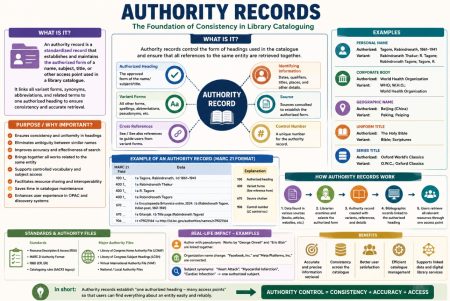
- Authority Files: To ensure consistency and accuracy in the catalogue, authority files are used to standardize terms, names, and other key data. Authority files are databases that contain standardized versions of terms, names, and subject headings used across the catalogue. They help avoid confusion and redundancy in the catalogue records. For example, if an author has published under multiple names, the authority file ensures that all works by that author are linked together under one standard name. This consistency makes it easier for users to find all works by a specific author, regardless of how their name may appear in different records.
- User Services and Account Integration: Many modern library catalogues integrate with user accounts, providing additional services that enhance the user experience. Users can create an account to track their borrowing history, place holds on materials, renew borrowed items, and receive notifications about overdue books. For example, a user can log in to the catalogue to see which books they have checked out, when they are due for return, and place a hold on an item that is currently unavailable. These user-centered features help improve library services and ensure users can manage their library activities conveniently.
The essential elements of a library catalogue—bibliographic information, classification systems, access points, availability details, digital resource integration, search functionality, authority files, and user services—work together to create an efficient and effective tool for both library users and staff. These elements make it possible for users to easily find, access, and manage resources while supporting the library in organizing and maintaining its collection. As libraries continue to evolve in the digital age, the catalogue remains a cornerstone of library services, helping users navigate an increasingly complex and vast collection of materials.


3 Comments
The is very simple and incredible,But should be more explained,i thinks the writer really tired
Thanks so much this blog has been so useful
thanks, this Chanel is ver good.