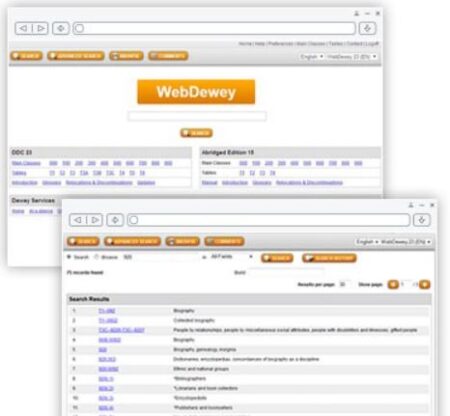
In the field of library and information science, classification systems are crucial for organizing knowledge in a structured and accessible way. However, not all classification systems are equally effective; their usefulness largely depends on their design and application. A well-designed classification system should not only organize materials logically but also address the practical needs of both library users and professionals. It should facilitate easy access to information, ensure accurate subject representation, and remain adaptable to the ongoing expansion of knowledge.
Throughout history, library scientists, particularly S. R. Ranganathan, have highlighted several essential characteristics that determine the quality and efficiency of a classification system. These characteristics serve as guiding principles for developing systems that are simple, flexible, consistent, and capable of supporting effective information retrieval in both traditional and digital library settings.
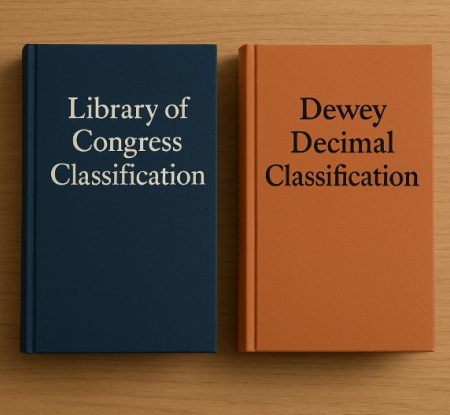
- Simplicity and Ease of Use: A good classification system should be simple enough to be understood and implemented without unnecessary complexity. Simplicity enables librarians to classify materials efficiently, and it allows users to interpret call numbers without confusion. If a system is overly complicated, it increases the chances of misclassification and user frustration. For example, the Dewey Decimal Classification is widely appreciated for its straightforward numerical structure, where subjects are divided into clear categories, such as 500 for Science and 800 for Literature. This simplicity allows even new library users to locate materials with minimal guidance.
- Logical and Systematic Arrangement: A classification system must follow a logical order, typically progressing from general subjects to more specific topics. This arrangement helps users understand the relationships between different areas of knowledge. For instance, within the Science category, Biology may be subdivided into Zoology, which can further be divided into more specific topics like Mammals or Birds. Such a hierarchical arrangement makes browsing intuitive and meaningful. Systems like the Universal Decimal Classification and Dewey Decimal Classification demonstrate this logical progression, allowing users to navigate collections step by step.
- Flexibility and Hospitality: Flexibility, often referred to as hospitality in classification, means that the system should accommodate new subjects without disturbing the existing structure. As knowledge evolves, new disciplines such as Artificial Intelligence or Data Science must be incorporated smoothly. A rigid system that cannot adapt quickly becomes outdated. For example, modern extensions in the Dewey Decimal Classification allow for the inclusion of emerging topics through decimal expansion, ensuring that the system remains relevant over time.
- Consistency and Uniformity: Consistency ensures that similar subjects are treated uniformly across the classification system. Standardized rules for assigning class numbers reduce confusion and improve reliability. If two books on the same subject are classified differently, it creates difficulties for users in locating related materials. For instance, all books on a specific subject like “Library Science” should be grouped under the same classification range instead of being scattered across different sections. Consistency builds trust in the system and enhances the user experience.
- Brevity and Mnemonic Notation: The notation used in classification should be brief, clear, and, where possible, mnemonic (easy to remember). Long or complicated notations can be difficult to read and interpret, especially for users. A good notation system employs symbols or numbers that have logical meanings. For example, in the Dewey Decimal Classification, the number 900 represents History, which is easy to remember and interpret. Mnemonic notation helps both librarians and users quickly understand the subject and location of materials.
- Scalability and Expandability: A good classification system must be scalable, meaning it should allow continuous growth as new knowledge is produced. Libraries continually acquire new materials, and the classification system should accommodate this expansion without requiring major restructuring. For instance, decimal notation in systems like the Dewey Decimal Classification allows the addition of more digits to represent increasingly specific subjects, ensuring long-term usability.
- Universality: Universality refers to the ability of a classification system to be applied across different types of libraries and subject areas. A good system should not be limited to a particular discipline or region. Systems like the Dewey Decimal Classification are used worldwide in academic, public, and school libraries because they cover a broad range of subjects. This universality ensures standardization and facilitates resource sharing among libraries.
- Accuracy and Specificity: A classification system must accurately represent the content of materials and be specific enough to distinguish between closely related topics. Accurate classification ensures that users can find exactly what they are looking for without confusion. For example, a book on “Digital Libraries” should not be placed under the general category of “Computer Science” without further specification. Instead, it should be assigned a more precise classification number that reflects its exact subject. This level of specificity improves information retrieval and user satisfaction.
In summary, the effectiveness of a library classification system depends on how well it balances simplicity, logic, flexibility, consistency, and accuracy. Each characteristic plays a vital role in ensuring that knowledge is organized in a way that is both meaningful and accessible. A well-designed system not only supports efficient library management but also enhances the overall user experience by making information easy to locate and understand.