

Reference services are a core and indispensable function of libraries, designed to connect users with the information they need in an efficient, accurate, and meaningful way.…
Reference services are a core and indispensable function of libraries, designed to connect users with the information they need in an efficient, accurate, and meaningful way.…
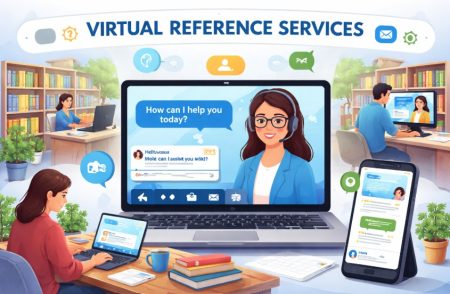
Virtual Reference Services (VRS) represent a modern extension of traditional reference services, enabling libraries to provide timely and professional assistance to users beyond the physical library…

The role of the library has evolved significantly beyond its traditional function as a place for book lending, reflecting fundamental changes in information access, technology, and…
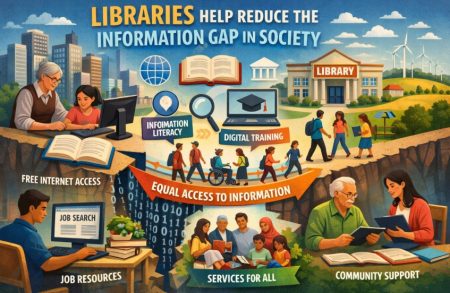
In contemporary society, access to information plays a decisive role in shaping educational opportunities, economic participation, and social inclusion. However, not all individuals and communities benefit…
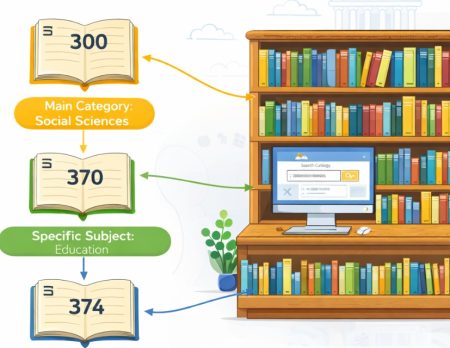
Hierarchical classification is a fundamental approach to organizing knowledge in which subjects are arranged in a systematic order from broader concepts to more specific topics. This…

A shared library catalogue is a unified bibliographic database that brings together the holdings of multiple libraries into a single searchable system. Instead of searching separate…

A library plays a vital role in the overall teaching and learning process by serving as a central hub for knowledge, information, and academic support. It…
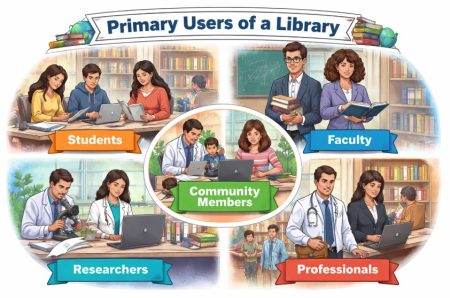
Who Are the Primary Users of a Library? Libraries are established to serve specific groups of people by providing access to information, knowledge, and learning resources.…

PMEST is a theoretical framework introduced by S. R. Ranganathan for subject analysis in library classification, especially in faceted classification and Colon Classification. PMEST stands for…
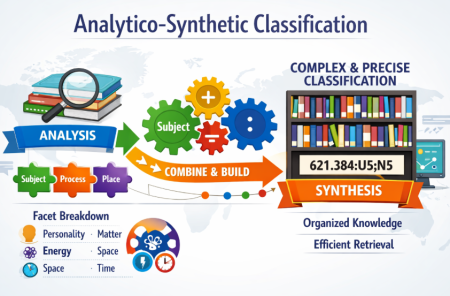
Analytico-Synthetic Classification is a fundamental approach to knowledge organization in library and information science that emphasizes systematic subject analysis and logical construction of class numbers. Unlike…