
Introduction: RFID-based Library Systems represent a technological evolution in library management and organization, revolutionizing traditional book-tracking methods and patron services. Radio-frequency identification (RFID) technology has emerged as a powerful tool, seamlessly integrating into library operations to enhance efficiency and user experience. Unlike conventional barcodes, RFID tags enable swift and contactless identification of library materials, reducing the time spent on manual check-ins and check-outs. These systems consist of RFID tags affixed to library items, a network of RFID readers strategically placed throughout the library, and a central database orchestrating the entire system. The tags store unique identification information, allowing for easy and simultaneous detection of multiple items. One of the standout features of RFID-based Library Systems is their ability to automate various processes, such as inventory management, self-checkout stations, and security systems. This not only streamlines day-to-day operations but also empowers librarians to focus more on providing quality services to patrons. Additionally, the technology enhances security by providing real-time tracking and alerts for misplaced or wrongly shelved items. As libraries adapt to the digital age, RFID-based systems offer a modern solution to traditional challenges and pave the way for a more accessible, user-friendly, and efficiently managed library experience.
1.1 What is Radio-frequency identification (RFID)?
Radio-frequency identification (RFID) is a sophisticated technology designed for identifying, tracking, and managing objects, people, or animals through wireless communication. At its core, RFID involves using RFID tags, small electronic devices that incorporate a unique identifier and an antenna. These tags can be attached to a wide range of items and possess the capability to store and transmit data. RFID systems comprise two essential components, including RFID tags and an RFID reader. The reader emits radio-frequency signals, initiating communication with the tags within its proximity. This communication allows for information retrieval without requiring direct line-of-sight or physical contact. There are two main categories of RFID systems: active and passive. Active RFID tags have their own power source, enabling them to actively transmit signals, while passive RFID tags rely on the energy emitted by the RFID reader for communication. This technology has found widespread applications across industries, offering efficient solutions for inventory management, supply chain optimization, access control, and security enhancement. The versatility of RFID makes it a valuable tool in streamlining processes and improving overall operational efficiency in diverse fields.
1.2 RFID-based Library System.
An RFID-based Library System represents a modern and efficient approach to managing library resources and services. Radio-frequency identification (RFID) technology is harnessed in this system to streamline the various tasks associated with library operations. The system comprises RFID tags affixed to library materials and RFID readers strategically placed throughout the library. Each RFID tag contains a unique identifier, allowing for quick and accurate identification of items. Unlike traditional barcode systems, RFID tags do not require line-of-sight, enabling multiple items to be scanned simultaneously.
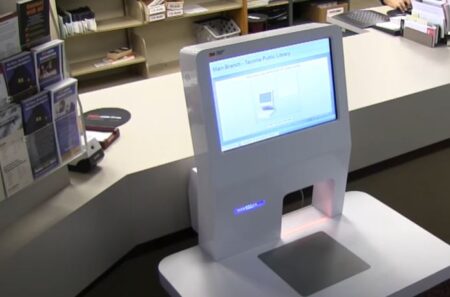
One of the primary advantages of an RFID-based Library System is the automation it introduces into routine library tasks. The technology facilitates rapid and contactless check-ins and check-outs, reducing queues and enhancing the overall efficiency of the borrowing process. Libraries can also employ self-checkout stations, empowering patrons to manage their transactions independently. Moreover, RFID enables real-time inventory management by swiftly tracking the movement and location of library materials. This not only minimizes the likelihood of misplacement but also aids in the timely retrieval of items.
Security is another critical aspect addressed by RFID in library systems. The technology allows for implementing anti-theft measures, as RFID tags can trigger alarms if not properly deactivated during the borrowing process. Additionally, the system aids in easily identifying misplaced or incorrectly shelved items, contributing to the overall organization of the library collection.
1.3 Advantages and Disadvantages of RFID-based Library System.
The adoption of RFID-based Library Systems has heralded a transformative era in library management, offering various advantages while posing certain challenges. One of the primary advantages lies in the system’s ability to automate and streamline various library processes. The technology facilitates quick and contactless check-ins and check-outs, reducing waiting times for patrons and enhancing the overall efficiency of library operations. RFID enables real-time inventory management, minimizing the chances of misplacement and easing the tracking of materials. Additionally, implementing RFID contributes to enhanced security measures, with anti-theft features and the ability to detect misplaced items. However, besides these advantages, RFID-based Library Systems also bring some challenges. Issues related to cost, implementation complexities, and potential privacy concerns need careful consideration. Balancing the benefits with these challenges is crucial in assessing RFID technology’s overall impact and suitability in the library context.
1.3.1 Advantages of RFID-based Library System.
Adopting Radio-frequency Identification (RFID) technology in library systems heralds a paradigm shift, ushering in many advantages that revolutionize traditional library management. RFID-based Library Systems offer a dynamic solution to the challenges faced by libraries in tracking and managing their diverse collections. Automation lies at the heart of these advantages, as RFID facilitates swift and contactless processes such as check-ins, check-outs, and inventory management. Real-time tracking capabilities minimize the risk of misplacement and provide librarians with valuable insights into the movement of materials. Beyond efficiency, the system enhances security with anti-theft features and quickly detects misplaced items. Self-checkout stations empower patrons, while the ability to identify multiple items simultaneously sets RFID apart from conventional methods.
- Efficient Check-in and Check-out Processes: One of the standout advantages of RFID-based Library Systems is the automation of check-in and check-out processes. Unlike traditional barcodes, RFID tags enable quick and contactless identification of library materials. Patrons can check out multiple items simultaneously, reducing waiting times and enhancing operational efficiency. This efficiency is crucial in busy library settings, where a seamless borrowing experience contributes to patron satisfaction.
- Real-time Inventory Management: RFID technology empowers libraries with real-time inventory management capabilities. Librarians can instantaneously track the movement and location of items, minimizing the chances of misplacement. This not only ensures the accuracy of the collection but also facilitates the timely retrieval of materials. The system’s ability to provide up-to-the-minute information about the availability and location of resources enhances librarians’ decision-making processes.
- Enhanced Security Measures: Security is a paramount concern for libraries, and RFID technology addresses this by offering advanced security features. RFID tags can be programmed to trigger alarms if not properly deactivated during the borrowing process, acting as a deterrent to potential theft. The system also aids in quickly identifying misplaced or improperly shelved items, contributing to the overall security of the library collection.
- User-friendly Self-Checkout Stations: RFID-based Library Systems introduce user-friendly self-checkout stations, empowering patrons to handle transactions independently. These stations reduce the workload on library staff and provide users with a convenient and efficient way to borrow materials. The self-checkout feature enhances user autonomy, contributing to a positive and modern library experience.
- Multiple Item Identification: Unlike traditional barcodes that require individual scanning, RFID allows for the simultaneous identification of multiple items. This capability is a significant time-saver during inventory checks and returns tasks. Librarians can process multiple items in a single scan, increasing productivity and reducing manual workload.
- Integration with Other Systems: RFID-based library systems are designed to integrate seamlessly with other library management systems. This integration facilitates efficient communication and data sharing between various aspects of library operations, leading to a more cohesive and interconnected library ecosystem. Libraries can integrate RFID technology with cataloging systems, patron databases, and other software to create a comprehensive and streamlined information network.
The advantages of RFID-based Library Systems extend far beyond traditional library management. RFID technology is reshaping libraries into modern, dynamic, and user-centric institutions, from efficient check-in and check-out processes to real-time inventory management, enhanced security measures, user-friendly self-checkout stations, and seamless integration with other systems. As libraries continue to evolve in the digital era, RFID stands as a beacon of innovation, offering libraries the tools they need to meet the changing needs of their patrons and stay relevant in the ever-evolving landscape of information management.
1.3.2 Disadvantages of RFID-based Library System.
While Radio-frequency Identification (RFID) technology has brought about a transformative wave in the management of library systems, it is essential to examine the potential drawbacks associated with its implementation critically. The advantages of RFID-based Library Systems are undeniable, but it is equally crucial to address the challenges and disadvantages that may arise. These drawbacks warrant careful consideration, from initial implementation costs to potential privacy concerns and the complexity of integrating RFID technology with existing library infrastructures.
- Initial Implementation Costs: The upfront costs associated with implementing an RFID-based Library System can include expenses for RFID tags, readers, antennas, and related infrastructure. The financial burden may be particularly challenging for smaller libraries or those operating on limited budgets. Additionally, costs extend beyond the technology to include staff training and system integration expenses. Libraries must carefully evaluate the return on investment and assess whether the long-term benefits justify the initial financial outlay.
- Integration Complexity: Integrating RFID technology with existing library management systems can be complex. Libraries often have well-established processes, databases, and workflows that may need to be adapted to accommodate RFID systems seamlessly. Customizing or modifying existing systems to align with RFID requirements can be time-consuming and resource-intensive. Thorough planning, collaboration with technology experts, and a phased implementation approach can help mitigate integration challenges.
- Maintenance Costs: Beyond the initial investment, ongoing maintenance costs are critical for libraries implementing RFID systems. Regular updates to software and firmware, technical support, and potential replacements or upgrades to hardware components contribute to the total cost of ownership. Libraries should consider these recurring expenses when budgeting for RFID technology to ensure sustained system functionality and reliability.
- Privacy Concerns: The storage and transmission capabilities of RFID tags raise legitimate privacy concerns among library patrons. RFID tags can store unique identifiers linked to specific items or individuals, prompting worries about data security and unauthorized access. Libraries must implement robust data protection measures, communicate transparently with patrons about how their information is used and stored, and comply with relevant privacy regulations to build trust and address privacy concerns effectively.
- Limited Standardization: The absence of standardized protocols for RFID in libraries can lead to interoperability challenges. Libraries may encounter difficulties integrating RFID components from different vendors, potentially resulting in system inefficiencies or compatibility issues. Developing and adopting industry-wide standards would facilitate a more seamless and standardized approach, promoting better compatibility and reducing integration complexities for libraries.
While RFID-based Library Systems undeniably offer many benefits, libraries must navigate the potential pitfalls with a well-informed approach. Recognizing the disadvantages, planning for mitigations, and addressing concerns proactively will empower libraries to harness the advantages of RFID technology while fostering a seamless and secure library experience for patrons and staff alike.








2 Comments
Your analysis of the ‘Advantages and Disadvantages of RFID-based Library Systems’ is insightful. Clearly outlining the pros and cons, your article serves as a valuable guide for those considering this technology. Thanks for shedding light on the nuances of RFID implementation in libraries—informative and helpful!
Compatibility issues would be there with existing library management systems without arranging the additional device when implementing rfid in libraries