Virtual Reference Services (VRS) represent a modern extension of traditional reference services, enabling libraries to provide timely and professional assistance to users beyond the physical library environment. Through digital communication tools such as email, live chat, web forms, video conferencing, and social media platforms, VRS allows users to seek information, research guidance, and technical support remotely. These services are particularly valuable in academic libraries, where students and researchers increasingly rely on online resources and require immediate, flexible access to expert support. By eliminating geographical and time constraints, virtual reference services enhance the accessibility and inclusiveness of library assistance for diverse user groups.
From a service delivery perspective, Virtual Reference Services support a wide range of user needs, including database searching, citation and referencing guidance, literature review support, and assistance with accessing electronic resources. Librarians providing VRS apply the same professional standards and ethical principles as in face-to-face reference interactions, such as accuracy, confidentiality, and user-centered communication. The interactive nature of virtual platforms also enables personalized and responsive engagement, often allowing librarians to guide users step by step through complex research tasks. As digital learning environments continue to expand, Virtual Reference Services have become an essential component of library service models, strengthening the library’s role as an accessible, supportive, and technology-enabled information hub.
Virtual Reference Services and Their Distinction from Traditional Reference Services
Virtual Reference Services (VRS) are library support services that enable users to seek reference assistance through digital communication technologies rather than in-person interactions. These services typically operate through platforms such as email, live chat, web-based forms, video conferencing tools, and, in some cases, social media or AI-powered chat systems. The primary purpose of virtual reference services is to provide users with timely access to professional guidance for information searching, research support, citation assistance, and the effective use of library resources, regardless of the user’s physical location. By leveraging online tools, VRS extends the reach of library reference services to remote learners, off-campus researchers, and users who prefer digital modes of communication.
The key difference between virtual reference services and traditional reference services lies in the mode of interaction and service delivery. Traditional reference services are typically offered face-to-face at a physical reference desk within the library, relying on direct personal communication and on-site resources. In contrast, virtual reference services remove geographical and temporal constraints, allowing users to receive assistance at flexible times and from any location with internet access. While traditional reference interactions often depend on immediate, in-person dialogue, virtual reference services emphasize asynchronous or real-time digital communication, documentation of queries, and technology-mediated support. Despite these differences, both service models share the same core objectives: to connect users with reliable information, support their research needs, and uphold professional standards of accuracy, confidentiality, and user-centered service.
Factors Leading to the Emergence of Virtual Reference Services in Libraries
The emergence of Virtual Reference Services (VRS) in libraries is the result of multiple interrelated technological, social, and educational developments. As libraries transitioned from print-centered environments to digitally driven information ecosystems, traditional face-to-face reference services alone became insufficient to meet evolving user needs. The following points highlight the major factors that led to the development of virtual reference services, supported by real-world examples.
- Growth of Information and Communication Technologies (ICT): Advancements in information and communication technologies have been the most influential factor behind the rise of virtual reference services. The widespread availability of the internet, web-based communication tools, and affordable digital platforms enabled libraries to provide reference assistance remotely. Technologies such as email, live chat, video conferencing, and integrated library websites made it possible for librarians to interact with users in real time or asynchronously. Example: Many university libraries introduced “Ask a Librarian” chat services using platforms like LibAnswers or custom web chat tools, allowing students to receive instant help with database searches or access issues without visiting the library.
- Changing User Behavior and Expectations: Modern library users increasingly prefer fast, convenient, and online access to services. Students and researchers are accustomed to digital communication and expect support to be available at the point of need, often outside traditional library hours. Virtual reference services emerged as a response to these changing expectations, offering flexibility and immediacy. Example: Students working on assignments late at night often use live chat or email reference services to clarify citation styles or locate academic articles, rather than waiting for in-person desk hours the next day.
- Expansion of Distance and Online Education: The rapid growth of distance education and online learning programs significantly contributed to the development of virtual reference_services. Many learners enrolled in online or blended programs may never physically visit the campus library, yet they require the same level of academic and research support as on-campus students. Example: Open universities and institutions offering fully online degree programs commonly rely on virtual reference services to support remote learners with literature reviews, research strategies, and database navigation.
- Increasing Dependence on Electronic Resources: As libraries expanded their collections of e-journals, e-books, online databases, and institutional repositories, users required more assistance in navigating these digital resources. Access issues, complex search interfaces, and authentication systems created a need for ongoing, remote guidance from librarians. Example: A researcher encountering access problems with an off-campus database login can receive immediate assistance through email or chat reference, avoiding delays in their research process.
- Space and Time Constraints in Traditional Reference Services: Traditional reference desks are limited by physical space and fixed operating hours. Virtual reference_services help overcome these limitations by allowing libraries to provide support beyond the library building and, in some cases, beyond standard working hours. Example: Academic libraries often extend reference support during examination periods through online chat services, enabling students to receive help even when the physical library desk is closed.
- Institutional Demand for Inclusive and Equitable Services: Libraries are increasingly expected to ensure equitable access to information services for all users, regardless of location, physical ability, or schedule. Virtual reference_services support inclusivity by removing barriers associated with travel, mobility, or time constraints. Example: Users with disabilities or those living far from campus can engage with librarians through virtual platforms, ensuring equal access to professional reference support.
- Evolving Role of Librarians in Digital Environments: The professional role of librarians has expanded from traditional reference desk service to digital research support, information literacy instruction, and online user engagement. Virtual reference services provide librarians with opportunities to apply their expertise in technology-rich environments and support users in developing effective research skills. Example: Librarians conducting virtual consultations via video conferencing help postgraduate students refine research topics, develop search strategies, and manage references using citation tools.
The emergence of virtual reference_services in libraries is the result of technological innovation, changing user expectations, growth in online education, and the expanding digital role of libraries and librarians. By integrating virtual reference services into their service models, libraries have successfully adapted to contemporary information needs, ensuring continuous, flexible, and inclusive access to professional reference support in an increasingly digital world.
Alignment of Virtual Reference Services with the Mission of Modern Libraries
Virtual Reference Services (VRS) closely align with the core mission of modern libraries, which emphasizes equitable access to information, user-centered services, and the effective use of technology to support learning, research, and knowledge creation. As libraries evolve from primarily physical spaces into dynamic, hybrid information environments, virtual reference services enable them to fulfill their mission by extending professional support beyond traditional boundaries. By offering reference assistance through digital platforms, libraries ensure that users can access expert guidance regardless of location, time constraints, or physical presence within the library.
From a service perspective, virtual reference services reinforce the library’s commitment to accessibility, inclusivity, and lifelong learning. Modern libraries aim to serve diverse user communities, including remote learners, part-time students, researchers, and individuals with limited ability to visit the library in person. VRS supports these goals by providing flexible, responsive, and personalized assistance that meets users at their point of need. Additionally, virtual reference interactions promote information literacy by helping users develop critical searching, evaluation, and ethical use of information skills within digital environments. In this way, virtual reference services are not merely a technological enhancement but a strategic extension of the modern library’s mission to remain relevant, supportive, and actively engaged in an increasingly digital academic and information landscape.
Types of Libraries That Benefit Most from Virtual Reference Services
Virtual Reference Services (VRS) have become an essential component of modern librarianship, enabling libraries to extend professional reference support beyond physical spaces and traditional service hours. While virtually all types of libraries can benefit from virtual reference services, certain library settings gain particularly strong advantages due to their user profiles, service demands, and information environments. The following discussion highlights the types of libraries that benefit most from virtual reference services and explains why these services are especially valuable in each context.
- Academic Libraries: Academic libraries are among the primary beneficiaries of virtual reference services. Universities and colleges serve diverse user groups, including undergraduate students, postgraduate researchers, faculty members, and distance learners, many of whom rely heavily on electronic resources. Virtual reference_services allow academic librarians to provide research guidance, database search support, citation assistance, and troubleshooting for remote access issues. These services are especially valuable during peak academic periods, such as examinations or thesis submission deadlines, when users require immediate support. By offering online reference assistance, academic libraries ensure continuous access to expert help, supporting teaching, learning, and research activities effectively.
- Distance Learning and Open University Libraries: Libraries supporting distance education and open learning programs benefit significantly from virtual reference_services because their users are geographically dispersed and may never visit the physical library. Virtual reference platforms enable librarians to assist students with literature searches, accessing digital collections, and understanding academic integrity and citation practices. These services help bridge the gap between remote learners and institutional academic support, ensuring that off-campus students receive the same quality of reference assistance as on-campus users.
- Special Libraries: Special libraries, such as those in corporate organizations, research institutes, government agencies, and healthcare institutions, benefit from virtual reference services due to their highly specialized user needs and time-sensitive information demands. Professionals in these environments often require quick access to accurate and authoritative information. Virtual reference_services allow librarians to respond promptly to complex queries, provide tailored information support, and deliver research findings digitally. This enhances decision-making processes and supports organizational goals without disrupting professional workflows.
- Research and National Libraries: Research and national libraries serve scholars, policymakers, and researchers who require access to extensive collections and specialized materials. Virtual reference services help these libraries respond to complex research inquiries, provide guidance on accessing digital archives, and support users who may be located nationally or internationally. By offering virtual reference assistance, research libraries extend their reach and enhance their role as central knowledge institutions.
While virtual reference services can enhance service delivery in all library types, academic, distance learning, special, public, school, and research libraries benefit the most due to their diverse user needs and reliance on digital resources. By adopting virtual reference services, these libraries strengthen accessibility, improve user satisfaction, and align their services with the demands of modern information environments. Virtual reference services thus play a vital role in ensuring that libraries remain responsive, inclusive, and effective in fulfilling their information support missions.
Integration of AI-Based Chatbots into Virtual Reference Services
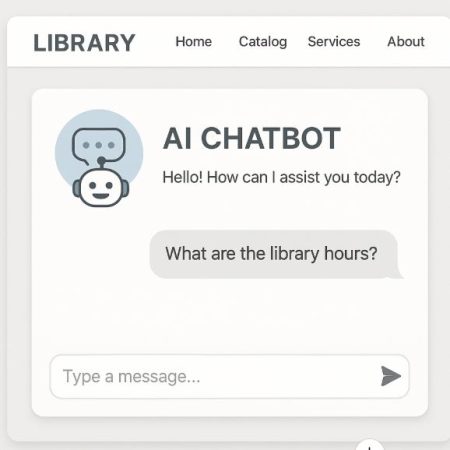
AI-based chatbots are increasingly integrated into virtual reference services to enhance the efficiency, accessibility, and responsiveness of library support. These chatbots are typically embedded within library websites, discovery platforms, or mobile applications, where they serve as the first point of contact for users seeking assistance. Using natural language processing and predefined knowledge bases, chatbots can interpret user queries, identify intent, and deliver instant responses to frequently asked questions related to library hours, policies, resource access, and basic research guidance. This integration allows libraries to provide round-the-clock reference support, even outside normal service hours, thereby improving user experience and service continuity.
In practice, AI-based chatbots function as complementary tools rather than replacements for human librarians. They are designed to handle routine and repetitive queries efficiently, while more complex or specialized reference questions are seamlessly escalated to librarians through live chat, email, or referral systems. This hybrid service model optimizes librarian workload and ensures that users receive accurate and context-appropriate support. Additionally, interaction logs generated by chatbots are analyzed to identify common user needs, service gaps, and opportunities for system improvement. By integrating AI-based chatbots into virtual reference services, libraries strengthen their capacity to deliver timely, scalable, and user-centered assistance while maintaining the professional standards and personalized support central to modern librarianship.
How Virtual Reference Services Have Transformed Library User Support
Virtual Reference Services (VRS) have significantly reshaped the way libraries deliver user support, moving reference assistance beyond the traditional confines of the physical library. By integrating digital communication technologies into reference work, libraries have adapted to changing user behaviors, expanded access to services, and redefined the interactions between librarians and users. This transformation has influenced not only how support is delivered, but also when, where, and to whom library services are available.
One of the most notable changes brought about by virtual reference services is the removal of physical and geographical barriers. Users no longer need to visit a reference desk to seek assistance; instead, they can connect with librarians from any location through email, live chat, video consultations, or web-based forms. This shift has greatly improved access for distance learners, off-campus researchers, and users with mobility or time constraints. As a result, library support has become more inclusive and responsive to diverse user needs.
Virtual reference services have also transformed the timeliness and flexibility of user support. Traditional reference services are often limited to fixed service hours, whereas virtual platforms allow libraries to offer extended or even 24/7 assistance. Users can submit queries at their convenience and receive responses either in real time or asynchronously. This flexibility is particularly beneficial during peak academic periods, such as examinations or research deadlines, when immediate support is critical.
Another important change is the increased emphasis on personalized and guided support within digital environments. Through virtual reference interactions, librarians can provide step-by-step assistance with database searching, citation management, and resource evaluation using screen sharing, hyperlinks, and digital demonstrations. These tools enable more effective instruction and enhance users’ information literacy skills, even without face-to-face contact. Virtual reference services thus support deeper engagement with users’ research processes.
The adoption of virtual reference services has also led to more efficient use of librarian expertise and institutional resources. Routine and frequently asked questions can be addressed through automated systems or standardized responses, allowing librarians to focus on complex research inquiries and advanced user support. Additionally, records of virtual interactions can be analyzed to identify common user challenges, inform service improvements, and guide staff training.
Overall, virtual reference services have transformed library user support by making it more accessible, flexible, data-informed, and user-centered. Rather than replacing traditional reference services, VRS has complemented and expanded them, enabling libraries to meet contemporary information needs while maintaining professional standards of accuracy, confidentiality, and service quality. In doing so, virtual reference services have reinforced the library’s role as an essential and adaptable support system in an increasingly digital information landscape.
Impact of Virtual Reference Services on User Satisfaction and Engagement
Virtual Reference Services (VRS) have a significant positive impact on user satisfaction and engagement by making library support more accessible, responsive, and user-centered. By allowing users to seek assistance through digital channels such as live chat, email, and online platforms, virtual reference services reduce common barriers associated with traditional reference desks, including limited service hours and the need for physical presence. This convenience enables users to receive timely support at the moment of need, which directly enhances satisfaction and builds trust in library services.
In terms of engagement, virtual reference services encourage more frequent and interactive communication between users and librarians. Users who may feel hesitant to approach a physical reference desk often find virtual platforms more approachable, leading to increased participation and inquiry. The interactive nature of online reference, through real-time messaging, guided searches, and follow-up communication, helps users stay actively involved in their research process. Additionally, personalized digital interactions foster a sense of ongoing support, motivating users to return to library services for future information needs.
Strategies to Improve Virtual Reference Service Quality in Libraries
Virtual Reference Services (VRS) have become an essential part of modern library operations, enabling libraries to support users in digital and remote environments. However, the effectiveness of these services depends on how well they are designed, managed, and continuously improved. The following points outline key strategies that libraries can adopt to enhance the quality of their virtual reference services.
- Select Reliable and User-Friendly Technology: Libraries should invest in stable and easy-to-use virtual reference platforms that support multiple communication channels, such as live chat, email, video consultations, and integrated web forms. Systems should be compatible with the library website, discovery tools, and remote access platforms to ensure seamless service delivery. Reliable technology reduces service interruptions and improves user confidence.
- Provide Continuous Staff Training: Librarians delivering virtual reference services must be trained in both reference skills and digital communication techniques. Training should focus on online reference interviewing, effective written communication, use of digital tools, and troubleshooting electronic resource access. Regular professional development ensures consistent and high-quality user support.
- Develop Clear Policies and Service Guidelines: Establishing clear service policies is essential for maintaining consistency and quality. Libraries should define response time standards, service scope, referral procedures, and user privacy guidelines. Transparent communication of these policies helps manage user expectations and ensures accountability in service delivery.
- Use a Hybrid Service Model: Combining AI-based tools with human expertise can significantly improve efficiency. Automated systems or chatbots can handle routine queries, while complex or research-intensive questions are referred to librarians. This approach reduces response times and allows librarians to focus on advanced user support.
- Ensure Data Privacy and Ethical Practices: Protecting user privacy is a critical aspect of service quality. Libraries must ensure that virtual reference platforms comply with data protection standards and that user interactions are handled confidentially. Ethical data practices build trust and encourage users to engage with virtual services.
- Monitor Performance and Analyze Data: Regular evaluation of virtual reference interactions helps identify strengths and weaknesses. Libraries should analyze usage statistics, response times, and common user queries to improve service design and update knowledge bases. Data-driven decision-making supports continuous quality enhancement.
- Collect and Act on User Feedback: User feedback provides valuable insights into service effectiveness and user satisfaction. Libraries should encourage feedback through surveys or follow-up messages and use this information to refine service processes, improve communication, and address recurring issues.
- Promote Awareness of Virtual Reference Services: High-quality services must also be visible and accessible. Libraries should actively promote virtual reference services through websites, orientations, workshops, and social media. Clear instructions on how to access these services increase user engagement and utilization.
Improving the quality of virtual reference services requires a strategic and systematic approach. By focusing on technology, staff capacity, clear policies, ethical practices, and continuous evaluation, libraries can deliver responsive, reliable, and user-centered virtual reference services that effectively support modern information needs.