A shared library catalogue is a unified bibliographic database that brings together the holdings of multiple libraries into a single searchable system. Instead of searching separate catalogues for each institution, users can use a single interface to discover resources owned by multiple libraries. For example, WorldCat is a widely used global shared catalogue that allows users to search the collections of thousands of libraries worldwide. Similarly, university library consortia often maintain a shared catalogue so that students and researchers can find books, journals, theses, and other materials available across all member institutions, along with information about their location and availability.
From a service and management perspective, shared library catalogues strongly support cooperation and resource sharing among libraries. When a user searches a shared catalogue and finds a book that is not available in their home library, they can request it through interlibrary loan, as the catalogue clearly indicates which library holds the item. For instance, a student at one university may locate a specialized research book held by another university within the same consortium and request it for short-term use. Shared catalogues also reduce duplication of cataloging work, as libraries can copy or adapt standardized bibliographic records created by other institutions, ensuring consistency and saving time and costs. Overall, through practical systems like WorldCat and consortium-based catalogues, shared library catalogues enhance both library efficiency and user access to a much broader range of academic and research resources.
What Is a Shared Library Catalogue?
A shared library catalogue is a centralized bibliographic system that combines the collections of multiple libraries into a single, searchable database. Rather than searching individual catalogues separately, users can access a single platform to identify resources, such as books, journals, theses, audiovisual materials, and digital content, held by different libraries. A well-known example is WorldCat, which allows users to search the holdings of thousands of libraries worldwide. Similarly, many academic library consortia maintain shared catalogues, allowing students and researchers to discover materials available across all member institutions, along with details about their location, availability, and lending conditions.
From a library service and management perspective, shared library catalogues promote collaboration, efficiency, and wider access to information. They support services like interlibrary loan and document delivery by clearly showing which library owns a particular item, making it easier for users to request materials not available in their home library. For example, if a research book is unavailable locally, a student can locate it through the shared catalogue and request it from another consortium library. Shared catalogues also reduce duplication of cataloging work, as libraries can reuse standardized records created by partner institutions, ensuring consistency and saving time and costs.
Why Do Libraries Create and Use a Shared Library Catalogue?
Libraries create and use a shared library catalogue to expand access to information and improve the efficiency of library services through collaboration. By combining the collections of multiple libraries into a single searchable system, a shared catalogue allows users to discover resources beyond the limits of their own library. This is particularly beneficial for students and researchers who require specialized, rare, or interdisciplinary materials that may be held by another institution. Instead of searching multiple catalogues separately, users can locate needed resources quickly through one interface, which enhances convenience and supports more effective research.
From an administrative and operational standpoint, shared library catalogues promote resource sharing and cost-effective library management. They facilitate services such as interlibrary loan and document delivery by clearly identifying where materials are held and under what conditions they can be accessed. Shared catalogues also reduce duplication of cataloging efforts, as libraries can reuse standardized bibliographic records contributed by partner institutions, ensuring consistency in metadata and saving time, labor, and costs.
What Types of Library Materials Are Usually Included in a Shared Catalogue?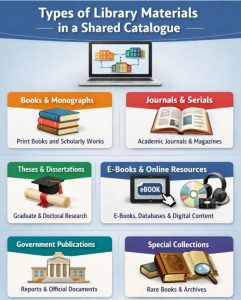
A shared library catalogue is designed to provide comprehensive access to the combined collections of multiple libraries. To support diverse academic, research, and informational needs, shared catalogues typically include a wide range of library materials in both print and digital formats. By bringing these resources together in a single searchable system, shared catalogues help users discover and access materials beyond the scope of their local library.
- Books and Monographs: Printed books and monographs form the core of most shared library catalogues. These include textbooks, reference books, scholarly monographs, and general reading materials held by participating libraries. Bibliographic records typically provide essential details, such as author, title, edition, publication year, call number, and owning library, enabling users to locate and request books from other institutions when needed.
- Journals and Serials: Shared catalogues commonly include journals, magazines, newspapers, and other serial publications. These may cover both current and back issues in print or electronic form. Catalogue records often indicate whether a library holds complete runs or specific volumes and issues, which is particularly useful for researchers seeking older or specialized journal content.
- Theses and Dissertations: Academic libraries frequently include theses and dissertations in shared catalogues. These materials are valuable for advanced research, as they often contain original studies and local research outputs. Shared access allows researchers from different institutions to discover and consult graduate and doctoral research produced elsewhere.
- Electronic and Digital Resources: Many shared catalogues now integrate electronic resources, such as e-books, online journals, and digitized documents. These records may include direct links to full-text content or information about access restrictions. Including digital materials in a shared catalogue enhances remote access and supports distance learning and online research.
- Audiovisual and Multimedia Materials: Shared catalogues also list audiovisual materials, including CDs, DVDs, educational videos, and other multimedia formats. These resources support teaching, learning, and training activities and are often shared among libraries to maximize their use.
- Government and Official Publications: Government reports, policy documents, statistics, and official publications are commonly included in shared catalogues, especially in academic and research libraries. These materials are important for social science research, public policy studies, and institutional analysis.
- Special Collections and Rare Materials: Some shared catalogues include records for special collections, such as rare books, manuscripts, archival materials, and historical documents. Although access to these items may be restricted, their inclusion in the catalogue helps researchers identify where unique materials are held and how they can be consulted.
A shared library catalogue typically includes a broad range of materials, from books and journals to digital resources, theses, multimedia items, and special collections. By integrating these diverse formats into a single system, shared catalogues enhance resource discovery, support academic collaboration, and ensure more effective use of library collections across institutions.
Who Can Use a Shared Library Catalogue?
A shared library catalogue is designed to serve a wide range of users by providing unified access to the collections of multiple libraries. Students are among the primary users, as shared catalogues allow them to locate textbooks, reference materials, and research resources beyond the holdings of their own institution. This is especially helpful for postgraduate and research students who often require specialized or less frequently used materials that may be available in partner libraries.
Faculty members and researchers also benefit greatly from shared library catalogues. By searching a single platform, they can identify scholarly books, journals, theses, and reports held across different libraries, supporting advanced research and interdisciplinary studies. Shared catalogues enable efficient use of interlibrary loan and document delivery services, ensuring timely access to essential academic resources.
In addition, library professionals use shared catalogues for cataloging, collection development, and resource management purposes. They rely on shared systems to reuse bibliographic records, maintain metadata consistency, and coordinate resource-sharing activities. In many cases, external users, such as independent researchers or members of the public, may also be allowed limited access to search shared catalogues, depending on library policies.
How Does a Shared Library Catalogue Benefit Students and Researchers?
In modern academic and research environments, access to diverse and reliable information resources is essential. Since no single library can collect everything required by its users, libraries increasingly depend on collaborative systems. A shared library catalogue integrates the collections of multiple libraries into a single searchable platform, enabling students and researchers to discover and access resources beyond their home institution. Real-world implementations of shared catalogues clearly demonstrate their practical value in academic work.
- Expanded Access to Academic Resources: One of the most important benefits of a shared library catalogue is expanded access to learning and research materials. For example, WorldCat, the world’s largest shared library catalogue, enables students and researchers to search the holdings of thousands of libraries worldwide. A postgraduate student working on a specialized research topic may find that a required book is unavailable locally but held by another university library. Through WorldCat or a regional consortium catalogue, the student can easily identify where the resource is available.
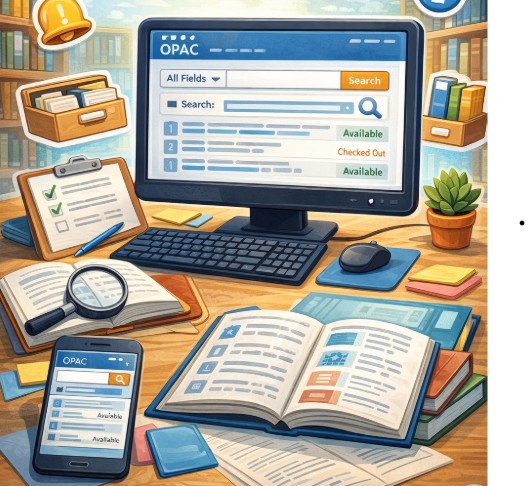
- Efficient and Time-Saving Resource Discovery: Shared catalogues significantly reduce the time required to locate materials. Instead of searching multiple library OPACs individually, users perform a single search to view results from all participating libraries. For instance, many university library consortia operate shared catalogues that allow users to search books, journals, and theses across all member institutions. This unified search approach simplifies the research process and improves productivity for both students and researchers.
- Support for Interlibrary Loan and Document Delivery: Shared library catalogues directly support interlibrary loan (ILL) services by clearly showing which library owns a specific item and its availability status. For example, if a researcher identifies a journal volume held by another university in the same consortium, they can request it through ILL using information provided in the shared catalogue. This ensures timely access to essential research materials without the need for physical travel.
- Access to Theses, Dissertations, and Unique Research Outputs: Many shared catalogues include theses and dissertations, which are valuable sources of original research. For example, national or consortium-based shared catalogues often index postgraduate research from multiple universities, allowing researchers to discover studies conducted at other institutions. This is especially useful for literature reviews, comparative studies, and identifying research gaps.
- Improved Research Quality and Academic Collaboration: By enabling access to a wider range of authoritative sources, shared library catalogues help students and researchers produce more comprehensive and higher-quality research. Researchers may discover related works held at other institutions, leading to collaboration or further inquiry. Shared catalogues also highlight the strengths of different libraries, encouraging academic networking and resource sharing at institutional and national levels.
Shared library catalogues benefit students and researchers by expanding access to information, streamlining discovery, and supporting efficient resource sharing. Real-world systems such as WorldCat and consortium-based shared catalogues demonstrate how collaborative cataloguing enhances research efficiency and academic outcomes. In an increasingly interconnected academic landscape, shared library catalogues play a vital role in supporting learning, scholarship, and knowledge advancement.
What Are the Limitations of Maintaining a Shared Library Catalogue?
Shared library catalogues play a vital role in expanding access to information and supporting collaboration among libraries. However, maintaining such systems is not without challenges. In real-world implementations, libraries often face technical, administrative, and operational limitations that affect the efficiency and reliability of shared catalogues.
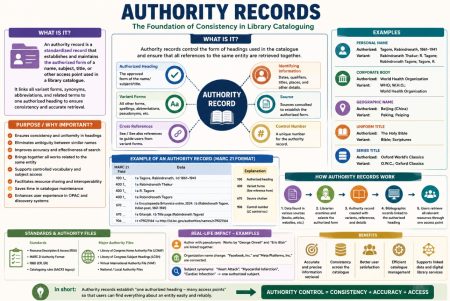
- Metadata Inconsistency and Quality Control: One of the most common limitations is inconsistent metadata quality. In large shared catalogues such as WorldCat, records are contributed by thousands of libraries worldwide, each following slightly different cataloguing practices. As a result, the same book may appear with multiple records, variations in author names, or differences in subject headings. These inconsistencies can confuse users and reduce the precision of search results unless continuous record cleanup and authority control are applied.
- Technical Complexity and System Integration: Shared library catalogues often rely on integrating multiple integrated library systems (ILS) and discovery platforms. For example, in university library consortia where member libraries use different ILS software, synchronizing records into a single shared catalogue can be technically complex. System upgrades or changes in one library’s software may affect the entire network, requiring coordinated technical support and careful system management.
- High Initial and Ongoing Costs: Although shared catalogues can reduce long-term duplication of effort, their setup and maintenance costs can be substantial. Licensing fees for shared platforms, server infrastructure, data migration, and staff training require sustained funding. In some regional or national library consortia, smaller institutions struggle to contribute financially, which can limit their level of participation or access to advanced features.
- Administrative and Governance Challenges: Managing a shared catalogue requires strong governance and policy agreements. Participating libraries must agree on cataloguing standards, record ownership, access rules, and decision-making processes. In real consortium environments, differences in institutional priorities—such as varying loan policies or cataloguing depth—can lead to disagreements and delays in implementing updates or improvements.
- Delays in Record Updates and Availability Information: In shared catalogues, real-time accuracy can be difficult to maintain. For instance, an item may appear as available in a shared catalogue but may already be checked out or under repair at the owning library. Such delays are common in systems where record updates are synchronized periodically rather than instantly, leading to user frustration and failed interlibrary loan requests.
- Limited Customization for Individual Libraries: Shared catalogues typically emphasize standardization, which can restrict local customization. For example, a library with a strong subject specialization or unique local collections may find it difficult to highlight these materials prominently within a shared interface. This can reduce the visibility of special collections or local research outputs within the broader catalogue.
- User Confusion and Access Restrictions: Users may discover materials in a shared catalogue that are not easily accessible due to licensing restrictions, non-circulating status, or physical distance. For example, a researcher may find a journal or book listed in the catalogue but later learn that it is restricted to in-library use only or cannot be loaned outside the owning institution. Without clear communication, this can create unrealistic expectations and dissatisfaction.
While shared library catalogues significantly enhance resource discovery and collaboration, real-world examples show that they also present notable limitations. Issues related to metadata consistency, technical integration, costs, governance, and user access require ongoing attention and management. By acknowledging these challenges and implementing strong standards, governance structures, and user communication strategies, libraries can better manage shared catalogues and maximize their long-term benefits.