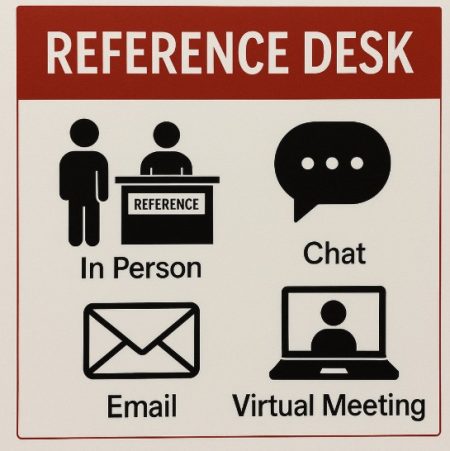
The reference desk is one of the most essential service points in any library, serving as the central hub for research assistance and information support. Staffed by trained reference librarians, it helps users locate accurate and credible resources for their academic, professional, or personal information needs. For example, a student writing a term paper may approach the reference desk for help in finding peer-reviewed journal articles, while another user might seek assistance in locating historical documents or government publications. The reference desk also guides readers through essential tools, such as the online catalog (OPAC), subject-specific databases, and digital repositories. For instance, it helps new users explore databases like JSTOR, Scopus, or Research4Life to retrieve relevant literature.
Beyond answering direct questions, the reference desk promotes information literacy by teaching users how to evaluate sources, develop search strategies, and cite materials ethically. A librarian might demonstrate how to use Boolean operators, refine keyword searches, or verify the authenticity of online information. In an era of overwhelming digital content, this service is crucial for helping users avoid misinformation and navigate complex research environments. Whether assisting with citation styles, guiding users to specialized collections (such as maps, archives, or dissertations), or supporting advanced research projects, the reference desk reinforces the library’s commitment to fostering learning, research excellence, and lifelong access to knowledge.
The Primary Purpose of the Reference Desk in a Library
The reference desk is a vital service point in any modern library. It serves as the central hub where users can receive expert support, personalized guidance, and reliable information assistance. In an era where information is abundant but often overwhelming, the reference desk plays a crucial role in helping users effectively navigate library resources and develop strong research skills. Its primary purpose goes beyond merely answering questions; it empowers users to become informed, confident, and independent seekers of knowledge.
The reference desk is primarily designed to assist users in finding accurate and relevant information. Many library resources, including books, journals, digital databases, archives, and online repositories, can be overwhelming for new or inexperienced users. When a user approaches the reference desk with a question, such as “Where can I find articles on climate change policy?” or “How do I search for books on microbiology?”, reference librarians interpret the request, identify the user’s information needs, and guide them to the appropriate resources. This process may involve searching online catalogs, recommending relevant databases such as JSTOR or Research4Life, or locating materials from specific subject areas. The reference desk ensures that users can access credible information quickly and efficiently.
One important purpose of the reference desk is to enhance information literacy among users. Libraries have evolved beyond physical books; they now contain complex digital collections that require specific research skills to navigate. Reference librarians teach users how to develop effective search strategies, evaluate the reliability of sources, and refine their keyword searches to enhance their research. They may demonstrate the use of Boolean operators, guide users in filtering search results, and help them distinguish between peer-reviewed articles and other types of general web content. Through these interactions, users acquire essential skills for managing information effectively, which is crucial in academic, professional, and everyday life.
The reference desk plays a crucial role in supporting academic research. Students, faculty, and researchers often require assistance with advanced tasks, such as conducting literature reviews, adhering to specific citation styles, and accessing specialized materials. Librarians at the reference desk assist users in finding theses and dissertations, navigating institutional repositories, and sourcing historical documents or statistical datasets. For instance, a postgraduate student preparing a thesis may rely on the reference desk for guidance on selecting appropriate journals, using citation tools like Zotero or Mendeley, or accessing interlibrary loan services. This specialized support enhances the quality of academic work and promotes research excellence.
In addition to providing research assistance, the reference desk contributes to user orientation and enhances the overall library experience. Many users approach the desk with general inquiries about library policies, borrowing procedures, study spaces, or technology support. Reference staff help users understand how to utilize library services, such as book renewals, printing facilities, OPAC searches, and access to digital resources. This welcoming environment encourages users to engage more deeply with the library, fostering a sense of belonging within the academic community.
Despite technological advancements, the human element provided by reference librarians remains irreplaceable. While search engines and AI tools can deliver quick answers, they often struggle to interpret context, evaluate credibility, or understand the deeper aspects of user needs. Reference librarians add value by providing curated guidance, supporting critical thinking, and offering personalized instruction. Their expertise helps users avoid misinformation, approach research systematically, and achieve better outcomes in their academic or personal projects.
How Does the Reference Desk Support Users in Finding Reliable and Accurate Information?
The reference desk plays a critical and multifaceted role in helping library users access reliable and accurate information, acting as a central point where professional guidance meets individual research needs. In today’s complex information environment, filled with millions of online sources, conflicting facts, and varying levels of credibility, users often struggle to determine which information is trustworthy. Reference librarians address this challenge by using their expertise to guide users toward authoritative resources such as peer-reviewed journals, scholarly books, academic databases, institutional repositories, government publications, and verified statistical sources. For instance, when a student seeks research materials on environmental policy, the reference desk may direct them to reputable databases, such as JSTOR, Scopus, or Research4Life, rather than random web pages or unverified blogs. Beyond simply locating materials, librarians help users refine their research topics, interpret assignment requirements, and choose the most relevant sources for their academic or professional goals.
A significant part of the reference desk’s support involves teaching users how to critically evaluate information. Librarians explain how to assess authorship, publication credibility, methodological strength, and citation practices to determine whether a source is reliable. They may demonstrate how to identify peer-reviewed articles, distinguish scholarly texts from popular sources, or avoid misinformation and biased content. This instruction is particularly useful for students who are unfamiliar with academic research standards or overwhelmed by the volume of available information. Additionally, reference librarians help users develop powerful search strategies that improve the accuracy of information retrieval. They demonstrate how to utilize Boolean operators, phrase searching, truncation, filters, subject headings, and database-specific tools to refine search results. For example, a user researching “mental health in rural communities” may be shown how to narrow the topic using specific keywords, date ranges, or subject categories to retrieve more focused and reliable results.
The reference desk also supports the accurate use of information by providing guidance on proper citation styles, such as APA, MLA, and Chicago. By helping users cite correctly, librarians ensure that information is not only reliable but also traceable and ethically used. Another key role is assisting users in accessing specialized materials that require expert navigation, such as archival collections, historical records, legal documents, maps, dissertations, and statistical datasets. Reference librarians interpret these resources and explain how to extract accurate data or contextual information. They may also guide users toward interlibrary loan services or digital document delivery when needed materials are not available locally. Moreover, the reference desk contributes to users’ long-term research skills by fostering information literacy, a foundational ability in academic and professional life. Through personalized help sessions, workshops, and one-on-one consultations, users learn how to formulate more effective research questions, identify information gaps, evaluate conflicting sources, and verify facts from multiple perspectives. This continuous support helps users develop the confidence to navigate information independently. Overall, the reference desk serves not just as a help point but as an educational and advisory space, empowering users to locate, evaluate, and utilize reliable information effectively in their studies, careers, and everyday lives.