Knowledge is one of the most powerful assets that humans possess, shaping how we understand the world, interact with others, and solve problems. It goes beyond the simple accumulation of facts, involving the interpretation, comprehension, and application of information in meaningful ways. For example, a medical student may memorize human anatomy, but true knowledge comes when they apply this understanding to diagnose a patient’s illness. Similarly, a farmer’s knowledge of weather patterns and soil quality, developed through years of experience, allows them to make better decisions about planting and harvesting.
Knowledge helps individuals make informed decisions, enhances creativity, and fosters innovation by enabling us to connect ideas and develop new perspectives. For instance, scientific discoveries such as electricity or vaccines emerged from accumulated knowledge, experimentation, and analysis. At a broader level, knowledge drives social progress, cultural development, and economic growth, making it a cornerstone of human civilization. The development of the internet, for example, is not just a technological achievement but a direct result of shared and expanding knowledge across generations.
Importantly, knowledge is not static; it evolves continuously through learning, experience, and critical reflection. In today’s information-driven age, the importance of knowledge is even more pronounced, as it equips people with the tools to navigate complex challenges, adapt to rapid changes, and contribute productively to society. For example, during the COVID-19 pandemic, the rapid sharing of medical research and scientific knowledge helped countries develop vaccines in record time. Ultimately, knowledge empowers individuals and communities alike, serving as both a personal resource and a collective force for advancement.
The Importance of Knowledge
Knowledge is the foundation upon which human progress and development are built. It is not only the collection of facts and information but also the wisdom, skills, and experiences that shape how we interpret and apply them in real-life situations. Knowledge gives meaning to human existence by guiding decision-making, enhancing creativity, and driving both personal growth and societal advancement. In every aspect of life, education, work, innovation, and culture, knowledge plays a central role, making it one of the most valuable assets that individuals and communities can possess.
On an individual level, knowledge is essential for personal development and self-improvement. It helps people understand their environment, make informed choices, and develop problem-solving abilities. For example, learning financial literacy skills enables individuals to manage their money more effectively, avoid debt, and plan for the future, while knowledge of health and nutrition empowers people to make lifestyle choices that improve their well-being. Without knowledge, personal growth remains limited, as individuals are unable to fully realize their potential.
Education is the primary channel through which knowledge is acquired and transmitted across generations. It equips learners with the ability to think critically, analyze situations, and develop innovative solutions. In academic research, knowledge allows students and scholars to build upon previous findings, refine theories, and generate new insights. Classrooms, libraries, and digital platforms all serve as spaces where knowledge is shared and expanded. In this sense, education becomes more than the transmission of facts; it nurtures intellectual growth that prepares learners to address real-world challenges.
Human history demonstrates that innovation and progress are deeply rooted in knowledge. Scientific and technological advancements from the invention of the printing press to modern breakthroughs in artificial intelligence are all outcomes of accumulated knowledge applied creatively. The discovery of electricity revolutionized industries, communication, and daily life, while medical knowledge has enabled humanity to combat diseases, develop vaccines, and improve life expectancy. Knowledge acts as the spark for creativity and invention, making societies more resilient and adaptive to change.
Beyond personal and technological benefits, knowledge plays a crucial role in shaping society and ensuring collective progress. It fosters social awareness, tolerance, and cooperation among communities. Understanding history helps societies avoid repeating past mistakes, while knowledge of cultural diversity encourages mutual respect and peaceful coexistence. In governance, policymakers rely on knowledge-based research to design effective policies that address economic, environmental, and social challenges. Societies that value knowledge—through investments in education, libraries, and research—tend to be more prosperous, equitable, and innovative.
The well-known saying “knowledge is power” reflects its ability to influence and transform lives. Those who possess knowledge are better positioned to make decisions, lead others, and create opportunities. However, unequal access to knowledge can also create disparities, with disadvantaged groups being left behind in education, technology, and employment. For instance, communities with limited access to digital resources often face barriers to growth compared to those with abundant knowledge-sharing platforms. This highlights the importance of ensuring knowledge equity so that its benefits are shared widely.
Why is Knowledge Important in Life?
Knowledge is important in life because it equips individuals with the ability to understand the world around them, make informed decisions, and solve problems effectively. It goes beyond memorizing facts; it helps people interpret information, think critically, and apply what they know in practical situations. For example, knowledge of health and nutrition allows individuals to lead healthier lifestyles, while financial knowledge helps in managing money and planning for the future. On a broader scale, knowledge fosters creativity and innovation, driving technological and social progress that benefits entire communities. It also nurtures confidence and independence, as people who are well-informed are better prepared to face challenges, adapt to changes, and seize opportunities. Ultimately, knowledge empowers individuals to grow personally, contribute meaningfully to society, and lead more purposeful and fulfilling lives.
Why is Knowledge Considered a Foundation of Human Progress and Civilization?
Knowledge has always been at the heart of human progress and the development of civilization. From the earliest days of human history, people have relied on knowledge to survive, adapt, and grow. It is through knowledge that humans learned to hunt, farm, build shelters, and create tools. Over time, knowledge expanded beyond survival needs and laid the groundwork for science, culture, governance, and innovation. This cumulative body of knowledge has allowed civilizations to rise, flourish, and leave lasting contributions to humanity. Without knowledge, no civilization could have sustained itself or passed on its legacy to future generations.
In the earliest societies, knowledge was directly linked to survival. People depended on their understanding of nature, weather patterns, and animal behavior to secure food and ensure safety. For instance, hunters learned migration routes of animals, while farmers developed knowledge of soil fertility and seasonal cycles to grow crops. The discovery of agriculture itself was one of the greatest knowledge breakthroughs in human history, allowing people to move from a nomadic lifestyle to permanent settlements. This shift created food surpluses, encouraged trade, and paved the way for population growth. The ability to preserve and transfer such knowledge across generations formed the backbone of early civilizations such as Mesopotamia, the Indus Valley, and Ancient Egypt.
Scientific progress has always depended on the accumulation and application of knowledge. Ancient civilizations contributed significantly to the foundations of modern science and technology. The Babylonians studied astronomy, the Egyptians advanced medicine and engineering, while the Greeks developed mathematics, philosophy, and logic. These early forms of scientific knowledge enabled humans to invent tools, construct buildings, and expand their geographical boundaries through improved navigation. A powerful example of knowledge shaping progress was the invention of the printing press in the 15th century, which made information accessible to the masses. This led to the Renaissance and Enlightenment periods, sparking revolutions in art, science, and philosophy. Each innovation throughout history, from the discovery of electricity to the digital revolution, has been possible because knowledge was preserved, shared, and applied.
Knowledge has also been the cornerstone of social development. Civilizations relied on shared knowledge to create laws, systems of governance, and principles of social organization. Early codes, such as Hammurabi’s Code in Mesopotamia, were based on an accumulated understanding of justice, order, and fairness within society. Similarly, philosophical knowledge in ancient Greece introduced ideas of democracy, citizenship, and ethics, while Confucian teachings in China shaped governance and morality for centuries. These intellectual contributions continue to influence how modern societies are structured today. Knowledge provided not only the rules but also the rationale behind building cohesive communities that could thrive collectively.
Cultural advancement is another area where knowledge has played a vital role. Civilizations are remembered for their artistic, literary, and philosophical achievements, all of which were products of accumulated knowledge and creativity. The construction of the pyramids in Egypt, the writings of Greek philosophers like Plato and Aristotle, and the literary treasures of India and China all reflect societies that valued knowledge as a cultural force. The preservation of such knowledge, whether through libraries, manuscripts, or oral traditions, ensured that future generations could learn and expand upon it. The Library of Alexandria, though lost, symbolized humanity’s desire to collect and safeguard knowledge for posterity. Similarly, medieval scholars in Islamic civilizations preserved and expanded upon Greek and Roman knowledge, passing it later to Europe and fueling the Renaissance.
In the modern world, knowledge continues to be the foundation of progress. Advances in medicine, technology, and science have significantly improved the quality of human life. For instance, medical knowledge has allowed doctors to eradicate diseases like smallpox and create life-saving treatments and vaccines. Technological knowledge has transformed communication, with the internet connecting billions of people instantly across the globe. Nations that prioritize education, research, and innovation are the ones that thrive economically and socially. The digital age, often referred to as the “knowledge economy,” is proof that access to and application of knowledge is the most powerful driver of development in the 21st century.
In What Ways Does Knowledge Empower Individuals in Their Personal and Professional Lives?
Knowledge is one of the most powerful tools an individual can possess, shaping not only personal growth but also professional success. It goes beyond the memorization of facts; true knowledge involves understanding, applying, and reflecting on information in meaningful ways. When individuals acquire knowledge, they gain the confidence, skills, and perspective needed to make informed decisions, adapt to change, and thrive in a competitive world. Both in personal life and professional environments, knowledge acts as a source of empowerment that enables people to unlock their potential, achieve their goals, and contribute positively to society.
- Knowledge and Personal Growth: On a personal level, knowledge enriches everyday life by helping individuals make better choices and develop self-awareness. For example, knowledge of health and nutrition empowers people to maintain a balanced lifestyle, prevent illness, and improve their overall well-being. Similarly, financial literacy provides individuals with the ability to manage budgets, avoid debt, and build long-term financial security. Knowledge also nurtures critical thinking and problem-solving skills, which enable individuals to evaluate situations logically and act wisely. Beyond practical benefits, knowledge broadens horizons by exposing people to diverse cultures, philosophies, and ideas, ultimately making them more open-minded and empathetic. In this way, knowledge empowers individuals to lead healthier, wiser, and more fulfilling lives.
- Knowledge in Professional Development: In professional settings, knowledge is the foundation of competence and success. Acquiring expertise in a chosen field allows individuals to perform their tasks effectively and stand out in their careers. For instance, an engineer with advanced technical knowledge can design innovative solutions, while a teacher equipped with pedagogical knowledge can better engage and inspire students. Knowledge also boosts confidence in professional interactions, as individuals who are well-informed can communicate ideas persuasively and make sound decisions. Furthermore, continuous learning and the ability to update one’s knowledge are vital in today’s fast-changing job market. Those who stay current with new trends, technologies, and industry practices remain competitive and adaptable.
- Knowledge as a Source of Confidence and Independence: Knowledge empowers individuals by giving them confidence and independence in both personal and professional contexts. In personal life, an individual who understands their rights and responsibilities is less likely to be misled or exploited. In the workplace, knowledgeable employees are more likely to take initiative, assume leadership roles, and contribute innovative ideas. This confidence not only benefits the individual but also inspires trust and respect from others. Knowledge thus creates a sense of independence, allowing individuals to rely on their judgment rather than depending solely on others.
- Knowledge and Problem-Solving Abilities: Another way knowledge empowers people is by enhancing their problem-solving abilities. Life and work are full of challenges, and the ability to analyze situations, weigh alternatives, and choose the best course of action is rooted in knowledge. For example, a doctor uses medical knowledge to diagnose illnesses, while an entrepreneur draws on market knowledge to launch and sustain a business. In both cases, knowledge equips individuals with the capacity to transform obstacles into opportunities.
- Knowledge and Lifelong Growth: Finally, knowledge empowers individuals by fueling continuous personal and professional growth. The pursuit of knowledge fosters curiosity and resilience, qualities that are essential in an ever-changing world. Lifelong learning enables individuals to adapt to new roles, explore different interests, and redefine success at various stages of life. In professional environments, organizations often reward individuals who demonstrate a commitment to learning and self-improvement, as such people bring innovation and long-term value.
Knowledge empowers individuals in both personal and professional life by providing them with the tools to make informed decisions, solve problems, and grow continuously. It fosters self-confidence, independence, and adaptability, while opening doors to opportunities and success. Whether it is in maintaining health, managing finances, excelling in a career, or navigating social challenges, knowledge serves as a guiding force that shapes a person’s journey. Ultimately, it is knowledge that transforms potential into achievement and empowers individuals to lead purposeful and impactful lives.
How Does Access to Knowledge Shape the Quality of Education?
Education is widely recognized as the key to personal development, social progress, and national growth, and at its core lies access to knowledge. Students, teachers, and institutions all rely on information, ideas, and experiences to create meaningful learning, which means the quality of education is directly influenced by how effectively learners can access, understand, and apply knowledge. When knowledge is abundant, accurate, and easily available, education thrives, but when it is limited, outdated, or restricted, the learning process suffers.
Access to knowledge forms the backbone of learning by providing students with the resources they need to explore, question, and understand the world around them. A school with an extensive library, digital databases, and open educational resources offers learners far greater opportunities than one with minimal resources. For instance, a student who can access a wide range of books, journals, and online platforms is better positioned to gain deeper insights into a subject than a student limited to a single outdated textbook. The breadth and quality of accessible knowledge, therefore, directly shape educational outcomes.
Teachers also benefit when they themselves have strong access to knowledge. Educators who remain updated through scholarly research, professional training, and digital resources can bring fresh perspectives and effective teaching strategies into the classroom. A science teacher, for example, who has access to the latest climate change research can design lessons that are more engaging and relevant. Global access to knowledge also enables teachers to align curricula with international standards, ensuring students are prepared for worldwide competitiveness.
In today’s digital age, technology has become a vital tool for expanding access to knowledge and shaping education. Online platforms, e-libraries, and open educational resources allow learners to study anytime and anywhere, which is especially valuable for students in remote or under-resourced areas. Initiatives like MOOCs and free digital repositories have given millions the chance to access high-quality education regardless of geography or income. In this way, digital access to knowledge acts as a powerful equalizer in improving education.
When students have wide access to diverse sources of knowledge, they are also more likely to develop critical thinking and creativity. Exposure to different perspectives, theories, and case studies allows them to analyze, compare, and question information rather than memorizing it passively. A student studying world history from multiple viewpoints, for instance, gains a much more nuanced understanding than one relying on a single narrative. Such access to diversity encourages intellectual curiosity and innovation, both of which are hallmarks of quality education. However, unequal access to knowledge often widens educational gaps. Students from wealthier backgrounds, who enjoy advanced libraries, private tutors, and digital resources, typically achieve more than those with limited opportunities. This inequality emphasizes the need to make knowledge accessible to all, regardless of social or economic background. Governments and institutions have a crucial role in bridging this gap by investing in libraries, online learning tools, and inclusive policies that make knowledge available to everyone.
What Role Does Knowledge Play in Critical Thinking and Problem-Solving?
Critical thinking and problem-solving are essential skills in both personal and professional life, allowing individuals to analyze situations, evaluate alternatives, and make sound decisions. At the core of these abilities lies knowledge, which provides the foundation upon which reasoning, creativity, and judgment are built. Without knowledge, critical thinking becomes shallow, and problem-solving turns into guesswork. Knowledge equips people with the tools to question assumptions, recognize patterns, and develop effective solutions.
In critical thinking, knowledge serves as the framework for evaluating the accuracy and relevance of information. A historian analyzing multiple accounts of the same event, for example, relies on historical context to identify credible sources and avoid misleading interpretations. Similarly, a scientist reviewing experimental results draws on prior knowledge of methods and theories to judge validity. Without this base, thinking cannot progress beyond surface-level analysis.
Problem-solving also begins with identifying and defining the problem accurately, and this step requires knowledge. A doctor diagnosing a patient, for instance, uses medical knowledge to distinguish minor signs from critical symptoms and trace them to the underlying cause. Likewise, an engineer troubleshooting a machine failure relies on technical knowledge to determine whether the issue lies in design, operation, or maintenance. The ability to define problems clearly is only possible when guided by relevant knowledge.
Knowledge also fuels creativity by enabling individuals to connect ideas in new ways. Exposure to diverse fields allows for innovative solutions, as seen in the creation of smartphones, which combined knowledge from telecommunications, computing, and design. Social entrepreneurs, too, often merge knowledge of business, community needs, and cultural practices to address challenges uniquely. Such blending of knowledge stimulates original thinking that is vital for solving complex and unfamiliar problems.
In decision-making, knowledge plays a decisive role by helping individuals weigh alternatives, assess risks, and predict outcomes. Policymakers tackling climate change, for example, must draw on insights from environmental science, economics, and sociology to design effective strategies. In daily life, knowledge about nutrition, exercise, or mental health allows people to make choices that enhance well-being. In both cases, decisions become thoughtful and evidence-based rather than random or uninformed.
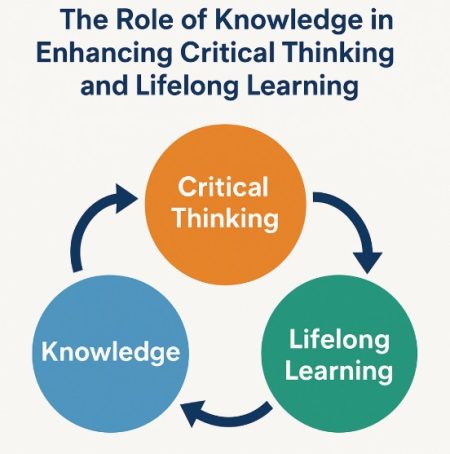
Finally, knowledge ensures continuous improvement in critical thinking and problem-solving. These are not one-time activities but ongoing processes that require reflection and adaptation. Professionals such as teachers, doctors, and managers constantly update their knowledge through research and practice, enabling them to refine strategies and respond more effectively to challenges. In this way, knowledge allows individuals to learn from experience and strengthen their skills over time.
Why is Knowledge Often Described as “Power”?
The phrase “knowledge is power” has been repeated for centuries, highlighting the immense influence that knowledge holds over individuals and societies. Knowledge empowers people to make informed decisions, challenge ignorance, and create opportunities for growth and progress. Unlike wealth or material possessions, knowledge is a resource that cannot be stolen once acquired and continues to expand as it is shared. Its ability to influence thoughts, shape actions, and drive innovation makes knowledge one of the most powerful tools available to humanity.
- Knowledge as a Tool for Informed Decision-Making: One reason knowledge is equated with power is its role in decision-making. Individuals who are well-informed can evaluate situations more accurately, anticipate possible outcomes, and choose wisely. For example, a person with knowledge of financial management is less likely to fall into debt and more likely to secure financial independence. Similarly, leaders with political, social, and historical knowledge can craft policies that serve their communities more effectively. In this sense, knowledge provides people with the power to direct their lives and influence others positively.
- Knowledge and Social Empowerment: Knowledge also plays a central role in social empowerment. Access to education and information enables marginalized groups to assert their rights, demand justice, and break free from cycles of poverty and inequality. For instance, when communities are equipped with knowledge about healthcare, they are better able to combat disease and improve quality of life. Knowledge of laws and rights also prevents exploitation, allowing citizens to hold governments and institutions accountable. By empowering individuals and communities, knowledge becomes a force for equity and social progress.
- Knowledge as a Driver of Innovation and Progress: Throughout history, knowledge has been the driving force behind scientific and technological advancements. Innovations such as electricity, vaccines, and the internet have transformed human life and reshaped civilization. These breakthroughs were possible because of the accumulation and application of knowledge. Each discovery provided humanity with greater control over nature and the ability to solve complex problems. In this way, knowledge acts as power by fueling progress, expanding opportunities, and enabling societies to advance beyond limitations.
- Knowledge and Leadership: Leadership is another domain where knowledge is synonymous with power. Leaders who are knowledgeable inspire confidence, gain respect, and guide others toward shared goals. A knowledgeable leader is capable of making strategic decisions, resolving conflicts, and motivating people effectively. Historical examples, from great philosophers to visionary political figures, show that leadership grounded in knowledge often creates lasting impacts. Such leaders wield power not through force but through wisdom, insight, and guidance.
- Knowledge as a Form of Independence: Finally, knowledge is described as power because it fosters independence and self-reliance. Individuals who possess knowledge are less dependent on others for guidance and support, as they can navigate challenges on their own. For example, someone who understands digital technology can access information, solve technical problems, and stay connected in the modern world without constant external help. This independence strengthens confidence and gives individuals control over their own lives.
Knowledge is often described as “power” because it enables people to make informed decisions, empowers communities, drives innovation, strengthens leadership, and fosters independence. Unlike physical strength or material wealth, knowledge creates sustainable power that grows when shared and applied. It is the invisible force that has transformed societies, advanced civilizations, and improved the quality of human life. As long as individuals and societies continue to value knowledge, it will remain the most enduring and influential form of power.