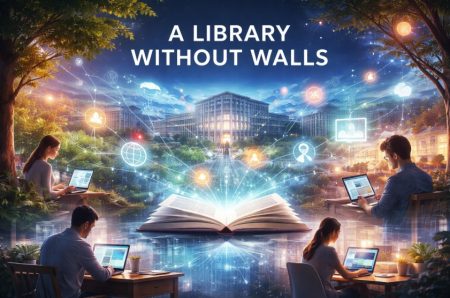
Describing libraries as “gateways to knowledge” in the modern context highlights their role as essential entry points to information, learning, and discovery in an increasingly complex world. Traditionally, libraries were seen as repositories of books, but today they serve a much broader function by providing access to diverse resources, both physical and digital, that empower individuals to explore ideas, conduct research, and develop new skills. For example, an academic library may provide students with access to subscription-based databases like JSTOR, Scopus, or IEEE Xplore, which are otherwise too costly for individuals to access independently. Public libraries often act as digital literacy centers by offering free internet access, workshops on using online government services, or training on computer skills for job seekers. In this sense, libraries act as bridges that connect people to knowledge– whether through scholarly journals, e-books, databases, institutional repositories, or curated collections that reflect cultural and intellectual heritage, such as digitized manuscripts or rare archives. Moreover, they play a critical role in fostering information literacy by guiding users on how to find, evaluate, and use information effectively; for instance, library-led workshops on citation management tools like EndNote or Zotero help students and researchers properly manage references and avoid plagiarism. By offering equitable access to knowledge, libraries help overcome barriers of geography, economics, and technology, ensuring that learning opportunities are not limited to a privileged few; for example, rural communities accessing e-resources via mobile library services or remote authentication tools like OpenAthens. In the modern age of rapid digital transformation, libraries continue to redefine themselves as dynamic hubs of innovation, lifelong learning, and community engagement, making the metaphor of “gateways to knowledge” more relevant than ever.
Libraries as Gateways to Knowledge
Libraries have always been linked with knowledge preservation, but in the modern world, their role has expanded far beyond storing books. Today, they act as comprehensive gateways that guide individuals to access, interpret, and apply information for learning, research, and innovation. The term “gateways to knowledge” reflects this shift: libraries are not passive collections but active enablers of intellectual growth and community development. By offering physical books, digital resources, learning support, and collaborative spaces, libraries ensure that knowledge remains open and accessible to all, regardless of social or economic background.
One of the most visible ways libraries function as gateways is through providing access to a wide range of resources that individuals may not be able to afford or locate otherwise. Academic libraries subscribe to costly databases such as Scopus, JSTOR, IEEE Xplore, and ScienceDirect, which give researchers and students access to thousands of peer-reviewed articles essential for their work. Without such access, many individuals would struggle to keep pace with developments in their fields. Public libraries also extend their reach by offering e-books, audiobooks, and multimedia content through digital lending platforms such as OverDrive or Libby. A strong example is the New York Public Library, which has digitized millions of maps, manuscripts, and photographs and made them available for free worldwide. By opening such doors, libraries democratize access to information and ensure that valuable knowledge is not locked behind paywalls or confined to specific institutions.
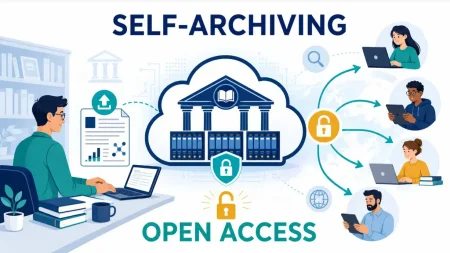
Libraries also actively contribute to research and innovation by curating and preserving institutional knowledge. Many universities manage institutional repositories using platforms such as DSpace or EPrints to host theses, dissertations, and faculty publications. For example, MIT’s DSpace repository makes thousands of research outputs globally accessible, giving visibility to the work produced within the institution. In addition to preserving knowledge, libraries provide specialized support like guidance with literature reviews, assistance with research metrics, and training in citation management. These services allow scholars to strengthen their work and increase its impact. By archiving intellectual contributions and promoting open access, libraries bridge the past and present of research while fueling future innovation.
In the digital era, access to information is abundant, but the ability to critically evaluate it is often limited. Libraries address this gap by promoting information literacy, helping users to identify credible sources, avoid plagiarism, and use knowledge ethically. Academic libraries frequently conduct workshops on plagiarism awareness, proper citation, and the use of reference management tools like EndNote, Zotero, or Mendeley. Orientation programs and training sessions equip students and faculty with the skills to engage with resources effectively, transforming mere access into responsible and meaningful knowledge use. This role is particularly significant in an age marked by misinformation and fake news, where the ability to critically assess information is as important as gaining access to it.
Beyond their academic role, libraries also serve as inclusive community hubs that foster lifelong learning. Public libraries host literacy programs for children, run workshops for adults seeking digital skills, and organize cultural events that bring communities together. In many rural areas, mobile book vans or digital library buses extend services to communities that lack permanent facilities, inspiring reading habits and educational growth. Academic libraries also strengthen learning environments by organizing student orientations, subject-specific workshops, and collaborative research events. These initiatives highlight how libraries are not only buildings filled with resources but also vibrant spaces for social and intellectual engagement.
Another crucial way libraries serve as gateways is by bridging the digital divide. In many parts of the world, people still lack access to reliable internet or modern technologies. Libraries fill this gap by providing free Wi-Fi, computer labs, and access to online learning platforms, giving opportunities to those who might otherwise be excluded from the digital world. Global initiatives such as the Bill & Melinda Gates Foundation’s Global Libraries program have helped public libraries in developing countries expand digital services and reach underserved populations. In higher education, tools like OpenAthens and EZproxy enable remote access to electronic resources, ensuring that students and faculty can connect with knowledge from anywhere. This inclusivity allows libraries to open digital gateways that transcend barriers of geography and privilege.
Despite their expanding roles, libraries also face challenges. Limited funding makes it difficult to maintain subscriptions to high-cost journals or invest in new technologies. The rapid pace of digital change requires ongoing system upgrades, digitization projects, and professional training for staff. Libraries must also balance the needs of users who value traditional physical spaces with those who prefer digital access. Yet these challenges also present opportunities for innovation. Many libraries are embracing artificial intelligence for smarter catalog systems, cloud-based repositories for scalable storage, and digitization of rare collections to protect fragile resources. AI-driven recommendation tools within online catalogues already help users discover resources more efficiently, pointing toward a future where libraries combine traditional strengths with cutting-edge technologies to remain vital.
To describe libraries as “gateways to knowledge” is to acknowledge their transformative role in connecting individuals with learning, research, and discovery. They provide access to diverse resources, support innovation, foster critical literacy, strengthen communities, and bridge the digital divide. Whether through institutional repositories, digital lending services, training programs, or community outreach, libraries ensure that knowledge is not a privilege but a shared right accessible to all. As society advances deeper into the digital age, libraries remain indispensable not as static storehouses of books but as dynamic bridges to lifelong learning, intellectual growth, and global knowledge sharing.
From Storehouses of Books to Multifaceted Knowledge Hubs: The Evolution of Libraries
For centuries, libraries were primarily regarded as storehouses of books-silent spaces where information was preserved and guarded for posterity. Their primary function was to collect, catalog, and safeguard written materials for scholarly use. However, with the advent of digital technology, globalization, and the growing demand for lifelong learning, libraries have undergone a profound transformation. Today, they are not just repositories but dynamic knowledge hubs that integrate information, technology, and community engagement to empower individuals and societies.
- Libraries as Custodians of Knowledge in the Past: Historically, the role of libraries was centered on preservation. From the great Library of Alexandria to medieval monastic libraries, the primary objective was to collect manuscripts and books for future generations. Access was often restricted to a select few scholars, clergy, or the elite, who could navigate these storehouses of knowledge. Even during the early days of public libraries, the emphasis was still largely on providing access to physical books, with librarians acting as custodians rather than active facilitators of learning. The focus was on the storage and protection of materials rather than on active engagement with users.
- The Shift Toward Access and Democratization of Knowledge: The late 19th and early 20th centuries marked a turning point when libraries began to prioritize access over preservation. Public library movements across Europe and North America promoted the idea that knowledge should be free and available to all citizens. The establishment of public lending services, open stacks, and children’s sections encouraged wider participation. This was the first step in transforming libraries into inclusive institutions that promoted learning beyond academic elites. The democratization of access laid the foundation for libraries to grow into knowledge gateways.
- Embracing Digital Technology: The digital revolution has had the most profound impact on the evolution of libraries. With the rise of electronic resources, online databases, and e-books, libraries have expanded their role from custodians of print collections to providers of multi-format knowledge systems. Academic libraries now give access to powerful research databases such as JSTOR, Scopus, ProQuest, and IEEE Xplore, while public libraries use platforms like OverDrive and Libby to make e-books accessible remotely. Digitization projects, such as the Google Books Project and institutional repositories like DSpace, have further transformed how knowledge is stored and shared. Libraries no longer only house physical collections; they provide 24/7 digital gateways that transcend geographical boundaries.
- Libraries as Learning and Research Partners: Modern libraries actively support research, teaching, and innovation. They provide institutional repositories, research consultations, data management services, and training workshops that enhance academic productivity. For example, university libraries worldwide offer workshops on academic writing, citation management tools, and plagiarism awareness. Some libraries even provide makerspaces and innovation labs equipped with 3D printers, coding resources, and design software, giving students and researchers hands-on opportunities to experiment and innovate. In this way, libraries are no longer passive providers of information but active partners in knowledge creation.
- Community Engagement and Lifelong Learning: Libraries have also transformed into vibrant community hubs that foster social learning and inclusion. Public libraries organize reading circles, digital literacy training, cultural events, and job skills workshops. For instance, many libraries in rural and underserved communities act as critical bridges across the digital divide, offering free internet, computer access, and online learning platforms. Programs such as mobile libraries and book vans bring resources to remote areas, ensuring that knowledge reaches people beyond urban centers. In this sense, libraries are increasingly about people as much as books.
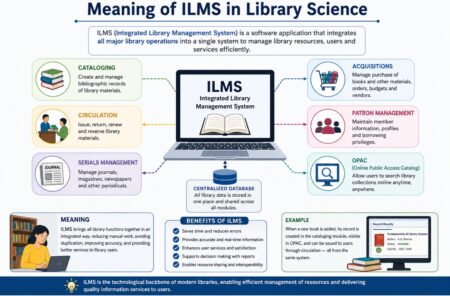
- Libraries in the Age of Innovation: The modern knowledge hub is not limited to books, databases, or workshops; it also integrates cutting-edge technologies. Many libraries are adopting AI-driven search tools, cloud-based repositories, RFID-enabled self-checkout systems, and big data analytics to improve efficiency and enhance user experience. Some institutions are experimenting with virtual reality (VR) and augmented reality (AR) to provide immersive learning experiences, while others are digitizing rare collections to preserve cultural heritage and make it accessible globally. The role of librarians has evolved as well, shifting from custodians to knowledge navigators and digital literacy educators.
The transformation of libraries from storehouses of books to multifaceted knowledge hubs reflects a broader shift in society’s relationship with information. While the traditional role of preservation remains important, libraries have embraced technology, democratized access, and expanded their services to support learning, research, and community development. Today’s libraries are active, innovative, and inclusive institutions that empower individuals to not only consume knowledge but also to create and share it. As the world becomes more digitally connected and knowledge-driven, libraries will continue to stand as indispensable gateways that bridge the past with the future.
Ensuring Equitable Access to Knowledge: The Role of Libraries in Diverse Communities
Libraries play a crucial role in ensuring equitable access to knowledge for diverse communities by breaking down economic, technological, and social barriers that often prevent individuals from learning and growing. One of the most important contributions libraries make is removing financial barriers to information. Scholarly resources, e-books, and journals can be prohibitively expensive for individuals, yet academic libraries subscribe to databases such as Scopus, JSTOR, and SpringerLink, allowing students and researchers to access them freely. Similarly, public libraries provide lending services for books, e-books, and multimedia content without cost, and platforms like OverDrive or Libby allow members to borrow materials remotely. By absorbing these costs, libraries guarantee that knowledge is not reserved for those with economic privilege.
In addition to affordability, libraries help bridge the digital divide by providing free Wi-Fi, computer labs, and digital learning platforms. This service is especially valuable in rural and underserved areas where access to reliable internet and technology is limited. Many public libraries operate mobile library services or book buses that deliver internet access, reading materials, and educational resources to remote communities. Academic libraries extend this effort through remote authentication tools such as OpenAthens and EZproxy, enabling students and faculty to use databases and digital resources from anywhere. In this way, libraries connect even marginalized groups to global knowledge networks.
Equity in libraries also means designing services that are inclusive of different abilities, languages, and learning needs. Many libraries provide braille books, audiobooks, screen readers, and assistive technologies for visually impaired patrons, while others translate resources into multiple languages to serve culturally diverse populations. National libraries in multilingual countries like Canada and India curate materials in several languages, ensuring access for indigenous and regional communities. Accessibility is also prioritized through wheelchair-friendly infrastructure, quiet study zones, and designated learning spaces, creating an environment where everyone feels welcome.
Beyond resources and technology, libraries support lifelong learning by offering training and skill-building opportunities. Public libraries host literacy programs for children, digital literacy classes for adults, and career development workshops for job seekers, covering everything from resume writing to coding skills. Academic libraries extend this support by organizing research training, academic writing workshops, and plagiarism awareness programs, ensuring that all learners—regardless of background—are equipped to succeed. These initiatives transform libraries into lifelong learning centers where knowledge is continuously available and beneficial.
Equitable access is also strengthened through outreach and partnerships. Libraries collaborate with schools, NGOs, cultural institutions, and government agencies to reach underserved populations. Services such as prison libraries, refugee library programs, and mobile outreach in rural areas show the proactive steps libraries take to deliver knowledge where it is needed most. In many parts of Africa and South Asia, partnerships between public libraries and NGOs have enabled the delivery of agricultural, health, and educational information directly to local communities.
By removing economic barriers, bridging the digital divide, fostering inclusivity, supporting lifelong learning, and engaging in outreach, libraries uphold their mission as equalizers of knowledge. They make information a shared resource rather than a privilege, empowering individuals from all walks of life to participate in education, research, and personal development. As societies continue to evolve in the digital age, libraries remain vital institutions of equity, ensuring that knowledge is accessible, inclusive, and transformative for diverse communities.