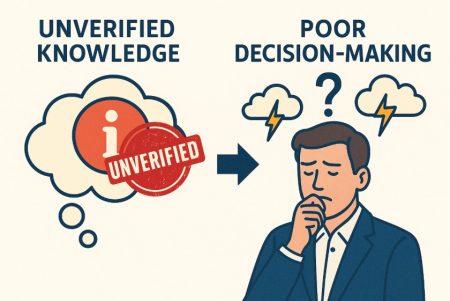
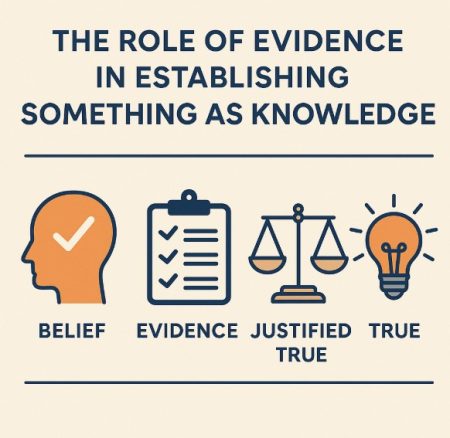
Classical theories of knowledge form the foundation of epistemology, the branch of philosophy that investigates the nature, scope, and limits of human understanding. One of the most influential and widely discussed accounts comes from Plato, who defined knowledge as “justified true belief.” According to this theory, three conditions must be satisfied for something to count as knowledge: the belief must be true, the individual must genuinely believe it, and there must be sufficient justification to support that belief. For example, if someone believes that the sun will rise tomorrow because of personal habit or superstition, this is mere opinion. However, if their belief is grounded in astronomical reasoning and scientific evidence, it becomes a justified, true belief and therefore qualifies as knowledge. This distinction helps to separate knowledge from simple guesswork. Other classical thinkers also contributed to the debate. Aristotle, for instance, emphasized the role of systematic reasoning and empirical observation in securing reliable knowledge, such as studying natural phenomena to understand causes rather than relying solely on tradition. Meanwhile, skeptics questioned whether humans could ever achieve certainty, arguing that what people often consider knowledge might be influenced by perception or cultural bias. Although Plato’s definition dominated for centuries, it was later challenged by cases such as the Gettier problem, which showed that a belief could be true and justified yet still fail to be genuine knowledge, for instance, someone believing a clock shows the correct time, when it does so only by coincidence. These examples highlight how classical theories not only shaped the philosophical understanding of knowledge but also set the stage for ongoing debates in modern epistemology.
The Main Classical Theories of Knowledge in Philosophy
The question “What is knowledge?” has been at the heart of philosophy for centuries. Epistemology, the branch of philosophy that studies knowledge, explores what it means to know something, how knowledge is acquired, and how it differs from mere opinion or belief. Classical theories of knowledge provide the foundation upon which modern debates in epistemology are built. Thinkers from Plato and Aristotle to Descartes, Locke, and Hume offered distinct perspectives on what counts as knowledge, often in response to each other. This article discusses the main classical theories of knowledge, highlighting their contributions, examples, and criticisms.
Plato’s Theory of Justified True Belief
Plato, in his dialogue Theaetetus, defined knowledge as “justified true belief.” According to this model, three conditions must be satisfied for something to count as knowledge: it must be true, the individual must believe it, and there must be justification supporting the belief. For example, a person who claims that “water boils at 100°C at sea level” knows this fact because it is true, they believe it, and it can be justified by scientific reasoning and observation. Plato’s definition distinguished knowledge from mere opinion, giving epistemology a structured foundation. However, the model was challenged much later by the 20th-century philosopher Edmund Gettier, who showed that justified true belief could sometimes fail to be knowledge in certain problem cases.
Aristotle’s Empiricism and Intellectual Insight
While Plato emphasized abstract reasoning, Aristotle rooted knowledge in empirical observation combined with rational explanation. He argued that all knowledge begins with sensory perception, which provides the raw data of experience. The mind then processes this data, forming universal concepts and principles. For instance, repeated observation of fire burning objects leads to the general principle that “fire causes burning.” Aristotle believed true knowledge goes beyond mere observation, requiring understanding of the causes behind phenomena. His integration of empirical and rational methods laid the foundation for scientific inquiry and influenced both medieval and modern philosophy.
Rationalism: Knowledge Through Reason
Rationalism, championed by philosophers like René Descartes, stressed that reason is the ultimate source of knowledge. Descartes famously sought certainty by doubting everything that could be doubted, arriving at his foundational statement “Cogito, ergo sum” (“I think, therefore I am”). Rationalists argued that certain truths—such as mathematics or logic—do not depend on sensory experience but are known through innate ideas and deductive reasoning. For example, the truth of the statement “2 + 2 = 4” does not rely on physical experience but is accessible through pure reason. This approach highlighted the limits of the senses, which can often be deceptive, and emphasized the role of rational certainty in securing knowledge.
Empiricism: Knowledge Through Experience
In contrast, empiricists like John Locke, George Berkeley, and David Hume argued that all knowledge originates in sensory experience. Locke described the human mind as a tabula rasa (blank slate), upon which experiences are written. For him, concepts such as “red” or “sweet” come from repeated sensory impressions. Berkeley extended this view, insisting that “to be is to be perceived,” while Hume took a skeptical stance, questioning the certainty of causal claims. For instance, while we see the sun rise every day, Hume argued this does not prove it will always rise, since inductive reasoning cannot guarantee future outcomes. Empiricism emphasized observation and experimentation, profoundly shaping the development of modern science.
Skepticism: Questioning the Possibility of Knowledge
Skeptics, both ancient and modern, challenged whether humans can achieve true knowledge at all. Ancient thinkers like Pyrrho argued for suspending judgment, since perception and reasoning are prone to error. Skepticism highlights cases where what we perceive or believe may turn out to be false—for example, illusions, dreams, or mistaken identifications. Modern skeptics also point to cultural bias and subjective interpretation as barriers to certainty. While skepticism can seem paralyzing, it has historically pushed philosophers to refine their definitions and justifications of knowledge more rigorously.
The Gettier Problem and the Legacy of Classical Theories
Although not ancient, Edmund Gettier’s 1963 paper dramatically reshaped epistemology by challenging Plato’s definition of knowledge as justified true belief. He presented scenarios where someone had a belief that was true and justified, but true only by coincidence, such as a broken clock showing the right time when someone checks it. These cases suggest that classical theories of knowledge were incomplete, sparking new debates on whether knowledge requires additional conditions beyond justification, truth, and belief.
The main classical theories of knowledge, Plato’s justified true belief, Aristotle’s empirical-rational model, rationalism, empiricism, and skepticism, laid the foundation for centuries of philosophical inquiry. Each theory attempted to clarify how humans can distinguish true knowledge from mere opinion, guesswork, or illusion. While these perspectives differ, together they illustrate the complexity of the question “What is knowledge?” and show why epistemology remains a central field of philosophy. The challenges posed by later thinkers, such as Gettier, demonstrate that the debate is far from settled, ensuring that the exploration of knowledge continues to evolve.
Plato’s Definition of Knowledge as Justified True Belief
Plato’s definition of knowledge as “justified true belief” remains one of the most enduring and influential contributions to philosophy, shaping centuries of debate about the nature of human understanding. In his dialogue Theaetetus, Plato explained that knowledge cannot be reduced to mere belief or opinion, since beliefs can often be mistaken or formed by chance. Instead, for a belief to count as knowledge, it must meet three essential conditions: it must be true, it must be sincerely believed by the individual, and it must be justified by sufficient reasons or evidence. Truth ensures that the claim corresponds to reality, belief ensures that the person genuinely accepts it, and justification provides rational support that distinguishes knowledge from simple guesswork.
This model becomes clearer when we consider everyday examples. Take the case of a student who asserts that Dhaka is the capital of Bangladesh. This qualifies as knowledge because the claim is true, the student genuinely believes it, and the belief is supported by justifications as lessons from geography textbooks, government documents, or maps. By contrast, if someone randomly guesses that Dhaka is the capital without any supporting evidence, their correct answer would lack justification and therefore not qualify as knowledge. Similarly, in science, a researcher who claims that water boils at 100°C at sea level demonstrates knowledge, because this fact is true, backed by experimental evidence, and widely accepted within scientific reasoning. Without the justification of repeated testing and observation, such a claim would remain a mere belief rather than scientific knowledge.
Legal contexts also illustrate Plato’s idea. Suppose a jury concludes that a suspect is guilty. If this conclusion is supported by credible evidence such as fingerprints, CCTV footage, and witness testimony, their belief in the suspect’s guilt can be considered knowledge. However, if the jury simply “feels” the suspect is guilty without strong evidence, even if the verdict happens to be correct, it would not qualify as knowledge because justification is missing. The same logic applies in everyday life- for instance, if you believe your friend will arrive at 6 p.m. because they always take the same bus, and you know the bus schedule, this belief is justified and becomes knowledge once the friend arrives. On the other hand, if you guessed the time by chance without reasoning, it would be a mere lucky belief.
While Plato’s theory provided a powerful framework for understanding knowledge, it has faced challenges, particularly from Edmund Gettier in 1963. Gettier presented scenarios where individuals held beliefs that were true and justified, yet not knowledge, because they were true only by coincidence. For example, someone might look at a broken clock that coincidentally shows the correct time. Their belief that it is “3 o’clock” is true and justified, but it does not feel like genuine knowledge. These examples revealed the limitations of Plato’s definition, sparking debates about whether additional conditions are needed to fully define knowledge.
Despite these criticisms, Plato’s model remains a cornerstone of epistemology. It offers a clear way of separating knowledge from mere belief, chance, or superstition, and it continues to be applied in contexts as diverse as science, law, education, and everyday reasoning. By highlighting the roles of truth, belief, and justification, Plato set the groundwork for understanding how humans approach knowledge and why justification is essential for claims to be more than just lucky guesses.
Why Plato’s Definition of Knowledge Was Considered Revolutionary in Ancient Philosophy
Plato’s definition of knowledge as “justified true belief” was considered revolutionary in ancient philosophy because it transformed the way people understood the difference between knowledge and mere opinion. In ancient Greece, many believed that knowledge, or doxa, could be equated with opinion, habit, or cultural tradition. Plato challenged this by insisting that even if an opinion turned out to be correct, it could not be considered knowledge without proper justification. For example, a farmer might believe it will rain tomorrow based on superstition, and if it does rain, the belief is true, but still not knowledge because it lacks rational support. By introducing the three-part structure of truth, belief, and justification, Plato provided a systematic model for evaluating claims, ensuring that knowledge corresponded to reality, was genuinely believed, and was supported by evidence or reasoning. This approach was groundbreaking because it elevated knowledge beyond practical skills or intuition, requiring rational analysis instead of mere guesswork. A skilled sailor predicting a storm through instinct might have experience, but Plato argued that true knowledge must include justification, such as understanding natural causes like wind and weather patterns. In doing so, Plato laid the foundation for epistemology, turning the study of knowledge into a distinct philosophical discipline. His model not only provided clarity but also inspired centuries of debate about what counts as adequate justification and whether certainty is even possible. This critical shift in thinking influenced later philosophers such as Aristotle and Descartes, and it continues to shape epistemological debates today. By setting higher standards for knowledge and separating it from opinion, Plato’s definition reshaped philosophy and ensured that the question “What is knowledge?” would remain central to human inquiry.