
The Universal Decimal Classification (UDC) system is a comprehensive and highly detailed method for organizing and classifying knowledge across various fields. Developed in the late 19th century by Belgian bibliographers Paul Otlet and Henri La Fontaine, the UDC is an expansion of the Dewey Decimal Classification (DDC) and is designed to meet the growing need for a flexible and precise classification system in libraries, information centers, and digital repositories.
Unlike other classification systems, the UDC uses a decimal notation system combined with symbols and numbers to represent a wide array of subjects, from the most general to the most specific. Its analytico-synthetic structure allows for both the decomposition of complex subjects into their components (analytic) and the combination of multiple facets (synthetic) to create a nuanced, hierarchical classification scheme. This flexibility makes the UDC suitable for organizing multidisciplinary knowledge and facilitating efficient information retrieval.
The UDC system is widely used around the world and supports the organization of materials in over 50 languages. It is particularly valuable in libraries, museums, and research institutions where the classification of diverse collections is essential for efficient access and discovery. The UDC continues to evolve, embracing new fields of knowledge and adapting to the digital age, ensuring that it remains a key tool in the organization and retrieval of information globally.
The Universal Decimal Classification (UDC) Scheme
The Universal Decimal Classification (UDC) scheme was developed in 1895 by the Belgian barrister Paul Otlet and Nobel Prize winner Henri La Fountaine. The UDC is peculiar in that it consists of a combination of both enumerative and faceted characters of the schemes. Hence, it is designated as an Almost-Faceted Scheme of Classification. The UDC is derived from DDC as universal since it encompasses the whole field of knowledge. It is the multi-lingual general classification tool for organizing all kinds of recorded knowledge in the library. It is an international classification system mainly developed for the purpose of indexing and arranging an enormous card bibliography, which includes not only books but also all kinds of documents, periodical articles, patents, trade catalogues, abstracts, and other micro documents in more than 50 different international languages.
The International Institute of Bibliography (IIB) was organized under the aegis of an International Conference on Bibliography held in Brussels in 1895. One of the main objectives was to devise a classification scheme for its use in indexing world literature. The existing classification schemes were found inadequate; therefore, it is an international extension and adaptation of the DDC, initially by two Belgians, Paul Otlet and Henry La Fontaine. The first edition appeared in French in 1905 as Manual du Repertoire Bibliographique Universel, which has 33,000 sub-divisions. The second edition was also published in French, containing 70,000 sub-divisions. The third edition was published in German in 7 tables and three alphabetic index volumes containing 140,000 sub-divisions. Complete editions have also appeared in French, Spanish, and Japanese languages. The English translation was published in 1943 and entitled “Universal Decimal Classification” and was designated as the fourth international edition. The British Standards Institution published the third revised edition of the abridged English Edition in 1961. The Abridged edition of the UDC has been published in 13 different languages.
Development of the Universal Decimal Classification (UDC) System
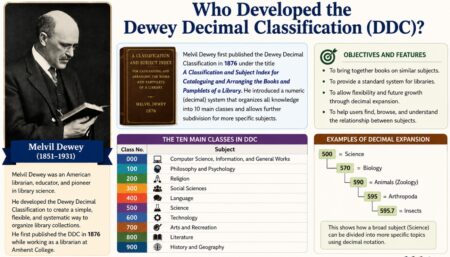
Paul Otlet and Henri La Fontaine were influenced by earlier systems of classification, particularly the Dewey Decimal Classification (DDC), developed by Melvil Dewey in the United States. However, while the DDC was effective for classifying books within specific categories, it did not provide enough granularity for more specialized fields or interdisciplinary knowledge. Otlet and La Fontaine aimed to create a system that would be more flexible and precise, capable of accommodating a vast range of subjects and allowing for greater specificity when classifying materials.
Their work led to the development of the Universal Decimal Classification (UDC) in the early 1900s, which was intended to be a comprehensive system for organizing all types of knowledge across all disciplines. Unlike the DDC, which used a simple numerical system for categorizing knowledge, the UDC was designed to be analytico-synthetic. This means that the system could not only break down complex subjects into smaller, more manageable components (analytic) but also allow for the combination of multiple concepts to form new categories (synthetic).
One of the distinguishing features of UDC is its use of a decimal-based notation system, where each number represents a specific subject, and the system can easily expand to accommodate new fields of knowledge. Additionally, UDC employs various symbols and punctuation marks to separate and link related concepts, making it more dynamic and precise than other classification systems of its time.
Purpose of the Universal Decimal Classification (UDC) System
The Universal Decimal Classification (UDC) system serves multiple purposes in the organization and retrieval of knowledge across a wide range of subjects and disciplines. Designed by Paul Otlet and Henri La Fontaine, the UDC system was created to address the limitations of earlier classification schemes and to support the growing and increasingly complex body of knowledge in the 19th and 20th centuries. The following are the key purposes behind the development and continued use of the UDC system:
- Comprehensive Organization of Knowledge: One of the primary purposes of the UDC system is to provide a comprehensive framework for the organization of knowledge. The UDC was designed to classify all fields of knowledge, from basic concepts to specialized academic disciplines, covering both traditional subjects like literature, history, and philosophy, as well as emerging areas in science, technology, and digital fields. By offering an organized approach to knowledge, UDC allows libraries, information centers, and databases to store and manage vast collections of materials effectively, enabling easier access and discovery.
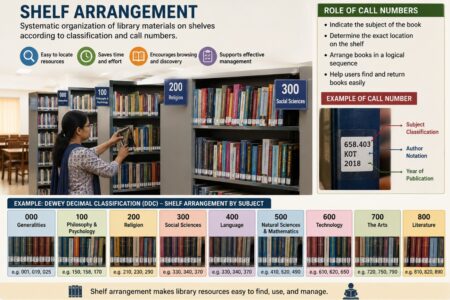
- Facilitating Information Retrieval: A critical purpose of UDC is to enhance information retrieval. The system’s detailed and precise classification structure ensures that library materials, research papers, books, and digital resources can be easily located based on their subject matter. The hierarchical structure of UDC, with broad categories and more specific subdivisions, allows for the efficient organization of resources, which helps users find relevant information quickly and accurately. This is especially beneficial for researchers, students, and library users who need to navigate large, diverse collections.
- Adaptability and Flexibility for Multidisciplinary and Specialized Knowledge: UDC’s analytic-synthetic approach provides the flexibility to classify complex, multidisciplinary, and interdisciplinary subjects. In the modern world, many topics span across multiple fields of study, and UDC allows the classification of materials in a way that reflects these cross-disciplinary connections. For instance, a subject like “biotechnology” can be classified under both biology and technology, thus making it accessible to users from different academic backgrounds. This adaptability also allows UDC to be extended and updated as new fields and technologies emerge.
- Global Standardization and International Knowledge Sharing: UDC was developed with the goal of creating a universal classification system that could be used internationally. UDC promotes the global sharing of information by offering a standardized method of organizing knowledge. It enables libraries, research institutions, and other information repositories across the world to use a common system for organizing their collections. The UDC system has been translated into over 50 languages, making it widely accessible and facilitating the exchange of knowledge across linguistic and cultural boundaries. As a result, UDC plays a key role in promoting international collaboration in fields such as academia, research, and information science.
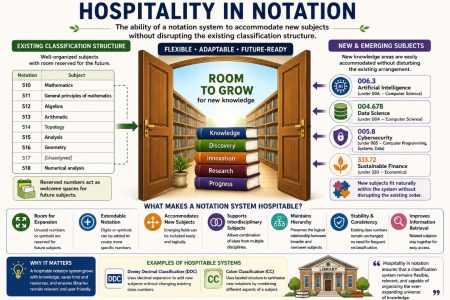
- Accommodating New Knowledge and Emerging Fields: As the world of knowledge continuously evolves, the UDC system remains adaptable to new disciplines, emerging scientific fields, and innovations in technology. The flexibility of the UDC allows it to integrate new areas of study, ensuring that the system stays relevant and up-to-date with current knowledge. For example, the rise of digital information, the internet, and artificial intelligence can all be effectively incorporated into the UDC structure, allowing libraries and digital repositories to classify and organize resources related to these new domains. This makes UDC a dynamic tool for managing modern information needs.
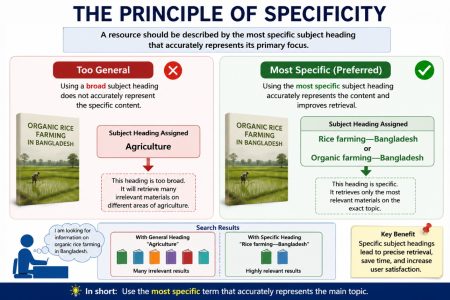
- Precise and Granular Classification: UDC’s use of a decimal-based notation system enables a highly detailed and granular classification of subjects. Each subject in the UDC is represented by a unique code or number, which can be expanded to accommodate increasing levels of detail. For example, the number for “history” (9) can be further subdivided into specific historical periods, geographical regions, or types of history (e.g., military history, social history). This level of detail makes the system particularly useful for classifying specialized materials and allows for fine-grained categorization, ensuring that users can find exactly what they need without ambiguity.
- Supporting the Organization of Digital and Non-Physical Resources: In addition to organizing traditional physical resources, UDC is also designed to accommodate digital resources. As libraries and information centers shift towards digital collections and online repositories, UDC plays an essential role in organizing electronic books, journals, research papers, and multimedia content. The system’s flexible structure can classify not only printed materials but also digital files, websites, databases, and other forms of online content, ensuring that all types of information are organized in a consistent and accessible manner.
- Enhancing the Efficiency of Libraries and Information Systems: By providing a standardized classification system, UDC contributes to the efficiency of library operations. It allows for uniform cataloging, which makes library management more streamlined and systematic. With the UDC system in place, libraries can easily organize their collections, ensuring that materials are grouped together based on subject, and users can access them quickly and easily. This organization also supports automated systems, such as library management software and online databases, making it easier to manage large and dynamic collections in modern libraries and information centers.
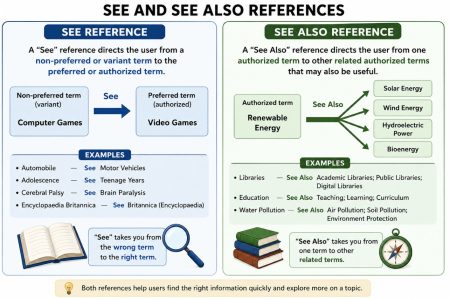
- Promoting Knowledge Discovery and Cross-Referencing: The systematic organization provided by UDC encourages users to discover new areas of knowledge through cross-referencing. For instance, related subjects within the UDC system can be easily linked to one another, allowing users to explore different fields and topics that may not have been immediately obvious. This facilitates interdisciplinary research and provides a means for discovering new connections between diverse bodies of knowledge.
The Universal Decimal Classification (UDC) system plays a crucial role in the organization and retrieval of information in modern libraries and information centers. Its purposes go beyond simply categorizing knowledge; UDC enhances information retrieval, supports multidisciplinary classification, and facilitates global information sharing. By offering a flexible, detailed, and comprehensive structure, UDC ensures that knowledge is organized in a way that is both accessible and useful, supporting the growth of libraries and institutions worldwide as they navigate the increasing complexity of modern information.
Features of UDC
The Universal Decimal Classification (UDC) system is a highly detailed, flexible, and adaptable method for organizing knowledge across a wide range of subjects. Designed to accommodate the growing volume and complexity of information, UDC incorporates several distinctive features that make it a powerful tool for libraries, information centers, and digital repositories. Below are the key features of the UDC system:
- Decimal Notation System: The UDC uses a decimal-based notation system, where each subject is assigned a unique number, and further subdivisions of topics are created using decimal points. This allows for the classification of both broad and specific concepts, with the flexibility to accommodate new subjects as needed. For example, “Science” may be assigned a general number like 5, while a specific subcategory like “Physics” could have a more precise number like 530.
- Analytico-Synthetic Structure: UDC employs an analytic-synthetic structure. This means the system is designed to break down complex subjects into smaller components (analytic) and combine different facets or topics to create more complex classifications (synthetic). This dual approach allows for a more precise and flexible representation of knowledge, especially when dealing with multidisciplinary or specialized topics.
- Multidisciplinary and Flexible: One of the standout features of the UDC system is its ability to classify multidisciplinary subjects. It is not limited to a single field of knowledge but instead covers the entire spectrum of human knowledge, including science, technology, arts, humanities, and more. This makes UDC a highly flexible system that can handle new and emerging fields of study, allowing for the integration of new knowledge without the need for a complete overhaul of the classification structure.
- Use of Symbols and Punctuation: UDC incorporates a variety of symbols and punctuation marks in addition to numbers to create more specific classifications. For example, a colon (“:”) or a slash (“/”) can be used to link concepts together or represent relationships between different subjects. This use of symbols makes the system more dynamic and precise, allowing for complex relationships between subjects to be easily represented.
For instance, a classification for “mathematical methods” might look like 510:62 (mathematics applied to computing). The colon separates the core subject from its specific application, showing the relationship between the general field and the particular topic. - Extensive Hierarchical Structure: The UDC system is organized in a hierarchical manner, with broad subjects at the top level, followed by more detailed subcategories. For example:
0 SCIENCE AND KNOWLEDGE. ORGANIZATION. COMPUTER SCIENCE. INFORMATION. DOCUMENTATION. LIBRARIANSHIP. INSTITUTIONS. PUBLICATIONS
1 PHILOSOPHY. PSYCHOLOGY
2 RELIGION. THEOLOGY
3 SOCIAL SCIENCES
5 MATHEMATICS. NATURAL SCIENCES
6 APPLIED SCIENCES. MEDICINE. TECHNOLOGY
7 THE ARTS. RECREATION. ENTERTAINMENT. SPORT
8 LANGUAGE. LINGUISTICS. LITERATURE
9 GEOGRAPHY. BIOGRAPHY. HISTORY
This hierarchical structure allows for both broad and specific categorization, ensuring that knowledge is organized in a way that is intuitive and manageable. - International Usage and Multilingual Support: The UDC is used globally in libraries, museums, and other information organizations, making it a universal system for knowledge classification. The system has been translated into over 50 languages and is applied in various countries around the world. This widespread use allows libraries and information centers to create consistent classification systems, making information accessible to users from different linguistic and cultural backgrounds.
- Flexibility for New Fields and Technologies: The UDC is designed to be easily extended and updated. As new fields of knowledge and technology emerge, the system can quickly adapt by introducing new subclasses and notations. For example, the rise of digital technology, the internet, and artificial intelligence can be incorporated into the UDC system with new classifications that reflect the latest developments in these areas.
- Detailed Notation for Specialized Knowledge: UDC allows for the detailed classification of specialized knowledge. For instance, while the general category of “Science” might be classified under 5, more specific branches like Physics or Biology are given their own unique numbers, allowing for fine-grained categorization. This feature makes the system especially useful for academic libraries and institutions dealing with complex or highly specialized information.
- Integration of Cross-References: UDC supports cross-referencing, making it possible to link related subjects or materials. When one topic is closely related to another, UDC enables librarians to create cross-references that guide users to relevant, interconnected subjects. For example, a user searching for materials on psychology might be directed to related fields like sociology or neurology based on UDC classifications.
The Universal Decimal Classification (UDC) system is a versatile and dynamic tool for organizing and categorizing the ever-expanding body of human knowledge. With its decimal notation system, analytic-synthetic structure, and international application, UDC offers a robust framework for libraries and information centers to manage both traditional and digital collections. Its detailed, flexible approach makes it a valuable resource for efficiently retrieving information across a broad spectrum of disciplines.
Principles of UDC:
- It is a classification in the strict sense depending on the analysis of an idea and content so that the related concepts and groups of concepts are brought together and are arbitrary or haphazard systemization of alphabetical and other arrangements are avoided.
- It is a universal classification system for which an attempt has been made to include in every field of knowledge not as a patchwork of isolates, self-sufficient specialists grouping but as an integrated pattern and correlated subjects.
- It is constructed on the principles of proceeding from general to the more particular revision of human knowledge into ten main branches, each further subdivided decimally to the required degree.
- It is a practical system for retrieving information in which the order of subjects is not of much more importance than the provision for detailed specifications.
- It also accepts the principles of mutually exclusive classes, collection of related subjects, and consistency of approach.
- It has tried to remove national and racial basis by removing these factors and performing common facets.
- Its notation consists of Indo-Arabic numerals used decimally, allowing infinite hospitality and social sciences.
- It employs certain notational techniques by which it is possible to link simple main classes or other main numbers with auxiliaries indicating place, time, and similar commands used for categories.
UDC Notations and Symbols:
The UDC is based on the outline and notational base of the Dewey Decimal Classification. The basic notation of UDC consists of Indo-Arabic numerals 0-9 used decimally, the different mathematical symbols, and punctuation marks that have converted its notation into a mixed notation. The naught and decimal points have been omitted for convenience and have been implied. The numbers indicate 0, 1, 2, 3, 4, 5—-. UDC uses single-digit numbers, and every digit is a significant one. However, the use of different signs and symbols has added qualities to the notation of UDC.
| Symbols | Expressed as | Significance |
| + | Plus | Connection of non-consecutive numbers |
| / | Stoke | Connection of consecutive numbers |
| : | Colon | Relation |
| [ ] | Square Brackets | Relation (Subordinate) |
| = | Equals | Language |
| (0) | Brackets Naught | Form |
| (0-9) | Brackets | Place |
| (=) | Brackets Equals | Race and Nationality |
| ” “ | Inverted Commas | Time |
| A-Z | A to Z | Individual Sub-divisions |
| – | Hyphen | Special Analytical numbers |
| .00 | Point Double Zero | Point of View |
| .0 | Point Naught | Special Analytical numbers |
Structure of UDC
The whole universe of knowledge in UDC is divided into two categories.
- Systematic Tables- The systematic tables, also called schedules, give the notational number of all basic classes from 0-9. The general order and vocabulary of the main table are the same as DDC. The whole universe of knowledge is divided into ten main branches denoted by decimal fractions and Indo-Arabic numerals. UDC uses one-digit numbers for the main class. The main class numbers and their subdivisions are divided by a continuous extension of the decimal fraction on the principle of proceeding from general to specific. DDC’s practice of using a dot after every three digits has been retained in UDC. In UDC, the 4th class is kept vacant for future subjects.
Ten main Classes of UDC
| 0 | Science and Knowledge. Organization. Computer Science. Information Science. Documentation. Librarianship. Institutions. Publications |
| 1 | Philosophy. Psychology |
| 2 | Religion. Theology |
| 3 | Social Sciences |
| 4 | Vacant |
| 5 | Mathematics. Natural Sciences |
| 6 | Applied Sciences. Medicine, Technology |
| 7 | The Arts. Entertainment. Sport |
| 8 | Linguistics. Literature |
| 9 | Geography. History |
Revision Policy of UDC:
The Scheme is revised and updated from time to time by the International Federation for Information and Documentation (FID). FID achieves the development and maintenance of UDC at Hague through its ultimate coordinating body, the Central Classification Committee. This committee is assisted in its work, directly or indirectly, by the National Committees, Special Subject Committees in each Country, and International Subject Committees. Thus, a decentralized procedure is followed for the revision of the UDC. The revision is done in the following three ways:
- Extension of topics by more detailed sub-divisions.
- Minor changes in the existing class numbers of sub-divisions.
- Starvation Policy introduced by Donker Duyvis. This policy assumes a fair state of collection and opportunity for re-classification. Donker Duyvis used the unused notation in the dynamic and rapidly changing subject.
If the users of the UDC want to suggest amendments or extensions to the schedules, they have to suggest the same to a National Body in their respective Countries. The changes in the UDC are communicated to its users by a half-yearly bulletin titled Extensions and Corrections to UDC. From the end of 1991, responsibility and updating were assumed by a new organization, the UDC Consortium (UDCC), which publishes the bulletin, Extensions, and Corrections of the UDC.
How the Structure of UDC Allows for More Detailed and Flexible Classification
The Universal Decimal Classification (UDC) system stands out in its ability to provide a detailed and flexible classification of knowledge, which makes it particularly useful in libraries, research institutions, and information centers that manage large, diverse collections. UDC’s structure combines several key features that set it apart from other classification systems, allowing for greater precision, adaptability, and multidisciplinary organization. Here’s how the structure of UDC enables these advantages:
- Decimal Notation System: One of the most fundamental features of UDC is its decimal notation system, which is both hierarchical and extensible. In this system, broad categories are represented by whole numbers, and more specific subcategories are created by adding decimal points. For example:
0: General works
5: Science
530: Physics
This allows for an infinite number of levels of detail by continuously subdividing subjects using decimals. Each new subdivision builds on the previous one, creating a granular classification that enables precise categorization. The ability to add more decimal places gives UDC a significant advantage over other systems, like Dewey Decimal Classification (DDC), which may not allow for as much flexibility or as many specific subdivisions. - Analytico-Synthetic Structure: The analytic-synthetic structure of UDC is another key feature that enhances its flexibility and ability to provide detailed classification. The system allows for:
-
- Analytic classification: The breakdown of complex subjects into smaller components. For example, a topic like “Environmental Science” can be broken down into more specific aspects like “Air Pollution,” “Climate Change,” or “Water Resources.”
- Synthetic classification: The combination of various related subjects or facets into a more specific classification. For example, “Energy Systems” could be classified by combining aspects of both Technology (6) and Science (5) to form a more comprehensive classification.
This ability to deconstruct and then recombine concepts makes UDC highly adaptable and capable of accommodating interdisciplinary and emerging fields of knowledge. Unlike other systems that may classify a subject into a single, rigid category, UDC can easily combine multiple aspects of a subject, providing greater flexibility.
-
- Use of Symbols and Punctuation Marks: UDC incorporates symbols and punctuation marks in addition to numbers, which are used to represent relationships between subjects or aspects of a subject. These symbols are used to combine or link different aspects of a subject, providing an added layer of detail:
-
- Colon (:): Used to separate concepts or subcategories.
- Slash (/) or Hyphen (-): Used to connect related fields or show a hierarchy.
- Equal sign (=): Used to show equivalence or close relation between concepts.
For example, 530:62 could represent “Mathematics Applied to Computing” (mathematical methods in computer science), where the colon separates the general field of mathematics from its application in computing. This level of symbolic notation provides a more nuanced and flexible way to organize knowledge than systems that rely solely on numbers.
-
- Multidisciplinary Classification: UDC’s structure is specifically designed to handle multidisciplinary subjects, which is one of its greatest strengths. Many fields of study today require classification that spans multiple disciplines, especially in the case of interdisciplinary research. UDC’s flexibility allows for the cross-referencing and integration of different aspects of knowledge. For example:
-
- Technology (6) and Medicine (61) can be linked to form categories like “Medical Technology.”
- Social Sciences (3) and Psychology (159) can be combined to classify topics like “Social Psychology.”
This is in contrast to other classification systems like Dewey Decimal Classification (DDC), which may not have the same level of flexibility for combining and cross-referencing multiple disciplines. UDC’s structure allows for knowledge to be represented more accurately across its diverse facets.
-
- Flexibility for New Fields and Emerging Subjects: UDC’s expandability and ability to accommodate new subjects are built into its structure. As new areas of knowledge emerge, UDC can incorporate these fields by creating new notations and subclasses, ensuring the system remains relevant over time. For example:
-
- The rise of artificial intelligence, bioinformatics, and digital libraries are all incorporated into UDC by creating new subclassifications under relevant general categories (e.g., under Technology or Computer Science).
Unlike static classification systems, UDC is continuously revised and updated, allowing it to integrate new fields of study as they emerge. This makes UDC particularly effective in handling rapidly changing fields like technology and science.
-
- International Compatibility: UDC’s structure is designed to be universal and adaptable across different languages, cultures, and regions, making it globally applicable. The hierarchical and decimal nature of UDC ensures that it can be applied consistently in various countries and contexts. Since UDC is used in over 130 countries, it supports global knowledge sharing, with institutions across the world using the same system to classify materials. The structure’s international appeal is reinforced by its ability to be translated into over 50 languages, making it adaptable to a range of local contexts while maintaining a unified global standard.
- Hierarchical Nature: UDC’s hierarchical structure divides knowledge into broad categories at the top level, such as:
-
- 0: General Works
- 1: Philosophy
- 3: Social Sciences
- 5: Science
Each broad category is subdivided into more specific subcategories, and these subcategories can further be subdivided as needed. This clear hierarchy ensures that knowledge is classified in a way that reflects its relationship to other subjects, providing an organized, intuitive approach to classification.
-
The structure of UDC offers greater detail and flexibility than other classification systems due to its decimal notation, analytic-synthetic approach, use of symbols, and ability to accommodate multidisciplinary subjects. Its hierarchical and expandability features, coupled with a global reach, make it a powerful tool for organizing knowledge across diverse fields and ensuring easy access to information. UDC’s adaptability and precision set it apart, allowing it to handle the evolving needs of libraries and information systems worldwide.
The Analytico-Synthetic Nature of UDC and Its Impact on the Organization of Knowledge
The analytico-synthetic nature of the Universal Decimal Classification (UDC) refers to the system’s ability to both break down complex subjects into smaller, more manageable components (analytic) and to combine various aspects or facets of knowledge to form a more specific, comprehensive classification (synthetic). This dual approach is one of the key features that sets UDC apart from other classification systems and greatly enhances its flexibility and precision in organizing knowledge.
In its analytic mode, UDC allows subjects to be deconstructed into subcategories that represent specific aspects of the broader topic. For example, the general subject of “Science” (classified under 5) can be broken down into Physics (530), Chemistry (540), and Biology (570), with each of these areas further subdivided into more specialized fields. This analytical process enables the system to handle the complexities of specific subjects by representing them in smaller, more precise units. As new subfields or emerging topics arise, they can easily be integrated into the existing classification structure.
On the synthetic side, UDC allows for the combination of different categories or concepts to create new, more specific classifications. This is particularly useful for organizing multidisciplinary topics. For instance, the combination of Technology (6) and Medicine (61) may result in the classification of “Medical Technology” (e.g., 615 for pharmacology). By linking various disciplines together in this way, the UDC system accommodates the modern trend of interdisciplinary research, where many subjects overlap and require a flexible system for categorization.
The analytico-synthetic nature of UDC significantly impacts the organization of knowledge by providing a dynamic and adaptable framework. It not only allows for precise classification but also offers the flexibility to handle complex, multidisciplinary, and specialized topics. This dual approach ensures that the UDC system remains relevant and effective in an era of rapidly advancing knowledge and emerging fields. It enables knowledge to be classified in a way that reflects its multifaceted nature, ensuring that users can find the information they need in the most relevant context.
Reference Articles:
- RAJU (AA N). Universal decimal classification (IME-1993): Theory and practice: A self instructional manual. 2007. Ess Ess Publications; New Delhi. p-4- 9
- SARDANA (JL) and SEHGAL (RL). Universal decimal classification: Structure and methodology. 1983. Ess Ess Publication; New Delhi. p 1.
- KRISHAN KUMAR. Theory of classification. 1993. Vikas Publishing; New Delhi. p1.
- SHARMA (C D). Use of libraries: A guide to better use of libraries and their resources. 1978. Metropolitan Book; New Delhi. p-120.
- SHARMA (C D). Op. cit., p 121.
- KRISHAN KUMAR. Op. cit., p 4.
- INDIRA GANDHI NATIONAL OPEN UNIVERSITY (IGNOU). Unit 2: Needand purpose of library classification. IGNOU; New Delhi. p 26.
- DUTTA (Dwijendranath). Library classification: Theory and practice. 1962. The Western Book Depot; Nagpur. p 48.
- RAJU (Addepali Appala Narasimha). Dewey decimal classification (DDC 20): Theory and practice: A practical and self instructional manual. 1995. T.R. Publications; Madras. p 4.
- CHOWDHURY (G G). Introduction to modern information retrieval. Ed. 3. 2004. Facet Publishing; London. p 89.
- Nobel Peace Prize 1913. (n.d.). NobelPrize.Org. Retrieved March 1, 2025, from https://www.nobelprize.org/prizes/peace/1913/fontaine/biographical/
- Paul Otlet | Belgian Lawyer, Bibliographer & Father of Information Science | Britannica. (n.d.). Retrieved March 1, 2025, from https://www.britannica.com/biography/Paul-Otlet
- Universal Decimal Classification. (2025). In Wikipedia. https://en.wikipedia.org/w/index.php?title=Universal_Decimal_Classification&oldid=1276468977
- Universal Decimal Classification (UDC) | Interoperable Europe Portal. (n.d.). Retrieved March 1, 2025, from https://interoperable-europe.ec.europa.eu/collection/education-culture-and-sport/document/universal-decimal-classification-udc



5 Comments
I really impressed with the provided explanation vividly thanks, more grease on your elbow.
UDC has following features:
UDC is a practical scheme based on the demands of pamphlets, reports and periodical literature rather than the framework of a theory.
The scheme is based on DDC and claims to be the first Analytico-synthetic classification scheme.
It lays more stress to achieve co-extensive class numbers i.e. detailed specification than the achievement of a sequence of subjects for optimum helpfulness.
It avoids the lacunae of numerous private classification schemes by providing astandard system covering all the disciplines and may be used in any type of library.
It is a general classification scheme and not a bundle of special classification. It is rather an integrated whole.
The scheme reflects exhaustive enumeration in the schedule with due provision for synthesis or coordination.
It is amenable to adjustments to meet the special needs because acitation order in any given class allows alternative treatment.
The use of synthetic devices like colon (:), permits coordination of concept in different permutation, there by minimizing the rigidity in the enumerated classification scheme.
An International body for its maintenance and revision with full cooperation of its users guarantees the continual existence of the system as a current and up-to-date one.
The terminology used in UDC helps in a comprehensive vocabulary of terms for indexing purposes.
Principles of UDC:
It is a classification in the strict sense depending on the analysis of idea, content, so that the related concepts and groups of concepts are brought together and are arbitrary or haphazard systemization of alphabetical and other arrangements are avoided.
It is a universal classification system for which an attempt has been made to include in it every field of knowledge not as a patch work of isolates, self-sufficient specialists grouping but as an integrated pattern and correlated subjects.
It is constructed on the principals of proceeding from general to the more particular revision of the whole human knowledge into ten main branches each further sub-divided decimally to the required degree.
It is a practical system for retrieval of information in which the order of subjects is not of much importance than the provision for detailed specifications.
It also accepts the principles of mutually exclusive classes, collection of related subjects and consistency of approach.
It has tried to remove national and racial basis to some extent by removing these factors and performing common facets.
Its notation consists of Indo-Arabic numerals used decimally which allows infinite hospitality and social sciences.
It employs certain notational techniques by which it is possible to link simple mainclass either which other main number with auxiliaries indicating place, time and similar commands used for categories.
UDC Notations and Symbols:
The UDC is based on the outline and the notational base of the Dewey Decimal Classification. The basic notation of UDC consists of Indo-Arabic numerals 0-9 used decimally, the different mathematical symbols and punctuation marks that have converted its notation into a mixed notation. The naught and decimal point have been omitted for convenience and have been implied. The numbers are simply indicated that is 0, 1, 2, 3, 4, 5—-. UDC uses single digit numbers and every digit is a significant one. However, the use of different signs and symbols has added qualities to the notation of UDC.
Symbols Expressed as Significance
+ Plus Connection of non consecutive numbers
/ Stoke Connection of consecutive numbers
: Colon Relation
[ ] Square Brakets Relation (Subordinate)
= Equals Language
(References: (This document is collected from materials available from online/web and organize here for LIS students)
RAJU (AA N). Universal decimal classification (IME-1993): Theory and practice: A self instructional manual. 2007. Ess Ess Publications; New Delhi. p-4- 9
SARDANA (JL) and SEHGAL (RL). Universal decimal classification: Structure and methodology. 1983. Ess Ess Publication; New Delhi. p 1.
KRISHAN KUMAR. Theory of classification. 1993. Vikas Publishing; New Delhi. p1.
SHARMA (C D). Use of libraries: A guide to better use of libraries and their resources. 1978. Metropolitan Book; New Delhi. p-120.
SHARMA (C D). Op. cit., p 121.
KRISHAN KUMAR. Op. cit., p 4.
INDIRA GANDHI NATIONAL OPEN UNIVERSITY (IGNOU). Unit 2: Needand purpose of library classification. IGNOU; New Delhi. p 26.
DUTTA (Dwijendranath). Library classification: Theory and practice. 1962. The Western Book Depot; Nagpur. p 48.
RAJU (Addepali Appala Narasimha). Dewey decimal classification (DDC 20): Theory and practice: A practical and self instructional manual. 1995. T.R. Publications; Madras. p 4.
CHOWDHURY (G G). Introduction to modern information retrieval. Ed. 3. 2004. Facet Publishing; London. p 89.
Related Articles:
All post of Library Classification here
About Library Classification
Types of Library Classification Schemes
Features of Library Classification Scheme
Purpose & Objectives of Library Classification
Dewey Decimal Classification: Brief Information of DDC
DDC 23rd Edition
Advantages and Disadvantages of DDC (Dewey Decimal Classification) Scheme
Colon Classification: A brief Information About Library Colon Classification
Advantages and Disadvantages of Colon Classification (CC)
Universal Decimal Classification (UDC)
Advantages and disadvantage of UDC (Universal Decimal Classification)
Comparative Analysis Between DDC, UDC and CC Classification Scheme
Library Classification Schemes
Enumerative Classification Scheme
Freely Faceted Classification
Difference between Natural Classification and Artificial Classification
Special Features of Book Classification and its type
Generalia Class / Waste-Paper Basket Class
Criteria of book classification
Purposes of library classification
Classification
Classification Scheme
PREVIOUS ARTICLE
Classification Research Group (CRG)
NEXT ARTICLE
Colon Classification : A brief Information About Li0) Brakets Naught Form
Pls I need the current citation
Can any one answer this question?? UDC is more appropriate for scientific, technical libraries.