Problem-Based Learning (PBL) is an innovative, student-centered approach to education that emphasizes active Learning through the process of solving open-ended problems. Rather than relying on traditional lecture-based instruction, PBL engages students by presenting real-world scenarios requiring critical thinking, collaboration, and self-directed research. In this framework, students take ownership of their learning journey, developing problem-solving skills and deepening their understanding of the subject matter as they work together to find solutions. PBL fosters knowledge acquisition and prepares students for the complexities of real-life challenges by encouraging creativity and resilience.
What is Problem-Based Learning?
Problem-Based Learning (PBL) is an educational approach where students learn by actively engaging in real-world and complex problems. Unlike traditional teaching methods focusing on the direct transmission of knowledge from instructor to student, PBL places students at the center of the learning process. In this model, students are presented with an open-ended problem with no correct answer. They must collaborate, research, and apply their knowledge to develop solutions.
This method encourages students to take responsibility for their Learning, enhances critical thinking skills, and promotes deep understanding by connecting theoretical concepts to practical applications. PBL is widely used in various disciplines, particularly in fields such as medicine, engineering, and education, where problem-solving is a key competency. The goal of PBL is not just to solve the problem at hand but to equip students with the skills and mindset needed to tackle future challenges independently.
Core Components of Problem-Based Learning (PBL)
Problem-based learning (PBL) is an instructional method that has gained significant popularity across various educational fields, particularly in disciplines where critical thinking, problem-solving, and practical application of knowledge are essential. PBL is distinctive in its approach, moving away from traditional lecture-based Learning to a more interactive, student-centered format. The core components of Problem-Based Learning (PBL) include the following:
- Real-World Problems: In PBL, the starting point is a real-world problem that is often messy, complex, and without a clear-cut solution. These problems are carefully chosen to be relevant and reflective of challenges that students may encounter in their professional lives. The problems are typically open-ended, meaning there isn’t a single correct answer. Instead, students must think deeply, explore multiple perspectives, and consider various solutions. This component of PBL is crucial because it mimics real-life situations, helping students develop skills that are directly transferable to the workplace.
- Student-Centered Learning: PBL shifts the traditional classroom dynamic by placing students at the center of the learning process. Instead of passively receiving information from the instructor, students actively participate in their own learning journey. They are responsible for determining what they need to know to solve the problem, deciding how to learn it, and applying what they learn. This approach fosters independence, self-motivation, and a sense of ownership over their education. It also allows students to engage in learning in a way that is meaningful and relevant to them personally.
- Collaboration: Collaboration is a fundamental aspect of PBL. Students typically work in small groups to tackle the problem at hand. This collaborative environment encourages the sharing of ideas, perspectives, and knowledge. Each group member may bring different strengths to the table, allowing for a richer and more diverse exploration of the problem. Students learn to communicate effectively, manage conflicts, delegate tasks, and build on each other’s ideas through collaboration. These skills are essential in most professional settings where teamwork and collaboration are crucial.
- Self-Directed Learning: PBL requires students to take charge of their learning process. They must identify what they already know, what they need to learn, and how they will acquire that knowledge. This might involve researching academic articles, consulting experts, or experimenting with different solutions. Self-directed Learning is a vital skill in today’s fast-paced world, where continuous Learning and adaptation are necessary for success. By engaging in self-directed Learning, students develop critical thinking, problem-solving, and research skills that are essential for lifelong Learning.
- Integration of Knowledge: One of the key strengths of PBL is its ability to integrate knowledge from various disciplines. Real-world problems are rarely confined to a single field of study; they often require a multidisciplinary approach. For example, solving a healthcare-related problem might require biology, ethics, sociology, and communication knowledge. PBL encourages students to draw on their knowledge from different subject areas and apply it in a cohesive and integrated manner. This helps students see the interconnectedness of different disciplines and how they can work together to solve complex problems.
- Reflection: Reflection is an essential part of the PBL process. Students are encouraged to reflect on their learning experiences throughout the problem-solving process. This reflection can occur individually or as a group and typically involves thinking about what worked well, what didn’t, and what could be improved in the future. Reflection helps students internalize the knowledge they’ve gained, understand their learning process, and develop a deeper understanding of the subject matter. It also allows them to become more aware of their strengths and areas for improvement, leading to more effective problem-solving in the future.
- Facilitator Role: In PBL, the instructor’s role shifts from being the primary source of knowledge to being a facilitator of Learning. The facilitator guides students through problem-solving, offering support and asking probing questions that encourage deeper thinking. However, the facilitator does not provide direct answers or solutions; instead, they help students stay focused, manage their group dynamics, and reflect on their Learning. This approach empowers students to take ownership of their Learning while still having access to guidance and support when needed.
The facilitator’s role is crucial in ensuring that students remain engaged and on track, but it’s also carefully balanced to ensure that students remain in control of their learning process. This approach helps develop a learning environment where students feel supported but also challenged to think independently and creatively.
The core components of Problem-Based Learning work together to create a dynamic and engaging learning environment that prepares students for the complexities of the real world. By focusing on real-world problems, fostering student-centered and self-directed Learning, encouraging collaboration, integrating knowledge across disciplines, and promoting reflection, PBL equips students with the skills and mindset needed for success in both their academic and professional lives.
The Process of Problem-Based Learning (PBL)
Problem-Based Learning (PBL) is an educational approach that has transformed traditional teaching paradigms by focusing on student-centered inquiry and real-world application of knowledge. This method enhances understanding of academic content and fosters essential skills such as critical thinking, collaboration, and self-management.
- Introduction of the Problem: The PBL process starts with the introduction of a real-world problem that is complex and without a clear, straightforward solution. This problem should be relevant to the curriculum and resonate with students’ potential professional challenges. The facilitator (usually a teacher or instructor) presents this problem engaging and challenging, prompting students to apply their existing knowledge and skills while identifying areas where further Learning is needed. The problem is crafted to be ambiguous to encourage exploration and simulate the type of uncertainty professionals often face, preparing students for real-life situations.
- Problem Analysis: In this step, students work collaboratively to dissect the problem presented. They discuss their initial thoughts, what they understand about the problem, and what appears unclear or confusing. This discussion leads to the identification of “learning issues”—key pieces of information they need to acquire or understand better to move forward. This phase is crucial as it sets the research agenda and helps students target their learning efforts efficiently. It also promotes critical thinking as students evaluate the problem’s components and their relevance.
- Self-Directed Learning: Following the identification of learning issues, students engage in self-directed Learning. This involves individual or group research where students seek out necessary information through various resources such as academic journals, books, online courses, and expert consultations. This stage fundamentally concerns students taking responsibility for their Learning, deciding how they learn best, and gathering the knowledge needed to address the problem. During this phase, students learn to manage their time effectively, evaluate sources for credibility and relevance, and synthesize information from disparate sources.
- Synthesis of Information and Solution Development: Students reconvene to integrate and apply their newly acquired knowledge after researching. This synthesis involves critical discussion where students compare notes, challenge each other’s understanding, and begin to formulate potential solutions based on the evidence they’ve gathered. The collaborative nature of this phase is essential as it mirrors many real-world settings where team-based problem-solving is the norm. Here, students apply their knowledge and learn to negotiate, persuade, and innovate within a group setting.
- Presentation and Peer Review: The presentation phase requires students to consolidate their findings and proposed solutions into a coherent format that can be communicated to others. This could be through a written report, a presentation, or even a practical demonstration. The act of preparing and delivering a presentation hones students’ communication skills. Subsequently, peer review introduces a critical element where students receive feedback and constructive criticism, allowing them to refine their ideas further and defend their solutions against scrutiny.
- Reflection and Assessment: Reflection is an integral part of the PBL process. After the presentation, students reflect on the entire process, from problem introduction to the final solution. This reflection might involve self-assessment or facilitated sessions where students consider what they learned, how effectively they worked, and what they could improve in the future. Formal assessments by the facilitator also take place in this phase, focusing not just on the final product but also on the process and soft skills like teamwork and communication.
- Iteration and Continued Learning: PBL is not always linear; based on feedback and reflection, students may cycle back to earlier phases to refine their understanding or explore alternative solutions. This iterative process is a realistic aspect of problem-solving in professional contexts where initial solutions often need reevaluation and adjustment. It encourages a mindset of continuous improvement and adaptability.
Problem-Based Learning is a holistic educational journey that prepares students both academically and personally by developing critical life skills such as problem-solving, teamwork, self-management, and effective communication. By engaging students in real-world problems and empowering them to lead their Learning, PBL fosters a deep, enduring understanding of the subject matter and prepares learners for the complexities of the professional world. This dynamic process, with its focus on active Learning and continuous improvement, illustrates a powerful shift in educational paradigms, emphasizing that Learning is about acquiring knowledge and becoming a capable and proactive individual.
How does Problem-Based Learning differ from Traditional Teaching Methods?
Problem-Based Learning (PBL) and traditional teaching methods differ significantly in their approach, objectives, and outcomes. While traditional methods have dominated education systems for centuries, PBL offers a dynamic alternative that aligns closely with the needs of contemporary learners and modern workplaces. Here’s a comparison of how PBL differs from traditional teaching methods:
| Aspect | Traditional Methods | PBL |
|---|---|---|
| Learning Approach | Traditional education typically follows a teacher-centered approach, where the instructor is the primary source of knowledge. Teaching is often conducted through lectures, where students passively receive information. The focus is on rote memorization and the recitation of facts. | In contrast, PBL is student-centered and inquiry-based. Students learn by actively engaging with real-world problems that require critical thinking and problem-solving. This method encourages students to investigate issues, ask questions, and discover answers for themselves, thereby fostering a deeper understanding of the subject matter. |
| Role of the Teacher | In traditional settings, the teacher acts as the expert and disseminator of knowledge. Students are expected to absorb this knowledge, often without question, and the teacher directs the learning process. | In PBL, the teacher’s role is that of a facilitator or guide. Instead of providing direct answers, teachers help students navigate their learning paths by posing thought-provoking questions, guiding research, and encouraging discussion. This approach empowers students to take ownership of their Learning. |
| Curriculum Structure | The curriculum in traditional education is typically structured around standardized tests and a fixed syllabus. Students progress through a linear curriculum covering a specific knowledge body within set time frames. | PBL does not follow a strict linear curriculum. Instead, it uses flexible, problem-driven curricula that integrate knowledge from various disciplines based on the problem at hand. This interdisciplinary approach helps students make connections across different subject areas, reflecting the interconnected nature of real-world issues. |
| Assessment Techniques | Assessment is often based on standardized tests and exams that measure students’ ability to recall and apply knowledge. These assessments usually focus on individual performance and are used to grade students against a predefined standard. | In PBL, assessment is more holistic and continuous. It evaluates the final product or solution and the process involved in reaching that solution, including teamwork, research, and problem-solving skills. Assessments in PBL often include self-assessments, peer reviews, and reflective essays, which help students develop a more comprehensive understanding of their learning processes. |
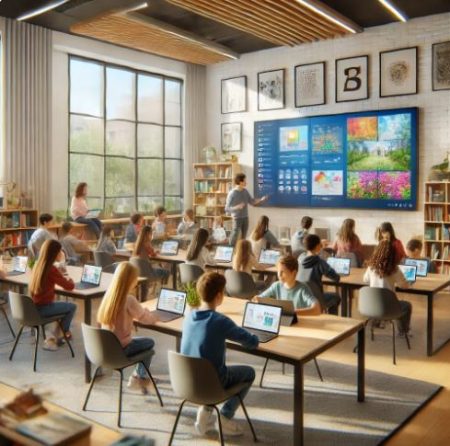
| Learning Environment | The learning environment in traditional education is typically structured and formal. Students learn in classroom settings where individual desks face the teacher who leads the session. | PBL often takes place in a more collaborative and informal setting. Students might work in groups around a table, discussing and solving problems together. This environment fosters teamwork and communication skills, which are vital in most professional contexts. |
| Outcomes and Skills Development | Traditional teaching methods primarily focus on academic success and the mastery of content. While important, this approach may not always equip students with practical skills needed in the workplace, such as critical thinking, problem-solving, and adaptability. | PBL prepares students for real-life challenges by emphasizing practical skills and lifelong learning abilities. It helps students develop academic knowledge and soft skills like leadership, teamwork, and effective communication, which are crucial for success in today’s dynamic world. |
Problem-Based Learning offers a more dynamic and practical approach to education compared to traditional teaching methods. By focusing on active Learning, real-world applications, and the development of essential life skills, PBL better prepares students for the complexities of modern professional environments and ongoing personal growth.
How does problem-based Learning enhance student engagement and motivation?
Problem-Based Learning (PBL) significantly boosts student engagement and motivation through its dynamic and interactive approach to education, which contrasts sharply with traditional, lecture-based teaching methods. PBL focuses on real-world problems that require active participation from students, making Learning immediately relevant and applicable. This relevance helps students see the practical impact of their studies, driving interest and engagement. PBL also places students at the center of their learning journey, allowing them to guide their investigation and solution development. This ownership increases motivation as students feel more responsible for and invested in their outcomes.
Collaboration is another key element of PBL that enhances engagement. Students work in groups to solve problems, creating a community learning environment that fosters interaction and peer support. This makes Learning more enjoyable and encourages a deeper commitment to the group’s goals. The challenges posed by PBL are designed to be both stimulating and achievable, providing students with a sense of accomplishment and progress as they work towards solving complex issues. Continuous feedback and opportunities for reflection help students refine their strategies and understand their learning process, which keeps them engaged and motivated to improve.
PBL also prepares students for the professional world by developing essential soft skills such as critical thinking, problem-solving, and effective communication. Developing these skills can significantly motivate students as they recognize the value they will have in their future careers. Combining practical relevance, active involvement, collaborative Learning, and skill development in PBL creates a rich, stimulating educational experience that significantly enhances student motivation and engagement.
What roles do instructors and facilitators play in a problem-based learning environment?
In a Problem-Based Learning (PBL) environment, the roles of instructors and facilitators are pivotal but distinct from traditional teaching roles. Here’s how they contribute to the learning process:
- Facilitator Rather Than Traditional Instructor: In PBL, educators act more as facilitators than traditional lecturers. Their primary role is to guide the learning process rather than directly transmit knowledge. This involves setting up the learning environment, introducing problems, and helping students navigate the challenges. Facilitators are not the central figures of information; instead, they empower students to find and evaluate information themselves.
- Designing and Framing Problems: One of the critical responsibilities of PBL facilitators is to design and frame the problems that will engage students. These problems need to be complex enough to challenge students but also aligned with the course’s learning objectives. Facilitators ensure that problems are open-ended and relevant, providing a real-world context that enhances learning and applicability.
- Guiding the Learning Process: Facilitators guide the learning process by helping students understand the problem and its requirements. This may involve prompting students with strategic questions, providing necessary resources, or pointing students toward potential research paths. The goal is to support students in their learning journey without leading it, allowing them to develop autonomy and critical thinking skills.
- Encouraging Collaboration: Collaboration is essential in PBL. Facilitators encourage and support group dynamics, ensuring all students are actively involved in problem-solving. They help manage interpersonal dynamics and conflict within groups, fostering an environment where all voices are heard and valued. This role is crucial in developing students’ teamwork and communication skills.
- Monitoring Progress: Facilitators monitor students’ progress, ensuring they are on track to achieve the learning objectives. This involves checking in with groups, assessing their research and problem-solving strategies, and providing feedback when necessary. Monitoring progress also helps facilitators identify any areas where students might be struggling, allowing for timely interventions.
- Providing Feedback and Assessment: Feedback is a continuous part of the PBL process. Facilitators provide ongoing, formative feedback that helps students reflect on their learning and refine their approaches. This feedback is crucial for learning as it helps students identify strengths and areas for improvement. Additionally, facilitators are responsible for the summative assessment of students’ performance, evaluating both the process and the final solutions.
- Fostering Reflection: Facilitators encourage students to engage in reflection throughout the PBL process. Reflective practice helps students internalize what they have learned, understand their cognitive and collaborative processes, and recognize how they can apply their knowledge in the future. Facilitators guide these reflections, often integrating them into formal learning assessments.
- Creating a Supportive Learning Environment: Facilitators create and maintain a supportive learning environment that encourages risk-taking and experimentation. They ensure that the classroom is a safe space for inquiry, debate, and error-making, which are all integral to the PBL experience. This supportive environment is vital for fostering creativity and innovation among students.
The role of instructors and facilitators in a PBL environment is multifaceted and centered around supporting, guiding, and empowering students rather than directing them. This shift enhances student engagement and learning outcomes and prepares students with the skills needed for lifelong learning and professional success.
What challenges do educators face when implementing problem-based learning in their classrooms?
Implementing Problem-Based Learning (PBL) in the classroom presents educators with several distinct challenges that stem from both logistical and pedagogical shifts required by this approach. One major challenge is the transition from traditional teaching roles to the role of a facilitator. This shift requires educators to guide and support student-led learning without directly imparting knowledge, a change that can be difficult for those accustomed to more directive teaching styles. Educators must develop new skills, such as managing group dynamics, encouraging deep inquiry, and facilitating reflective thinking.
Designing effective PBL scenarios is another significant hurdle. These scenarios must be engaging, appropriately complex, and aligned with educational goals. Creating such balanced problems demands substantial time, effort, and creativity. Additionally, PBL is resource-intensive, requiring access to diverse materials and databases for student research, which can be a constraint, especially in under-resourced settings.
Assessment in PBL also poses a challenge because it requires evaluating the final product and the learning process itself, including students’ collaboration, problem-solving, and critical thinking skills. Developing comprehensive and fair assessment criteria that capture these diverse outcomes can be complex. Furthermore, some students may resist the PBL approach, particularly if they are used to more structured and predictable learning environments. This resistance can necessitate additional efforts from educators to help students adjust and understand the benefits of PBL.
Group dynamics present another challenge; not all groups function effectively, and conflicts or uneven participation can impede progress. Educators need to be adept at facilitating positive group interactions and resolving conflicts. Additionally, implementing PBL in larger classes or within tight curricular timelines can be difficult due to the intensive nature of facilitation and the time-consuming aspects of PBL projects. Professional development is crucial for educators transitioning to PBL. They often require training in specific skills related to PBL, such as effective questioning techniques and resource management. However, such training may not always be available, requiring institutions to support educators in adopting this innovative teaching approach. Despite these challenges, the benefits of PBL—such as enhanced student engagement, critical thinking, and real-world skills—make overcoming these hurdles worthwhile, promoting a more dynamic and effective learning environment.
Can problem-based learning be effectively used in online education settings?
Problem-Based Learning (PBL) can be effectively implemented in online education settings, though it requires careful adaptation to maximize its benefits. Online platforms offer unique advantages for PBL, such as broad access to digital resources, the ability to connect students from diverse geographical and cultural backgrounds, and the flexibility for students to engage with learning materials and group discussions on their own schedule. These features can enhance the PBL experience by providing a rich array of information sources and varied perspectives on the problems being tackled.
However, effective implementation of PBL online also faces specific challenges. One of the primary issues is fostering a sense of community and collaboration among students who may feel isolated due to the lack of physical presence. To overcome this, educators can utilize interactive tools such as video conferencing, collaborative workspaces, and discussion forums to facilitate direct interaction and build a collaborative learning environment. Maintaining student engagement is another challenge, as online settings often lack the immediate feedback and interaction of a traditional classroom. Educators must employ regular check-ins, interactive activities, and dynamic multimedia content to keep students actively involved.
Assessment in an online PBL setting also needs careful consideration. Unlike traditional tests and written assignments, PBL requires assessing both the process and the product of learning, including collaboration, problem-solving abilities, and the application of knowledge. Online tools and analytics can aid in tracking participation and progress, providing insights that help tailor feedback and support. Ensuring all students have equal access to the necessary technology and internet connectivity is crucial for equitable participation in online PBL. Educational institutions must address these disparities to ensure that every student can fully engage with the PBL activities.
Some FAQ about Problem-Based Learning (PBL):
- What is Problem-Based Learning (PBL)?
Problem-Based Learning is an instructional methodology that uses real-world problems as the starting point for learning. Students learn about a subject through the experience of solving an open-ended problem presented in a contextualized scenario, encouraging them to work collaboratively and think critically. - How does PBL differ from traditional learning methods?
Unlike traditional learning, where teachers provide facts and then test knowledge through exams, PBL encourages students to research and apply knowledge to solve problems. This method promotes active learning, self-directed study, and peer collaboration. - What are the benefits of PBL?
PBL helps develop critical thinking, problem-solving, and interpersonal skills. It also enhances motivation and helps students learn how to learn, making them more independent and capable learners. - What are the challenges of implementing PBL?
Challenges include the need for significant preparation by educators to design effective problems, the potential for uneven group participation, and the requirement for substantial time investment to allow deep exploration of complex issues. - How is student performance assessed in PBL?
Assessment in PBL can include peer evaluation, self-assessment, and instructor evaluation of both the process and the final solution. Tools such as rubrics, reflection papers, and presentations are often used to evaluate different aspects of student performance. - Can PBL be used in any educational field?
Yes, PBL can be applied across various disciplines. It is widely used in fields such as medicine, business, engineering, law, and education, as it can be adapted to suit the specific learning outcomes of different subjects. - What role do instructors play in PBL?
Instructors in PBL act more as facilitators or guides rather than traditional lecturers. Their role is to support students in their learning process, provide resources, guide discussions, and help students reflect on what they have learned. - How do students work together in PBL?
Students typically work in small groups to encourage collaboration. They share ideas, challenge each other’s understanding, and develop communication skills. The group works together to research the problem, propose solutions, and present their findings. - What are the key elements of a successful PBL scenario?
A successful PBL scenario should be complex, open-ended, and realistic enough to engage students and encourage them to delve deeply into the subject matter. It should also be aligned with the learning objectives of the course. - How can schools or institutions transition to PBL?
Transitioning to PBL involves training educators, redesigning curricula, and adjusting assessments to focus on process and learning rather than just outcomes. It may also require changes in classroom management and the acquisition of new resources and materials.