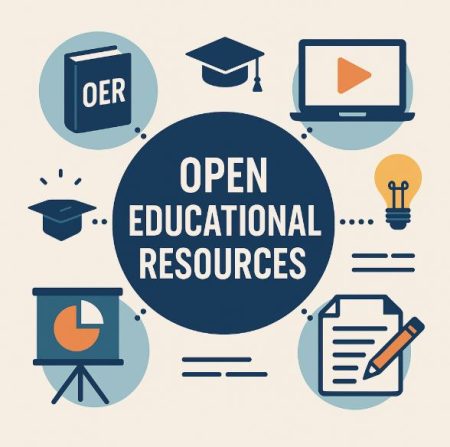
Open Educational Resources (OER) refer to teaching, learning, and research materials that are freely accessible and openly licensed, allowing educators to use, adapt, and share them. In the context of teaching and curriculum design, OER plays a pivotal role in fostering a more inclusive and flexible educational environment. For example, a university professor might replace expensive commercial textbooks with open textbooks, such as those available through platforms like OpenStax, which provide high-quality, peer-reviewed content at no cost to students. By integrating OER into curriculum design, educators can provide students with cost-effective learning resources that are easily adaptable to diverse learning needs. These resources can range from textbooks and multimedia content to entire courses, such as those available through MIT OpenCourseWare, offering opportunities for customization to fit specific teaching goals and student learning outcomes. The use of OER not only reduces the financial burden on students by eliminating the high cost of textbooks and materials but also supports collaborative learning environments where resources are continuously updated and improved. For instance, a math instructor might modify an open resource to include relevant real-world examples specific to their students’ region or field of study. As education evolves in response to technological advances and global challenges, OER represents a transformative approach to curriculum development, empowering educators to create more dynamic, accessible, and equitable learning experiences for all students.
The Role of Open Educational Resources in Teaching and Curriculum Design
Open Educational Resources (OER) have significantly transformed the landscape of education in recent years, offering innovative solutions to some of the most pressing challenges faced by educators and students alike. Defined as freely accessible, openly licensed materials that can be used, adapted, and shared by anyone, OER plays a crucial role in reshaping teaching practices and curriculum design. By reducing costs, increasing flexibility, fostering collaboration, and promoting inclusivity, OER is helping to create a more equitable, accessible, and dynamic educational environment.
- Reducing Costs and Increasing Accessibility: One of the primary benefits of OER is its ability to reduce the financial burden on students. Traditional educational resources, particularly textbooks, can be prohibitively expensive, making it difficult for many students to afford essential learning materials. According to a report from the Student Public Interest Research Groups (PIRG), the average college student in the United States spends over $1,200 per year on textbooks. By using OER, educators can eliminate or significantly reduce this cost, allowing students to access high-quality learning materials at no charge.
For example, platforms like OpenStax, which provides peer-reviewed textbooks in subjects ranging from physics to economics, allow students to access full-text books without spending a dime. Additionally, MIT OpenCourseWare offers entire courses with free downloadable lecture notes, assignments, and video lectures, making it easier for students to follow along with their studies and reduce dependency on costly printed materials. - Customization and Flexibility in Curriculum Design: Another significant advantage of OER is the flexibility it offers in curriculum design. Educators can modify, adapt, and update the materials to better fit their teaching styles and the specific needs of their students. This level of customization allows for a more personalized learning experience. For example, a history instructor teaching an American Revolution course can update an OER textbook with new case studies, local historical contexts, or current research findings, tailoring the content to reflect the unique needs and interests of their students.
The adaptability of OER also enables the development of interdisciplinary courses. Educators can seamlessly combine resources from various fields, such as science, technology, and the humanities, creating a more cohesive and integrated learning experience. This approach promotes greater flexibility, allowing students to approach subjects from multiple perspectives and apply their knowledge in real-world scenarios. - Promoting Collaborative Learning and Knowledge Sharing: OER fosters a collaborative learning environment by encouraging the sharing and remixing of educational content. Since OER materials are openly licensed, they can be freely shared, adapted, and redistributed by educators worldwide. This promotes a culture of collaboration and knowledge exchange among educators, institutions, and even students.
For instance, OER Commons and MERLOT are platforms that host a wide range of open educational resources, where educators can upload their own materials or search for resources created by others. Such platforms allow teachers to access a vast repository of instructional materials and pedagogical strategies, helping them improve their teaching methods while contributing to the wider educational community. Collaboration can take many forms, including co-authoring textbooks, creating joint lesson plans, or participating in global discussions on curriculum design. - Supporting Inclusive and Diverse Learning Environments: OER also plays a pivotal role in fostering inclusivity within the educational system. Because these resources can be easily modified, educators can create content that reflects the cultural, linguistic, and social diversity of their student body. For example, an educator teaching English as a second language (ESL) can use OER to design course materials that cater to different language proficiency levels, incorporate multicultural perspectives and adapt the content to be more relevant to the specific cultural backgrounds of their students.
Furthermore, OER provides a powerful tool for addressing the digital divide. By offering resources that are freely accessible online, students in remote areas or from underprivileged backgrounds can access high-quality education without the barriers associated with traditional educational materials. This democratization of knowledge helps to bridge the gap between students from different socioeconomic backgrounds, ensuring that everyone has an equal opportunity to succeed. - Facilitating Lifelong Learning and Professional Development: The use of OER is not limited to formal education; it also plays an essential role in lifelong learning and professional development. Educators and professionals can engage with OER to stay updated on the latest advancements in their fields, acquire new skills, and enhance their teaching methodologies. For instance, an educator in the field of technology can access OER to learn about the latest programming languages, tools, or trends, which they can then incorporate into their curriculum.
Moreover, OER can be used to design professional development courses for educators themselves. By providing free access to teaching strategies, pedagogical techniques, and subject-specific knowledge, OER ensures that teachers continue to grow in their profession and offer the best possible learning experiences to their students. - Addressing Challenges in OER Adoption: While the benefits of OER are clear, there are challenges to its widespread adoption. One of the primary obstacles is the lack of awareness and training among educators. Many teachers may not know where to find OER or may be unsure how to integrate these resources effectively into their teaching. There is also the challenge of assessing the quality and reliability of OER, as not all materials are created with the same level of rigour. To overcome these challenges, institutions must invest in professional development programs that train educators on how to find, evaluate, and implement OER effectively.
Additionally, while many OER are freely available online, access to digital resources can still be a barrier for students in low-income areas or those without reliable internet connections. In such cases, it may be necessary for educational institutions to supplement OER with printed versions or other offline access strategies.
The role of Open Educational Resources in teaching and curriculum design is transformative, offering numerous advantages that help create a more accessible, flexible, and inclusive educational experience. By reducing costs, promoting customization, fostering collaboration, and supporting diversity, OER empowers educators to design curriculum that meets the needs of today’s diverse student population. As educational institutions continue to embrace OER, the potential for innovation in teaching and learning will only grow, shaping a future where education is truly open and accessible for all.
Key Advantages of Incorporating Open Educational Resources (OER) into the Curriculum
Incorporating Open Educational Resources (OER) into the curriculum offers a multitude of advantages, making it a transformative approach to education. One of the primary benefits is the significant reduction in costs for students. Traditional textbooks and learning materials can be prohibitively expensive, often creating a barrier to access for many students. OER, however, provide high-quality educational content at no charge, making education more accessible to all, regardless of financial background. Platforms like OpenStax offer a range of textbooks in various subjects, allowing students to access resources without the financial burden associated with commercial textbooks.
Another key advantage of OER is their flexibility and ability to be customized to fit specific teaching needs. Unlike traditional textbooks, which are fixed in content, OER can be adapted, remixed, and updated by educators to better align with course objectives, student needs, and recent developments in the field. This ability to tailor content ensures that the materials used in the curriculum remain relevant, current, and applicable to students’ contexts. Additionally, OER fosters a collaborative environment, as they are openly licensed, enabling educators to share resources, remix materials, and exchange best practices. This promotes a culture of knowledge sharing and community, allowing educators to collaborate and refine their teaching methods for improved student outcomes.
OER also play a vital role in promoting inclusivity and diversity in the curriculum. Because OER can be easily adapted, educators can modify content to reflect the cultural, linguistic, and social diversity of their students. This ensures that all students see themselves represented in the materials they engage with, which enhances the relevance and effectiveness of the learning experience. Furthermore, OER provides a valuable tool for lifelong learning. Their open access means that anyone, at any time, can use them to enhance their knowledge and skills. Whether for formal education or self-directed learning, OER offers opportunities for individuals to engage with high-quality educational content throughout their lives.
In addition to the educational benefits, OER contributes to sustainable education practices by reducing the environmental impact associated with producing and distributing physical textbooks. Since OER are digital and freely available online, the need for printing and shipping is minimized, making education more environmentally friendly. The sustainability of OER is further enhanced by their ability to be continuously updated and improved without the need for frequent reprints. Finally, OER supports the principles of open pedagogy, where students become active participants in the creation and adaptation of learning materials. This empowers students by involving them in the co-creation of knowledge, fostering deeper engagement and critical thinking skills.
Overall, the integration of OER into the curriculum not only reduces costs but also offers greater flexibility, fosters collaboration, supports inclusivity, and contributes to sustainable education. As OER adoption continues to grow, its role in transforming education and enhancing the learning experience for both students and educators will become even more significant.
How OER Can Contribute to Improving Access to Education for Diverse Learner Populations
Open Educational Resources (OER) have the potential to significantly improve access to education, particularly for diverse learner populations. By providing high-quality, freely available educational materials that can be modified, adapted, and shared, OER breaks down traditional barriers to education and fosters a more inclusive, equitable learning environment. From reducing financial constraints to offering tailored content for different learning needs, OER plays a key role in supporting learners from various backgrounds, abilities, and geographic locations.
- Reducing Financial Barriers: One of the most direct ways OER contributes to improving access to education is by reducing the financial burden on students. Traditional textbooks and learning resources can be prohibitively expensive, often creating a barrier for students from lower-income backgrounds. According to the U.S. Public Interest Research Group (PIRG), the cost of textbooks has increased dramatically over the past few decades, making higher education increasingly unaffordable. OER offers a solution to this challenge by providing free access to high-quality learning materials, enabling students to focus on their studies rather than the cost of textbooks. This is particularly beneficial for students from economically disadvantaged backgrounds, as it allows them to access the same resources as their peers without the financial burden.
- Supporting Learners in Remote or Underserved Areas: OER can also help bridge the gap for students in remote or underserved areas who may not have access to traditional educational resources. In many rural or low-income communities, educational materials are often scarce, and students may not have the same opportunities to access quality textbooks and learning tools as their counterparts in urban areas. OER, being freely available online, can be accessed by anyone with an internet connection, helping to level the playing field for students who might otherwise be excluded from educational opportunities. For instance, a student in a rural part of a developing country can access an open textbook or course materials provided by platforms like MIT OpenCourseWare or Khan Academy, allowing them to engage in self-directed learning or supplement their classroom experience.
- Catering to Diverse Learning Needs: Another significant way OER improves access is by providing flexible, customizable learning materials that cater to diverse learning needs. Every student has unique learning preferences, strengths, and challenges, and traditional one-size-fits-all textbooks often fail to meet the needs of all learners. OER, however, can be easily adapted and modified to suit a wide range of learning styles, abilities, and educational backgrounds. For example, an educator teaching a history course could modify an open textbook to include multimedia resources such as videos, podcasts, and interactive quizzes, making the material more engaging for visual and auditory learners. Similarly, OER can be adjusted to meet the needs of students with disabilities, such as providing content in accessible formats (e.g., audio, Braille, or large print), ensuring that all learners can engage with the materials effectively.
OER also support differentiated instruction by enabling teachers to tailor resources for students who require additional support. For instance, an educator can use OER to provide additional practice problems, scaffolding, or enrichment activities for students at different levels of proficiency, ensuring that every student can progress at their own pace and receive the level of support they need to succeed. - Promoting Inclusivity and Cultural Relevance: Inclusivity is a key consideration in education, and OER can contribute to making educational content more culturally responsive and inclusive. Traditional textbooks often present a narrow perspective, typically reflecting the dominant cultural and societal values of a specific region or group. OER, by contrast, can be easily adapted to include diverse perspectives, authors, and content that reflect the experiences and backgrounds of a broader range of students. Educators can modify OER to ensure that the content is relevant to their students’ cultural contexts, fostering a more inclusive learning environment.
For example, an educator teaching a global studies course could adapt an open resource to include case studies from different regions of the world, ensuring that students from various cultural backgrounds feel represented. This approach not only enhances the relevance of the curriculum but also helps students develop a broader, more global perspective. Additionally, OER enables the inclusion of materials that reflect diverse learning needs and experiences, such as content tailored to students with different learning disabilities or those who speak English as a second language (ESL). By using OER, educators can create a curriculum that is more inclusive and reflective of the diverse communities they serve. - Supporting Lifelong Learning and Access for Non-Traditional Students: OER also contributes to improving access to education for non-traditional learners, such as adult learners, working professionals, and those seeking to upskill or reskill. Non-traditional students often face barriers related to time, location, and financial constraints, which make traditional educational options less viable. OER, however, provide the flexibility for learners to engage with high-quality educational content at their own pace, from anywhere in the world, and without the need for costly textbooks or materials.
For example, a working professional looking to enhance their skills in project management can access a wide range of free, open resources to learn at their own pace and apply new knowledge to their work immediately. Similarly, adult learners who may not have completed their formal education can use OER to fill in gaps in their knowledge and pursue self-directed learning on topics of personal or professional interest. This flexibility makes education more accessible to individuals who may not be able to attend traditional in-person classes due to work or family commitments. - Bridging the Digital Divide: While OER are primarily digital, efforts are underway to bridge the digital divide and ensure that all students, regardless of their access to technology, can benefit from these resources. In many regions, particularly in low-income areas or developing countries, access to reliable internet and digital devices remains a significant barrier. However, initiatives such as Offline OER are helping to make resources available to students who lack internet access. In such cases, OER materials can be downloaded onto devices and distributed in offline formats, making them accessible to learners in areas with limited connectivity.
Moreover, some OER platforms are working to provide resources in multiple languages, further ensuring that students from diverse linguistic backgrounds can benefit from these educational materials. By making content available in various languages and offline formats, OER helps break down the technological and linguistic barriers that often limit access to education.
Open Educational Resources (OER) play a crucial role in improving access to education for diverse learner populations. By reducing financial barriers, providing customizable and flexible content, fostering inclusivity, and supporting lifelong learning, OER contributes to creating a more equitable educational landscape. They ensure that learners from all backgrounds—whether based on income, location, learning needs, or cultural context—have access to high-quality, relevant educational materials. As the adoption of OER continues to grow, its potential to level the playing field for students worldwide will only expand, offering new opportunities for learners to thrive in an increasingly interconnected and diverse global education system.