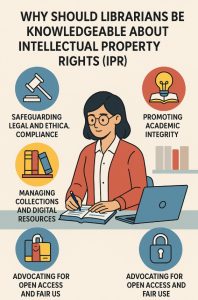
Why Should Librarians Be Knowledgeable About Intellectual Property Rights (IPR)?
Intellectual Property Rights (IPR) in the context of libraries refers to the legal protections and ethical considerations surrounding the use, distribution,…

LEARN. EXPLORE. PUT KNOWLEDGE TO WORK.
Explore library science, research and technology. Find practical guides and free tools for students, teachers and library professionals.
Intellectual Property Rights (IPR) in the context of libraries refers to the legal protections and ethical considerations surrounding the use, distribution,…

Intellectual Property Rights (IPR) refer to the legal rights granted to creators and owners of intellectual works, such as books, research…
Circulation service ensures the smooth flow of library resources to users by functioning as the central mechanism through which materials are…
Classification in libraries plays a vital role in arranging books systematically, making it easier for both users and librarians to locate…
Classification numbers play a crucial role in helping users locate books and other resources within a library. These numbers, often referred…
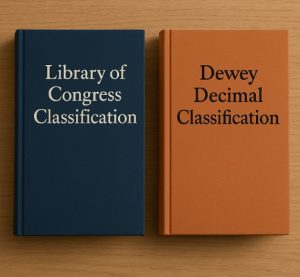
The Library of Congress Classification (LCC) and the Dewey Decimal Classification (DDC) are two of the most widely used systems for…
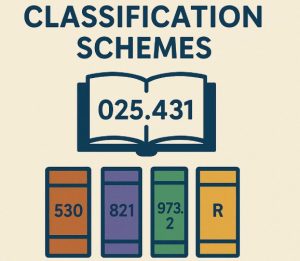
Library classification schemes are systematic methods used to organize and arrange library materials in a logical order, making it easier for…
Library classification schemes are systematic methods used to organize and arrange books, journals, reports, and other information resources in a library…
Knowledge is one of the most powerful assets that humans possess, shaping how we understand the world, interact with others, and…
Describing libraries as “gateways to knowledge” in the modern context highlights their role as essential entry points to information, learning, and…
Knowledge can be defined as a justified, true, and reliable understanding of reality that enables individuals to make sense of the…
The knowledge acquisition process refers to the systematic way through which individuals or groups gather, absorb, and internalize information to transform…
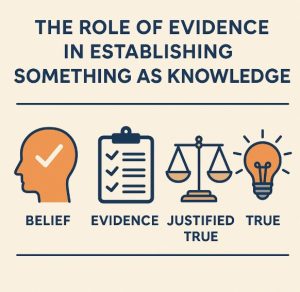
Evidence plays a central role in transforming a belief or claim into recognized knowledge. In philosophy and everyday reasoning, knowledge is…