
E-resources, or electronic resources, are digital formats of information that have revolutionized access to knowledge across various domains, particularly in libraries, educational institutions, and research environments. These resources include e-books, journals, databases, multimedia content, and online repositories, all of which offer significant advantages over traditional print materials. For example, databases like JSTOR and PubMed provide access to thousands of academic papers and articles on a wide range of subjects, while platforms like Google Books offer digital versions of texts that would otherwise be confined to physical libraries. The rise of e-resources has been driven by the rapid advancement of digital technologies, making information more accessible, flexible, and interactive. Unlike physical resources, e-resources can be accessed remotely, allowing users to obtain information from anywhere at any time, which is particularly beneficial for students, researchers, and professionals in the digital age. Tools such as Kindle and Adobe Acrobat also support reading and annotating e-books, enhancing the user experience. Furthermore, e-resources are often updated in real time, ensuring that users have access to the most current information. For instance, news outlets like The New York Times and BBC provide instant updates on global events, and academic journals regularly publish new research articles online. However, alongside their numerous benefits, e-resources also present challenges, such as licensing complexities, digital literacy requirements, and concerns over long-term preservation. Many institutions must navigate subscription models for access to platforms like Elsevier’s ScienceDirect, and the perpetual storage of digital content raises concerns about data degradation or obsolescence. Despite these hurdles, e-resources continue to play an essential role in shaping the future of information dissemination and research, providing valuable support to the academic and professional communities.
Advantages & Disadvantages of E-Resources.
The advent of e-resources has significantly transformed the way information is accessed, shared, and utilized across academic, professional, and personal contexts. One of the primary advantages of e-resources is their unparalleled accessibility; users can access a vast array of materials, from academic journals and e-books to multimedia files, anytime and anywhere, provided they have an internet connection. This flexibility is especially beneficial for students, researchers, and professionals who need immediate access to current information. E-resources also offer the advantage of searchability, allowing users to quickly locate specific content within large volumes of data, something traditional print resources cannot match. For instance, research databases like Google Scholar or IEEE Xplore enable users to search for and retrieve relevant articles or papers in a matter of seconds. Additionally, e-resources are often more cost-effective in the long run, as they eliminate the need for physical storage and distribution, which can be expensive for both publishers and institutions. However, despite these advantages, e-resources come with several challenges. One of the primary disadvantages is the issue of the digital divide, as not all users have equal access to the necessary technology or internet connectivity to fully benefit from e-resources. Moreover, e-resources often come with licensing and copyright restrictions, limiting how they can be shared or used. For example, while an e-book might be accessible to an institution’s library, it may not be available for individual purchase or distribution. There are also concerns about the long-term preservation of digital content, as the rapid pace of technological change could render certain formats obsolete, risking the loss of important information. Furthermore, reliance on e-resources may also lead to challenges in digital literacy, as users need the necessary skills to effectively navigate and utilize these tools.
Advantages of E-Resources
The digital revolution has brought about significant changes in the way information is accessed, shared, and utilized across various sectors. Among the many technological advancements, e-resources have emerged as one of the most transformative tools in academic, research, and professional environments. E-resources, which include e-books, online journals, databases, multimedia files, and digital archives, offer a multitude of advantages that surpass traditional print materials. Let’s explore the key benefits of e-resources and how they are reshaping the landscape of information dissemination.
- Accessibility Anytime, Anywhere; One of the most compelling advantages of e-resources is the ability to access information at any time and from anywhere. Whether on a campus, at home, or even traveling, users can access e-resources with an internet connection. This level of convenience has greatly benefited students, researchers, and professionals who require flexible access to resources. Digital libraries, such as JSTOR, Google Books, and PubMed, provide users with a vast range of academic articles, books, and other materials that can be accessed remotely, without being bound by the physical limitations of traditional print resources.
In the context of global learning, e-resources have removed geographical barriers, ensuring that users from different parts of the world can access the same content. This universal accessibility is particularly important in today’s interconnected world, where research and knowledge are shared on a global scale. - Searchability and Efficiency: E-resources come with powerful search features that allow users to quickly locate specific information within vast collections of data. Unlike physical books or journals, where one must flip through pages to find relevant sections, e-resources allow for rapid keyword searching and filtering. Digital archives like IEEE Xplore and ScienceDirect make it easy to search for research papers, articles, and publications on specific topics in a matter of seconds.
This searchability saves valuable time, particularly for researchers and professionals who need quick access to specific data or references. Additionally, many e-resources are organized in a user-friendly manner, with categorization and tagging systems that further enhance the efficiency of information retrieval. - Cost-Effectiveness: E-resources are often more affordable for both institutions and individuals compared to physical resources. For libraries and educational institutions, purchasing physical books, journals, and newspapers can be costly, especially when dealing with large volumes of materials. In contrast, many e-resources are offered on subscription-based models, allowing institutions to provide access to a vast array of materials for a fraction of the price.
Moreover, digital resources do not require the same expenses related to printing, distribution, and storage, which makes them a more sustainable and cost-effective option. This makes it possible for libraries, research institutions, and universities to offer a broader selection of materials without facing the financial constraints associated with physical acquisitions. - Real-Time Updates and Access to Current Information: Another significant advantage of e-resources is their ability to provide real-time updates. Unlike printed materials, which can become outdated, digital resources such as online journals and news websites are continuously updated to reflect the latest research, news, and developments in various fields.
For example, medical researchers can access real-time data from platforms like PubMed and clinical trial databases, ensuring they are using the most up-to-date information in their work. Similarly, news outlets like The New York Times and BBC provide instant updates on global events, allowing users to stay informed in real time. This constant flow of current information is crucial in fast-paced fields like medicine, technology, and science, where new findings can have immediate implications. - Environmental Benefits: The shift from print to digital resources has environmental benefits as well. By reducing the need for paper production, printing, and physical distribution, e-resources help minimize the carbon footprint associated with traditional publishing. The paper industry, which is responsible for deforestation and significant energy consumption, can be significantly reduced as more materials move into digital formats.
Furthermore, many institutions and publishers are adopting green practices by offering e-resources as a means to support sustainability. The ability to access and share information digitally without the need for physical storage or transportation contributes to a more eco-friendly approach to knowledge dissemination. - Multimedia Integration and Interactive Features: E-resources often include multimedia elements that enhance the learning and research experience. Unlike traditional print materials, digital resources can incorporate videos, podcasts, animations, and interactive elements. This ability to integrate various forms of media makes e-resources a more engaging and dynamic way of presenting information.
For example, online courses on platforms like Coursera and Khan Academy combine video lectures, quizzes, and interactive discussions, providing a comprehensive learning experience that goes beyond the capabilities of a textbook. Similarly, academic e-books can include embedded links, videos, and infographics that help users better understand complex topics. - Collaboration and Sharing: E-resources facilitate collaboration among individuals and groups, both locally and globally. Digital platforms allow users to share content, collaborate on research, and exchange ideas in real-time. This has created new opportunities for cross-disciplinary collaboration and global knowledge sharing. Tools such as Google Scholar and ResearchGate allow researchers to share papers, discuss findings, and collaborate on projects, thus accelerating the pace of scientific discovery.
Additionally, many e-resources support features such as bookmarking, annotation, and highlighting, which enable users to personalize content and share notes with others. This enhances the collaborative nature of digital research and encourages a more interactive, community-driven approach to knowledge creation. - Long-Term Preservation of Rare Materials: E-resources also play an essential role in the preservation of rare, fragile, or historical materials. By digitizing physical documents, libraries and archives can safeguard valuable information from physical deterioration due to age, handling, or environmental factors. Historical manuscripts, rare books, and out-of-print publications can be preserved in digital formats, ensuring their survival for future generations.
In addition, the digitalization of these resources makes them more widely accessible, breaking down barriers to accessing rare or geographically isolated materials. This helps democratize knowledge, allowing scholars and enthusiasts worldwide to explore and learn from resources that were once difficult to access.
E-resources have revolutionized the way we access, interact with, and share information. Their benefits, such as increased accessibility, efficiency, cost-effectiveness, real-time updates, and environmental sustainability, have made them indispensable tools for modern research and learning. As technology continues to evolve, the role of e-resources in shaping education, research, and knowledge dissemination will only continue to grow, further enhancing the ability of individuals and institutions to collaborate, innovate, and thrive in the digital age.
Disadvantages of E-Resources
While e-resources have transformed the way information is accessed and shared, offering numerous advantages, they also come with their own set of challenges and limitations. The shift from traditional print materials to digital formats has created a more convenient and flexible learning environment, but it has also introduced some complications. Here are some of the disadvantages of e-resources and how these challenges impact users, institutions, and content providers.
- Digital Divide and Inequitable Access: One of the most significant disadvantages of e-resources is the issue of the digital divide. While e-resources offer immense benefits, their accessibility is not uniform across all users. People from rural or underdeveloped areas often struggle with limited or no access to reliable internet connections or modern computing devices. This digital gap can leave certain populations, such as students in remote regions or low-income communities, at a disadvantage, as they cannot fully benefit from the wealth of digital information available online.
Moreover, even in well-connected regions, there can be disparities in the quality of internet access. Slow or unreliable connections can make it difficult for users to download or stream content, significantly hindering their ability to access critical resources. In a world increasingly reliant on digital tools, addressing the digital divide is a major challenge for institutions and governments worldwide. - Digital Literacy and Skills Gap: The widespread use of e-resources assumes a level of digital literacy that not all users possess. While younger generations are often more tech-savvy, many older adults and individuals from less technology-centric backgrounds may struggle to navigate digital platforms effectively. Without proper training, users might find it difficult to locate, access, or fully utilize e-resources, reducing the overall value of these digital tools.
This skills gap also extends to educators and researchers who may not be familiar with advanced search techniques or the full range of features available on various e-resource platforms. As a result, the potential of e-resources is not always fully realized, and users may not be able to take advantage of the full functionality offered by these platforms. - Over-Reliance on Digital Platforms: With the growing reliance on e-resources, there is a risk of over-dependence on digital platforms. This could lead to the underutilization of traditional resources, such as physical books, which remain valuable in certain contexts. For example, print materials often provide a tactile experience that enhances comprehension and focus, something that digital screens might not replicate. Furthermore, a complete reliance on e-resources might limit students’ ability to engage in critical thinking and research methods that do not rely on instant search functions.
Moreover, over-reliance on digital content could also affect retention. Some studies suggest that reading on screens might result in lower retention of information compared to reading print materials, as digital screens often encourage skimming rather than in-depth reading. - Copyright and Licensing Issues: E-resources, particularly academic articles, books, and databases, often come with complex copyright and licensing restrictions. Publishers, institutions, and users must navigate these legal frameworks to ensure they are compliant with intellectual property laws. Access to certain e-resources may be restricted based on licensing agreements, limiting the number of users who can access the same content simultaneously or preventing the sharing of resources across platforms.
For instance, a library may have a subscription to an academic journal, but its users may be unable to access specific articles or share them with others due to restrictions placed by the publisher. These copyright and licensing issues can create barriers for users who wish to freely share, distribute, or reuse the information they access, limiting the educational and research potential of e-resources. - Security and Privacy Concerns: Another disadvantage of e-resources is the increased risk of security and privacy issues. Digital content is vulnerable to hacking, data breaches, and unauthorized access. Personal information, such as login credentials or payment details, may be compromised if users or institutions do not implement strong security measures.
Additionally, e-resources hosted on commercial platforms often require users to create accounts or submit personal data, raising concerns about privacy. Data about user activity, such as search queries and download history, can be collected by service providers, potentially leading to unwanted surveillance or the sale of personal data to third parties. This intrusion into users’ privacy is a growing concern, particularly as e-resources become more integrated into daily research and learning practices. - Digital Preservation and Longevity: While e-resources are advantageous in terms of accessibility and convenience, they face significant challenges in terms of long-term preservation. Digital content is susceptible to technological obsolescence, file corruption and format degradation. Unlike physical books or documents, which can last for centuries if stored correctly, digital resources may become inaccessible over time due to changes in technology or software.
For example, older file formats may no longer be compatible with modern devices or software, and hardware used to store digital content can become obsolete. In addition, digital archives and repositories may not have sufficient funding or infrastructure to ensure the long-term preservation of e-resources. This raises concerns about the sustainability and future accessibility of digital knowledge, especially when valuable historical or scholarly content is at risk of being lost. - Technical Issues and Platform Limitations: E-resources rely heavily on technology, which makes them prone to technical issues that can disrupt access. Problems such as server downtime, slow loading speeds, and broken links can cause significant delays for users trying to access information. For institutions that rely on subscription-based digital platforms, these technical difficulties can create barriers to research and learning, especially if users cannot access the materials they need due to technical issues.
Moreover, the design and user experience of e-resource platforms are not always optimized, leading to frustration among users. Poorly designed websites, non-intuitive search functions, and lack of mobile compatibility can hinder the ease of use and accessibility of digital resources. These limitations can result in a subpar user experience, reducing the effectiveness of e-resources. - Lack of Tangible Ownership: Unlike physical books or print materials, which users can keep indefinitely, e-resources are often rented or licensed, meaning users do not truly “own” the content they access. This lack of ownership means that users may lose access to certain materials if their institution’s subscription ends, or if the resource is removed from a platform due to changes in licensing agreements.
For academic institutions, this can be problematic, as research materials may become inaccessible after a subscription expires or if licensing costs rise. Similarly, individuals who purchase e-books may face limitations on how they can use or transfer their digital content, further limiting the perceived value of e-resources.
While e-resources offer numerous advantages in terms of accessibility, efficiency, and convenience, they also present significant challenges. From issues of digital equity and security to concerns about long-term preservation and licensing, these disadvantages must be addressed to ensure the sustainable and equitable use of digital resources. As institutions and technology providers continue to develop and refine e-resource systems, it will be essential to balance the benefits of digital tools with efforts to overcome these inherent challenges, ensuring that e-resources continue to serve users effectively in the future.
How E-Resources Improve Access to Academic and Research Materials Compared to Traditional Print Resources
E-resources have profoundly transformed the way academic and research materials are accessed, offering several advantages over traditional print resources. One of the most significant benefits is the ability to access materials remotely, at any time, and from any location. Unlike print resources, which are confined to physical spaces like libraries, e-resources can be accessed from anywhere with an internet connection, providing unparalleled convenience for students, researchers, and professionals. Platforms like JSTOR, Google Scholar, and PubMed allow users to access scholarly articles, e-books, and research databases remotely, making research more flexible and efficient. Additionally, e-resources offer real-time access to the latest information, an advantage over print materials that are often slow to publish and update. Digital platforms, such as PubMed and ScienceDirect, provide immediate access to current research, clinical trials, and studies, ensuring users can access the most up-to-date information.
E-resources also enhance research efficiency through their powerful search functions. Users can quickly search for specific topics, keywords, or authors, streamlining the process of locating relevant materials. Academic databases like IEEE Xplore and ProQuest allow users to search vast collections of academic papers and articles in a matter of seconds, which is far more efficient than manually browsing through physical books and journals. Moreover, e-resources provide access to a much broader range of materials compared to print resources, which are often limited by space and physical storage constraints. Digital libraries and platforms house millions of documents, articles, and e-books, many of which might be unavailable in a traditional library’s collection. This opens up new avenues for research, allowing scholars to explore a wider variety of topics and materials.
Cost-effectiveness is another notable advantage of e-resources. For academic institutions, digital resources often come with subscription models that provide access to a wide range of materials at a fraction of the cost of purchasing individual print copies. Libraries no longer need to invest in multiple copies of expensive journals or books, which reduces operational costs and allows institutions to provide broader access to materials. For individual users, many e-resources are available free of charge through institutional subscriptions, and the rise of open-access content further lowers the financial barriers to accessing academic materials. Beyond affordability, e-resources also offer multimedia and interactive features that enhance the learning and research experience. Unlike print materials, which are limited to text and images, digital resources can include videos, simulations, and interactive components that help users better understand complex subjects. For example, platforms like Coursera and Khan Academy use video lectures, quizzes, and interactive discussions to create a more engaging learning environment.
Finally, e-resources foster greater collaboration and sharing among users. Digital platforms often allow scholars to share research papers, annotations, and findings with others, regardless of geographic location. Websites like ResearchGate and Academia.edu enable researchers to upload their papers, engage in discussions, and collaborate globally. The ability to highlight, annotate, and bookmark digital materials also encourages more personalized and collaborative research. This enhances the overall research experience, making e-resources a valuable tool for scholars and students alike. In contrast, print resources are limited by their physical nature, often preventing the sharing and collaboration that digital platforms facilitate.
How E-Resources Contribute to Reducing the Cost of Acquiring Academic Materials for Students and Institutions
The shift from traditional print materials to e-resources has had a transformative impact on the costs associated with acquiring academic materials. Both students and institutions have experienced significant cost reductions as digital resources become more widely available. E-resources, which include e-books, journals, databases, and digital archives, offer a range of advantages that contribute to lowering the financial burden on individuals and educational institutions alike. Here is how e-resources help reduce the cost of acquiring academic materials for students and institutions, making education and research more affordable and accessible.
- Elimination of Printing and Distribution Costs: One of the most obvious cost-saving benefits of e-resources is the elimination of the need for printing and physical distribution. Traditional print resources, such as textbooks and academic journals, involve significant expenses related to printing, shipping, and storing physical copies. Institutions must not only purchase multiple copies of materials for library collections but also allocate space for storage and incur costs associated with maintenance. With e-resources, these expenses are largely avoided. Digital materials can be accessed remotely with a subscription or license, meaning that no physical copies need to be printed or stored, resulting in savings for both libraries and publishers. As a result, e-resources help academic institutions minimize operational costs.
- Subscription-Based Models and Shared Access: Rather than purchasing individual copies of books, journals, or articles, institutions can subscribe to digital platforms that provide access to a broad range of academic materials. These subscription-based models allow universities and libraries to offer access to thousands of academic publications for a fraction of the cost of buying physical copies. Major academic databases like JSTOR, SpringerLink, and ScienceDirect operate on subscription models, providing institutions with access to a vast array of content, including peer-reviewed journals, e-books, and research papers.
By subscribing to these platforms, educational institutions can provide faculty and students with comprehensive access to a wide variety of academic resources. This shared access reduces the need to purchase expensive individual copies of academic materials, thus lowering costs for both students and institutions. Instead of each student or researcher purchasing their own materials, institutions can provide widespread access to digital content, maximizing the utility of each subscription. - Open Access and Free Resources: The growing trend of open-access publishing has significantly contributed to reducing the cost of academic materials. Open-access journals, repositories, and research papers are freely available to the public, allowing students, researchers, and institutions to access scholarly content without incurring any fees. Many universities and research organizations now publish their research in open-access formats, ensuring that the results of academic studies are available to everyone, regardless of financial status.
In addition to open-access journals, there are many open-access platforms such as PubMed Central, the Directory of Open Access Journals (DOAJ), and the Public Library of Science (PLOS) that host free academic content. These resources greatly reduce the financial burden on students and institutions by providing free access to high-quality academic material that would otherwise be behind expensive paywalls. - Cost-Effective Textbook Access: Textbooks are traditionally one of the most expensive academic resources that students must purchase, often costing hundreds of dollars per semester. The digitalization of textbooks has made them more affordable and accessible. E-textbooks are typically priced lower than their print counterparts, reducing the financial strain on students who are required to purchase multiple textbooks for their courses. In addition, e-textbooks often come with additional features, such as searchability, note-taking capabilities, and multimedia content, enhancing the learning experience while still keeping costs lower.
Many universities and colleges are also adopting digital textbook rental programs or offering free access to e-textbooks through digital libraries. These programs enable students to rent or borrow digital versions of textbooks at a fraction of the price of purchasing them. This shift toward digital textbooks makes education more affordable and less reliant on costly print editions, benefiting both students and academic institutions. - Reduced Need for Physical Storage and Maintenance: E-resources also reduce the need for physical storage space, which can be costly for institutions. Traditional libraries must allocate space for books, journals, and other physical materials, which not only requires storage infrastructure but also ongoing maintenance, such as cleaning, preservation, and repairs. With digital resources, there is no need for physical space, as e-books, journals, and databases can be accessed online. This reduces the costs associated with maintaining and preserving physical collections.
Additionally, digital resources are easier to update, ensuring that academic content remains current and accurate. In the case of printed books and journals, updates or new editions must be purchased and stored, adding to the overall cost. With e-resources, new editions, updates, and supplementary materials can be made available online instantly, without the need for purchasing new physical copies. - Wider Access and Cost Sharing Among Institutions: E-resources facilitate collaboration and cost-sharing among institutions, further reducing the financial burden on individual universities or libraries. Through consortia agreements and collaborative subscription models, multiple institutions can share access to digital resources at a lower per-institution cost. For example, regional consortia or national partnerships allow libraries to pool their resources and subscribe to databases collectively. This shared access ensures that smaller institutions or those with limited budgets can still provide their students and faculty with access to high-quality academic materials.
Such collaboration also benefits students who may be enrolled at smaller or less-funded institutions, ensuring that they have access to the same range of academic materials as those at larger, wealthier universities. By participating in these cost-sharing initiatives, institutions can significantly reduce the individual costs associated with acquiring digital resources. - Reduction in Transaction Costs: E-resources eliminate many of the transaction costs associated with acquiring print materials. Students no longer need to visit physical bookstores or libraries to purchase or borrow textbooks, nor do they need to worry about transportation costs. With digital resources, materials can be accessed directly through online platforms, streamlining the process and reducing both time and money spent on acquiring academic content. Additionally, the digital nature of these resources means that they can be instantly distributed to multiple users without the logistical challenges associated with physical copies.
E-resources play a crucial role in reducing the cost of acquiring academic materials for students and institutions. Through the elimination of printing and distribution costs, the use of subscription-based access models, the rise of open-access publishing, and the affordability of digital textbooks, e-resources make academic content more accessible and cost-effective. Furthermore, the shared access models and reduced need for physical storage help institutions lower their operational costs while expanding access to a broader range of materials. As the digital landscape continues to evolve, e-resources will remain a key factor in making education more affordable and accessible to students and institutions worldwide.
How the Availability of E-Resources Enhances Information Retrieval and Research Efficiency
The availability of e-resources has greatly enhanced information retrieval and research efficiency by providing researchers, students, and professionals with a more streamlined and accessible way to access academic materials. One of the most significant advantages of e-resources is the powerful search capabilities they offer. Unlike traditional print resources, which require users to manually browse through materials, e-resources allow for quick and precise searches using keywords, phrases, or specific topics. Platforms like Google Scholar, JSTOR, PubMed, and IEEE Xplore provide advanced search functions and filters that enable users to narrow down their results by publication date, author, subject, or document type. These features make it much easier to find relevant information quickly and efficiently, saving valuable time during the research process.
Another key advantage of e-resources is the vast and diverse range of materials they provide access to. Digital platforms can host millions of academic papers, books, journals, and multimedia content, offering researchers a comprehensive body of knowledge that might not be available in physical libraries. Unlike print resources, which are often constrained by space, e-resources offer virtually unlimited access to scholarly content, ensuring that researchers have a broad selection of materials from which to draw. This wide availability of resources allows for a more in-depth exploration of topics, helping researchers to engage with a range of perspectives and findings.
E-resources also provide real-time access to the latest academic research and information, making it easier for researchers to stay up to date. Unlike print materials, which can become outdated after publication, e-resources are continuously updated as new content is published. Platforms like PubMed and ScienceDirect offer immediate access to new studies, articles, and clinical trials, ensuring that researchers can base their work on the most current information available. This ability to access real-time data is especially crucial in fast-evolving fields like medicine, technology, and science, where timely information can have a significant impact on research outcomes.
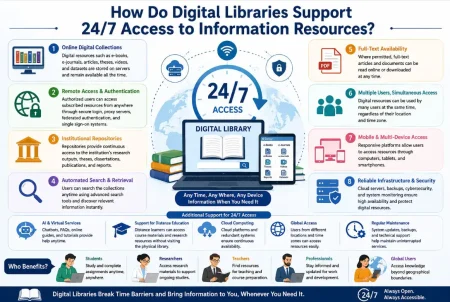
The remote access provided by e-resources further enhances research efficiency. Researchers no longer need to be physically present in a library to access academic materials; instead, they can access digital resources from any location with an internet connection. This flexibility allows users to conduct research at their convenience, whether at home, in a café, or while traveling. E-resources are available 24/7, offering researchers the freedom to work outside the limitations of library hours or physical access to print resources. Additionally, e-resources often incorporate multimedia and interactive elements, which enhance the research process. For example, many educational platforms and academic journals integrate videos, interactive charts, simulations, and other multimedia components that provide a more engaging and comprehensive learning experience. This integration of different media helps researchers better understand complex topics, as it allows them to visualize and interact with data in ways that print resources cannot offer.
E-resources also promote collaboration and information sharing, which boosts research efficiency. Many digital platforms enable researchers to share their work, annotations, and insights with others, fostering a collaborative environment. Websites like ResearchGate and Academia.edu allow scholars to upload and share research papers, engage in discussions, and connect with peers across the globe. Additionally, e-resources often offer tools for real-time collaboration, such as commenting, highlighting, and annotating, which allow researchers to work together on documents and share insights instantaneously. This collaborative aspect not only enhances the research process but also accelerates the pace of discovery and innovation.
Finally, the cost-effectiveness of e-resources makes them an essential tool for improving research efficiency. Many digital platforms offer open-access content, allowing researchers to access high-quality academic materials without incurring high costs. Open-access journals and institutional repositories provide free access to scholarly articles, studies, and research papers, removing financial barriers for those at institutions with limited budgets. Moreover, e-resources often come at a lower cost than print materials, and the subscription-based models for digital platforms allow institutions to provide broad access to resources without having to purchase individual copies of books or journals.
How the Use of E-Resources Supports the Trend Toward Sustainability and Reduces the Environmental Impact of Publishing
The increasing use of e-resources has significantly contributed to sustainability efforts by reducing the environmental impact of publishing. One of the primary ways e-resources support sustainability is by eliminating the need for paper, a resource traditionally used in large quantities for printing books, journals, and other academic materials. The production of paper involves deforestation, which negatively impacts biodiversity and contributes to climate change. By shifting to digital formats, e-resources remove the need for paper altogether, cutting down on the consumption of natural resources. This shift also reduces the energy and water consumption associated with paper manufacturing and printing processes, which are necessary for traditional publishing.
E-resources reduce the energy consumption and carbon emissions associated with the transportation of physical materials. Shipping printed books, journals, and other academic publications worldwide requires significant amounts of energy and contributes to greenhouse gas emissions. Digital content, however, can be accessed instantly through the internet, eliminating the need for shipping and significantly lowering the carbon footprint associated with distribution. In addition to reducing transportation emissions, e-resources reduce the energy needed for storage and maintenance. Physical libraries must allocate space to store printed materials, requiring energy for lighting, climate control, and general upkeep. With digital resources, academic content can be stored electronically, taking up minimal space and requiring far less energy to maintain, leading to a reduced environmental impact.
Another way e-resources contribute to sustainability is by lowering the production costs and resource usage involved in traditional publishing. Print materials require significant resources such as paper, ink, and chemicals, all of which must be sourced and processed. The production of e-resources, on the other hand, involves fewer raw materials, with digital content needing no physical materials for printing or distribution. This reduces the demand for paper, ink, and other resources, supporting a more sustainable model for publishing. Additionally, e-resources enable publishers to adopt digital-first strategies, prioritizing the release of digital content over physical print runs, which further reduces waste and resource consumption. This trend toward digital publishing is especially beneficial as it reduces the environmental costs of large-scale print runs, such as ink and paper, as well as the waste generated when books and journals become obsolete.
The widespread adoption of e-resources also supports long-term preservation efforts. Unlike physical books, which degrade over time due to wear and tear, digital resources can be preserved indefinitely with proper backup and storage. This long-term accessibility reduces the need for the constant replacement of printed materials, which would otherwise require additional resources and energy to produce. E-resources, stored digitally, help ensure that important academic and historical content is preserved without the need for physical storage space, contributing to a more sustainable model for information preservation. Moreover, e-resources support the idea of a circular economy by reducing waste and promoting the reuse of academic materials. With digital content, multiple users can access the same resource simultaneously without the need for new copies to be produced. Platforms like institutional repositories, open-access journals, and digital archives allow academic content to be shared and reused, reducing the demand for constant production and disposal of physical materials. This circular model of reuse and sharing aligns with sustainability goals by minimizing resource consumption and encouraging the efficient use of existing content.
How E-Resources Can Be Integrated into Library Services to Provide Users with an Enriched Research Experience
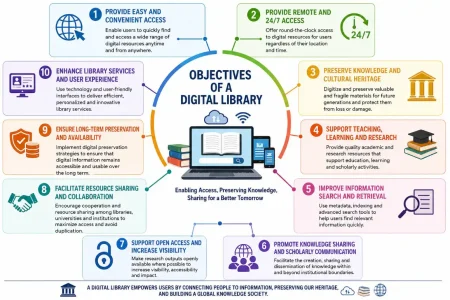
E-resources have become an essential part of modern library services, offering vast opportunities for enhancing the research experience for users. Libraries, traditionally repositories of print materials, are increasingly adopting digital resources such as e-books, online journals, research databases, and multimedia content to meet the needs of students, researchers, and faculty members. The integration of e-resources into library services not only increases accessibility to academic materials but also supports a more dynamic, interactive, and efficient research environment. Let’s explore the various ways in which e-resources can be seamlessly integrated into library services to provide users with a more enriched and efficient research experience.
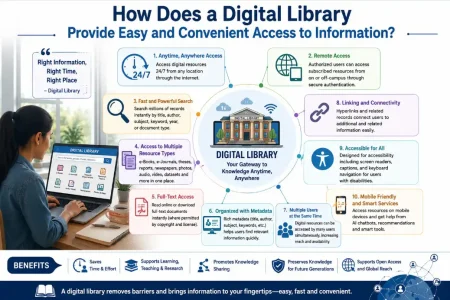
- Providing Remote and On-Demand Access to Materials: One of the most powerful ways e-resources can enhance library services is by offering users remote and on-demand access to academic content. Unlike print resources that require users to be physically present in a library, e-resources can be accessed from anywhere at any time. This is particularly beneficial for users who may need to access materials outside of regular library hours or those who are unable to visit the library due to geographical constraints. By offering access to e-books, online journals, and databases like JSTOR, PubMed, or Google Scholar, libraries can ensure that users have continuous access to the materials they need, regardless of time or location.
For example, academic institutions that integrate e-resources into their library services can offer remote access to research databases, allowing students and researchers to retrieve articles, journals, and papers from their homes or while traveling. This remote accessibility enables a flexible and user-friendly research process, removing barriers associated with physical library visits and offering greater convenience to users. - Incorporating Seamless Search Functions and Discovery Tools: E-resources can be integrated into library services through the use of advanced search functions and discovery tools that enhance information retrieval. By incorporating integrated library systems (ILS) or discovery layers such as Summon or Primo, libraries can enable users to search across multiple e-resource platforms simultaneously. These tools allow users to search for articles, books, journals, and other materials from a single interface, streamlining the research process.
Additionally, these discovery tools often provide filtering options, allowing users to refine their searches based on parameters such as publication date, author, subject, and resource type. This makes it easier for users to find the most relevant materials quickly and efficiently, enhancing the overall research experience. The integration of these search functions into library services not only saves time but also helps users navigate vast amounts of information, ensuring that they can easily access the content they need without getting overwhelmed by irrelevant results. - Enhancing Collaboration and Information Sharing: E-resources foster collaboration among users, an essential aspect of modern research. Libraries can integrate collaborative tools and platforms that allow users to work together on research projects, share resources, and exchange ideas. For example, many e-resource platforms, such as Google Scholar and ResearchGate, allow users to share articles, research findings, and notes with colleagues and peers. By promoting access to these platforms through library services, libraries can encourage a collaborative research environment where users can interact, share insights, and collaborate on projects.
Moreover, the integration of e-resources that support real-time collaboration, such as cloud-based document sharing tools (Google Drive, Dropbox), can help students and researchers work together on research papers or projects from any location. This collaborative functionality enhances the research process by facilitating information exchange, peer review, and discussion, ultimately leading to more robust and well-rounded research outcomes. - Supporting Personalized Learning and Research Paths: E-resources also support personalized learning and research experiences by offering tailored recommendations based on a user’s interests and research history. Libraries can integrate personalized tools within their e-resource platforms, which track users’ search behavior and reading patterns. For instance, many digital library platforms like EBSCOhost or ProQuest offer personalized recommendations of articles, books, or journals based on a user’s previous searches or academic interests. This helps users discover new resources and research materials that are relevant to their work without having to conduct repetitive searches.
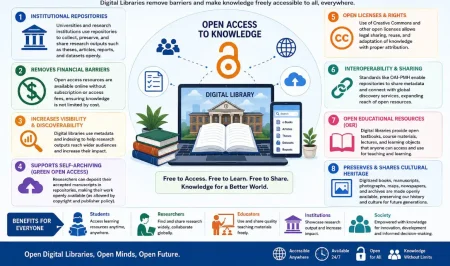
By providing personalized research pathways, libraries can guide users to relevant resources and support their academic and research goals more effectively. This personalization fosters a deeper engagement with the material and enhances the overall research experience, helping users make more meaningful connections with the content they are studying. - Promoting Open Access and Digital Repositories: Libraries can integrate open-access resources and institutional digital repositories into their services, supporting the broader movement towards freely accessible academic content. Open-access journals and databases, such as the Directory of Open Access Journals (DOAJ) and PubMed Central, provide users with free access to scholarly articles and research papers. Libraries that actively promote and integrate open-access resources into their services help bridge the knowledge gap and make academic research more equitable.
Additionally, by establishing institutional repositories where research produced within the institution can be stored and shared, libraries encourage the dissemination of scholarly work within the academic community. This not only supports research visibility but also helps users access valuable materials without encountering paywalls or subscription barriers. These initiatives contribute to the global effort to democratize knowledge and enhance research accessibility, aligning library services with modern academic values. - Offering Multimedia and Interactive Content: E-resources often offer multimedia elements that enhance the research process by providing alternative methods of learning and information presentation. Libraries can integrate e-resources that include videos, podcasts, interactive simulations, and online tutorials, which enrich the user experience by catering to different learning styles. For instance, platforms like Coursera, Khan Academy, and TED-Ed offer a variety of educational content that goes beyond traditional reading materials and helps users better understand complex concepts.
Integrating multimedia content into library services provides students and researchers with a more dynamic and engaging way to explore academic topics. Interactive elements such as video tutorials, online lectures, and 3D models enhance comprehension and retention, making learning more accessible and effective. This approach also appeals to diverse audiences, accommodating various learning preferences and supporting a more inclusive educational environment. - Providing Training and Support for E-Resource Utilization: While the integration of e-resources enhances the research experience, libraries must also provide training and support to ensure that users can make the most of these digital tools. Offering workshops, tutorials, and one-on-one consultations on how to use e-resources effectively can help students and researchers navigate complex platforms and maximize the potential of digital content. This support can include guidance on conducting advanced searches, using citation tools, managing digital collections, and evaluating sources, all of which are essential for effective research.
Additionally, libraries can provide resources to help users understand the ethical implications of using e-resources, such as proper citation practices and copyright laws. By offering comprehensive support and training, libraries empower users to make informed decisions about how they access and use academic materials, contributing to a more effective and responsible research process.
The integration of e-resources into library services has the potential to enrich the research experience by providing users with increased accessibility, flexibility, and functionality. By offering remote access, advanced search features, collaboration tools, personalized learning pathways, and multimedia content, libraries can help users navigate vast amounts of information more efficiently. The promotion of open access and the integration of digital repositories further enhance the accessibility of research materials, ensuring that academic knowledge is available to a broader audience. As libraries continue to embrace and integrate e-resources into their services, they play a crucial role in supporting the research needs of students, faculty, and researchers, creating a more dynamic and engaging academic environment.


10 Comments
Hi Dear, are you in fact visiting this website regularly, if so afterward you will without doubt obtain good
knowledge.
Thanks for sharing, the information in this write-up has really solved my assignments status.
very helpful
One of the problems with internet based resources is uncertainty with regard to continued access . In several countries , Internet has become a political tool in the hands of govts to control civil problems. A recent example is denial of access to internet in Kashmir leading to hugely affecting research and learning. This could be considered as one of the disadvantages of eresourcrs.
this article have helped me in my assignment
The article has helped me to learn information that I didn’t know
This section make me easily to get my assignment done.
The section has helped me understand better
Thanks for the information
I really like it