
Visual aids in teaching and learning are powerful tools that enhance the educational experience by making abstract or complex concepts more tangible and accessible. These aids, which include images, charts, graphs, diagrams, videos, and interactive whiteboards, serve to complement verbal instruction by providing a visual representation of the material. For instance, a teacher explaining the water cycle might use a diagram to show the processes of evaporation, condensation, and precipitation, which helps students visualize the concept more clearly. When integrated effectively, visual aids can cater to different learning styles, particularly visual learners, who grasp information more efficiently when they see it rather than hear it alone. In addition to enhancing understanding, they can also aid in memory retention by offering a visual context that reinforces key points. For example, a history teacher might use a timeline to help students better understand historical events in sequence, which makes it easier to recall the progression of those events.
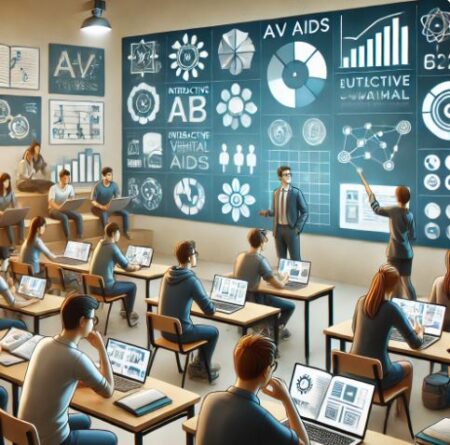
Visual aids are particularly beneficial in conveying information that may be difficult to explain through words alone, such as scientific processes, geographical features, or mathematical formulas. A physics instructor, for instance, might use animations or simulations to demonstrate complex principles like Newton’s laws of motion or the concept of electrical circuits. Furthermore, they help break down language barriers, making learning more inclusive for students with varying levels of proficiency. A teacher explaining the concept of democracy could show a video clip of different electoral processes around the world, allowing students to observe the practical application of the theory. The use of visual aids not only facilitates a deeper understanding of the subject matter but also engages students more actively, promoting greater participation and interaction in the classroom. For example, teachers can use interactive whiteboards, allowing students to actively participate in solving problems or completing activities in real time.
Use of Audio-Visual Aids in Teaching and Learning
The use of audio-visual aids in teaching and learning has revolutionized the educational experience, offering educators dynamic tools to enhance lessons and engage students in meaningful ways. These aids, which include videos, audio recordings, interactive presentations, and multimedia resources, provide a more engaging and accessible approach to learning. Audio-visual aids are especially beneficial in catering to diverse learning styles, as they combine both auditory and visual elements that support a wide range of students. For example, when explaining complex concepts like the process of photosynthesis, a video animation can make the idea clearer by visually depicting the chemical reactions involved. Similarly, audio recordings, such as historical speeches or literature readings, offer students a deeper understanding of the content through sound, adding emotional and contextual richness.
The advantages of using audio-visual aids in education are vast. One of the key benefits is the enhancement of student understanding. Visual materials such as diagrams, charts, and videos help simplify abstract ideas and make them more tangible. For instance, a geography teacher might use a video to showcase terrain features, providing a clearer understanding than descriptions alone. Furthermore, the combination of auditory and visual inputs improves memory retention. Studies suggest that students are more likely to retain information when presented in both forms, as it strengthens the encoding of information in the brain. Audio-visual aids also foster active engagement, encouraging students to participate directly in the learning process. Interactive tools such as online quizzes, educational games, and simulations require students to engage with the material, enhancing critical thinking and problem-solving skills. Additionally, these aids cater to different learning preferences, ensuring that both visual and auditory learners are effectively supported.
Despite these benefits, there are challenges to using audio-visual aids in teaching. One significant issue is the accessibility of technology. Not all schools and educational institutions have the resources needed to incorporate these aids into their curriculum, such as projectors, computers, or high-speed internet. In addition, teachers must be trained to use these technologies effectively. Without proper training, there is a risk of over-relying on audio-visual materials, potentially detracting from the effectiveness of other teaching methods. Another challenge is the potential for distraction. If not carefully selected or integrated, audio-visual aids can divert students’ attention away from the learning objectives, particularly if the content is not closely related to the lesson. It is essential that these tools are used purposefully and in alignment with the learning goals.
In practical terms, audio-visual aids are widely applied across various educational settings, from primary classrooms to higher education and online learning environments. In traditional classrooms, teachers often use videos, animations, and slides to enhance lectures and facilitate discussions. For example, a biology teacher might show a documentary about marine ecosystems to complement their lesson on oceanography. In online and blended learning environments, audio-visual aids play a crucial role in helping students learn at their own pace. Educational videos, podcasts, and interactive content enable students to revisit difficult concepts and engage with the material in a flexible manner. In vocational education, audio-visual aids are essential for teaching practical skills. For instance, medical students can watch surgical procedure videos to better understand the techniques before performing them.
Importance of Audio Visual Aids in Teaching and Learning.
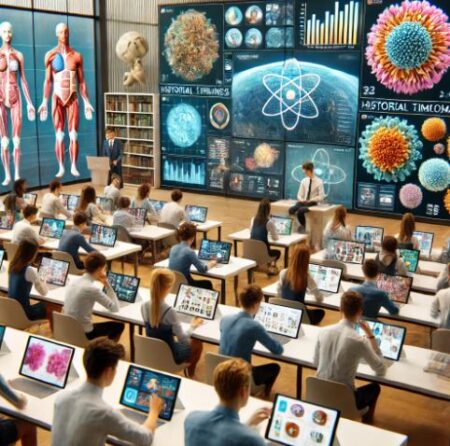
Audio-visual aids have become a cornerstone of modern education, providing teachers with dynamic tools to enhance the learning experience. These aids, which encompass various forms such as videos, audio recordings, images, charts, and interactive multimedia, serve as powerful instruments to enrich the teaching process and support diverse learning styles. The integration of audio-visual aids into classrooms or learning environments has been shown to significantly improve student engagement, understanding, and retention of knowledge. Here are some of the importance of audio-visual aids in teaching and learning, focusing on their benefits, applications, and impact on educational outcomes.
- Enhancing Understanding and Clarifying Complex Concepts: One of the key reasons audio-visual aids are so crucial in education is their ability to simplify and clarify complex concepts. Abstract ideas, particularly in subjects like science, mathematics, and history, can often be difficult for students to grasp through traditional text-based teaching alone. Visual materials such as diagrams, charts, and videos help to illustrate these concepts in a more concrete and relatable way. For example, in a physics class, a video demonstrating the principles of motion or gravity can provide a clear, visual understanding of what might otherwise be an abstract theory. Similarly, in subjects like biology, animated videos showing the processes within the human body allow students to visualize biological processes like respiration, digestion, and cellular activities, which may be hard to explain purely through words.
- Improving Retention and Memory: Another significant advantage of audio-visual aids is their positive impact on memory retention. Research has consistently shown that students are more likely to remember information when it is presented through both visual and auditory channels. The use of both images and sounds strengthens memory pathways, making the information more memorable. For example, when students watch a video on a historical event, not only do they hear the narration, but they also see images of the event, which helps them recall the information more effectively. The combination of auditory and visual stimuli helps reinforce the lesson, increasing the likelihood of long-term retention.
- Promoting Active Learning and Engagement: Audio-visual aids also play a critical role in fostering active learning, which is crucial for deepening understanding and improving educational outcomes. Traditional lecture-based teaching often limits student engagement, but audio-visual materials offer an interactive approach that can actively involve students in the learning process. For instance, interactive multimedia, such as online simulations or educational games, encourages students to apply their knowledge and solve problems in real time. In language learning, students benefit from hearing native speakers and engaging with pronunciation exercises, which reinforces their learning through practice and repetition. This active involvement not only helps students understand the material better but also encourages critical thinking, problem-solving, and collaboration.
- Catering to Diverse Learning Styles: Every student learns differently, and audio-visual aids are valuable tools for addressing these diverse learning preferences. Visual learners benefit from materials like videos, diagrams, and charts that present information in a visual format. Auditory learners, on the other hand, find podcasts, lectures, and audio recordings more helpful for absorbing knowledge. By incorporating both audio and visual elements into lessons, teachers can cater to a wider range of learners, ensuring that no student is left behind. For example, in a classroom where students speak different languages or have varying levels of proficiency, visual aids such as infographics and subtitles in videos can help bridge language gaps and provide additional support. This inclusivity makes learning more accessible and ensures that students with different needs and abilities can engage with the material in a way that works best for them.
- Support for Students with Special Needs: Audio-visual aids also contribute to creating an inclusive learning environment for students with special needs. Students with learning disabilities, such as dyslexia or attention disorders, can benefit significantly from multimedia resources. Visual aids like diagrams and illustrations can help these students understand content better, while audio resources, such as podcasts and narrated slideshows, offer alternative ways to absorb information. For students with hearing impairments, videos with subtitles or captions allow them to follow along with the content, making the learning experience more accessible. By using a combination of visual and auditory aids, teachers can support the diverse needs of all learners, ensuring that each student has an equal opportunity to succeed.
- Encouraging Student Motivation and Interest: The use of audio-visual aids also helps to capture students’ attention and maintain their interest in the lesson. In today’s digital age, students are accustomed to multimedia content and are more likely to engage with lessons that incorporate videos, animations, and interactive elements. The use of engaging, real-world examples, such as documentary clips, virtual field trips, or interactive demonstrations, can make learning feel more relevant and exciting. This not only motivates students to pay attention but also helps them see the practical applications of what they are learning. For example, a mathematics teacher might use a video demonstrating how geometry is applied in architecture, showing students the real-world relevance of abstract concepts.
The importance of audio-visual aids in teaching and learning cannot be overstated. These tools provide significant advantages, including enhanced understanding, improved retention, and active student engagement. By catering to diverse learning styles and supporting students with special needs, audio-visual aids help create an inclusive and effective learning environment. Furthermore, they encourage student motivation and interest, making learning more enjoyable and relevant. As technology continues to evolve, the role of audio-visual aids in education will likely expand, further transforming the way teachers teach and students learn. Ultimately, when used effectively, these aids can significantly enhance the quality of education and help students succeed in their academic pursuits.
How Audio-Visual Aids Can Enhance Students’ Engagement in the Learning Process
Audio-visual aids play a crucial role in enhancing student engagement in the learning process by offering dynamic tools that stimulate multiple senses. By combining visual and auditory elements, these aids create a richer, more interactive experience for students. For example, a video demonstrating a scientific experiment or a historical event allows students to both see and hear the concept in action, deepening their understanding and keeping them engaged. This multi-sensory approach helps students process information more effectively, appealing to both visual and auditory learners. Additionally, audio-visual aids are particularly useful in simplifying complex or abstract ideas. Subjects such as science, mathematics, and history often present challenges in conveying difficult concepts through text alone, but visual representations such as animations, diagrams, and videos make these concepts more accessible and easier to understand. For instance, a math teacher can use an animation to show the steps of solving an algebraic equation, which can be more effective than simply explaining the process verbally.
Audio-visual aids promote active learning, which encourages students to engage directly with the material. Unlike traditional lecture-based methods, which often involve passive listening, audio-visual tools such as interactive quizzes, educational games, and simulations require students to participate in real-time problem-solving. This type of engagement helps to reinforce the material and keeps students focused. In language learning, for example, students can practice pronunciation and vocabulary by interacting with videos or recording their own responses. The immediate feedback from these activities further motivates students to stay engaged and continue learning. Additionally, audio-visual aids increase student motivation and interest in the subject matter by making lessons more relevant and exciting. In a world filled with digital media, traditional teaching methods may not always capture students’ attention, but incorporating videos, podcasts, and other multimedia tools can make learning feel more stimulating and relatable. For example, a teacher might use a documentary to explain a historical event or play audio clips to demonstrate different musical genres, which helps students connect with the material and sparks their curiosity.
Furthermore, these aids foster collaborative learning, encouraging students to work together in groups to explore concepts, solve problems, and create projects. By incorporating multimedia into group activities, such as producing a video or preparing a multimedia presentation, students are able to collaborate creatively, strengthening both their understanding of the material and their teamwork skills. Audio-visual aids also contribute to making learning more inclusive by catering to diverse learning needs. Students with visual impairments can benefit from audio recordings, while those with hearing impairments can use videos with subtitles or captions. By providing content in multiple formats, audio-visual tools ensure that all students, regardless of their individual needs, can engage with the material. In conclusion, the use of audio-visual aids significantly enhances student engagement in learning by providing a multi-sensory, interactive, and inclusive environment. These tools make complex concepts easier to understand, promote active participation, increase motivation, and encourage collaboration, ultimately leading to more effective learning outcomes.
How Audio-Visual Aids Contribute to Better Understanding and Retention of Information Among Students
The integration of audio-visual aids in education has proven to be an effective strategy for enhancing students’ understanding and retention of information. These aids, which include videos, images, diagrams, audio recordings, and interactive multimedia, engage multiple senses simultaneously, providing a richer and more comprehensive learning experience. By appealing to both visual and auditory learning channels, audio-visual aids help students absorb and retain information more efficiently, especially when learning complex or abstract concepts. Let’s explore the ways in which audio-visual aids contribute to better understanding and retention of information, focusing on their ability to simplify material, reinforce learning, and increase student engagement.
- Simplifying Complex Concepts: One of the most significant ways audio-visual aids improve understanding is by simplifying complex or abstract concepts that might be difficult to grasp through text alone. Visual aids such as diagrams, charts, and animations provide concrete representations of abstract ideas, making them more accessible and easier to understand. For example, in a science class, a teacher might use an animation to show the process of photosynthesis, helping students visualize the steps involved in a way that static images or verbal explanations cannot achieve. Similarly, in mathematics, visualizing geometric shapes or equations using interactive tools helps students understand their properties and relationships more clearly. These visual representations break down complex ideas into digestible, easy-to-understand parts, making it easier for students to internalize the material.
- Reinforcing Learning Through Dual Encoding: Audio-visual aids enhance retention by engaging both the visual and auditory senses, which creates what is known as dual encoding. According to cognitive psychology, dual encoding strengthens memory retention because the brain processes information through two separate channels—one for images and one for sounds. This dual-channel processing increases the likelihood that students will remember the information. For example, when a student watches a video about the solar system, they not only see the planets and their orbits but also hear explanations about their characteristics and position in the universe. This combination of visual and auditory input helps reinforce the information and makes it easier to recall later. The more pathways through which information is processed, the more likely it is to be retained in long-term memory.
- Providing Context and Real-World Application: Audio-visual aids also contribute to better understanding by providing context and real-world applications of theoretical concepts. Students often struggle to relate abstract concepts to real-life situations, but audio-visual aids offer practical examples that bridge this gap. For instance, in a history lesson, a teacher might show a video clip of a significant historical event, such as the signing of a peace treaty, which not only illustrates the event itself but also provides context for why it was important. Similarly, in subjects like economics or business studies, case studies and real-world examples can be presented through multimedia, helping students see how theories are applied in real-life scenarios. By providing this context, audio-visual aids make learning more meaningful and relevant, which helps students better understand the material and remember it for the future.
- Engaging Students and Improving Motivation: Engagement is a key factor in retention, and audio-visual aids are particularly effective at capturing students’ attention and keeping them involved in the learning process. Traditional lectures or textbooks may not always hold the interest of students, especially in the age of digital media, but multimedia resources offer a dynamic, interactive experience that keeps students motivated and engaged. For example, interactive videos, educational games, or virtual tours can actively involve students in the learning process, making them more invested in the material. When students are actively engaged, they are more likely to pay attention, ask questions, and retain the information presented. Additionally, the novelty of using technology and multimedia in the classroom can stimulate students’ curiosity and encourage them to explore topics further, enhancing both short-term understanding and long-term retention.
- Supporting Diverse Learning Styles: Another way audio-visual aids enhance retention is by catering to the diverse learning styles of students. Different students process information in various ways, and audio-visual aids offer a variety of formats to support these preferences. Visual learners, for example, benefit from images, charts, and diagrams, while auditory learners may find podcasts, lectures, and narrated videos more effective. Kinesthetic learners, who learn by doing, can benefit from interactive multimedia that allows them to engage directly with the content through simulations, activities, or problem-solving exercises. By addressing the needs of students with different learning styles, audio-visual aids ensure that every student has access to information in a format that suits them best, which improves their understanding and retention of the material.
- Facilitating Active Recall and Revision: Active recall, the process of retrieving information from memory, is one of the most effective ways to strengthen retention. Audio-visual aids support this process by providing students with opportunities to review and interact with the material repeatedly. Educational videos, for example, can be revisited at any time, allowing students to re-engage with the content whenever needed. Additionally, multimedia tools that include quizzes or interactive exercises help students practice active recall by prompting them to retrieve and apply the information they have learned. This continuous engagement with the material reinforces memory and improves retention, as the more students actively recall information, the stronger the neural connections related to that information become.
- Making Learning Accessible and Inclusive: Finally, audio-visual aids contribute to better retention by making learning more accessible and inclusive. Students with learning difficulties, such as dyslexia or attention deficit disorder, often struggle with traditional reading and writing-based activities. However, multimedia resources provide alternative ways for these students to engage with the content. For example, students with visual impairments can benefit from audio recordings of lessons, while those with hearing impairments can follow along with subtitled videos. By offering a range of formats, audio-visual aids ensure that all students, regardless of their abilities, can access and retain the information being taught.
Audio-visual aids play a pivotal role in improving students’ understanding and retention of information. By simplifying complex concepts, reinforcing learning through dual encoding, providing real-world context, engaging students actively, and supporting diverse learning styles, these aids create a more effective and inclusive learning environment. Additionally, by fostering active recall and offering opportunities for repeated review, audio-visual aids help strengthen memory retention. As educational technology continues to evolve, the use of audio-visual aids will likely remain an integral part of teaching, enhancing both understanding and retention of material for students of all backgrounds and learning preferences.
Types of Audio-Visual Aids Most Effective for Online Learning Environments
In online learning environments, audio-visual aids are vital tools that help bridge the gap between traditional classroom instruction and remote education. These aids enhance engagement, comprehension, and retention, making learning more interactive and accessible. With the increasing reliance on digital platforms, it is essential to choose the right types of audio-visual aids to create an engaging and effective learning experience. Some of the most effective audio-visual aids for online learning environments include educational videos, interactive simulations, podcasts, infographics, webinars, and interactive quizzes.
- Educational Videos and Tutorials: One of the most commonly used and impactful audio-visual aids for online learning is educational videos. Videos can present complex concepts in a dynamic and visually engaging manner, making them easier for students to understand. Videos can feature animations, real-life examples, expert interviews, or step-by-step tutorials that demonstrate key concepts. For instance, a video explaining the water cycle can show animations that visualize each stage of the process, helping students grasp the concept more effectively than through text alone. Educational videos also allow students to learn at their own pace, pausing or rewinding content as needed. As a result, videos help reinforce learning and provide clarity on topics that may be challenging to understand.
- Interactive Simulations and Virtual Labs: Interactive simulations are especially effective in online learning environments, particularly for subjects that require hands-on experience, such as science, engineering, and computer programming. These simulations allow students to explore concepts in a virtual setting, experiment with variables, and observe real-time feedback. For example, in an online chemistry course, a virtual lab may allow students to mix chemicals and observe reactions, providing a safe and controlled environment for practical learning. Virtual labs and simulations replicate real-world scenarios, making abstract concepts tangible and easier to comprehend. These interactive aids promote active learning, allowing students to apply theoretical knowledge in practical situations, which significantly enhances engagement and understanding.
- Podcasts and Audio Recordings: Podcasts and audio recordings are valuable tools for supplementing online learning materials. They are particularly effective for auditory learners who absorb information better through listening. Podcasts can be used to discuss topics in-depth, review important points, or interview subject matter experts, allowing students to gain additional insights. Audio recordings also allow students to engage with the content while multitasking, such as listening to a lecture while commuting or exercising. Furthermore, language learning courses benefit greatly from audio resources, as students can practice pronunciation and improve listening comprehension by listening to native speakers or conversational exercises.
- Infographics and Diagrams: Infographics and diagrams are highly effective visual tools for summarizing and organizing information in a simplified and accessible format. In an online course, infographics can break down complex data, processes, or concepts into easily digestible visuals. For instance, a diagram illustrating the steps of a biological process, such as cellular respiration, can help students visualize and better understand the sequence of events. Infographics also provide an engaging way to present comparisons, statistics, or timelines, helping students grasp key concepts quickly. Because they condense large amounts of information into compact visuals, infographics are particularly helpful for revision and reinforcing essential points.
- Webinars and Live Video Sessions: Webinars and live video sessions offer opportunities for real-time interaction between instructors and students, replicating the dynamics of a traditional classroom in an online setting. These sessions enable instructors to present lessons, answer questions, and engage with students directly, making learning more interactive. During live sessions, instructors can use visual aids like slideshows, annotations, and screen sharing to enhance explanations. Students can also ask questions and participate in discussions, promoting engagement and clarifying concepts in real-time. Moreover, live video sessions can be recorded for future reference, allowing students to revisit the material if needed. This interactivity helps bridge the isolation often associated with online learning, fostering a sense of connection and collaboration among students and instructors.
- Interactive Quizzes and Assessments: Interactive quizzes and assessments are crucial for reinforcing learning and testing comprehension in an online environment. These tools often incorporate multimedia elements, such as images, audio clips, or videos, to make assessments more engaging. For example, a geography quiz could feature images of landmarks or natural landscapes and ask students to identify them, while a history quiz might play an audio recording of a speech and require students to answer related questions. By using multimedia in assessments, instructors can make quizzes more interactive and memorable, helping students retain the information. Moreover, quizzes provide immediate feedback, allowing students to gauge their understanding of the material and identify areas for improvement.
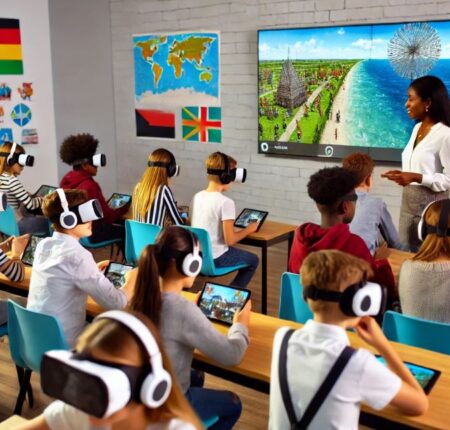
- Virtual Field Trips: Virtual field trips are a powerful tool for making online learning more immersive and experiential. They allow students to explore historical sites, museums, cultural landmarks, or natural environments from the comfort of their homes. Using 360-degree videos, virtual reality (VR), or interactive maps, students can engage with real-world locations and scenarios, enhancing their learning experience. For example, a history class might take a virtual field trip to ancient Greece, exploring the ruins of Athens and learning about the civilization’s architecture and culture. These immersive experiences provide students with a deeper understanding of the subject matter and foster curiosity, making learning feel more exciting and relevant.
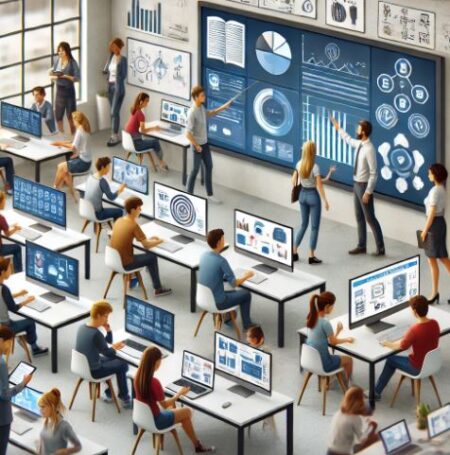
- Interactive Whiteboards and Screen Sharing: Interactive whiteboards and screen-sharing tools are valuable for creating real-time, collaborative learning experiences. Platforms such as Zoom, Microsoft Teams, or Google Meet offer features that allow instructors to share their screens, annotate slides, and collaborate with students on a virtual whiteboard. These tools replicate the interactive aspects of in-person learning, allowing instructors to demonstrate concepts, solve problems, or create visual representations during live lessons. Students can also participate by contributing to the whiteboard or sharing their own screens during group work. Interactive whiteboards and screen sharing help maintain student engagement and foster collaboration, making learning more interactive and dynamic.
In online learning environments, the effective use of audio-visual aids is crucial for enhancing engagement, comprehension, and retention. Educational videos, interactive simulations, podcasts, infographics, webinars, and quizzes are some of the most effective aids that support various learning styles and foster a more interactive and immersive learning experience. By incorporating these tools into online courses, instructors can create a more dynamic, accessible, and engaging learning environment that helps students better understand complex concepts, retain information, and stay motivated throughout their educational journey.
Challenges Teachers Face When Incorporating Audio-Visual Aids into Their Teaching
Incorporating audio-visual aids into teaching has the potential to significantly enhance the learning experience, but it also presents a variety of challenges for educators. While these aids can make lessons more engaging, dynamic, and accessible, their integration into the classroom or online environment requires careful planning, resources, and technical skills. Teachers face numerous obstacles when using audio-visual aids, including technical issues, resource limitations, time constraints, and the need for proper training. This article explores the key challenges teachers encounter when incorporating audio-visual aids into their teaching, highlighting the complexities involved and offering insights into how these hurdles can be overcome.
- Technical Issues and Equipment Limitations: One of the most common challenges teachers face when using audio-visual aids is dealing with technical issues and equipment limitations. Whether in a physical classroom or during online learning, technical difficulties can disrupt lessons and hinder the effectiveness of audio-visual aids. In traditional classrooms, teachers may encounter problems with outdated or malfunctioning equipment, such as projectors, computers, or sound systems. If the necessary technology is not functioning properly, the teacher may not be able to present video or audio content, making the lesson less engaging and less effective.
In online learning environments, issues such as poor internet connectivity, incompatible software, or platform malfunctions can impede the smooth delivery of audio-visual content. For instance, a slow internet connection may cause videos to buffer or freeze, leaving students frustrated and disengaged. Furthermore, compatibility issues between different devices, browsers, and operating systems can prevent students from accessing or interacting with the content as intended. To overcome these challenges, teachers must ensure they have access to reliable technology, conduct tests before lessons, and be prepared with backup plans in case of technical failures. - Resource Availability and Budget Constraints: Another significant challenge is the availability of resources and budget constraints. In many educational institutions, especially in underfunded schools, the resources required to incorporate high-quality audio-visual aids may be limited. Teachers may lack access to modern equipment, such as projectors, interactive whiteboards, or high-quality video production tools. In online learning environments, schools may struggle to provide all students with access to devices capable of supporting multimedia content, such as laptops or tablets, or with high-speed internet connections necessary for streaming videos or engaging in live sessions.
Even when resources are available, the cost of purchasing or subscribing to audio-visual materials, such as educational videos, software, or online tools, may exceed the budget allocated for instructional purposes. This can limit teachers’ ability to incorporate a variety of audio-visual aids into their lessons. To address this issue, schools and educators can explore open-access resources, free educational platforms, and partnerships with organizations that provide educational content at a low cost or for free. Additionally, teachers can repurpose existing materials or create their own multimedia content to minimize costs. - Time Constraints and Preparation Effort: The incorporation of audio-visual aids into lessons often requires significant time and effort in preparation. Teachers must carefully select, create, or edit multimedia content that aligns with lesson objectives and is appropriate for the students’ level of understanding. This process can be time-consuming, especially when creating original content or curating high-quality educational materials. For instance, a teacher may need to edit videos, create interactive presentations, or adapt multimedia resources to suit different learning styles. This preparation takes away from other aspects of lesson planning, leaving teachers with less time to focus on other important tasks, such as grading or lesson delivery.
Additionally, once the materials are prepared, teachers must allocate sufficient time for students to engage with and reflect on the content. This can be particularly challenging in classrooms with strict time constraints, where teachers feel pressured to cover a set curriculum within a limited period. In online environments, managing the timing of multimedia presentations and ensuring that students have enough time to absorb the content without becoming overwhelmed can also be challenging. To mitigate this issue, teachers can consider using pre-recorded materials that students can engage with asynchronously, giving them more flexibility in managing their time. - Lack of Training and Familiarity with Technology: Another challenge is the lack of proper training and familiarity with technology. While many teachers are adept at using traditional teaching methods, they may not be well-versed in integrating and using audio-visual aids effectively. Learning how to use multimedia tools, video editing software, or interactive platforms can require additional training, which may not always be available or accessible. Without proper training, teachers may struggle to effectively utilize the technology, leading to frustration or ineffective implementation of audio-visual aids.
Moreover, some teachers may feel overwhelmed by the constant need to stay updated on new tools and technologies. With the rapid advancement of educational technology, it can be difficult for educators to keep up with the latest trends and best practices for using audio-visual aids. Providing professional development opportunities and ongoing support for teachers is essential to ensure they feel confident and capable of using these tools. Schools can offer workshops, training sessions, or peer collaboration to help teachers improve their technological proficiency and integrate multimedia resources into their teaching. - Ensuring Accessibility and Inclusivity: When incorporating audio-visual aids into lessons, it is essential for teachers to consider the accessibility needs of all students. Some students may have disabilities, such as hearing impairments, visual impairments, or learning disabilities, which may make it difficult for them to engage with multimedia content. For instance, students with hearing impairments may struggle to follow along with audio or video content unless subtitles or captions are provided. Similarly, students with visual impairments may find it challenging to engage with materials that rely heavily on visual elements.
To ensure inclusivity, teachers must make sure that the audio-visual aids they use are accessible to all students. This may involve providing subtitles or captions for videos, offering audio descriptions for visual content, or using alternative formats that accommodate different needs. Teachers can also ensure that online platforms and multimedia tools are compatible with screen readers or other assistive technologies. By being mindful of these accessibility considerations, teachers can ensure that all students have an equal opportunity to benefit from audio-visual aids. - Student Distractions and Over-Reliance on Technology: While audio-visual aids can enhance learning, they can also lead to distractions if not used appropriately. In an online learning environment, students may be more prone to distractions, such as browsing social media or engaging in unrelated activities while watching videos, or participating in virtual classes. Similarly, in physical classrooms, students may become distracted by the technology itself, especially if the multimedia content is not directly relevant to the lesson. Over-reliance on technology can also be a concern, as students may become passive recipients of information rather than active participants in the learning process.
To mitigate these risks, teachers need to strike a balance between using technology and traditional teaching methods. It is important to ensure that audio-visual aids are used purposefully and are integrated into lessons in a way that complements rather than dominates the learning experience. Teachers should also establish clear expectations for student engagement and monitor participation during multimedia activities to ensure that students remain focused on the material.
Incorporating audio-visual aids into teaching offers numerous benefits but also presents several challenges for educators. Technical issues, resource limitations, time constraints, lack of training, accessibility concerns, and the potential for student distractions are all obstacles that teachers must navigate. To overcome these challenges, educators need access to reliable technology, professional development opportunities, and resources that support the creation and use of multimedia content. By addressing these issues, teachers can more effectively integrate audio-visual aids into their lessons, enhancing the learning experience and fostering a more engaging and inclusive environment for students.

16 Comments
good writting
Ammy
Thanks for guide me
It’s easy to understand
Thanks for guide me
It’s easy to understand
Good effort sir
Thanks for help, guid, inform and imparting knowledge that you are making which is much better and good for us and every body, keep it up.
Nice notes
சிறப்பு
Simple and nice notes for understanding.
Da best wak eva
Worth spending time reading this blog! Amazingly written. Would love to read more useful blogs. Waiting for you to post more blogs of the same pattern.
Wonderful and interesting explanation. May the Almighty God bless your task.
Thank you very much for your kind words and blessings! I’m glad you found the explanation wonderful and interesting. If you have any further questions or need additional clarification, feel free to ask. Wishing you continued blessings and success in your endeavors!
Good effective information about a AV classrooms and more useful content . Thank you
It was such an interesting and worthy to spend time to read this blog.
Thank you so much for your kind words! I’m thrilled to hear that you found the blog interesting and worth your time. If you have any more feedback or if there are any other topics you’d like to see covered, please don’t hesitate to let me know. Your input is greatly appreciated!
Thanks for making the work easier