
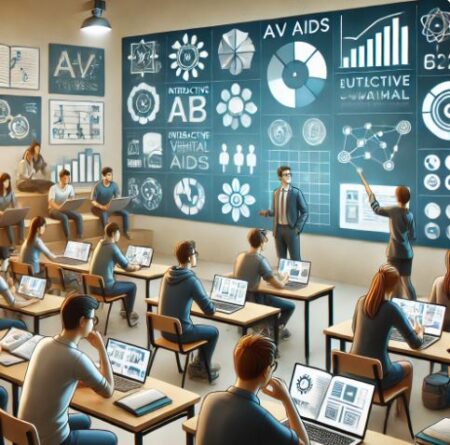
Introduction: Audiovisual aids refer to the tools, materials, and equipment used to enhance the learning and communication experience by combining auditory and visual elements. These aids support and reinforce information by integrating sound, images, and text, creating a multi-sensory learning environment. From slideshows and videos to interactive presentations and digital media, audiovisual aids play a crucial role in various educational settings, business presentations, and entertainment industries. Engaging multiple senses simultaneously captivates audiences, improves understanding, and leaves a lasting impact on the recipients. With their ability to convey complex concepts, stimulate interest, and enhance communication, audiovisual aids have become indispensable tools in today’s dynamic and visually-driven world.
What is Audio-Visual Aids?
An audio-visual aid is a teaching or communication tool combining auditory and visual elements to enhance the learning or communication experience. It refers to various materials and equipment used to present information, such as images, videos, slideshows, diagrams, charts, graphs, and interactive media. By incorporating both sight and sound, audio-visual aids aim to engage multiple senses, reinforce understanding, and create a more dynamic and immersive experience for the audience. These aids are commonly used in classrooms, training sessions, business presentations, conferences, and other contexts where information must be effectively conveyed and retained. They serve as powerful tools for conveying complex concepts, stimulating interest, and facilitating better comprehension and retention of information.
Audio-visual aids can be used in a variety of subjects and grade levels. Some common examples of audio-visual aids include:
- Charts and graphs
- Maps and globes
- Models and dioramas
- Videos and films
- Computer software
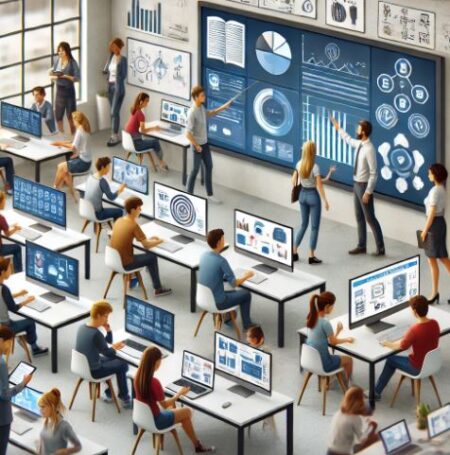
- Interactive whiteboards
- Smartboards
Types of Audio-Visual Aids
In the modern education, training, and communication world, audio-visual (AV) aids have become essential tools. These aids combine auditory and visual components to enhance the learning experience, making complex ideas easier to understand and retain. Audio-visual aids are widely used in classrooms, corporate training, conferences, and even casual presentations because they cater to different learning styles and improve comprehension. Here are the three types of audiovisual aids:
- Audio Aids: Audio aids are tools or devices that focus solely on sound to communicate information or support learning. These are beneficial for auditory learners who absorb information more effectively through hearing. Common examples of audio aids include:
- Radio: Broadcasts lectures, news, and educational programs that help in auditory learning.
- Podcasts: Digital audio files on various topics that can be streamed or downloaded for educational or informative purposes.
- Recordings (Cassettes, CDs, MP3s): Audio files that provide pre-recorded information, such as language learning tapes or recorded lectures.
- Speeches and Narrations: Live or recorded speeches that convey knowledge or experiences through sound.
- Visual Aids: Visual aids involve imagery, graphics, or text that learners view to gain information or better understand concepts. These are particularly effective for visual learners who grasp information by seeing it. Examples include:
- Charts and Graphs: Simplifies data or statistical information through diagrams, making it easier to interpret complex information.
- Photographs and Pictures: Visual representations used in education, museums, or presentations to give real-world context to learning.
- Posters and Diagrams: Provide visual information in a simplified or exaggerated manner, useful for summarizing key points or processes.
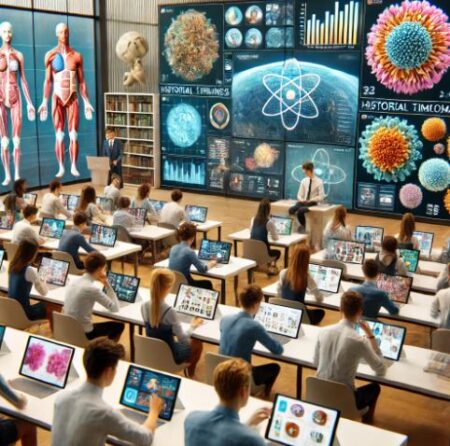
- PowerPoint Presentations: Slides that combine text, images, and sometimes video to present information in a structured, visually appealing format.
- Flashcards: Simple learning tools with visual information, often used for quick memory recall or reinforcement of concepts.
- Audio-Visual Aids: Audio-Visual aids combine both sound and visual elements to offer a more interactive and engaging learning or presentation experience. These are powerful tools because they cater to both auditory and visual learners, offering a multisensory approach. Examples include:
- Videos (Educational Films, Documentaries): Combine moving images with sound to explain concepts in detail, provide demonstrations, or tell stories.
- Television and Streaming Services: Deliver educational content, news, or entertainment that can be highly informative and interactive.
- Webinars and Online Lectures: Offer live or recorded sessions where speakers use audio and visual components (like slides and videos) to convey information to a remote audience.
- Interactive Whiteboards: Modern tools allow teachers or presenters to write, draw, and interact with digital elements on a screen while explaining with audio.
- Animations: Used in educational content or presentations to simplify complex ideas by making them dynamic and engaging.
Each type of audio-visual aid serves a distinct purpose, and the choice of aid depends on the context, audience, and learning goals. While audio aids are great for auditory learning, visual aids help break down complex concepts visually. Audio-visual aids combine the best, making learning more interactive and comprehensive.
Objectives of Audio Visual Aids
Audio-visual aids are indispensable tools in modern education and communication. Combining sight and sound, they have revolutionized how information is shared and absorbed. Whether used in classrooms, corporate presentations, or training programs, audio-visual aids significantly enhance the learning experience, making it more interactive, engaging, and effective. The objectives of audio-visual aids are diverse, and they cater to a wide range of learning needs and communication goals. Below are the primary objectives of using audio-visual aids:
- Enhancing Understanding of Complex Concepts: One of the main objectives of AV aids is to make complex information easier to comprehend. By combining both auditory and visual components, difficult topics can be broken down into more digestible parts. For example, a scientific concept or historical event can be more easily understood through videos, animations, or diagrams.
- Increasing Engagement and Interest: Audio-visual aids are designed to capture the attention of learners or audiences by making content more engaging. Using visuals, sound, and interactive elements prevents monotony and helps maintain interest in the subject matter. This objective is particularly important in classrooms, where student engagement is critical to learning outcomes.
- Catering to Different Learning Styles: Not all individuals learn the same way. Some are auditory learners, while others are visual or kinesthetic learners. Audio-visual aids aim to address these varying learning styles by providing multisensory experiences. By combining sound, images, and interactive elements, AV aids ensure that a broader range of learners can grasp the material effectively.
- Improving Retention and Recall: Research shows that people remember information better when it is presented through auditory and visual channels. The objective of AV aids is to improve retention by reinforcing content through multiple senses. For instance, when learners see and hear a concept explained through a video, they are more likely to remember it later.
- Promoting Active Learning: Audio-visual aids encourage active participation rather than passive information consumption. Interactive whiteboards, simulations, and educational software promote involvement in the learning process. This leads to a deeper understanding of the subject and helps learners apply knowledge practically.
- Providing Real-World Context: AV aids can help relate abstract concepts to real-world situations. For example, a video showing the application of scientific principles in everyday life or industry helps learners see the relevance of what they are studying. This objective is especially important in vocational training, where real-life demonstrations are critical for learning.
- Encouraging Collaboration: In collaborative learning environments, AV aids foster group discussions and teamwork. Tools like interactive whiteboards or online collaborative platforms enable learners to collaborate on projects, share ideas, and engage in discussions. This leads to a more engaging and collaborative learning experience.
- Simplifying Assessment and Feedback: Another objective of AV aids is to simplify the assessment and feedback process. Tools like interactive quizzes, simulations, or educational software can assess learners’ understanding in real-time. This enables instructors to provide immediate feedback and adjust their teaching strategies to meet the learners’ needs.
- Breaking Language and Cultural Barriers: Audio-visual aids can transcend language and cultural barriers by using universally understood visuals or sound. For instance, images and animations can help convey concepts in multilingual or cross-cultural environments where verbal explanations might be challenging.
- Saving Time and Effort: AV aids also aim to save time and effort for both educators and learners. They can deliver large amounts of information quickly, making teaching and learning more efficient. For example, a video can explain in minutes what might take hours to cover in a textbook.
The objectives of audio-visual aids go beyond just making content more attractive; they aim to improve understanding, retention, and communication while catering to diverse learning styles. These tools are critical in creating an engaging, interactive, and efficient learning environment adaptable to modern needs.
Characteristics of Audio-Visual Aids
Audio-visual aids (AV aids) are essential tools used in education, corporate training, and communication to enhance learning. By combining visual and auditory elements, these aids make information more engaging, understandable, and memorable. Whether used in classrooms, seminars, or presentations, AV aids have a set of distinct characteristics that make them effective tools for teaching and communication. Here are the primary characteristics of audio-visual aids:
- Multisensory Appeal: One of the most important characteristics of audio-visual aids is their ability to engage multiple senses simultaneously. Unlike traditional text-based learning, AV aids stimulate sight and sound, providing a multisensory experience that caters to different learning styles. This multisensory appeal is particularly useful in improving retention and understanding. For example, a video that combines spoken narration with visuals allows learners to both hear and see the material, making it easier to grasp complex ideas and concepts.
- Clarity and Simplicity: Effective AV aids are clear and simple, designed to convey information in a straightforward and easy-to-understand manner. By breaking down complex information into manageable components, AV aids ensure learners are not overwhelmed by excessive detail. Tools such as diagrams, charts, and videos help simplify complex subjects, making it easier for the audience to follow. For instance, a teacher can use a flowchart to explain the steps of a scientific process, making it more digestible for students than lengthy text-based explanations.
- Interactivity: Many modern AV aids incorporate interactive features that actively engage learners. Interactivity is crucial because it promotes active learning, encouraging participants to engage with the material rather than passively consuming it. Interactive whiteboards, educational apps, and virtual simulations are examples of AV tools that allow users to manipulate content, answer questions, or explore scenarios. This interactivity fosters critical thinking and deeper understanding by allowing learners to experiment with concepts and receive immediate feedback.
- Flexibility: Flexibility is another defining characteristic of AV aids. These tools can be adapted to suit various subjects, learning environments, and audiences. Whether in a traditional classroom, a corporate setting, or an online learning platform, AV aids can be tailored to meet the needs of different learners. For example, a PowerPoint presentation used in a business meeting might focus on key data points for executives, while the same presentation could be modified with more detailed explanations for trainees. This flexibility ensures that AV aids remain effective across diverse contexts.
- Realistic and Practical Representation: Audio-visual aids excel in providing realistic and practical representations of abstract concepts. Through videos, animations, and case studies, AV aids can demonstrate real-world applications of theoretical knowledge. This characteristic is particularly valuable in fields such as science, technology, and vocational training, where learners need to see how concepts work in practice. For example, a documentary showcasing a real-life business operation helps business students understand how theoretical models are applied in the workplace.
- Engagement and Motivation: Audio-visual aids are designed to engage and motivate learners by making content more dynamic and visually appealing. Using animations, colorful slides, and multimedia elements captures attention and keeps learners focused throughout the lesson or presentation. This characteristic is especially important for maintaining interest in students struggling with traditional learning methods. For example, an animated video explaining a historical event can make the lesson more exciting, encouraging students to stay engaged and participate more actively.
- Versatility: Another key characteristic of AV aids is their versatility. These tools can take many forms, such as videos, slideshows, infographics, and interactive simulations. This versatility allows AV aids to be used across various subjects and educational settings. Whether teaching a complex scientific process, delivering corporate training, or presenting at a conference, AV aids can be tailored to fit the specific needs of the content and audience. For instance, a science teacher might use an interactive simulation to demonstrate a chemical reaction. At the same time, a business trainer might rely on a video case study to explain customer service strategies.
- Time-Saving: Audio-visual aids help save time by delivering information concisely and efficiently. Because AV aids can present complex information quickly and clearly, they reduce the time needed to explain difficult concepts. For example, a short educational video can summarize a large chapter in a textbook in just a few minutes, allowing more time for discussion or hands-on activities. This time-saving characteristic is particularly valuable in fast-paced environments where large amounts of content need to be covered within a limited timeframe.
- Accessibility: AV aids are also known for their accessibility, making them a valuable tool for diverse learners, including those with disabilities. By offering alternative information presentations, AV aids make learning more inclusive. For example, subtitles in videos help hearing-impaired learners, while descriptive audio can assist those who are visually impaired. Additionally, AV aids can be customized to suit learners with different cognitive abilities, ensuring everyone has access to quality education regardless of their physical or mental capabilities.
- Adaptability to Technology: The adaptability of audio-visual aids to modern technology is another critical characteristic. AV aids can be integrated with various devices, including computers, projectors, tablets, and smartphones. This makes them highly compatible with today’s technology-driven learning environments. Teachers can use AV aids in traditional classrooms with projectors or incorporate them into online learning platforms, making it easy to access and share educational content across different mediums. This adaptability ensures that AV aids remain relevant and useful as technology evolves.
The characteristics of audio-visual aids—such as their multisensory appeal, interactivity, clarity, and flexibility—make them indispensable in modern education and communication. By simplifying complex information, engaging learners, and offering practical, real-world applications, AV aids significantly enhance the learning experience. Their versatility and time-saving nature, combined with their ability to adapt to different technologies, ensure that AV aids will continue to play a central role in education and professional communication in the future.
Importance of Audio-visual aids
Audio-visual (AV) aids are powerful tools that have transformed how information is delivered in educational, corporate, and communication settings. Combining auditory and visual elements makes learning more engaging, efficient, and impactful. AV aids serve various functions, from enhancing understanding to improving retention and making learning more accessible to diverse audiences. Below are key reasons highlighting the importance of audio-visual aids in modern education and communication.
- Enhancing Understanding: One of the most important functions of audio-visual aids is to make complex information more understandable. AV aids use visuals such as images, diagrams, and videos, alongside auditory components like narration and sound, to break down intricate ideas into simpler, more digestible formats. This is particularly beneficial when teaching subjects that involve abstract concepts, such as science, mathematics, or technology. For example, a video demonstration of a chemical reaction helps students visualize the process, making it easier to comprehend than reading about it in a textbook. By presenting material through multiple channels, AV aids cater to various learning styles and ensure learners grasp key concepts more effectively.
- Increasing Engagement: AV aids are highly effective in capturing and maintaining learners’ attention. Long lectures can often result in disengagement or loss of focus in classrooms or training sessions. However, using AV aids can break up the monotony by introducing dynamic, visually appealing content. Sound, motion and visuals keep learners interested and motivated throughout the lesson or presentation. For example, animated videos, interactive simulations, or colorful slideshows make learning more enjoyable and stimulating, which leads to better participation and interaction. The increased engagement not only enhances the learning experience but also improves retention and recall.
- Improving Retention and Recall: Research suggests that people remember information better when presented through multiple sensory channels, such as visual and auditory. Audio-visual aids are designed to use both sight and sound, which helps reinforce the material and improve long-term retention. For instance, a combination of slides, videos, and spoken explanations ensures learners are more likely to retain the information than purely verbal instruction. Learners can see and hear the material, strengthening their memory through dual encoding. This leads to better outcomes in education and corporate training, as learners are more likely to recall the information when needed, whether for exams or professional tasks.
- Catering to Different Learning Styles: Not all individuals learn the same way. Some are auditory learners who process information best through listening, while others are visual learners who prefer to see concepts explained through diagrams, images, or videos. Audio-visual aids cater to a wide range of learning styles by combining auditory and visual elements, making the material accessible to a larger audience. By addressing the diverse needs of learners, AV aids ensure that no one is left behind in the learning process. This inclusive approach makes AV aids particularly valuable in classrooms where students have varying abilities and preferences.
- Making Learning More Interactive: AV aids promote active learning, encouraging students and trainees to participate in their learning process rather than passively receiving information. Interactive tools such as smartboards, virtual simulations, and educational software allow learners to engage with the material by answering questions, manipulating objects, or solving problems. This hands-on approach deepens understanding and helps learners apply theoretical knowledge in practical situations. For example, a virtual biology lab allows students to conduct experiments in a controlled, simulated environment, allowing them to learn through experimentation. This interactivity fosters critical thinking and problem-solving skills, essential in academic and professional settings.
- Providing Real-World Applications: Another significant advantage of AV aids is their ability to connect theoretical knowledge to real-world applications. Learners can see how abstract concepts are applied in practical scenarios through videos, documentaries, and case studies. This is particularly valuable in subjects like science, business, and engineering, where it is essential to understand how theoretical principles work in practice. For example, a business training video might show how customer service techniques are implemented in real-life interactions, helping trainees relate the theoretical lessons to their future roles. The practical application of knowledge makes learning more relevant and prepares students and professionals for real-world challenges.
- Saving Time and Effort: AV aids help educators and presenters deliver large amounts of information in a shorter time, making them a time-saving tool for teaching and training. Instead of spending hours explaining complex theories or concepts, a short video or a well-designed infographic can communicate the same material much faster and more effectively. For example, a 10-minute educational video can summarize an entire chapter of a textbook, leaving more time for discussion, hands-on practice, or question-and-answer sessions. This efficiency makes AV aids an invaluable tool in fast-paced environments where time is limited, such as classrooms, workshops, or corporate training sessions.
- Facilitating Communication: Audio-visual aids enhance communication by making it easier for presenters and teachers to convey their messages clearly and concisely. Complex ideas that are difficult to explain verbally can be simplified through visuals, graphs, or animations. For instance, a company presenting its annual performance might use charts and graphs to show growth trends, making it easier for stakeholders to understand the data. In addition, AV aids allow for better storytelling by combining sound, images, and motion, making presentations more impactful and persuasive. This is especially important in corporate settings, where clear communication is essential for decision-making and strategy development.
Audio-visual aids have become indispensable in modern education, corporate training, and communication. They enhance understanding, increase engagement, and improve retention, making learning more efficient and accessible. By catering to different learning styles, promoting interactivity, and providing real-world applications, AV aids create a richer and more dynamic learning experience. Their ability to foster inclusivity, save time, and facilitate communication ensures that AV aids will continue to play a vital role in education and professional development in the future.
Examples of Common Audio-Visual Aids
Audio-visual aids are indispensable tools in modern education, corporate training, and communication. By integrating both auditory and visual elements, these aids make learning and presentations more engaging, memorable, and accessible. From videos to interactive simulations, audio-visual aids cater to various learning styles and help simplify complex information. Below are some common examples of audio-visual aids:
- Videos: Videos are among the most effective and widely used audio-visual aids. They combine moving images and sound to convey information engagingly. Videos are ideal for explaining complex processes, demonstrating real-life examples, or telling stories that capture the audience’s attention. For instance, a science teacher might use a video to show the stages of the water cycle, helping students visualize each part of the process in a way that is more impactful than simply reading about it. The ability to appeal to both sight and sound makes videos highly effective for improving comprehension and retention.
- Slideshows (PowerPoint Presentations): Slideshows, typically created using tools like PowerPoint, are commonly used to present information visually. A slideshow consists of text, images, charts, and sometimes videos. This format is especially useful in educational or corporate settings, where structured presentations are needed to convey complex data clearly and concisely. For example, a business presentation might use slides with charts and graphs to illustrate company performance over the past year, making it easier for the audience to interpret key trends. Slideshows help presenters organize their information in a visually appealing format that enhances audience understanding.
- Projectors: Projectors are essential tools for displaying content to a large audience. Projectors projecting images, videos, or slideshows onto a screen ensure that everyone in the room can clearly see the presented information. Projectors are used in classrooms, lecture halls, and conference rooms to display educational content, training videos, or business presentations. For example, a teacher might use a projector to show a documentary on a large screen, making it easier for students to follow along. The ability to display content in a large, shared format makes projectors an important audio-visual aid in many settings.
- Interactive Whiteboards (Smartboards): Interactive whiteboards, or smartboards, are touch-sensitive boards that allow users to interact with the content displayed on the screen. These whiteboards offer a dynamic way to present information, as teachers or presenters can write, draw, or move objects directly on the screen. For instance, a math teacher might use a smartboard to solve equations interactively, encouraging students to participate by manipulating numbers or shapes on the board. The interactive nature of smartboards makes learning more engaging, as students can actively contribute to the lesson, fostering a deeper understanding of the material.
- Charts and Graphs: Charts and graphs are visual tools to present data in a simplified and easy-to-understand format. Whether in education or business, charts and graphs make it easier to interpret large amounts of data at a glance. For example, a teacher might use a bar graph to show the population growth of various countries, helping students visualize demographic trends. Pie charts and line graphs display sales figures or financial performance in corporate settings. The ability to break down complex information into a visual format ensures that charts and graphs remain one of the most effective audio-visual aids.
- Podcasts and Audio Recordings: Podcasts and audio recordings focus on auditory learning, making them useful tools for those who absorb information best through listening. These aids are particularly popular in language learning, history, and literature. For instance, a history teacher might assign a podcast detailing significant events during World War II, allowing students to listen and engage with the content in a narrative format. Audio recordings are also useful for people on the go, as they provide flexibility regarding where and when learning can occur. By focusing solely on sound, podcasts and audio recordings cater to auditory learners who benefit from listening to content.
- Infographics: Infographics are a visual representation of information, data, or knowledge, combining text, images, and data visualization to present information concisely. Infographics are effective because they simplify complex topics into easily digestible chunks of information. For example, an infographic explaining the stages of photosynthesis might include images of plants, arrows to indicate processes, and brief text explanations, providing a clear visual summary. These visual tools are widely used in education, marketing, and business because they can communicate a large amount of information quickly and efficiently.
- Educational Software and Simulations: Educational software and simulations are interactive tools that provide hands-on learning experiences. These programs allow learners to engage with the material by solving problems, conducting virtual experiments, or answering quizzes. For example, a virtual chemistry lab allows students to conduct experiments online, simulating the real-life experience of working with chemicals without the associated risks. Educational software encourages active participation, critical thinking, and practical application of knowledge, making it an invaluable tool in academic and corporate environments.
- Documentaries: Documentaries are non-fictional films that explore topics in-depth, providing real-world insights into historical, social, or scientific issues. They are commonly used in classrooms to enhance students’ understanding of a subject by showing real-life footage, expert interviews, and case studies. For example, a geography teacher might show a documentary about climate change, giving students a visual representation of its effects worldwide. Documentaries make learning more engaging by presenting factual content in a narrative format that is both educational and captivating.
- Podiums with Microphones: Podiums equipped with microphones are often used in large lecture halls, conferences, and public speaking events. A microphone ensures that the speaker’s voice is heard clearly by the entire audience, regardless of the room size. This is especially important in large settings where unamplified voices may not carry well. For example, a keynote speaker at a business conference might use a microphone to ensure their presentation reaches everyone. This audio-visual aid enhances communication by ensuring clarity and audibility for all participants.
Audio-visual aids like videos, slideshows, projectors, and interactive whiteboards enhance communication, learning, and engagement. These tools cater to different learning styles, simplify complex information, and make presentations more dynamic and interactive. In educational settings or corporate environments, audio-visual aids deliver information engagingly and efficiently. As technology continues to evolve, the use of these aids will only grow, offering new opportunities for learning and communication in the future.
Advantages of Using Audio-Visual Aids
Audio-visual (AV) aids have become essential in education, corporate training, and public communication. Integrating sound and visuals provides a multisensory learning experience that enhances understanding, engagement, and retention. The use of AV aids offers several advantages, making them an indispensable tool for effective communication and teaching. Below are the key advantages of using audio-visual aids:
- Enhanced Understanding: One of the primary benefits of audio-visual aids is that they simplify complex concepts and make information more accessible. Using visual and auditory elements, AV aids allow learners to see and hear the content, which helps in better comprehension. For example, a video explaining the human circulatory system offers a visual demonstration far more effective than a textual description. This multisensory approach helps learners grasp difficult concepts more easily and ensures that the material is understood more deeply.
- Increased Engagement and Interest: Audio-visual aids effectively capture and maintain the audience’s attention. Traditional methods, such as lectures or text-based materials, can become monotonous and cause disengagement. However, the dynamic nature of AV aids—like videos, interactive whiteboards, and presentations—keeps learners interested and focused. For instance, an animated video or an interactive quiz can make a lesson more engaging, encouraging active participation and keeping students motivated throughout the learning process.
- Improved Retention and Recall: People are more likely to remember information presented through sight and sound. Audio-visual aids reinforce learning by engaging multiple senses, which strengthens memory retention. For example, a student watching a video with a verbal explanation is more likely to recall the information later than reading a textbook alone. This combination of visual and auditory stimulation leads to better long-term retention and makes it easier for learners to recall the material when needed.
- Catering to Different Learning Styles: Not everyone learns in the same way. Some individuals are visual learners who grasp concepts better through images, charts, and videos, while others are auditory learners who learn more effectively by listening. Audio-visual aids cater to a wide range of learning styles by combining visual and auditory components, ensuring learners can absorb information in a way that suits them best. This inclusivity makes AV aids especially valuable in diverse classrooms or training environments where participants have varying learning preferences.
- Promoting Active Learning: AV aids encourage active participation by offering interactive elements, such as quizzes, games, or simulations. These tools promote active learning, where learners engage with the material rather than passively consuming it. For example, an interactive whiteboard allows students to solve problems in real-time, actively participating in the lesson. Similarly, educational software provides opportunities for hands-on learning, where students can experiment with scenarios and receive immediate feedback. This approach helps learners apply knowledge practically, fostering critical thinking and problem-solving skills.
- Providing Real-World Applications: One of the key advantages of using AV aids is their ability to connect theoretical knowledge to real-world applications. Videos, documentaries, and case studies help learners see how concepts are applied in real-life situations, making learning more relevant and practical. For example, a business training video might show employees dealing with customer service issues, giving trainees a realistic perspective of their challenges. This connection between theory and practice enhances learners’ understanding and prepares them to apply what they’ve learned in real-life scenarios.
- Time Efficiency: Audio-visual aids can convey large amounts of information in less time. Instead of spending hours explaining a concept through text or speech, a video or diagram can quickly summarize the material. For example, a 10-minute instructional video can cover what might take several pages of text to explain, saving both the teacher and the students valuable time. This time efficiency allows more content to be covered in a shorter period, leaving room for discussion or additional activities.
Audio-visual aids offer numerous advantages in education, training, and communication. From enhancing understanding and increasing engagement to improving retention and fostering inclusivity, these tools create a dynamic and interactive learning experience. As technology advances, the role of AV aids will only grow, providing even more innovative ways to improve learning outcomes and communication efficiency. Their ability to cater to different learning styles, connect theory with practice, and save time makes them indispensable in modern education and professional development.
The Impact of Audio-Visual Aids on Classroom Learning.
In today’s modern education system, technology and multimedia tools have transformed the traditional classroom. One of the most effective technological advancements is integrating audio-visual (AV) aids. By incorporating sound and visuals into lessons, audio-visual aids have significantly impacted how students learn and engage with content. These tools enhance understanding and retention and foster a more interactive and inclusive learning environment. Here are several ways in which audio-visual aids contribute to a more effective learning environment:
- Enhancing Understanding of Complex Concepts: One of the primary benefits of audio-visual aids in the classroom is their ability to simplify complex topics. Certain subjects, like science, mathematics, or history, can be difficult for students to grasp through text or verbal explanations alone. Using visual and auditory elements, AV aids make abstract concepts more concrete and relatable. For instance, a teacher explaining the structure of a cell can use a video or 3D animation to visually show each part of the cell, making it easier for students to understand how it functions. This visual representation helps bridge the gap between theory and practice, enabling students to learn more effectively.
- Increasing Student Engagement and Motivation: Audio-visual aids significantly enhance student engagement by making lessons more interactive and interesting. Traditional teaching methods, such as lectures or reading assignments, can sometimes lead to student disengagement, especially for those who struggle with traditional learning styles. However, AV aids capture students’ attention by offering dynamic and visually appealing content. Tools like videos, animations, and interactive whiteboards make lessons more exciting and encourage active participation. For example, an animated video on a historical event can bring history to life, making the content more relatable and stimulating for students. This increased engagement motivates students to participate in discussions and activities, leading to a more vibrant classroom environment.
- Improving Retention and Recall: The use of audio-visual aids has a significant impact on students’ ability to retain and recall information. Studies have shown that people remember information better when it is presented using multiple sensory inputs. By engaging sight and sound, AV aids reinforce learning and strengthen memory retention. For instance, a teacher using a video to explain a scientific experiment and verbal explanations can help students remember the steps and outcomes of the experiment more effectively than reading a text description alone. This improved retention is especially beneficial during assessments and exams, where students must recall learned information.
- Catering to Different Learning Styles: Not all students learn the same way, and one of the greatest strengths of audio-visual aids is their ability to cater to different learning styles. Some students are visual learners who grasp concepts better through images and diagrams, while others are auditory learners who prefer listening to explanations. Audio-visual aids combine both elements, ensuring that all students can absorb information in a way that suits them best. For example, an interactive smartboard can display visual content, such as graphs or charts, while the teacher provides verbal instructions, allowing visual and auditory learners to benefit simultaneously.
- Encouraging Active Learning: AV aids also promote active learning by encouraging students to engage directly with the content rather than passively consuming information. Tools like interactive whiteboards, educational software, and digital quizzes allow students to participate in lessons in real time. For instance, during a math lesson, students can use a smartboard to solve equations in front of the class, turning a typically passive experience into an interactive one. This active participation helps students better understand and apply what they have learned, leading to improved critical thinking and problem-solving skills.
- Fostering Inclusivity and Accessibility: Inclusion is a critical aspect of modern education, and audio-visual aids play a significant role in making classrooms more accessible. For students with disabilities, AV aids offer alternative ways to access and engage with information. For example, students with hearing impairments can benefit from videos with subtitles, while students with visual impairments can use audio descriptions to understand visual content. This ensures that all students have an equal opportunity to learn and succeed in the classroom regardless of their abilities. Additionally, AV aids can provide more personalized learning experiences, allowing teachers to adapt content to meet the diverse needs of their students.
- Connecting Classroom Learning to Real-world Applications: One of the most impactful contributions of AV aids is their ability to connect classroom learning with real-world applications. Teachers can show students how theoretical concepts are applied in real-life scenarios using videos, documentaries, or simulations. For example, a physics teacher might use a video demonstrating how the laws of motion apply to everyday activities, such as driving a car or playing sports. This connection between theory and practice helps students see the relevance of their learning, making the content more meaningful and memorable.
The impact of audio-visual aids on classroom learning is profound. By enhancing understanding, increasing engagement, improving retention, and catering to diverse learning styles, AV aids are transforming the way students interact with content. They encourage active participation, foster inclusivity, and make learning accessible to all students. As technology advances, the role of audio-visual aids in education will only grow, offering even more innovative ways to improve classroom learning and prepare students for the future. In today’s dynamic learning environment, audio-visual aids are not just supplementary tools but essential to creating an engaging, inclusive, and effective educational experience.
Conclusion: Audio-visual aids are important in education, communication, and other fields. Their ability to increase student interest and motivation, enhance understanding of concepts, improve retention of information, provide diverse learning experiences, differentiate instruction, make learning relevant to students’ lives, and prepare students for future learning makes them indispensable tools for effective teaching and communication. By incorporating audio-visual aids, educators and presenters can create engaging and interactive environments that cater to different learning styles, capture attention, and foster deep comprehension. These aids leverage technology to enhance the learning experience, promote active participation, and facilitate knowledge retention. Moreover, they adapt to the digital era, preparing learners for a technology-driven world and equipping them with essential digital literacy skills. Audio-visual aids create dynamic, inclusive, and impactful learning and communication experiences, empowering individuals to thrive and succeed.
Audio Visual Aids FAQ
- What are audio-visual aids?
Audio-visual (AV) aids are tools that use both sound and visual elements to convey information. These can include videos, projectors, slideshows, interactive whiteboards, infographics, and other tools that help enhance understanding, engagement, and retention of information. AV aids are commonly used in educational settings, corporate training, and presentations to make learning more interactive and engaging. - What are examples of audio-visual aids?
Common examples of AV aids include:- Videos and films
- PowerPoint slideshows
- Projectors
- Interactive whiteboards (smartboards)
- Educational software and simulations
- Podcasts and audio recordings
- Infographics and charts
- Documentaries and animations
- What are the benefits of using audio-visual aids in the classroom?
Using AV aids in the classroom enhances learning by:- Simplifying complex concepts
- Increasing student engagement and motivation
- Improving retention and recall of information
- Catering to different learning styles (visual, auditory, kinesthetic)
- Promoting active learning and participation
- Providing real-world applications of theoretical knowledge
- How do audio-visual aids cater to different learning styles?
AV aids combine both visual and auditory components, making them suitable for diverse learners. Visual learners benefit from images, diagrams, and charts, while auditory learners engage with spoken explanations, narrations, or podcasts. Additionally, interactive AV tools like simulations or smartboards provide kinesthetic learners with hands-on learning experiences. - How do AV aids improve retention and recall?
AV aids engage multiple senses simultaneously, which helps reinforce the information being taught. Learners who see and hear content simultaneously are more likely to remember it. This dual engagement strengthens memory retention and allows learners to recall the information more effectively during assessments or in practical situations. - What are the technological tools used in modern audio-visual aids?
Modern AV aids utilize a range of technological tools, such as:- Projectors for displaying content to large audiences
- Interactive whiteboards that allow users to manipulate digital content
- Educational software that offers interactive lessons, quizzes, and simulations
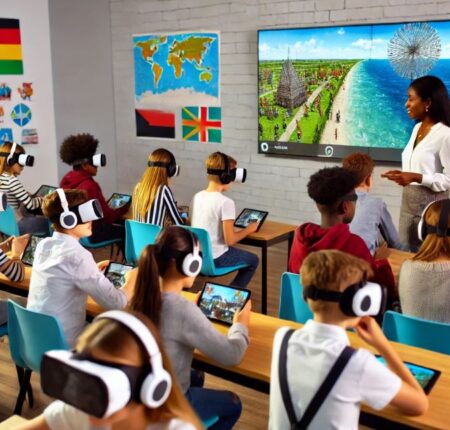
- Virtual reality (VR) and augmented reality (AR) for immersive learning experiences
- Digital media players and computers to access videos, podcasts, and multimedia presentations
- How do AV aids promote active learning?
AV aids encourage students or trainees to participate actively in the learning process. For instance, interactive simulations, educational games, and quizzes allow learners to engage directly with the material. This hands-on approach fosters critical thinking, problem-solving, and application of knowledge, leading to a deeper understanding of the subject matter. - How do audio-visual aids make learning more inclusive?
AV aids provide alternative ways of accessing information, making learning more inclusive for students with disabilities or diverse learning needs. For example, videos with subtitles can help hearing-impaired students, while audio descriptions can make visual content accessible to visually impaired learners. By offering multiple ways to engage with content, AV aids create a more equitable learning environment. - Can audio-visual aids be used in corporate training?
Yes, AV aids are widely used in corporate training to enhance learning and skill development. They are used to deliver presentations, demonstrate real-world applications through case studies or role-playing videos, and facilitate employee training through interactive software. AV aids also help businesses communicate complex data, such as sales metrics or market trends, through charts, graphs, and infographics. - What is the role of AV aids in communication?
In communication, AV aids simplify complex information, making it easier for audiences to understand and retain. For example, a speaker might use slides with images, graphs, and video clips to explain key points during a presentation. This combination of visual and auditory elements enhances clarity, ensuring the message is delivered effectively and efficiently. - Are audio-visual aids expensive to implement?
The cost of implementing AV aids varies depending on the tools used. Basic AV aids like slideshows or charts are inexpensive, while more advanced technologies, such as interactive whiteboards, VR systems, or projectors, may require a larger investment. However, the benefits of improved learning outcomes and communication often outweigh the initial costs. - How do audio-visual aids enhance presentations?
AV aids make presentations more engaging and professional by adding visual and auditory elements that capture the audience’s attention. Tools like slideshows, videos, and animations help break down complex ideas, making them easier to understand. By offering a multisensory experience, AV aids keep audiences interested and improve the overall effectiveness of the presentation. - Can audio-visual aids be used in online learning?
Yes, AV aids are essential in online learning environments. Videos, webinars, digital simulations, and interactive presentations make remote learning more dynamic and engaging. These tools allow online learners to interact with content in real time, enhancing their understanding and retention of the material. - What challenges are associated with using audio-visual aids?
Some challenges include:- Dependence on technology: AV aids require functional equipment and stable internet connections.
- Technical issues: Malfunctions such as projector failures or software crashes can disrupt learning.
- Over-reliance: Relying too much on AV aids without balancing other teaching methods may reduce the effectiveness of lessons.
- Cost: Implementing advanced AV tools can be expensive, especially for institutions with limited budgets.
- How can teachers effectively integrate AV aids into lessons?
To effectively integrate AV aids, teachers should:- Choose tools that align with the learning objectives.
- Use AV aids to complement, not replace, traditional teaching methods.
- Ensure that AV content is accessible to all students.
- Incorporate interactive elements to encourage participation.
- Test equipment beforehand to avoid technical issues during lessons.
Reference article:
- Lankapalli, R. (2015). Developing Oral Communication Skills of B Tech Studyings Using Audio Visual Aids. Retrieved from: http://hdl.handle.net/10603/216763
- Aqad, M. H. A., Al-Saggaf, M. A., & Muthmainnah, M. (2021). The Impact of Audio-Visual Aids on Learning English among MSU Third-Year Students. ENGLISH FRANCA : Academic Journal of English Language and Education, 5(2 November), Article 2 November. https://doi.org/10.29240/ef.v5i2.3329
- Arrahma, N., Harahap, S. R., Salwa, M., & Lubis, Y. (2024). The Effects Of Audio-Visual Aids On Listening Comprehension. Quality : Journal Of Education, Arabic And Islamic Studies, 2(1), Article 1. https://doi.org/10.58355/qwt.v2i1.38
- Chiekezie, P. N., & Inyang, M.-J. P. (2021). The Significance of Audio-Visual Aids in Teaching of English Vocabulary. GNOSI: An Interdisciplinary Journal of Human Theory and Praxis, 4(2), Article 2.
- Dheghu, Y. P., Mata, R., & Rita, P. (2021). Improving Students’ Listening Skill Using Audio Visual Aids. 411–413. https://doi.org/10.2991/assehr.k.210424.079
- Dickinson, A. K. (1972). The Role of Audio-visual Material. In Handbook for History Teachers. Routledge.
- Harahap, M. S., Nunzairina, N., Isnawati, I., & Subari, Z. (2022). THE EFFECTIVENESS OF USING AUDIO-VISUAL AIDS TO IMPROVE THE LISTENING SKILL OF SECOND YEAR SECONDARY STUDENTS AT THE INSTITUTE OF ISLAMIC EDUCATION AL-HADITH BAGAN BATU RIAU. Proceeding of International Conference on Islamic Education (ICIED), 477–487.
- Indrayanti, I., Kuntoro, A., & Romadhon, S. A. (2023). AUDIO-VISUAL AIDS MEDIA, LANGUAGE ACQUISITION AND ATTITUDE: AN INITIAL INVESTIGATION IN THE EFL CLASSROOMS. LLT Journal: A Journal on Language and Language Teaching, 26(1), Article 1. https://doi.org/10.24071/llt.v26i1.4862
- Kathirvel, K., & Hashim, H. (2020). The Use of Audio-Visual Materials as Strategies to Enhance Speaking Skills among ESL Young Learners. Creative Education, 11(12), Article 12. https://doi.org/10.4236/ce.2020.1112192
- Kwan, R. Y. C., Kwan, C. W., Kor, P. P. K., & Chi, I. (2022). Cognitive decline, sensory impairment, and the use of audio-visual aids by long-term care facility residents. BMC Geriatrics, 22(1), 216. https://doi.org/10.1186/s12877-022-02895-x
- Kwegyiriba, A., Mensah, R. O., & Ewusi, E. (2022). The Use of Audio- Visual Materials in Teaching and Learning Process in Effia Junior High Schools. Technium Social Sciences Journal, 31, 106.
- Ordu, U. B.-A. (2021). The Role of Teaching and Learning Aids/Methods in a Changing World. Bulgarian Comparative Education Society. https://eric.ed.gov/?id=ED613989
- Owusu, A. (2020). The impact of audio-visual technologies on university teaching and learning in a developing economy. South African Journal of Information Management, 22(1), 1–9. https://doi.org/10.4102/sajim.v22i1.1235
- Patahuddin, P., Syawal, S., Esnara, C., & Abdullah, M. (2022). Characterizing the Ideal Audio-Visual Learning Content of Writing Course Learned in Distance. Lingua Cultura, 16(1), Article 1. https://doi.org/10.21512/lc.v16i1.7731
- Setiyanti, A., & Nur, Z. A. (2021). The Use of Audio Visual Media As an Effort to Increase Student Motivation in Aqidah Akhlak Subjects. Misykat Al-Anwar Jurnal Kajian Islam Dan Masyarakat, 4(1), Article 1. https://doi.org/10.24853/ma.4.1.33-42
- Shaojie, T., Samad, A. A., & Ismail, L. (2022). Systematic literature review on audio-visual multimodal input in listening comprehension. Frontiers in Psychology, 13. https://doi.org/10.3389/fpsyg.2022.980133

8 Comments
Audio-Visual helps in presentation, whether it’s for business or entertainment. It has a significant impact on the industry because it gives proper representation. I like that you discuss the advantages of audio visual aid . It reflects the relevance of the topic with appropriate showcasing of the subject through the audio-visual utilization.
It was such an uselful information to know about Audio Visual system advantages and characteristics.
I’m glad to hear that you found the information on audio-visual systems helpful!
Aidio Visual Aids are really important in education , communication and other fields too. It was really helpul blog and described advantage and characteristics very beautifully.
It was really helpul blog and it described the advantage and characteristics very beautifully.
It was really helpul blog and it described the advantage and characteristics very beautifully. This is the kind of content much needed to imorove Sigma AVIT’s service to customers.
Yes i am satisfied with the answers because its everything i was looking for
Thank you, Deborah! I’m glad to hear that the information was helpful and met your expectations. Your feedback is greatly appreciated!