
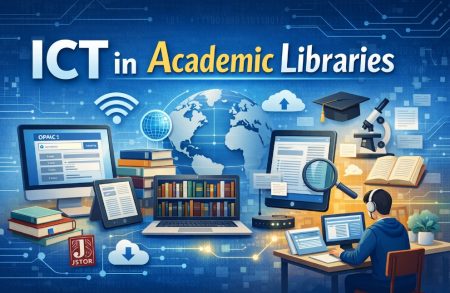
Introduction: The application of Information and Communication Technology (ICT) in libraries has revolutionized how they operate and deliver services. ICT has provided libraries powerful tools, systems, and platforms to manage, organize, and disseminate information more efficiently and effectively. From digital catalogs and databases to online access to resources, ICT has transformed libraries into dynamic knowledge and innovation hubs. Through ICT applications, libraries have enhanced information access, streamlined workflows, offered personalized services, and connected with users in new and engaging ways. ICT has empowered libraries to expand their collections, digitize resources, provide remote access to users, offer virtual reference services, and engage in collaborative initiatives. With ICT at their core, libraries are adapting to the digital era, embracing emerging technologies, and evolving to meet the changing needs of their users in the digital age.
1.1 Areas of ICT Application in Libraries:
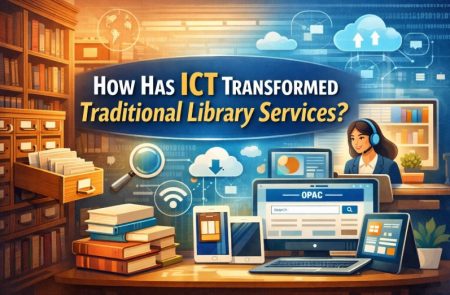
The advancement of information communication technology (ICT) has had a profound impact on libraries, revolutionizing the way they operate and provide services to users. Libraries have long recognized the need for improved technologies to enhance their offerings, and ICT has been instrumental in achieving this goal. Ranganathan’s five laws of Library Science, which emphasize maximizing the use of library materials, have been further realized with the integration of ICT in library operations. The application of ICT in libraries and information centers has led to significant improvements in the services provided to users. In the information age, libraries focus on ensuring timely access to accurate information to prevent obsolescence. Library professionals are leveraging advanced technologies to facilitate the delivery of the right information to users when they need it. Automation has played a crucial role in achieving this objective, with libraries adopting systems such as Online Public Access Catalogs (OPACs), webOPACs, CD-ROM networks, and office automation tools like desktop publishing (DTP). These technological advancements have streamlined processes such as circulation, reference services, and resource discovery, enhancing the overall user experience and ensuring efficient information retrieval.
- Library Management Systems: Library management systems are comprehensive software applications that automate and streamline various library functions. They include modules for cataloging, circulation, acquisitions, and inventory management. These systems enable librarians to handle tasks such as cataloging materials, tracking circulation and hold, managing subscriptions and licenses, generating reports, and maintaining patron records efficiently.
- Library Acquisition System: Library Acquisition System is an essential area of ICT application in libraries that focuses on the efficient management of acquiring and procuring library materials and resources. This system utilizes technology to automate and streamline the entire acquisition process, from identifying needed materials to the final acquisition and integration into the library’s collection. With a library acquisition system, librarians can search, evaluate, and select materials from various sources, including publishers, vendors, and online platforms. The system allows for seamless communication with suppliers, facilitating the ordering, invoicing, and tracking materials. Additionally, it provides tools for budget management, enabling librarians to monitor expenditures, generate reports, and ensure efficient financial management. By utilizing a library acquisition system, libraries can improve the accuracy and efficiency of their acquisition processes, enhance collection development, and ultimately provide library users with a diverse range of up-to-date resources. The integration of ICT in library acquisition systems optimizes the workflow, reduces manual effort, and allows librarians to allocate more time towards other essential tasks such as user services and resource evaluation.
- Digital Libraries and Repositories: Digital libraries and repositories utilize ICT to provide online access to various digital resources. These resources include e-books, e-journals, digitized manuscripts, audiovisual materials, and other digital content. ICT supports creating, organizing, and retrieving digital materials, ensuring long-term preservation, metadata management, and searchability of digital collections.
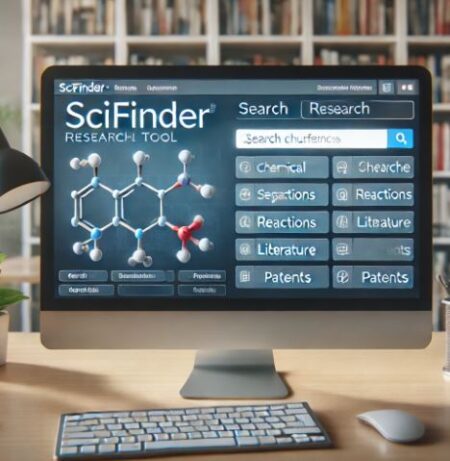
- E-resources and Database Management: Libraries subscribe to and manage various electronic resources such as research databases, digital archives, online journals, and multimedia databases. ICT enables libraries to provide seamless access to these resources, authenticate users, track usage, and manage licenses. Library staff use ICT tools to organize and maintain databases, ensure data integrity, and facilitate efficient search and retrieval of electronic resources.
- Information Literacy and User Education: ICT-based tools are employed in information literacy and user education programs. Libraries offer online tutorials, webinars, interactive modules, and video guides to teach users how to effectively search, evaluate, and use information resources. These tools enhance users’ information literacy skills and empower them to become proficient researchers.
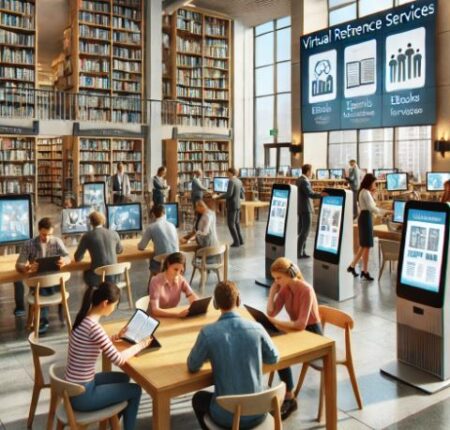
- Virtual Reference and Chat Services: ICT facilitates virtual reference and chat services, enabling users to seek librarian assistance remotely. Users can engage in real-time chats, exchange emails, or participate in video conferencing sessions with librarians. Virtual reference services provide prompt and personalized support, helping users with research queries, resource recommendations, and general information needs.
- Digital Preservation and Archiving: ICT is vital in preserving and archiving digital materials. Libraries employ digital preservation systems and strategies to ensure the long-term accessibility and integrity of digital assets. These systems involve format migration, data backups, metadata management, and adherence to preservation standards.
- Collaboration and Resource Sharing: ICT enables collaboration and resource sharing among libraries. Interlibrary loan systems and consortia networks allow libraries to share resources, provide access to materials beyond their collections, and collaborate on research projects. Shared repositories facilitate the exchange of digital content, reducing duplication and enhancing the availability of resources.
- Mobile Applications and Online Services: Libraries develop mobile applications and online platforms to provide convenient access to library services and resources. Mobile apps allow users to search the catalog, access e-resources, renew materials, and receive notifications on their smartphones and tablets. Online services include renewals, holds, fine payments, and personalized account management.
- Data Analytics and Decision Support: Libraries use data analytics tools and systems to analyze usage patterns, user behavior, and collection metrics. These tools help libraries make data-informed decisions regarding collection development, resource allocation, service improvements, and strategic planning. Data analytics also assist in understanding user preferences and optimizing the library’s offerings.
- Classification System: The library classification system is a crucial area of ICT application in libraries that focuses on organizing and categorizing library resources for efficient retrieval and access. It involves using technology to create and manage classification schemes and systems that provide a structured framework for arranging library materials. Through ICT, libraries can implement automated classification systems that utilize sophisticated algorithms and metadata management tools. These systems enable librarians to assign standardized classification codes, such as Dewey Decimal Classification (DDC) or Library of Congress Classification (LCC), to each item in the collection. ICT-based library classification systems ensure classification data consistency, accuracy, and interoperability across libraries. Furthermore, these systems facilitate the creation of online catalogues and search interfaces, enabling users to navigate and browse library collections based on specific subject areas or classification categories. By leveraging ICT in library classification, libraries enhance resource discoverability, streamline information retrieval, and support effective information organization.
Computerization provides the following benefits in classification:
-
- Helps the classification in the selection of isolate terms, grouping and arranging them in hierarchical sequence;
- Helps a classifier synthesize the class numbers;
- Saves time by avoiding reference to the schedules of scheme for classification on and often;
- The constructed class number can easily be used as a query language in a typical retrieval system, and
- Improves accuracy and speed in classification.
12. Circulation System: The ICT-based Library Circulation System is a critical component of library operations that facilitates the smooth management of borrowing and returning library materials. This system utilizes information and communication technology to automate and streamline circulation processes, enhancing efficiency and improving the overall user experience. With an ICT-based circulation system, libraries can electronically track and manage library items, user accounts, due dates, and fines. It enables librarians to easily issue and renew library materials, process returns, and handle reservations or holds. Users can conveniently check out and return items using self-checkout machines or online platforms. The system also sends automated reminders for overdue items and facilitates the collection of fines and fees. Additionally, an ICT-based circulation system provides real-time access to circulation data, enabling librarians to generate reports, analyze usage patterns, and make informed decisions regarding collection management and resource allocation. By leveraging ICT in library circulation, libraries can ensure accurate inventory control, improve service speed, reduce administrative tasks, and enhance user satisfaction. Integrating technology in the circulation system optimizes library operations, allowing librarians to focus on providing quality user services and fostering a positive library experience for all patrons.
13. Serial Control System: This system utilizes information and communication technology to automate and streamline processes related to the acquisition, subscription, tracking, and access of serial publications. With an ICT-based serial control system, libraries can efficiently manage subscriptions, renewals, and serial cancellations. It enables librarians to track the receipt and processing of individual issues, monitor the availability and location of serials within the library, and ensure timely access for users. The system also assists in maintaining accurate and up-to-date holdings records, including details on volume numbers, issue dates, and publication frequencies. Additionally, an ICT-based serial control system facilitates the management of online access to electronic serials, ensuring seamless retrieval and authentication of digital content. It provides users a centralized and user-friendly interface to search and browse serials, view current and back issues, and access full-text articles. By leveraging ICT in serial control, libraries can streamline the handling of serial publications, enhance resource discovery, and improve user access to the latest scholarly information. Integrating technology in the serial control system optimizes library operations, saves time and resources, and ensures efficient management of serials to meet the information needs of library users.
14. Article Indexing System: An Article Indexing System is an important component of library information organization and retrieval. It is an ICT-based system that facilitates the indexing and categorizing of articles from various sources, such as journals, magazines, and newspapers. The system employs technology to create metadata records describing each indexed article’s content, author, publication, and subject. These records are then stored in a searchable database, enabling users to locate relevant articles based on specific keywords, topics, authors, or publication dates. An Article Indexing System ensures efficient and comprehensive access to vast scholarly and research literature. It aids researchers, students, and library users in discovering relevant articles, staying up to date with the latest research, and access valuable information within their field of interest. Additionally, the system facilitates bibliographic control, allowing librarians to maintain accurate records of indexed articles, track usage statistics, and analyze trends in scholarly publishing. By leveraging ICT in article indexing, libraries enhance the discoverability and accessibility of scholarly literature, enabling users to access the information they need efficiently and effectively.
15. OPAC System (Online Public Access Catalogue): An Online Public Access Catalogue (OPAC) is a computer-based library catalogue that allows library users to search and retrieve bibliographic records independently without needing assistance from library staff. Originally introduced in the 1980s to replace traditional card catalogues, OPACs have evolved and are now often web-based, accessible both within the library and remotely via the internet. OPACs are typically part of an integrated library system and provide users with a comprehensive and searchable database of the library’s holdings. Users can perform various searches, access additional content such as book covers or video clips, and engage in interactive functions such as requesting and renewing materials. OPAC systems often feature browser-based interfaces with user-friendly components such as pull-down menus and dialog boxes, simplifying search commands and retrieval information formatting. Additionally, OPACs support functionalities like acquisition requests, material reservations, and the delivery of personalized notices and messages via email.
Reference Article:
- K.m, P. (2018). Use of ict resources and services at state university libraries in Gujarat a study. Retrieved from: http://hdl.handle.net/10603/247168
3 Comments
nice article
That is good
Good article. Thank you.