
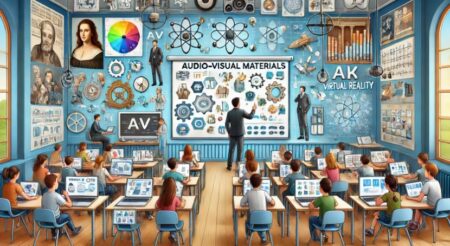
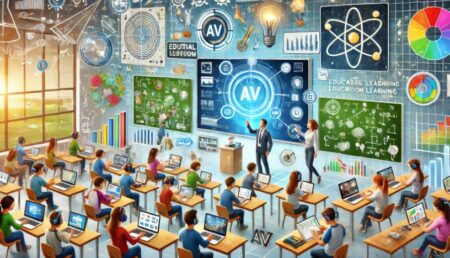
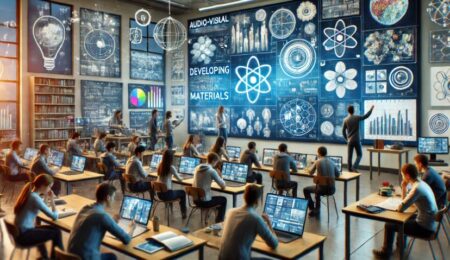
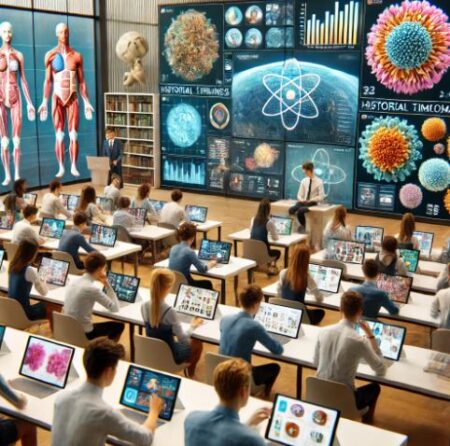
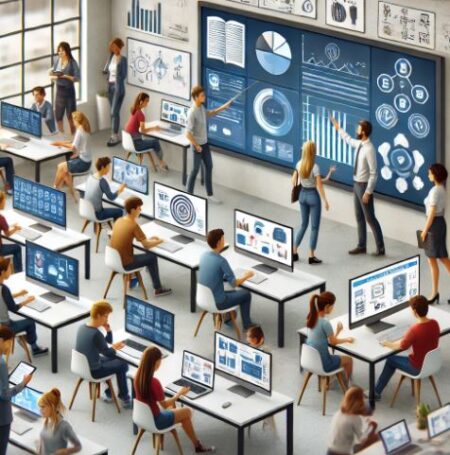
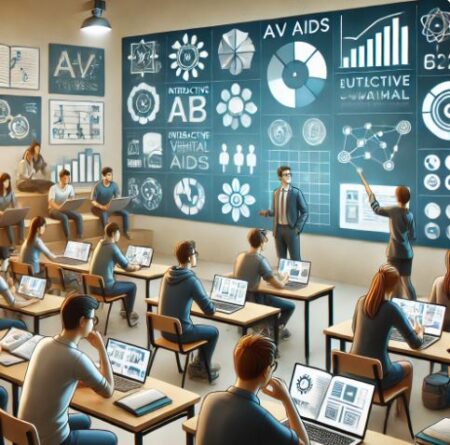
Audio-visual materials play a significant role in modern teaching and learning, offering an engaging and effective way to enhance the educational experience. These materials include a wide range of resources, such as videos, slideshows, podcasts, animations, and interactive media, which combine both auditory and visual elements to present information in a more dynamic and accessible manner. By appealing to multiple senses, audio-visual materials help cater to diverse learning styles, making it easier for students to grasp complex concepts. Visual aids can clarify abstract ideas, while audio components provide a deeper understanding of content through explanations, narratives, and examples. These materials not only stimulate students’ interest and motivation but also improve information retention and comprehension. In addition, audio-visual tools foster active learning environments, encouraging collaboration, critical thinking, and problem-solving. As educational institutions continue to embrace technology, the integration of audio-visual materials into classrooms and online platforms has become essential in creating an interactive, inclusive, and engaging learning experience for students of all ages.
What is Audio Visual Material?
Audio-visual material refers to any educational content that combines both sound and visual components to convey information. This could include videos, slideshows, films, animations, podcasts, or multimedia presentations that integrate images, text, and audio. The purpose of audio-visual materials is to engage both auditory and visual senses, which can significantly enhance the learning experience. By presenting information through a combination of sights and sounds, these materials help clarify complex concepts, provide real-world examples, and make learning more interactive and engaging. They cater to a variety of learning styles, particularly for those who benefit from seeing and hearing information simultaneously. In educational settings, audio-visual materials are used to reinforce lessons, improve student retention, and promote deeper understanding by offering diverse ways to process and absorb knowledge. These resources are particularly valuable in fostering engagement and stimulating critical thinking, making them essential tools in modern education in traditional classrooms and digital or remote learning environments.
Examples of audio-visual materials include:
- Videos – Educational videos that explain concepts, demonstrate experiments or provide real-life applications of theories.
- Films – Documentaries or feature films used to support learning, especially in subjects like history, social studies, or literature.
- Animations – Animated videos or graphics used to explain complex ideas or processes commonly used in subjects like science or mathematics.
- Slide Presentations – PowerPoint or other slide-based presentations that combine images, text, and audio to convey information.
- Podcasts with Visual Elements – Audio podcasts are enhanced with images, graphics, or videos that support the audio content.
- Interactive Multimedia – Digital learning tools or educational games that use sound, visuals, and interactive elements to engage learners.
- Webinars and Online Lectures – Live or recorded online sessions where instructors use visuals (slides, videos) and audio to teach a subject.
- Television Programs – Educational TV shows that teach subjects like geography, biology, or languages through a combination of visuals and narration.
- YouTube Channels – Educational channels that provide tutorials, lectures, and instructional videos on a wide range of topics.
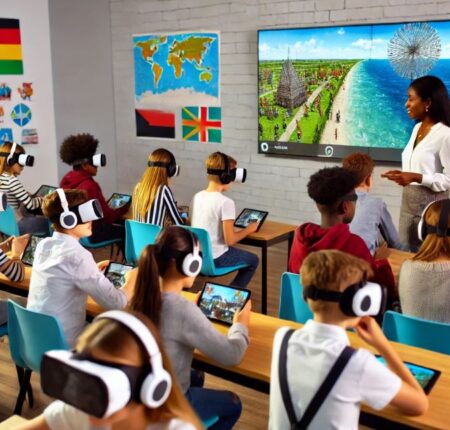
- Virtual Reality (VR) and Augmented Reality (AR) – Immersive technologies that use visuals and sounds to create interactive learning environments.
Impact of Audio Visual Materials in Teaching and Learning Process
The impact of audio-visual materials in the teaching and learning process is profound, transforming traditional education into a more dynamic, engaging, and effective experience. These materials, which combine both auditory and visual elements, such as videos, animations, podcasts, slideshows, and interactive media, offer numerous advantages that significantly enhance the learning process. The integration of audio and visual components appeals to a broader range of learning styles, helping to increase student engagement, improve retention, and facilitate a deeper understanding of complex concepts.
- Enhanced Engagement and Motivation: One of the most significant impacts of audio-visual materials in education is their ability to engage students more effectively than traditional text-based or lecture-based teaching methods. Research has shown that students are more likely to stay focused, interested, and motivated when they are exposed to multi-sensory stimuli, such as sound and images. Videos, animations, and podcasts create a dynamic learning environment that appeals to both auditory and visual learners, holding their attention and keeping them actively involved in the learning process.
For example, a history lesson that incorporates videos of historical events or a science class that uses animated simulations of biological processes makes the subject matter more vivid and relatable. This heightened engagement leads to increased participation, greater curiosity, and a more enjoyable learning experience, motivating students to explore topics beyond the classroom. - Improved Retention and Comprehension: Audio-visual materials have been shown to improve student retention and comprehension. According to the dual coding theory, when information is presented in both visual and auditory forms, it creates multiple pathways for processing the information, thereby increasing the likelihood of students retaining and recalling that information. For instance, when students watch a video that demonstrates a scientific experiment while hearing an expert’s explanation, they are better able to understand and remember the material.
The combination of images, sounds, and texts helps reinforce key points and provides students with a holistic understanding of concepts. The visual element can break down complex topics, while the audio adds context and clarification. This process helps students absorb and retain information more effectively, leading to improved learning outcomes. - Catering to Diverse Learning Styles: Every student has a unique way of learning, and audio-visual materials are particularly effective in catering to these diverse learning styles. Some students are visual learners who benefit from images, diagrams, and videos, while others are auditory learners who retain information better when it is spoken or discussed. By integrating both audio and visual elements into lessons, teachers can ensure that their content resonates with a wider range of students, making learning more accessible and inclusive.
In addition to visual and auditory learning styles, audio-visual materials also support kinesthetic learners, who learn best through hands-on experiences. Interactive multimedia, such as educational games or simulations, allows students to learn by doing, which promotes deeper engagement and understanding. This versatility makes audio-visual materials a powerful tool in creating a more inclusive classroom environment where all students have the opportunity to succeed. - Clarification of Complex Concepts: Some subjects, particularly in the fields of science, mathematics, and technology, involve complex or abstract concepts that can be difficult for students to understand through traditional teaching methods alone. Audio-visual materials help clarify these concepts by providing visual representations and real-world examples that make abstract ideas more tangible.
For example, in physics, videos or animations showing the motion of particles or the behavior of light can help students visualize complex theories. In mathematics, step-by-step video tutorials or animated demonstrations of solving equations can break down difficult problems into more manageable steps. By making abstract concepts more concrete, audio-visual materials help students grasp difficult ideas more easily, leading to better comprehension and mastery of the subject matter. - Promotion of Active Learning: Audio-visual materials foster active learning, which encourages students to engage with the content, ask questions, and apply what they have learned. Active learning promotes deeper thinking, critical analysis, and problem-solving, as students are required to process information more critically and interactively.
For example, an interactive video where students must answer questions or solve problems as they watch helps them stay actively involved in the learning process. Similarly, multimedia projects, such as creating a video or presentation on a given topic, encourage students to synthesize information, collaborate with others, and think critically about the subject matter. This active engagement enhances understanding and encourages students to take ownership of their learning. - Support for Collaborative Learning: Another impact of audio-visual materials is the promotion of collaboration among students. When audio-visual content is used in group activities or projects, it fosters teamwork, communication, and problem-solving skills. For instance, students can work together to analyze a video, discuss a documentary, or create a multimedia presentation on a particular topic.
Collaborative learning not only enhances understanding but also helps students develop social and interpersonal skills that are essential for success in both academic and professional environments. By working together to analyze and interpret audio-visual materials, students can gain new perspectives, share ideas, and learn from one another, enriching the learning experience for everyone involved. - Global Accessibility and Flexibility: Audio-visual materials, especially when used in digital formats, offer a level of accessibility that is unmatched by traditional teaching methods. With the rise of online platforms like YouTube, Vimeo, and educational websites, students from all over the world can access high-quality content at any time, provided they have an internet connection. This accessibility promotes global learning, where students from different countries and backgrounds can engage with the same materials, fostering a more diverse and inclusive learning environment.
Moreover, the flexibility offered by audio-visual materials allows students to learn at their own pace. In digital formats, students can pause, rewind, or replay videos and audio recordings to review material as needed, which supports self-paced learning. This flexibility is especially beneficial in online or distance learning contexts, where students may not have the same level of access to in-person instruction. - Real-World Applications and Contextual Learning: One of the most valuable aspects of audio-visual materials is their ability to connect theoretical knowledge to real-world applications. For instance, a video on environmental conservation can show students how the principles they are learning in the classroom are applied in real-life situations. Similarly, a documentary about the impact of technology in healthcare can provide a practical context for abstract concepts learned in biology or ethics.
By showing how knowledge is applied in real-world contexts, audio-visual materials help students understand the relevance of what they are learning, making education more meaningful and applicable to their everyday lives. This contextual learning encourages students to think critically about the world around them and how the knowledge they gain in the classroom can be used to address real-world challenges.
The impact of audio-visual materials in teaching and learning is far-reaching and transformative. These materials enhance student engagement, improve retention and comprehension, cater to diverse learning styles, and clarify complex concepts. They also promote active learning, foster collaboration, and provide real-world applications, making education more dynamic, inclusive, and accessible. As technology continues to evolve, the role of audio-visual materials in the classroom will only grow, shaping the future of education and providing students with innovative ways to learn, engage, and connect with the world around them. The integration of audio-visual tools into the learning process is not just a trend; it is a significant step toward a more effective, engaging, and inclusive educational experience for all learners.
How Audio-Visual Materials Enhance Student Engagement and Retention in the Classroom
Audio-visual materials significantly enhance student engagement and retention by offering a dynamic and multisensory approach to learning. When students are presented with information through both visual and auditory elements, they are more likely to become actively engaged with the material. Visual aids like images, videos, and animations capture attention, while auditory components such as explanations, music, or sound effects provide an additional layer of interest. This dual engagement of the senses keeps students focused and makes the learning process more stimulating, as it contrasts with traditional lecture-based teaching that may fail to maintain attention.
Audio-visual materials improve retention by reinforcing key concepts through repetition and varied presentation formats. Studies have shown that when information is presented in multiple formats, students are more likely to retain it, as it caters to different cognitive processing pathways. For example, a video that demonstrates a scientific experiment while also explaining the process through narration helps solidify the concept in students’ minds. The opportunity to revisit these materials, whether through recorded videos or interactive multimedia, allows students to reinforce their understanding at their own pace, increasing retention. By integrating both auditory and visual learning modes, audio-visual materials offer a more comprehensive and lasting way to absorb and remember information.
How Audio-Visual Materials Support the Development of Critical Thinking and Problem-Solving Skills in Students
In today’s rapidly evolving educational environment, fostering critical thinking and problem-solving skills is more important than ever. As students are required to navigate complex issues in both academic and real-world contexts, the ability to think critically and solve problems creatively becomes essential. One of the most effective tools for developing these skills in students is the use of audio-visual materials. These resources, including videos, documentaries, interactive simulations, and multimedia presentations, are not only engaging but also encourage students to analyze, question, and synthesize information in ways that traditional methods may not. By combining both auditory and visual elements, audio-visual materials provide a multi-dimensional learning experience that promotes deeper cognitive engagement and facilitates the development of critical thinking and problem-solving abilities.
- Encouraging Analysis and Evaluation: One of the primary ways audio-visual materials foster critical thinking is by encouraging students to analyze and evaluate the content they are presented with. For example, when students watch a documentary about climate change, they are exposed to a variety of viewpoints, data, and visual representations of environmental issues. This type of content prompts students to question the information, assess its validity, and consider different perspectives on the topic. In the process, students engage in higher-order thinking skills, such as evaluating the credibility of sources, comparing contrasting viewpoints, and making reasoned judgments based on evidence.
The combination of visual and auditory elements helps students think more deeply about the material. For instance, the visual representation of climate data in graphs or charts, coupled with expert commentary, allows students to identify patterns and relationships that they might overlook in a text-based format. This multidimensional approach helps students understand the information and strengthens their ability to think critically about it. - Promoting Problem-Solving Through Real-World Scenarios: Audio-visual materials often present real-world scenarios that require students to engage in problem-solving. For instance, interactive simulations or educational games can place students in situations where they must apply theoretical knowledge to solve practical problems. In a virtual chemistry lab, for example, students might be tasked with conducting experiments and troubleshooting results based on their understanding of chemical reactions. These activities require students to think critically about the problem, devise potential solutions, and test their hypotheses.
In addition to fostering problem-solving skills, these materials help students develop the ability to think creatively. Rather than simply memorizing facts or formulas, students must use their critical thinking abilities to work through challenges, adapt their approach based on feedback, and come up with innovative solutions. This process mirrors real-world problem-solving, where solutions are rarely straightforward and often require trial and error, creative thinking, and the integration of knowledge from multiple disciplines. - Facilitating Collaborative Learning and Discussion: Another way in which audio-visual materials promote critical thinking and problem-solving is by encouraging collaborative learning. When students watch videos or engage with interactive content as a group, they are often prompted to discuss and debate the material. Group discussions and debates encourage students to articulate their thoughts, listen to others’ perspectives, and build on each other’s ideas, all of which are essential components of critical thinking.
For example, a class watching a video case study on ethical dilemmas in business might split into groups to discuss the various aspects of the situation. Each group might take on a different perspective—whether that of the company, the consumer, or the government—and analyze the scenario through their assigned lens. This collaborative approach forces students to think critically about the issue, consider different angles, and defend their conclusions with evidence. These discussions often lead to deeper insights and a more nuanced understanding of the problem, helping students develop both critical thinking and problem-solving skills. - Stimulating Creative Thinking Through Interactive Content: Interactive audio-visual materials are particularly effective in stimulating creative thinking and problem-solving. These resources allow students to engage actively with the content rather than passively receiving information. Interactive simulations, for instance, might present students with a problem and require them to explore different strategies to find a solution. This kind of engagement fosters creative problem-solving because students must think outside the box, experiment with different approaches, and reflect on the results of their actions.
An example of this can be found in virtual reality (VR) environments used in fields such as architecture or engineering. In these environments, students can design and test structures in real time, adjusting variables and solving complex challenges as they go. The need to experiment and adapt based on the results encourages students to approach problems in innovative ways, pushing them to apply their critical thinking and creativity in a hands-on, interactive setting. - Encouraging Reflection and Self-Assessment: Audio-visual materials also support critical thinking by encouraging reflection and self-assessment. Many videos and interactive modules include prompts for students to pause and reflect on the material, consider how it relates to their existing knowledge, and evaluate their understanding of the topic. This reflective process is essential for developing critical thinking skills, as it helps students assess their thinking, identify gaps in their knowledge, and make connections between different concepts.
For instance, a video-based lecture might ask students to answer a series of questions about the material they just watched, prompting them to reflect on what they have learned and assess their own understanding. This type of self-assessment helps students develop a more analytical mindset and strengthens their ability to think critically about both the content and their own learning processes.
In conclusion, audio-visual materials play a vital role in supporting the development of critical thinking and problem-solving skills in students. By presenting information in engaging, multi-dimensional formats, these materials encourage analysis, evaluation, and the application of knowledge to real-world scenarios. They also promote collaboration, creative thinking, and self-reflection, all of which are key components of critical thinking and problem-solving. As education continues to evolve, the integration of audio-visual materials will remain an essential tool for helping students develop the skills they need to think critically, solve problems, and succeed in an increasingly complex and interconnected world.
The Role of Audio-Visual Materials in Making Complex Concepts Easier to Understand
One of the most challenging aspects for teachers and students in education is conveying and grasping complex concepts. Whether it’s abstract theories in physics, complicated processes in biology, or intricate mathematical formulas, some topics are inherently difficult to understand through traditional, text-based methods alone. However, the integration of audio-visual materials—such as videos, animations, diagrams, and interactive tools—into the learning process has proven to be an effective way to simplify and clarify these challenging concepts. By engaging multiple senses and providing visual representation alongside auditory explanation, audio-visual materials make learning not only more accessible but also more engaging.
- Visualizing Abstract Ideas: One of the primary roles of audio-visual materials is their ability to visualize abstract or difficult-to-conceptualize ideas. In subjects like physics or chemistry, where theories often involve invisible forces or microscopic particles, understanding the material can be particularly challenging. For example, the concept of gravity, or the movement of electrons around an atom, can be abstract without a visual representation. Through animations and 3D simulations, these abstract ideas become more concrete. A 3D animation that shows how planets move around the sun helps students visualize gravitational forces in action, making the concept much easier to grasp. Similarly, a simulation of how electrons behave in an atom provides a clearer understanding of atomic structure, helping students link theory to visual experience.
By translating theoretical knowledge into something that students can see, audio-visual materials take what might feel like abstract, intangible concepts and make them more relatable and understandable. - Breaking Down Complex Processes: In many fields, especially in science and engineering, learning often involves understanding complex processes that happen over time or in multiple stages. These processes can be overwhelming if presented in a text-heavy format. However, audio-visual materials help break down these processes into manageable steps. For instance, in a biology lesson on cellular respiration, instead of reading long paragraphs about the chemical reactions that take place, students can watch a step-by-step animation that shows the entire process. Each phase of cellular respiration, such as glycolysis, the Krebs cycle, and oxidative phosphorylation, is visually presented with narration that explains what is happening at each stage. By watching this process unfold visually, students are more likely to understand how each step contributes to the overall function, making the content easier to absorb.
These resources also allow students to see cause-and-effect relationships in action, which is crucial for understanding complex phenomena. Visual representations help learners connect the dots between concepts, reinforcing how one step leads to the next. - Engaging Multiple Senses for Deeper Understanding: Another critical benefit of audio-visual materials is their ability to engage multiple senses, making the learning experience more immersive. Research in cognitive science has shown that when information is presented in both visual and auditory formats, it is processed more deeply and retained more effectively. For example, when watching a historical documentary, students not only hear the narration explaining key events but also see historical footage or reenactments, making the events feel more real and relevant. The combination of seeing and hearing provides students with multiple ways to internalize the material, increasing comprehension and retention.
Additionally, interactive audio-visual tools—such as virtual labs or simulations—allow students to actively engage with the content. For example, a virtual chemistry experiment lets students manipulate variables (such as temperature or pressure) and observe the effects in real time. This hands-on approach allows students to experiment and solve problems in a risk-free, controlled environment, which can be especially beneficial for subjects that require the practical application of theoretical knowledge. - Catering to Different Learning Styles: Every student learns differently, and audio-visual materials are particularly beneficial because they cater to different learning styles. Some students learn best through seeing, while others learn best by hearing. Visual learners benefit from diagrams, charts, and videos, while auditory learners absorb information better through spoken explanations. By combining both visual and auditory elements, audio-visual materials meet the needs of both groups simultaneously.
Some students are kinesthetic learners, meaning they learn best through physical movement and hands-on activities. Interactive audio-visual resources, such as educational games or simulations, allow these students to engage physically with the material by making decisions, testing hypotheses, and seeing the immediate consequences of their actions. This interactive nature encourages students to take an active role in their learning, improving engagement and understanding. - Real-World Context and Relevance: Audio-visual materials also play an important role in connecting theoretical knowledge to real-world applications. Many students struggle to see the relevance of abstract concepts without understanding how they apply outside the classroom. For example, a video showcasing how engineers use physics principles to build bridges or a documentary on how environmental science is applied to tackle climate change helps students relate what they are learning to real-world problems and solutions. These resources bridge the gap between theory and practice, helping students understand why they are learning the material and how it applies to the world around them.
- Simplifying Difficult Topics through Repetition and Review: Audio-visual materials provide an excellent opportunity for repetition and review, which is essential for mastering difficult concepts. In a traditional classroom, teachers may not always have the time to revisit complex material or explain it multiple times in different ways. However, audio-visual resources can be revisited as often as necessary, giving students the flexibility to review content until they feel confident in their understanding. Students can pause, rewind, and rewatch sections of a video or re-engage with interactive simulations, allowing them to learn at their own pace. This flexibility ensures that difficult concepts are reinforced and understood thoroughly before moving on to more advanced material.
Audio-visual materials make complex concepts easier to understand by providing visual context, breaking down information into manageable parts, and engaging multiple senses to reinforce learning. These materials cater to various learning styles, simplify abstract ideas, and present real-world applications that make learning more relevant and meaningful. By offering dynamic, interactive, and repeatable ways of learning, audio-visual tools transform challenging subjects into more accessible and engaging experiences, ultimately enhancing comprehension, retention, and overall academic success. As technology continues to evolve, the role of audio-visual materials in education will only expand, offering even more innovative ways to make complex concepts easier to understand.
The Impact of Integrating Audio-Visual Materials on Students’ Academic Performance and Comprehension
The integration of audio-visual materials into the learning environment has a profound impact on student’s academic performance and comprehension. By combining both visual and auditory elements, these materials help to clarify complex concepts, making them easier for students to understand. For instance, in subjects like biology or physics, where abstract ideas are common, visual representations such as animations or diagrams can bring these concepts to life, providing students with a clearer understanding. The combination of sound and visuals enables students to process information through multiple sensory channels, reinforcing the material and aiding in better retention.
Audio-visual materials also enhance student engagement, which is critical for effective learning. Videos, simulations, and interactive tools can capture students’ attention in ways that traditional text-based resources may not. This increased engagement leads to greater motivation as students find the material more interesting and interactive. When students are engaged, they are more likely to retain the information presented, as they are actively involved in the learning process rather than passively receiving information. Moreover, audio-visual resources cater to a variety of learning styles. While some students may be visual learners, benefiting from charts, graphs, and videos, others might be auditory learners, absorbing information more effectively through narration or spoken explanations. By incorporating visual and auditory elements, audio-visual materials create a more inclusive learning environment, ensuring that all students can access the content in a format that best suits their preferences, ultimately enhancing their comprehension.
The use of these materials also encourages active learning, which is essential for deeper understanding and problem-solving skills. Interactive simulations and educational games, for example, require students to apply their knowledge, make decisions, and solve problems in real time, reinforcing learning through hands-on experiences. This kind of active engagement promotes critical thinking and enhances students’ ability to apply what they’ve learned in practical contexts, thus improving their academic performance.
In summary, integrating audio-visual materials into the teaching and learning process significantly boosts students’ academic performance and comprehension. These materials make complex ideas more accessible, increase student engagement, and cater to various learning styles, which together contribute to improved retention and understanding. By encouraging active learning and offering interactive experiences, audio-visual resources foster a deeper connection with the material, resulting in better academic outcomes for students.
What Are the Potential Drawbacks of Over-Relying on Audio-Visual Materials in Teaching?
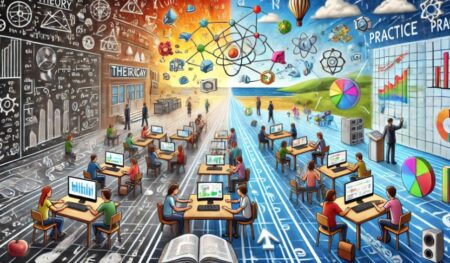
Audio-visual materials have undoubtedly transformed the way education is delivered, offering dynamic and engaging ways to present content. From videos and animations to podcasts and interactive simulations, these resources can make learning more interactive, accessible, and appealing. However, as with any teaching tool, over-relying on audio-visual materials can have potential drawbacks that may undermine the development of critical academic skills and affect overall learning outcomes. While these materials offer numerous benefits, it is important for educators to strike a balance between multimedia resources and traditional teaching methods to ensure a well-rounded educational experience.
- Reduced Development of Critical Thinking Skills: One of the most significant drawbacks of over-relying on audio-visual materials is the potential reduction in the development of critical thinking skills. When students primarily learn through pre-recorded videos, animations, or simulations, they might not be encouraged to engage deeply with the material. The information is often presented in a simplified, packaged form, leaving little room for students to analyze, critique, or question the content. Critical thinking requires students to actively process information, make connections, and form independent judgments, which is often overlooked when students passively watch a video or listen to a lecture without engaging with the material on a deeper level.
Without challenging students to think critically about what they are learning, there is a risk that they will become passive consumers of information rather than active thinkers. For example, when a complex historical event is presented in a documentary without encouraging further discussion or reflection, students may absorb the information without truly understanding or analyzing the causes, consequences, or different perspectives surrounding the event. - Underdeveloped Reading and Writing Skills: Audio-visual materials primarily focus on visual and auditory learning channels, but they often neglect the development of reading and writing skills. While watching videos or engaging with simulations may enhance understanding of certain concepts, they do not provide the same cognitive engagement required for reading comprehension and writing development. Reading and writing are crucial academic skills that students need to master for success in higher education and future careers.
Excessive use of audio-visual content in place of reading assignments can lead to a decline in students’ ability to critically read and analyze texts, essential skills for academic writing and research. Additionally, writing exercises help students synthesize information, organize their thoughts, and express ideas coherently—skills that cannot be fully developed through multimedia consumption alone. Over-reliance on audio-visual materials can unintentionally deprive students of these essential skills, which could affect their overall academic performance. - Distractions and Passive Learning: Another potential drawback of over-relying on audio-visual materials is that they may encourage passive learning, particularly when students become more focused on the entertainment or spectacle of the material rather than the educational content. Videos, especially those with high levels of visual effects or dramatic narratives, can become distracting, leading students to focus more on the format rather than the substance. This can make it difficult for students to stay on task and absorb the core messages or lessons being presented.
For instance, while an entertaining video on environmental science might initially engage students, its emphasis on flashy visuals or dramatic music could reduce their ability to focus on the scientific concepts being discussed. If students become more focused on the multimedia presentation than the educational content, they may miss key information, resulting in lower comprehension and retention of the material. - Equity Issues and Accessibility Concerns: The use of audio-visual materials in education can also create accessibility and equity issues. Not all students have equal access to the technology needed to benefit from these resources. Students from lower-income backgrounds or rural areas may lack access to reliable internet connections, computers, or smartphones, limiting their ability to engage with online videos or interactive simulations. This creates an uneven playing field, where some students have access to advanced multimedia resources while others do not.
Students with disabilities may find it difficult to fully participate in lessons that are heavily reliant on audio-visual content, particularly if captions, transcripts, or alternative formats are not provided. For example, hearing-impaired students may struggle to understand videos without accurate subtitles or sign language interpretation. As such, over-reliance on audio-visual materials can exclude certain groups of students, exacerbating existing educational inequalities. - Technical Difficulties and Reliability Issues: Another potential drawback of relying heavily on audio-visual materials is the dependence on technology. Technical issues such as poor internet connectivity, device malfunctions, or software glitches can disrupt the learning process, particularly if the lesson is structured around multimedia resources. For example, if a video won’t load properly or an interactive simulation freezes, the entire lesson could be derailed, leaving students frustrated and disengaged.
In cases where technology is not consistently available or reliable, over-reliance on these materials can lead to missed learning opportunities. This highlights the importance of having backup plans, such as incorporating traditional methods like lectures, discussions, and reading assignments, to ensure that learning continues smoothly in the event of technical failures. - Limited Student Interaction and Collaboration: Finally, an overemphasis on audio-visual materials might limit opportunities for student interaction and collaboration. While videos and simulations can be engaging, they often do not provide students with opportunities to interact with their peers or the instructor. Active learning, which includes group discussions, debates, or collaborative projects, fosters social interaction and critical thinking. These collaborative experiences are vital for developing communication, teamwork, and problem-solving skills—skills that are highly valued in academic and professional settings.
By focusing too heavily on passive learning through audio-visual resources, students miss out on these interactive opportunities, potentially hindering the development of important interpersonal and collaborative skills.
While audio-visual materials have proven to be valuable tools in the classroom, over-relying on them can lead to several potential drawbacks. These include reduced critical thinking, underdeveloped reading and writing skills, passive learning, equity and accessibility concerns, technical difficulties, and limited opportunities for collaboration. To avoid these pitfalls, educators should aim for a balanced approach that incorporates a variety of teaching methods, combining the benefits of audio-visual materials with traditional approaches like reading, writing, and hands-on activities. By doing so, teachers can ensure a well-rounded educational experience that promotes deeper engagement, critical thinking, and skill development for all students.
Reference Article:
- Benue State University, Makurdi-Nigeria, & Ashaver, D. (2013). The Use of Audio-Visual Materials in the Teaching and Learning Processes in Colleges of Education in Benue State-Nigeria. IOSR Journal of Research & Method in Education (IOSRJRME), 1(6), 44–55. https://doi.org/10.9790/7388-0164455
- Fuady, R., & Mutalib, A. A. (2018). Audio-Visual Media in Learning. Journal of K6 Education and Management, 1(2), Article 2. https://doi.org/10.11594/jk6em.01.02.01
- Mamun, A., & Abdullah, M. (2014). Effectiveness of audio-visual aids in language teaching in tertiary level [Thesis, BRAC University]. http://dspace.bracu.ac.bd/xmlui/handle/10361/3288
- Rasul, S., Bukhsh, Q., & Batool, S. (2011). A study to analyze the effectiveness of audio visual aids in teaching learning process at uvniversity level. Procedia – Social and Behavioral Sciences, 28, 78–81. https://doi.org/10.1016/j.sbspro.2011.11.016
- Wong, S. H. R. (2009). Incorporating Audio-Visual Materials in University Teaching: Results of a Faculty Survey and Corresponding Actions of the Library. New Review of Academic Librarianship, 15(1), 35–52. https://doi.org/10.1080/13614530903106620

3 Comments
Recently get audio visual services and do you need a tv aerial for sky tv services. I am glad here to reach here and read this great article while mediaComs also providing satellite services.
Can you help me with the Bose Audio Visual product below
Bose Home Theatre
Lifestyle 650 system
And i do need the system without installation and If yes kindly email me with the pricing and the quote thank you ..
315-869-5203
I found this article very informative about “”. Looking forward for more informative articles like this related to Fencing & Resin Drives Solutions Blackpool