Catalogue Card in a Library
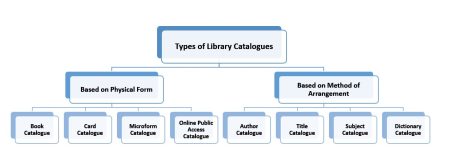
A catalogue card is a small, standardized card used in traditional library cataloging systems to record and organize bibliographic information about the materials available in a library. Before the introduction of computerized catalogues, such as Online Public Access Catalogues (OPAC), catalogue cards were the primary tool used by libraries to help users locate books and other resources. Each card represented a specific item in the library’s collection and contained essential details that enabled users to identify and find that item on the library shelves. These cards were stored in special catalogue cabinets and arranged according to specific filing rules, usually in alphabetical order by author, title, or subject. For example, if a user wanted to find books written by Rabindranath Tagore, they could look under the author section in the catalogue cabinet and find cards filed alphabetically under “Tagore.”
A typical catalogue card includes several important elements of bibliographic description, such as the author’s name, the title of the book, edition information, place of publication, publisher, year of publication, and physical description (such as the number of pages or illustrations). One of the most critical elements recorded on the catalogue card is the call number, which indicates the exact location of the item within the library’s classification system. For instance, a catalogue card for the book “Introduction to Library Science” by S. R. Ranganathan might include the call number 020 RAN, indicating that the book belongs to the library science class in the classification scheme and can be found in that section on the shelf.
Catalogue cards were typically prepared in different forms to provide multiple access points for users. The most common types include the main entry card, subject entry card, and title entry card. For example, if a library holds the book “Principles of Economics” by N. Gregory Mankiw, the main entry card would be filed under the author’s name, “Mankiw,” the title card would be filed under “Principles of Economics,” and a subject card might be filed under the subject heading “Economics.” This system allowed users to search for the same item in different ways, depending on whether they knew the author, title, or subject of the book.
Although modern libraries now rely on digital cataloging systems such as OPAC for faster and more efficient information retrieval, catalogue cards remain an important part of the historical development of library cataloging and information organization. They played a crucial role in providing systematic access to library collections and helped establish many of the cataloging principles still used in modern library systems today. For example, many of the bibliographic rules used in electronic catalogues are derived from the same principles that were originally applied when preparing traditional catalogue cards.
Standard Size of a Library Catalogue Card
The standard size of a library catalog card is 7.5 cm x 12.5 cm (approximately 3 inches x 5 inches). This size is internationally accepted because it is convenient for writing bibliographic information and is easy to handle, store, and arrange in catalog cabinets. Libraries adopted this standardized size to ensure uniformity in cataloging practices and to allow catalog cards to fit properly into specially designed drawers and cabinets. The consistent size also enables libraries to share catalog cards and bibliographic records with other institutions without needing to adjust their filing systems.
The 3 x 5 inch card provides enough space to record important bibliographic details such as the author’s name, the title of the book, the edition, place of publication, publisher, year of publication, physical description, subject headings, and the call number. For example, a catalog card for the book “Introduction to Information Science” might include the author’s name at the top (e.g., Borko, Harold), followed by the title, publication details such as “New York: Academic Press, 1968,” and the call number, such as “020 BOR,” which helps users locate the book on the shelves.
Another important feature of the catalog card is the small hole located at the bottom center of the card. This hole allows a metal rod to pass through the cards when they are placed in the catalog drawer, preventing the cards from being removed or misplaced while still allowing users to lift and read them easily.