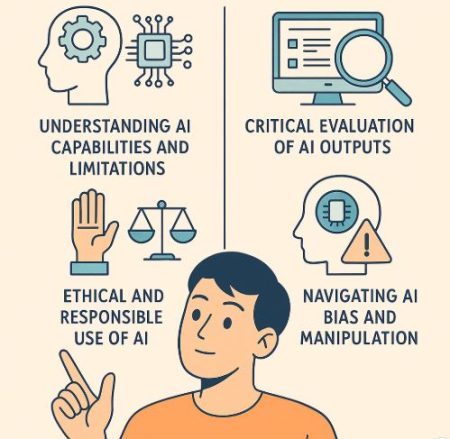
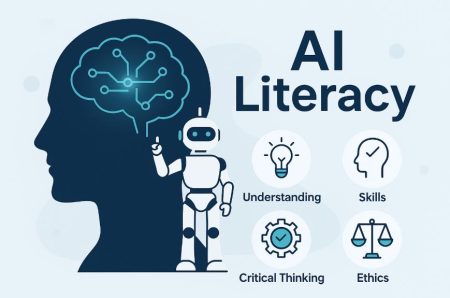
The ethical use of Artificial Intelligence (AI) refers to the responsible development, deployment, and application of intelligent systems in ways that respect human rights, protect privacy, and promote fairness. As AI technologies increasingly shape everyday activities, such as using AI writing assistants for academic work, relying on automated chatbots for customer service, or depending on machine-learning systems for job applicant screening, they raise important questions about how these tools should be used. Ethical AI emphasizes principles like transparency, accountability, data protection, and non-discrimination. For example, a plagiarism-checking tool should clearly explain how it analyzes documents, while a facial-recognition system must avoid biased outcomes that disproportionately misidentify certain groups. In academic and library environments, ethical use also involves helping students and researchers utilize AI appropriately, such as using AI to brainstorm ideas but not to write entire assignments, and citing AI-generated content when required by academic guidelines. Additionally, libraries offering AI-based services, such as virtual reference chatbots, must ensure that users’ conversation logs are anonymized and not shared without their permission.
What Does “Ethical Use of Artificial Intelligence” Mean in Modern Digital Environments
The ethical use of Artificial Intelligence (AI) in modern digital environments refers to the responsible design, deployment, and application of intelligent technologies in ways that uphold human values, protect user rights, and minimize harm. As AI becomes deeply integrated into daily life, from chatbot assistants and personalized recommendations to automated decision-making systems in workplaces and educational platforms, its influence creates both opportunities and ethical challenges. Ethical AI emphasizes core principles, including fairness, transparency, privacy, and accountability. Fairness ensures that AI systems do not reinforce bias or discriminate against specific groups, while transparency requires organizations to clearly communicate when and how AI is being used. Privacy protection is essential, as AI often relies on large amounts of user data that must be collected responsibly, stored securely, and used only with informed consent. Accountability ensures that developers, institutions, and users take responsibility for the outcomes of AI systems rather than attributing mistakes to the algorithm itself. Overall, the ethical use of AI means ensuring that technological innovation enhances human well-being, fosters trust, and respects the dignity and rights of individuals. In a world where digital tools increasingly shape how people learn, work, and interact, adopting ethical AI practices is essential for building a trustworthy and equitable digital future.
Why Is Ethics Important When Integrating AI into Education, Libraries, or Research?
Ethics play a crucial role in integrating Artificial Intelligence (AI) into education, libraries, and research because these environments focus on knowledge creation, academic integrity, and the protection of user rights. As AI-driven tools become increasingly prevalent, including automated tutoring systems, plagiarism detection software, research recommendation engines, and virtual library assistants, their impact on student learning, information access, and the creation of new knowledge is substantial. Ethical considerations ensure that these technologies enhance learning and scholarship without compromising fairness, privacy, or trust.
In educational settings, the ethical use of AI is crucial for protecting academic integrity and ensuring the authenticity of student learning. While AI writing tools can be helpful for brainstorming and grammar correction, their unethical uses, such as generating entire assignments, can undermine learning outcomes and distort assessments. Therefore, universities should establish clear policies that define acceptable AI usage and prevent students from becoming overly reliant on automated content. Additionally, AI systems employed for grading, admissions, or performance analytics must be free from bias and operate transparently in their decision-making processes, ensuring that students are evaluated fairly.
Libraries, as institutions committed to equitable access to information, must adopt ethical AI practices to preserve user privacy, intellectual freedom, and trust. AI-powered cataloging systems, chatbots, and recommendation engines can enhance user experience, but they also collect large amounts of data that may reveal personal reading habits, research interests, or browsing patterns. Ethical standards ensure that such data is anonymized, securely stored, and never misused. Libraries must also be transparent about when users are interacting with AI rather than human staff, helping maintain clarity and accountability.
In the field of research, ethics ensures that artificial intelligence (AI) enhances the integrity and reliability of scholarly work. AI tools used for literature reviews, data analysis, experiment simulations, or citation management must be utilized responsibly to prevent issues such as fabrication, misinterpretation of results, or plagiarism. Researchers who incorporate AI-generated insights must verify their accuracy, appropriately cite any AI assistance when necessary, and ensure that the use of AI tools does not compromise the originality of their contributions. Additionally, ethical AI practices are crucial in safeguarding sensitive data in research involving human subjects, particularly when AI models analyze personal, medical, or behavioral information.
What Types of Personal Data Can AI Systems Collect, Intentionally or Unintentionally?
Artificial Intelligence (AI) systems have become deeply integrated into modern digital life, supporting a wide range of applications, including online learning platforms, library services, healthcare tools, social media, and automated workplace systems. As these technologies expand, so does the amount of personal data they collect. AI tools not only gather the information users provide directly, but they also capture additional data in the background, sometimes without the user’s awareness. Understanding the types of personal data that AI systems can collect, both intentionally and unintentionally, is essential for protecting privacy and ensuring the ethical use of these systems.
- Intentionally Collected Personal Data: Many AI tools collect personal information that users actively submit as part of normal interactions. This intentional collection often includes basic identifiers such as name, email address, phone number, or institutional ID. For example, when students log into an AI-powered learning system, the platform may record their academic profile, course enrollments, or test performance to provide personalized guidance. Similarly, AI chatbots used in libraries or customer service often store conversation history to learn from previous interactions and deliver more accurate answers in the future.
AI systems designed for research or education may collect uploaded documents, such as assignments, research papers, or datasets, to analyze writing style, detect plagiarism, or provide content summaries. E-commerce and entertainment platforms intentionally track user preferences, purchase history, and rating patterns to generate personalized recommendations. These data points are typically gathered with user consent, though the depth of collection may not always be fully understood by users. - Unintentionally Collected Personal Data: Beyond the data users knowingly provide, AI systems frequently gather additional personal information automatically. This unintentional data collection often occurs through background processes such as tracking IP addresses, device identifiers, geolocation, or browsing behavior. For example, an AI system may detect a user’s location based on their device’s GPS signals or infer their time zone from network activity. Even simple interactions, such as searching for an article or clicking on a resource, can leave digital traces that the system records without requiring explicit user input.
Some AI tools rely on metadata attached to files, such as timestamps, authorship details, or geotags, without users realizing this information exists within their documents. Others use advanced techniques to infer sensitive attributes. For instance, AI systems analyzing voice recordings may infer emotional states, while facial recognition tools may detect age or identity. Language models can infer a user’s educational background or writing habits based solely on text patterns. These inferences, though not directly provided by users, still qualify as personal data and can be highly sensitive. - Inferred and Sensitive Data: One of the most complex forms of data collection involves inferred personal data—information the AI predicts based on patterns in user behavior. Algorithms may estimate a user’s interests, personality traits, health conditions, or academic challenges, even when such information was never supplied. AI tools used in research, healthcare, or education can unintentionally reveal sensitive information about individuals when data is insufficiently anonymized or when training datasets contain private details.
In biometric systems, AI collects extremely sensitive identifiers, such as facial images, fingerprints, or voice signatures. These forms of data are difficult to change or revoke, making them particularly vulnerable if mishandled or exposed. - Implications and the Need for Ethical Safeguards: The breadth of personal data collected by AI, both intentionally and unintentionally, underscores the need for robust ethical safeguards. Institutions deploying AI must ensure that data collection adheres to the principles of transparency, data minimization, and informed consent. Sensitive data should be anonymized whenever possible, securely stored, and never used for purposes unrelated to the original intent. Users should have access to clear information about what data is collected and how it will be used.
Moreover, developers and organizations must be cautious when training AI models, ensuring that datasets do not include private information or allow for unintended inferences. Ethical guidelines and regulatory frameworks play a crucial role in protecting individuals from privacy breaches, the misuse of sensitive data, and the harmful effects of algorithmic predictions.
AI systems collect a wide array of personal data, ranging from basic identifiers and conversation logs to geolocation, biometric information, and inferred behavioral patterns. Much of this data collection is intentional, but a significant portion happens automatically and often without explicit user awareness. Understanding the types of data AI can access is the first step toward ensuring the responsible and ethical use of AI. As AI becomes increasingly integrated into education, libraries, research environments, and everyday digital interactions, prioritizing privacy and ethical standards is essential for maintaining trust, safeguarding user rights, and ensuring that technology serves the public good.
How Can Organizations Ensure That AI Tools Do Not Misuse Sensitive User Information?
As Artificial Intelligence (AI) becomes an integral part of modern institutions, ranging from universities and libraries to corporations and government agencies, the responsibility to safeguard sensitive user information becomes paramount. AI tools often require large volumes of data to function effectively, but without proper oversight, this data can be misused, exposed, or exploited. Ensuring ethical and secure handling of sensitive information is not just a technical obligation; it is a fundamental requirement for maintaining user trust, protecting privacy, and promoting responsible digital transformation. Organizations must adopt a combination of policy, technological, and human-centered strategies to prevent AI systems from misusing sensitive data.
- Establish Clear Data Governance Policies: The first step in protecting sensitive information is to create robust data governance policies. These policies define the types of data that can be collected, the duration of storage, the individuals who can access them, and the purposes for which they may be used. Effective governance ensures that AI systems adhere to legal and ethical standards such as consent requirements, data minimization, and purpose limitation. For example, a library’s AI chatbot may collect anonymized queries to improve responses, but strict policies must prevent staff or developers from accessing identifiable user records.
- Implement Data Minimization Practices: One of the most effective ways to prevent misuse is to limit the amount of data collected in the first place. AI tools should only collect information that is absolutely necessary for their function. If a recommendation engine can operate effectively with anonymized behavioral data, it should not record names, email addresses, or demographic details. Minimizing the data footprint reduces the risk of breaches and protects users from unintended surveillance or profiling.
- Utilize Privacy-Preserving Technologies: Organizations can enhance protection by integrating privacy-preserving technologies, including data anonymization, pseudonymization, differential privacy, and encryption. Anonymization removes identifiers like names or IDs, making it impossible to trace data back to individuals. Differential privacy introduces statistical noise to datasets, allowing analysis without exposing personal details. End-to-end encryption ensures that sensitive data remains protected during transmission and storage. These technologies help AI tools function without revealing user identities.
- Conduct Regular Audits and Monitoring: Continuous monitoring and auditing of AI systems is essential for detecting unusual activity, unauthorized access, or potential vulnerabilities. Organizations should regularly assess whether algorithms are adhering to data protection policies and identify risks before they escalate. Independent audits conducted by external cybersecurity or ethics experts can provide unbiased evaluations of an organization’s data-handling practices. Transparent reporting of audit findings further strengthens accountability and user trust.
- Ensure Human Oversight and Accountability: AI systems should never operate in isolation when handling sensitive information. Human oversight ensures that questionable or unexpected outcomes are reviewed by trained professionals. Clear lines of accountability must be established so that individuals or teams are responsible for data protection, privacy compliance, and ethical AI operations. If an AI tool processes personal research queries, for example, librarians or administrators should be accountable for ensuring compliance with privacy guidelines.
- Train Staff and Users on Ethical AI Practices: Technology alone cannot prevent misuse; well-informed human practices are equally vital. Organizations should conduct regular training sessions for staff, developers, researchers, and users to ensure they understand the ethical responsibilities associated with AI tools. Training should cover topics such as handling sensitive data, recognizing ethical risks, understanding privacy laws, and responding to data breaches. When staff and users are equipped with ethical awareness, the risk of accidental misuse declines significantly.
- Secure Vendor and Third-Party Compliance: Many organizations rely on external AI platforms or cloud services. It is crucial to ensure that these vendors follow strict data protection standards. Before adopting third-party AI tools, organizations should review data-handling policies, assess compliance certifications, and require contractual guarantees that sensitive information will not be shared, sold, or repurposed. Vendor agreements should include clauses regarding data deletion, encryption, security protocols, and the right to audit their practices.
- Provide Transparency and User Control: Transparency strengthens user trust and reduces the likelihood of misuse. Organizations should openly explain what data is collected, why it is collected, and how it will be used. Offering users controls, such as the option to opt out of data collection, review stored information, or request deletion, empowers individuals and enhances compliance with ethical standards. Clear communication also helps prevent misunderstandings or fear about AI technologies.
- Test Systems for Ethical and Security Risks Before Deployment: Before AI tools go live, organizations should perform rigorous testing to identify ethical risks, biases, vulnerabilities, and privacy issues. This includes security penetration testing, bias detection analysis, and simulations to observe how the AI behaves with different types of user data. Pre-deployment evaluation ensures that tools operate within safe and ethical boundaries.
Ensuring that AI tools do not misuse sensitive user information requires a comprehensive strategy that combines strong policies, advanced technologies, human oversight, and ethical awareness. As AI becomes increasingly integrated into education, libraries, research, healthcare, and business environments, the importance of protecting personal data grows even more critical. By adopting robust governance frameworks, limiting data collection, enforcing privacy-preserving technologies, maintaining accountability, and promoting transparency, organizations can harness the power of AI while safeguarding the dignity, privacy, and trust of their users. Ethical data protection is not just a technical responsibility; it is a foundational commitment to responsible innovation and societal well-being.