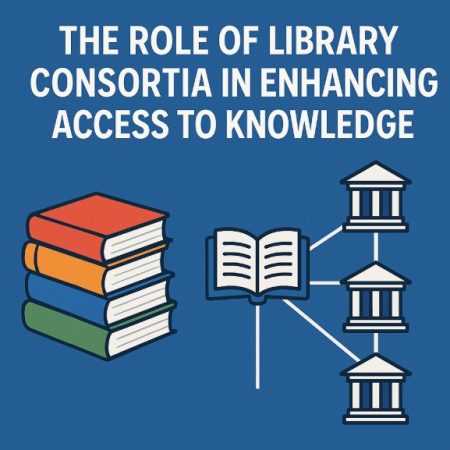
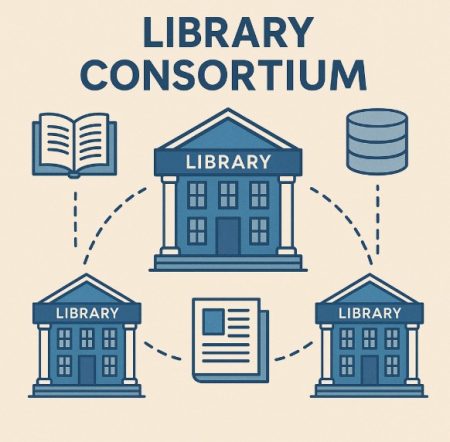
A library consortium is a collaborative partnership among multiple libraries that unite to achieve common objectives such as expanding access to resources, reducing costs, and improving services through cooperation. The primary goal of a consortium is to promote resource sharing so that users of one library can benefit from the collections and subscriptions of all member institutions. Another critical objective is cost reduction, since the rising prices of e-journals, databases, and digital resources are often beyond the reach of individual libraries. By pooling their budgets and negotiating collectively with publishers, consortia secure better licensing agreements and wider access at reduced costs. For example, the Library Consortium of Bangladesh (LiCoB) enables Bangladeshi universities to access international scholarly databases, while OhioLINK in the United States provides millions of shared resources to its member libraries at a fraction of the individual cost.
Consortia also play a crucial role in collective negotiation with publishers and vendors, which strengthens libraries’ bargaining power and ensures fairer pricing models. For instance, INFLIBNET’s e-ShodhSindhu Consortium in India brings thousands of universities under one umbrella to negotiate access to global research resources. However, one model of consortia does not fit all contexts—regional, national, subject-based, functional, and international consortia all serve different purposes. A subject-specific consortium, such as medical library networks, focuses on specialized journals and databases for health sciences, whereas international consortia like EIFL (Electronic Information for Libraries) work across countries to provide affordable access to electronic resources and promote open access in developing nations.
Discussing different models of library consortia is therefore essential, as each type responds to unique needs, financial capacities, and institutional priorities. By selecting the most suitable model, libraries ensure that collaboration remains practical, sustainable, and impactful for their users.
Library Consortia Models
A library consortium is an organized collaboration of libraries that join together to achieve shared objectives, particularly in resource sharing, cost reduction, and improving access to scholarly materials. Over the years, different models of consortia have emerged, shaped by geographical boundaries, institutional structures, subject priorities, and functional needs. Since no single model can serve all types of libraries equally, it is important to understand the various models of library consortia, their strengths, and their limitations.
- Geographical Model: In the geographical model, libraries within a specific region, state, or country form a consortium to serve the common needs of their local user communities. The shared proximity often makes collaboration easier in terms of logistics, governance, and access to physical as well as digital resources. For example, the Library Consortium of Bangladesh (LiCoB) brings together academic and research libraries in Bangladesh to provide access to e-resources. Similarly, the INFLIBNET UGC-Infonet Consortium in India facilitates access to thousands of scholarly journals for universities across the country. These consortia demonstrate how geographical collaboration can strengthen resource availability in developing regions where individual institutions may have limited funding.
- Subject-Based Model: The subject-based model is designed for libraries that serve specialized user groups in a particular academic or professional discipline. These consortia focus on acquiring and sharing subject-specific resources, databases, and journals that are crucial for advanced research. A notable example is the Medical Library Association (MLA) consortium in the United States, which supports medical libraries by negotiating access to biomedical resources. Similarly, agricultural libraries have formed consortia worldwide to provide access to critical resources such as AGRIS and CAB Abstracts. Subject-based consortia are particularly valuable in research-intensive fields where specialized content is too expensive for individual libraries to procure.
- Functional Model: In the functional model, libraries collaborate to achieve specific objectives or services rather than general resource sharing. These may include cooperative cataloging, interlibrary loans, digitization projects, staff training, or even shared IT infrastructure. For instance, the Online Computer Library Center (OCLC) operates as a cooperative network where member libraries contribute and access cataloging records, enabling global bibliographic control and resource sharing. This model emphasizes efficiency and avoids duplication of effort while improving service quality across member institutions.
- Institutional or Parent-Body Model: The institutional or parent-body model is formed when libraries belonging to a single organization, system, or governing body collaborate under one umbrella. University systems and government departments often adopt this approach to manage resources collectively. For example, the California State University System in the U.S. operates a consortium that provides shared electronic resources to all member campuses. In Bangladesh, university libraries under the University Grants Commission (UGC) benefit from collective resource-sharing initiatives. This model ensures consistency, standardization, and cost-effectiveness across institutions under the same authority.
- Resource-Sharing and Purchase Model: This model emphasizes joint acquisition and licensing of costly resources, especially electronic journals, databases, and e-books. By negotiating as a group, libraries can secure favorable licensing agreements that reduce costs for all members. The Big Deal agreements between academic consortia and major publishers (such as Elsevier, Springer, or Wiley) are examples of this model in action. In many developing countries, where budgets are limited, resource-purchase consortia have become the most practical and sustainable way to ensure access to scholarly resources for students and researchers.
- Virtual or Digital Consortia: With advancements in information technology, virtual consortia have emerged, operating primarily online without requiring geographical closeness. These consortia focus on digital platforms, institutional repositories, cloud-based services, and electronic resource sharing. A prominent example is the HathiTrust Digital Library, which offers a shared digital repository for research libraries worldwide. Similarly, Research4Life provides online access to thousands of journals and books in health, agriculture, and environmental sciences to institutions in low- and middle-income countries. The virtual model highlights how digital transformation enables collaboration on a global scale.
- Hybrid Models: Many modern consortia adopt a hybrid model, combining features of multiple approaches to serve broader objectives. For instance, a consortium may be both geographical and subject-based, or it may combine resource sharing with functional goals like staff training and digitization. An example is the Consortium of University Research Libraries (CURL) in the UK, which integrates multiple models to serve its members effectively. Hybrid models are increasingly popular because they offer flexibility and can adapt to the diverse needs of member institutions.
Library consortia are vital in ensuring equitable access to knowledge, reducing duplication, and optimizing limited resources. The different models-geographical, subject-based, functional, institutional, resource-purchase, virtual, and hybrid- demonstrate the diverse ways libraries can collaborate depending on their contexts, priorities, and challenges. No single model can meet the needs of all libraries, but by adopting the most suitable structure, libraries can ensure sustainable access to information and strengthen their role in advancing education, research, and innovation.
Importance of Studying Library Consortia Models
Studying and understanding the models of library consortia is essential because it provides libraries with a strategic framework to collaborate effectively, ensuring that their efforts lead to maximum benefit rather than wasted resources. Every consortium model has its own strengths, limitations, and areas of application, and without a clear understanding of these differences, libraries may choose structures that do not align with their goals. For example, a small academic library with limited funding may benefit more from joining a resource-sharing or purchase model, where collective bargaining can drastically reduce subscription costs. On the other hand, a large research-intensive university library may find greater value in a subject-based consortium that offers access to specialized materials tailored to advanced research.
Another reason why understanding consortia models is important lies in the economic and technological pressures libraries face. The rising costs of scholarly publications and digital databases often exceed the budget of single institutions. By carefully selecting the most suitable consortium model, libraries can leverage collective negotiation power to obtain favorable deals with publishers, while also ensuring access to a broader range of resources. Additionally, some models emphasize shared technology, such as cloud-based systems, interlibrary loan platforms, or digital repositories, which help reduce duplication of effort and modernize library services. Moreover, the study of consortia models is vital for long-term sustainability and governance. Each model has different approaches to decision-making, cost distribution, membership policies, and resource allocation. A thorough understanding of these aspects helps libraries anticipate challenges such as unequal participation among members, financial constraints, or technological disparities. By learning from successful models worldwide, like OCLC for functional collaboration, HathiTrust for digital preservation, or LiCoB for national-level access in Bangladesh, libraries can adapt best practices to their own contexts.
Finally, understanding these models fosters innovation and adaptability. As libraries transition into digital and hybrid environments, traditional models may no longer suffice, and hybrid or virtual consortia are becoming more relevant. By examining how different models function, libraries can design flexible collaborations that combine geographical, subject-specific, and digital approaches, ensuring they remain relevant in the changing landscape of information services. Thus, the study of library consortia models is not only about learning existing frameworks but also about inspiring innovation to create stronger, sustainable, and more inclusive networks for the future.