
Knowledge and book classifications represent integral aspects of organizing information in academia, libraries, and information management. Knowledge classification involves systematically arranging information based on inherent relationships, concepts, or domains within a broader field of study. This classification extends beyond the confines of physical items, encompassing diverse forms of knowledge, including theoretical frameworks, methodologies, and empirical findings. On the other hand, book classification specifically pertains to the systematic organization of printed or digital materials within a library setting. Utilizing standardized systems such as the Dewey Decimal Classification or Library of Congress Classification, book classification aims to facilitate efficient storage, retrieval, and accessibility of resources for users. While knowledge classification provides a conceptual framework for understanding diverse subjects, book classification serves as a practical implementation of these principles, ensuring that a library’s collection is organized and navigable for both scholars and enthusiasts alike.
What is Knowledge Classification?
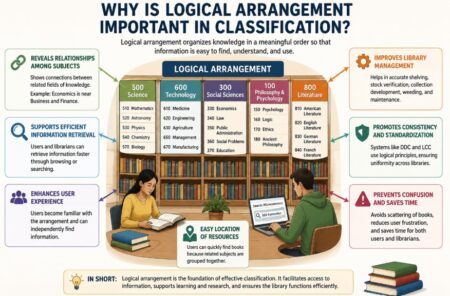
Knowledge Classification is the systematic organization of information or knowledge into categories based on shared characteristics, themes, or concepts. This process plays a vital role in the field of information science, education, and research, as it provides a structured way to arrange complex information for easier retrieval and understanding. The primary goal of knowledge classification is to group related information together, making it more accessible and manageable for users. For instance, in libraries, knowledge is classified into broad subjects like science, literature, and history, which are further subdivided into more specific areas such as biology, chemistry, or physics.
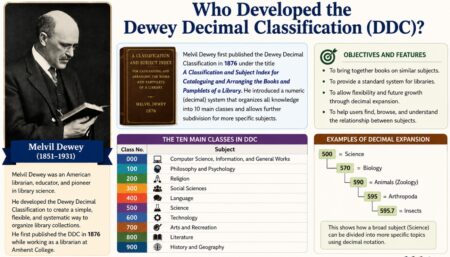
A well-known example of knowledge classification is the Dewey Decimal Classification (DDC) system, commonly used in libraries worldwide. In this system, knowledge is divided into ten main classes, such as 000-099 for general works, 100-199 for philosophy, and 500-599 for natural sciences. Within these main categories, there are further subdivisions that organize information in a hierarchical manner. Another example is the Universal Decimal Classification (UDC), which is widely used in scientific and technical libraries. UDC allows for even finer distinctions and is highly flexible, making it suitable for a broad range of disciplines.
Knowledge classification can also be seen in other areas, such as the organization of academic research papers. In research databases, knowledge is often classified by fields of study, like engineering, medicine, or social sciences, with further categorization based on sub-disciplines. This allows researchers to quickly access the most relevant information for their work. Ultimately, the purpose of knowledge classification is to create an organized structure that enhances knowledge sharing, learning, and information retrieval.
What is Book Classification?
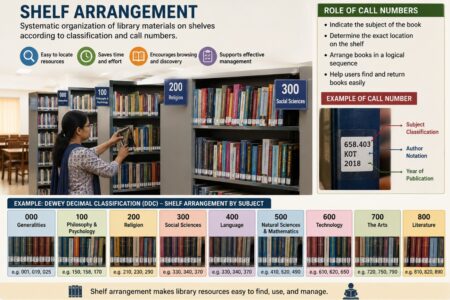
Book Classification is the process of organizing books in libraries or collections according to a specific system or method to ensure efficient retrieval and management. The aim is to group books based on subject, content, or other relevant attributes so that users can easily locate and access the material they need. Book classification systems provide a standardized framework that helps librarians organize vast collections of books in a logical and consistent manner. By doing so, these systems facilitate the smooth browsing and searching of books, saving time and improving access for library users.
One of the most widely used systems of book classification is the Dewey Decimal Classification (DDC). This system divides knowledge into ten main categories, each represented by a number from 000 to 999. For example, books related to computer science and general works are assigned numbers in the 000-099 range, while books on natural sciences like biology, chemistry, and physics fall under the 500-599 range. Each of these categories is further subdivided into more specific subcategories to allow for detailed organization. For instance, within the 500-599 range, books on botany could be classified as 580, while those on zoology may fall under 590.
Another commonly used system is the Library of Congress Classification (LCC), which is frequently employed in academic and research libraries. The LCC system uses a combination of letters and numbers to organize books into broad subject areas, such as A for general works, B for philosophy, and Q for science. Within these broad categories, further subdivisions provide more specific classifications. For instance, books related to chemistry would be categorized under QD, and books on mathematics under QA.
Book classification systems like DDC and LCC help to maintain a structured, accessible, and user-friendly library environment, allowing patrons to locate resources more efficiently. These systems not only serve the needs of users in physical libraries but also play a critical role in organizing digital libraries and online databases.
Differences between Knowledge Classification and Book Classification
Knowledge classification and book classification represent distinct yet interconnected facets of organizing information. While both involve the systematic arrangement of content, they differ in scope, purpose, and application. Knowledge classification encompasses a broader spectrum, focusing on categorizing theoretical frameworks, methodologies, and various forms of intellectual content within a specific field of study. This process contributes to a conceptual framework that aids in understanding relationships and hierarchies within a body of knowledge. On the other hand, book classification is a narrower application, specifically dealing with the systematic organization of printed or digital materials within a library setting. Employing standardized systems, such as Dewey Decimal Classification or Library of Congress Classification, book classification ensures the efficient storage, retrieval, and accessibility of resources. While knowledge classification provides a conceptual map of intellectual terrain, book classification translates these concepts into practical systems for libraries, facilitating easy navigation and user access to information. Understanding the distinctions between these two classifications is crucial for effective information management in both academic and library contexts.
Here is a table that summarizes the key differences between knowledge classification and book classification:
| Aspect | Knowledge Classification | Book Classification |
|---|---|---|
| Definition | Knowledge classification categorizes information or data based on certain criteria, characteristics, or relationships. It involves organizing knowledge into distinct groups or classes to facilitate better understanding, retrieval, and utilization of information. This classification helps manage and structure knowledge, making it more accessible and meaningful for users. | Book classification is the systematic arrangement of books in a library or other collection based on specific criteria such as subject, genre, author, or format. This organization allows for easy retrieval and navigation, making it simpler for users to locate and access relevant books. Standard classification systems include the Dewey Decimal Classification and the Library of Congress Classification. |
| Scope | Knowledge Classification refers to the broader process of organizing knowledge into categories based on shared themes or concepts. It encompasses various fields of information, including academic disciplines, research topics, and general knowledge areas. It is not limited to books or written materials but extends to all forms of knowledge, including digital resources, research papers, and multimedia. | Book Classification, on the other hand, is specifically concerned with organizing physical books or written materials in libraries or collections. It is a subset of knowledge classification that focuses on the arrangement of books based on subject, content, or other characteristics. |
| Purpose | The purpose of Knowledge Classification is to establish a structure that makes information easier to understand, share, and retrieve. It aims to create a logical framework for categorizing different kinds of knowledge, helping researchers, educators, and professionals locate relevant information in their respective fields. | The purpose of Book Classification is to organize books in a way that allows library users to easily locate and access them. It involves grouping books based on their subject matter or thematic content, thus enabling efficient book retrieval within a library or collection. |
| Application | Knowledge Classification is applied across a wide range of domains, such as academic research, information management, knowledge management systems, and digital archives. It includes systems like the Dewey Decimal Classification (DDC), Universal Decimal Classification (UDC), and other frameworks that organize information into categories like science, humanities, and technology. | Book Classification is applied specifically in library settings, where books are categorized according to established systems like DDC or the Library of Congress Classification (LCC). This helps libraries manage their collections and makes it easier for users to find books based on specific subjects or genres. |
| Nature of Content | It involves categorizing diverse forms of intellectual content, including abstract concepts, theories, and methodologies. The emphasis is on organizing knowledge in a conceptual sense. | Primarily deals with organizing tangible or digital items such as books, periodicals, and multimedia resources. The focus is on the physical or digital representation of knowledge. |
| Flexibility and Adaptability | It tends to be more flexible and adaptable, allowing for adjustments and refinements as the understanding of a field evolves. New theories or paradigms can be incorporated without the need for major restructuring. | It can be more rigid, especially in traditional library systems, as changes may require reorganizing physical materials and updating cataloging systems. Digital libraries may offer more flexibility in adapting to changes. |
| Human Interpretation | It often involves nuanced interpretations by experts in a particular field who analyze and categorize intellectual content based on their understanding of the subject matter. It may require ongoing discussions and debates within the academic community. | It involves the application of predefined rules and standards, often carried out by trained librarians. While subjectivity may play a role, it is more constrained by established systems and guidelines. |
| Digital Environment | It can extend beyond traditional boundaries in the digital space, encompassing a wider range of multimedia content, online discussions, and collaborative knowledge creation platforms. | Traditionally, it focused on physical items but has adapted to include the classification of digital resources, e-books, and online databases. Digital book classification often involves metadata tagging and electronic cataloging systems. |
| Accessibility and User Interaction | It aims to enhance the accessibility and understanding of complex ideas within a field, fostering intellectual exploration and collaboration among researchers and scholars. | They are primarily geared toward facilitating user-friendly access to specific resources in a library, ensuring that patrons can easily locate and retrieve physical or digital materials based on their informational needs. |


7 Comments
Thanks a lot for the short and simple explanation! Loved it.
However, I need further help in this regard. Can u help Plz? This is Nayan from Basirhat, West Bengal.
kindy NAME the classification which falls under the Knowledge and Book. thanks
thanks
I need the work.thanks
THANKS FOR THE WORK
But this is complete and utter nonsense. These are not two separate classification systems, as you explained it. Book classification in libraries can be divided into: knowledge (non-fiction) and fiction, which uses a completely different classification and can thus be described as book classification based on author and genre.
Thank you, Mr. Elias, for sharing your perspective. My article aimed to highlight the distinction between knowledge classification as a theoretical framework and book classification as its practical application in libraries.
Knowledge classification deals with the conceptual organization of human knowledge—how disciplines and subjects are structured, related, and divided. Book classification, on the other hand, applies these conceptual structures to organize physical or digital resources in a way that facilitates access and retrieval. In fact, major classification systems such as the Dewey Decimal Classification (DDC) and the Library of Congress Classification (LCC) are grounded in this broader classification of knowledge, not just the practical division of fiction versus nonfiction.
So while fiction versus nonfiction is indeed a common library-level distinction, the underlying theoretical framework of knowledge classification is what informs the systematic placement of nonfiction resources, and in turn makes book classification more than just a shelving practice—it becomes an application of knowledge organization.