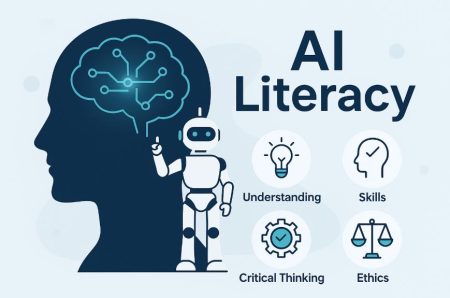
Artificial Intelligence (AI) has rapidly evolved from a futuristic concept to an integral part of our daily lives, influencing industries, economies, and even personal decision-making. As AI systems become more advanced and embedded in various technologies, it is crucial for individuals, especially students, to understand how these systems function and their potential and limitations. This understanding is referred to as AI literacy, which encompasses the knowledge, skills, and critical thinking needed to engage effectively with AI technologies. AI literacy goes beyond just technical expertise- it also involves recognizing the ethical, social, and economic implications of AI and how these technologies impact individuals and society at large. Promote AI Literacy
For students, AI literacy is becoming an essential skill set. In an increasingly AI-driven world, students must be able to use AI tools and understand their underlying principles to adapt to a rapidly changing job market. AI is transforming sectors such as healthcare, finance, education, and entertainment, creating a demand for a workforce that can navigate these technologies competently. Moreover, as AI continues to impact social, political, and economic spheres, students with AI literacy will be better equipped to assess the ethical implications of AI systems, make informed decisions, and engage in meaningful discussions about the role of AI in society. Developing AI literacy skills empowers students to think critically about the technology that shapes their environment, ensuring that they can leverage AI for positive, informed, and responsible applications in their future careers and personal lives.
The Importance of AI Literacy in Education
AI literacy is becoming increasingly important in the realm of education, as it not only enhances students’ ability to understand and utilize AI technologies but also equips them with essential skills for the future. In today’s digital age, AI systems are shaping various sectors, from healthcare to business to entertainment. For instance, AI is used in healthcare for diagnostic systems like IBM Watson, which helps doctors make better clinical decisions, and in business, it powers customer service chatbots and recommendation engines such as those used by Amazon and Netflix. As these technologies continue to evolve, it is crucial for students to develop a deep understanding of AI, not only for academic success but also for their long-term career prospects. Education plays a pivotal role in fostering this literacy by integrating AI concepts into curricula, enabling students to build the necessary skills to thrive in an AI-driven world.
AI literacy opens up new opportunities for personal and professional growth for students. It empowers them to engage with the technologies shaping modern industries, giving them a competitive edge in the job market. From data analysis and machine learning to automation and robotics, AI is revolutionizing many career paths. For example, AI tools are used in finance to analyze market trends, in journalism to automatically generate reports (such as with AI-driven content tools like Wordsmith), and in autonomous vehicles, where AI is essential for self-driving technologies like those developed by Tesla. Students equipped with AI knowledge are better positioned to succeed in these emerging fields. Moreover, AI literacy enhances students’ problem-solving abilities, critical thinking, and creativity, as they learn to approach challenges from an analytical and tech-savvy perspective.
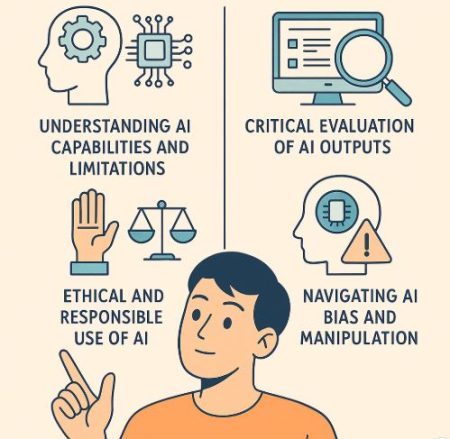
In addition to benefiting students’ career readiness, AI literacy is crucial for responsible digital citizenship. As AI systems influence decisions in areas like hiring, criminal justice, and healthcare, students must understand the ethical considerations involved in these technologies. For example, AI algorithms used in recruitment processes may unintentionally favor certain demographics, leading to biases in hiring decisions. Similarly, AI systems used in criminal justice, like predictive policing tools, have raised concerns about reinforcing racial biases. Students need to be able to assess the societal implications of AI, including potential biases and the risks of automation, in order to contribute thoughtfully to public discourse and policy decisions. By fostering AI literacy in education, institutions prepare students for future careers and encourage them to become informed, responsible citizens in a technology-driven world.
How Educational Institutions Can Promote AI Literacy Among Students and Faculty
As the significance of Artificial Intelligence (AI) continues to grow across industries, it becomes increasingly important for educational institutions to foster AI literacy among students and faculty. AI literacy empowers individuals to understand the technology, engage critically with AI systems, and recognize the ethical and social implications of their use. For educational institutions, promoting AI literacy is not merely about teaching technical skills but also about creating an environment that encourages critical thinking and prepares students to navigate an AI-driven world. Here are several strategies that can effectively promote AI literacy within educational settings.
- Integrating AI into the Curriculum: One of the most effective ways to promote AI literacy is by integrating AI concepts across various disciplines, not just in computer science programs. While computer science is often seen as the core area for learning about AI, its applications reach far beyond that. AI technologies are influencing fields like healthcare, business, the arts, and social sciences, making it essential for students in diverse fields to understand how AI works and its impact.
For instance, students in healthcare could learn about AI tools used for diagnostic purposes, such as IBM Watson, which helps doctors analyze medical data. In business, AI applications like predictive analytics or customer service chatbots could be incorporated into courses on management, marketing, and customer relationship management. Introducing AI-focused modules in these non-technical disciplines ensures that students develop a well-rounded understanding of AI’s potential and limitations. Interdisciplinary courses can also explore the ethical and social implications of AI, fostering a critical and holistic perspective on the technology. - Providing Hands-on Experience with AI Tools: Another strategy for promoting AI literacy is offering students and faculty the opportunity to engage directly with AI technologies. Hands-on experience allows individuals to understand AI tools and platforms, enhancing their ability to use them effectively and ethically. Institutions can introduce AI-driven software into the classroom, such as machine learning platforms, natural language processing tools, and data visualization tools, to provide students with practical exposure to real-world AI applications.
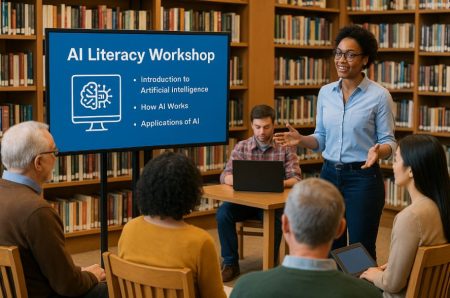
For example, students studying data science can work with machine learning algorithms and tools like TensorFlow or Scikit-learn to build their own AI models. Similarly, students in humanities or social sciences can use AI-based tools like sentiment analysis software or language translation models to explore AI applications in their field of study. Such hands-on experiences allow students to not only gain technical skills but also develop critical thinking about the ways AI systems are used and the potential biases that can arise. - Offering Workshops and Seminars: Educational institutions can organize workshops, seminars, and guest lectures focused on AI literacy. These events can be tailored to different levels of understanding, from introductory sessions for beginners to more advanced discussions for students and faculty with prior knowledge. By inviting AI professionals, industry experts, or academics in the field, institutions can ensure that their community stays up to date with the latest developments in AI and its applications.
Workshops can focus on various aspects of AI, such as its ethical implications, the latest trends in AI research, or how AI is transforming different industries. Additionally, workshops can also introduce students to tools for understanding AI systems more critically, such as algorithm auditing or AI ethics training. These events provide students with an opportunity to engage with AI beyond the classroom, fostering a deeper understanding of the technology’s societal and ethical implications. - Encouraging Interdisciplinary Collaboration: AI literacy is not confined to technical fields, and educational institutions should encourage interdisciplinary collaboration to promote a broader understanding of AI. Students and faculty from different departments should be encouraged to collaborate on projects exploring AI’s diverse applications. For example, a partnership between computer science and sociology departments could result in research on the social impact of AI in areas such as surveillance or data privacy. Similarly, students in law and ethics programs could explore the implications of AI in terms of governance, intellectual property, and human rights.
Such interdisciplinary initiatives foster an environment where AI literacy extends beyond the technical and theoretical aspects of the field, addressing the complex social, ethical, and political issues that AI raises. By working together, students from various backgrounds can contribute unique perspectives to the discussion on AI, helping to develop a well-rounded understanding of the technology. - Collaborating with Industry Partners: Collaborating with industry partners is an effective way for educational institutions to enhance AI literacy. Partnerships with tech companies and AI startups can provide students with real-world exposure to AI applications, allowing them to learn how AI is used in industries like healthcare, finance, and entertainment. Industry partnerships can also lead to internship opportunities, guest lectures, and access to cutting-edge AI research and tools.
For example, universities could partner with companies like Google, Microsoft, or IBM to offer AI-based projects, research collaborations, or mentoring programs for students. These partnerships provide invaluable experience for students, allowing them to gain practical knowledge and insights into how AI is applied in the real world. Such collaborations also ensure that the educational curriculum remains relevant and aligned with industry trends. - Creating AI Literacy Centers: To facilitate AI learning, institutions can establish dedicated AI literacy centers. These centers can serve as hubs for AI-related resources, offering students and faculty access to books, online courses, research papers, and AI-based tools. The centers could also organize training programs and events that focus on different aspects of AI, such as its applications, challenges, and ethical considerations.
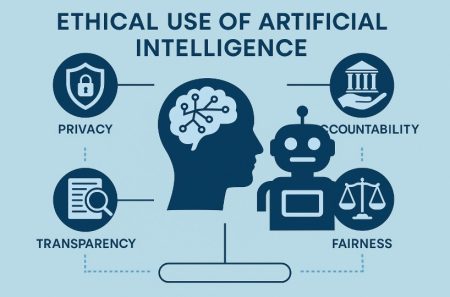
In addition to academic resources, these centers can offer specialized training for faculty members to help them integrate AI tools into their teaching and research practices. By creating a centralized space for AI learning, institutions can make AI education more accessible to everyone in the academic community, ensuring that all students, regardless of their field of study, can develop the skills necessary to engage with AI. - Raising Awareness of AI Ethics: An essential component of AI literacy is understanding the ethical implications of AI systems. Educational institutions must not only teach the technical aspects of AI but also emphasize the importance of responsible AI use. This includes addressing issues such as data privacy, algorithmic bias, transparency, and the potential impact of AI on jobs and society.
Integrating AI ethics into the curriculum helps students become aware of the potential dangers and challenges of AI technology, such as biases in AI algorithms or the risks of AI systems making decisions without human oversight. Teaching students to think critically about these ethical issues ensures that they can engage with AI in a thoughtful, responsible manner, both as users and developers of AI systems.
Promoting AI literacy in educational institutions is essential for preparing students and faculty to navigate a world increasingly shaped by AI technologies. By integrating AI into curricula, providing hands-on experiences, organizing workshops, and fostering interdisciplinary collaboration, educational institutions can ensure that their communities develop the knowledge and skills necessary to engage with AI both critically and responsibly. As AI continues to transform society, AI literacy will become a fundamental competency for all students, enabling them to succeed in an AI-driven world and contribute meaningfully to discussions on the ethical and societal implications of this powerful technology.