Information has emerged as a pivotal resource in contemporary society that shapes nearly every aspect of life. Whether in personal decision-making or within professional contexts, the quality, quantity, and accessibility of information play a fundamental role in guiding choices and strategies. From everyday decisions like purchasing a product to critical business and policy choices, the availability of accurate and timely information significantly influences outcomes. In the business world, for example, companies rely on market data, consumer feedback, and financial reports to make informed decisions that drive success. Similarly, in personal life, individuals use information from diverse sources, such as health data or news reports, to make choices that impact their well-being.
Beyond its role in decision-making, information is a crucial innovation driver. New ideas, products, and services are conceived through the accumulation and analysis of existing knowledge. In industries ranging from technology to healthcare, the ability to access, process, and apply information sparks creativity, leading to groundbreaking innovations. Whether through research and development (R&D) or collaborative knowledge-sharing, information enables individuals and organizations to push boundaries, solve problems, and develop solutions that were once unimaginable. Thus, information is not merely a tool for decision-making; it is the catalyst for progress and transformation, fostering advancements that shape society’s future.
The Role of Information in Decision-Making
In a world that is increasingly driven by data and technology, the role of information in decision-making has never been more critical. Information is the foundation upon which decisions are made, whether in personal life, business, government, or healthcare. The effectiveness of these decisions is largely determined by the quality, quantity, and accessibility of the information available to decision-makers. Here is how information influences decision-making across different contexts and highlights its central role in driving informed, strategic choices.
- Information in Personal Decision-Making: The decisions individuals make are often influenced by the information they gather from various sources. From simple day-to-day choices, such as what to eat or where to shop, to more significant decisions like purchasing a home or choosing a career, information plays a pivotal role in guiding these choices. The quality and relevance of the information available are key factors in making well-informed decisions that align with one’s values and objectives.
For example, consider a person contemplating a major purchase, such as a car. The individual might gather information from reviews, compare prices, evaluate fuel efficiency, and consider long-term maintenance costs. Armed with this information, the person can make a decision that best fits their budget, needs, and preferences. Similarly, when deciding on a career path, individuals typically research industry trends, salary data, educational requirements, and job satisfaction levels to ensure that their decision will lead to long-term personal fulfillment and financial stability.
The importance of information in personal decision-making is underscored by the fact that, in many cases, poor or insufficient information can lead to regret or dissatisfaction. For instance, an individual who buys a car without understanding its maintenance costs may later experience unexpected financial strain. Conversely, access to reliable, comprehensive information helps individuals make choices that are more likely to lead to positive outcomes. - Information in Organizational Decision-Making: In organizations, decision-making processes become more complex as multiple stakeholders and variables come into play. Businesses, for instance, rely on vast amounts of information to inform decisions about product development, marketing strategies, pricing, and expansion. The role of information in these decisions cannot be overstated, as it determines a company’s ability to respond to market changes, capitalize on opportunities, and avoid potential risks.
Take the example of a company launching a new product. Before making any strategic decisions, a business typically gathers information on market demand, consumer preferences, competitors, and pricing trends. This information helps the company position its product effectively, ensuring that it meets the needs of the target audience while staying competitive in the market. For instance, when Apple prepares to launch a new iPhone, the company collects extensive market research data, including consumer feedback, technological advancements, and competitive analysis. The decisions made based on this information are critical to the success of the product and, by extension, the company. Moreover, modern organizations increasingly rely on data analytics and business intelligence tools to process large volumes of data, enabling them to make data-driven decisions. Data-driven decision-making has become especially popular in industries like finance, healthcare, and retail. In finance, for instance, investment firms use market data and predictive models to make decisions about stock purchases and sales. The ability to analyze real-time data allows organizations to make faster, more accurate decisions, which is essential in a fast-paced, competitive environment. - Information in Government and Policy-Making: Governments also rely heavily on information to make decisions that affect national policies, laws, and public services. In the political and governmental sphere, decisions must be based on accurate and timely data to address societal needs, ensure public welfare, and promote economic stability. Information gathered through public surveys, census data, and research reports helps policymakers understand public opinion, identify key issues, and allocate resources efficiently.
For example, consider the decision-making process related to public health. During a health crisis, such as a pandemic, government agencies rely on information regarding infection rates, healthcare resources, and vaccination data to make critical decisions about lockdowns, resource allocation, and public health messaging. Inaccurate or delayed information in such cases can lead to poor policy decisions, resulting in harmful consequences for public health. Similarly, in areas such as environmental protection, governments gather data on pollution levels, climate change, and natural resource depletion to create policies that safeguard the environment. Decisions made without access to up-to-date and accurate information can result in ineffective policies or missed opportunities to mitigate risks. - The Role of Information in Innovation: Beyond aiding in decision-making, information is also a key driver of innovation. Innovation involves the creation of new ideas, products, or services that offer solutions to existing problems or meet new needs. Information fuels this creative process by providing the knowledge and insights needed to spark new concepts and refine existing ones.
In industries like technology, healthcare, and manufacturing, information plays a crucial role in driving R&D efforts. For instance, pharmaceutical companies rely on clinical trial data and research findings to develop new drugs and medical treatments. The continuous flow of new information enables these companies to improve existing medications, create more effective treatments, and address unmet medical needs. Similarly, tech companies like Google and Microsoft invest heavily in research and development, leveraging vast amounts of data to create innovative products that transform industries and improve everyday life. Moreover, information sharing and collaboration across different sectors and disciplines often lead to breakthroughs. For example, the intersection of artificial intelligence and healthcare has led to innovations in diagnostic tools, treatment plans, and personalized medicine. By sharing data and insights, professionals in diverse fields can work together to create innovative solutions to complex challenges. - Challenges in Information Use for Decision-Making: While information is invaluable in decision-making, it also presents several challenges. One of the primary challenges is the sheer volume of information available in the modern world, leading to information overload. In such cases, decision-makers may struggle to filter out irrelevant or redundant data and focus on what truly matters.
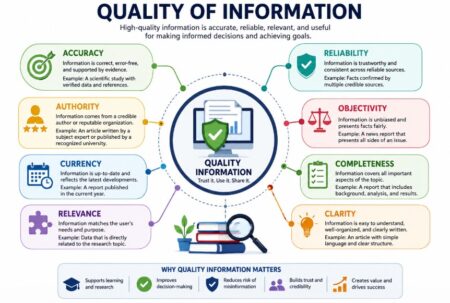
Additionally, the quality of information is a crucial factor. Decisions based on inaccurate, outdated, or biased information can lead to suboptimal outcomes. For example, a business that uses faulty market research to guide its product development may face challenges in attracting customers, ultimately leading to financial losses. Lastly, privacy and security concerns are particularly important when dealing with sensitive information, such as personal data or proprietary business intelligence. Decision-makers must ensure that information is protected and used ethically to avoid potential legal and reputational risks.
Information is an indispensable resource in decision-making across various domains of life. Whether it’s personal decisions, organizational strategies, government policies, or groundbreaking innovations, the quality and accessibility of information directly influence the outcomes of those decisions. In an era of data-driven decision-making, the ability to gather, analyze, and apply information effectively is more important than ever. However, the challenges of managing information, ranging from data overload to security concerns, highlight the need for robust systems and frameworks to ensure that information is used responsibly and to its fullest potential. By understanding and leveraging the power of information, decision-makers can navigate complexities, seize opportunities, and drive progress in their respective fields.
The Role of Information in Innovation
In the modern world, innovation is one of the primary engines of progress, driving advancements in technology, business practices, healthcare, and nearly every other sector. At the heart of innovation lies information, which plays an indispensable role in the development of new ideas, products, services, and solutions. The ability to access, process, and apply information effectively enables individuals and organizations to think creatively, solve complex problems, and bring novel ideas to fruition. Let’s explore the multifaceted role of information in innovation, illustrating how it fuels creativity, facilitates collaboration, and drives progress across industries.
- Information as a Catalyst for Creativity: Creativity, often seen as the foundation of innovation, is heavily influenced by the information to which individuals have access. Innovators and creators rely on existing knowledge to inspire new ideas and concepts. The more information they have, the more potential connections they can make between seemingly unrelated pieces of data. For instance, the development of the smartphone was not the result of a single groundbreaking idea, but rather the convergence of multiple technological advancements—touchscreen technology, mobile computing, wireless networks, and miniaturized hardware. Information on each of these areas helped innovators like Steve Jobs and his team at Apple develop a product that revolutionized communication and computing.
In industries like design, advertising, and entertainment, the availability of diverse information also plays a critical role in sparking creativity. Designers often combine insights from different disciplines—art, psychology, technology, and marketing—using this information to create products that resonate with consumers. The creative process is, therefore, a synthesis of existing knowledge, guided by the ability to identify gaps, anticipate needs, and envision possibilities. - The Role of Information in Research and Development: Information is especially vital in research and development (R&D), which serves as the backbone of innovation in fields such as pharmaceuticals, engineering, and technology. In R&D, the goal is to build upon existing knowledge to create something new—whether that’s a groundbreaking drug, an innovative piece of technology, or a novel manufacturing technique. Information gathered from scientific journals, research papers, and patents provides the groundwork for future discoveries.
For example, the development of new medications relies heavily on the latest research findings, clinical trial data, and global health trends. Pharmaceutical companies use this information to identify health challenges and unmet medical needs, guiding the creation of drugs and treatments that address those gaps. The development of mRNA vaccines for COVID-19, for instance, was accelerated by years of prior research on mRNA technology, virus structure, and immune responses. Access to the right information at the right time allowed researchers to rapidly innovate in the face of a global pandemic.
In the tech industry, companies like Google and Tesla use vast amounts of information, ranging from user data to technological advancements, to drive innovation. Google’s search algorithms, for example, are continuously refined based on new information from web pages, user behaviors, and interactions. Similarly, Tesla leverages data from its electric vehicles to improve battery technology and develop self-driving capabilities, constantly innovating based on real-world information and feedback. - Information Sharing and Collaboration: Innovation often arises from the collective knowledge of diverse individuals and organizations. Information sharing and collaboration across sectors, disciplines, and geographical boundaries significantly enhance the innovation process. In today’s interconnected world, the exchange of information is facilitated through global networks, open-source platforms, and collaborative tools, enabling individuals from different backgrounds to contribute their expertise to a shared problem.
The rise of open-source software development provides a clear example of the power of information-sharing in fostering innovation. Platforms like GitHub enable developers from around the world to collaborate on software projects, sharing code, ideas, and solutions. This collective approach has led to the rapid development of widely used software tools, such as the Linux operating system and Apache web server, demonstrating how information sharing can accelerate innovation in a decentralized, collaborative environment.
In healthcare, collaboration across borders has led to breakthroughs in global health initiatives. The sharing of information on treatment protocols, medical research, and best practices allows healthcare providers, researchers, and institutions to address complex health challenges more effectively. For example, the collaborative sharing of data on the spread of the COVID-19 virus helped shape global containment strategies and vaccine development, demonstrating how collective access to information drives innovation in crisis situations. - The Role of Technology in Information-Driven Innovation: Technological advancements, particularly in data analytics, artificial intelligence (AI), and machine learning, have significantly expanded the scope of innovation by enabling more efficient use of information. These technologies allow businesses and organizations to process vast amounts of data, uncover insights, and predict trends, all of which are essential for developing innovative products and services.
AI and machine learning algorithms, for instance, can analyze large datasets to identify patterns and generate new ideas. In healthcare, AI has been used to analyze medical images, predict patient outcomes, and even discover new drug compounds. In the automotive industry, AI is being applied to create self-driving cars by processing real-time data from sensors and cameras to make decisions in a split second.
Big data also plays a pivotal role in innovation, particularly in fields like marketing and consumer goods. By analyzing customer behavior, preferences, and feedback, companies can develop personalized products and services that meet the specific needs of their target audience. This data-driven approach enhances innovation and ensures that new products and services are aligned with consumer demand, leading to higher adoption rates and market success. - Overcoming Barriers to Information Access: While information is a key driver of innovation, access to it can sometimes be a barrier. Intellectual property laws, data privacy concerns, and information silos within organizations or industries can limit the flow of information, hindering innovation. Overcoming these barriers is essential to ensure that information is shared freely and used to its full potential in driving progress.
In the healthcare sector, for example, data privacy regulations such as the Health Insurance Portability and Accountability Act (HIPAA) protect patient information but can also restrict the ability to share health data for research purposes. However, initiatives like data anonymization and the development of secure data-sharing platforms are helping address these challenges, allowing information to flow more freely while maintaining privacy standards. Similarly, the balance between protecting intellectual property and encouraging collaboration can be tricky in the tech industry. Open-source platforms, however, offer a middle ground, allowing developers to share their work while maintaining certain rights over their contributions. These platforms foster innovation by enabling various contributors to improve existing software and create new solutions.
In conclusion, information plays a vital and multifaceted role in innovation. It catalyzes creativity, the foundation for research and development, and the fuel for collaboration and technological advancement. As technology continues to evolve and the world becomes more interconnected, the importance of information in driving innovation will only increase. Access to the right information, combined with the ability to analyze and apply it effectively, will remain a key determinant of success in fields ranging from healthcare and technology to business and the arts. As such, fostering environments that encourage information sharing, protect intellectual property, and facilitate collaboration will ensure that innovation continues to thrive.