The Library of Congress Subject Headings (LCSH) is a standardized system used by libraries worldwide to organize and classify materials based on subject content. Developed and maintained by the Library of Congress, LCSH provides a controlled vocabulary that ensures consistency in cataloguing and enhances information retrieval. It is widely used in academic, public, and research libraries to help users find relevant resources efficiently.
LCSH assigns subject headings to books, articles, and other materials using a hierarchical and structured approach, including main headings, subdivisions, and cross-references. This system helps avoid confusion caused by synonyms and variations in terminology, making it easier for users to conduct precise and effective searches. As one of the most comprehensive subject heading systems, LCSH is crucial in bibliographic organization, digital libraries, and metadata management. Over time, it has evolved to incorporate new terms, reflect changes in language, and support linked data applications in the digital era.
What is the Library of Congress Subject Headings (LCSH)?
The Library of Congress Subject Headings (LCSH) is a controlled vocabulary used by libraries and other information institutions to organize and classify materials by subject. It provides a standardized set of terms and phrases for cataloging and indexing resources, ensuring consistency and accuracy in describing content across different library catalogs. The Library of Congress maintains LCSH, and it is widely used by libraries worldwide to help users find information more easily by providing a systematic subject classification.
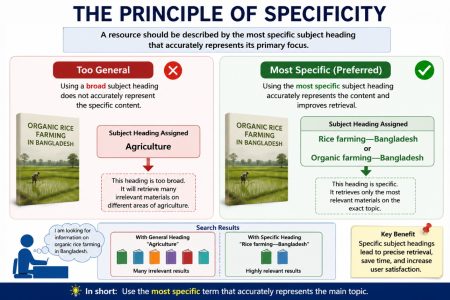
Each subject heading in LCSH is designed to be specific and descriptive, helping to eliminate ambiguity and improve search results. The system is hierarchical, with broad subject headings that can be narrowed down into more specific subheadings, allowing for detailed categorization of materials.
For example, a book about digital libraries might be cataloged under the LCSH term “Digital libraries”, which could be further broken down into specific subtopics like “Digital libraries–Access control” or “Digital libraries–Preservation”. LCSH plays an essential role in information retrieval by improving the discoverability of resources through a consistent and standardized indexing method.
Key Features of LCSH:
- Controlled Vocabulary – Ensures uniformity in subject descriptions, avoiding inconsistencies caused by synonyms and variant terms.
- Hierarchical Structure – Allows for broader, narrower, and related subject relationships to improve search precision.
- Cross-References – Directs users to preferred or related terms for better navigation.
- Subdivisions – Adds specificity by including aspects such as time, geography, or format (e.g., History – United States – 20th century).
- International Usage – Although developed by the Library of Congress, LCSH is widely adopted by libraries worldwide for cataloging and classification.
Why was the LCSH System Developed?
The Library of Congress Subject Headings (LCSH) system was developed to create a standardized and efficient method for organizing and retrieving information in libraries. Before its establishment, libraries used different classification methods, leading to inconsistencies in subject representation and making it difficult for users to find relevant materials. The Library of Congress designed LCSH as a controlled vocabulary, ensuring uniformity in cataloging by assigning standardized subject headings to resources. This approach eliminated ambiguity caused by synonyms, variant spellings, and evolving terminology, improving the accuracy and efficiency of searches. Additionally, as library collections grew in size and complexity, LCSH provided a scalable and structured framework that could accommodate various disciplines and subjects. Another key reason for its development was to facilitate bibliographic cooperation among libraries, allowing them to share cataloging records and reduce duplication of efforts. Over time, LCSH has evolved to support digital libraries and linked data applications, making it a vital tool for modern information retrieval and knowledge organization.
Why is the Library of Congress Subject Headings (LCSH) Important?
The Library of Congress Subject Headings (LCSH) plays a vital role in the organization and accessibility of library resources. Its importance stems from its ability to provide a standardized system for categorizing materials by subject, ensuring consistency in how topics are described across various libraries. By using LCSH, libraries can categorize their collections using a controlled vocabulary, making it easier for users to find relevant materials regardless of the institution or catalog they are searching in. This consistency improves the efficiency of information retrieval, allowing users to locate resources quickly and with greater accuracy. Furthermore, LCSH’s standardized terminology helps eliminate confusion caused by synonyms, differing naming conventions, or regional variations in language.
Another reason for the importance of LCSH is its role in facilitating collaboration and resource sharing among libraries worldwide. Since many libraries use the same subject headings, it creates a common ground for resource exchange, making it easier for users to access materials from different libraries without encountering discrepancies in subject categorization. The controlled vocabulary provided by LCSH not only supports local library systems but also allows libraries to integrate and share their resources on a global scale, ensuring the accessibility of information across borders.
LCSH also enhances the research experience by making it easier for scholars, students, and researchers to discover relevant materials. Its hierarchical structure enables users to begin with broad subject categories and drill down into more specific topics, thus providing a clear pathway for deeper exploration of a subject. This is particularly important in academic environments, where precise categorization is crucial for the efficient discovery of research materials. Additionally, LCSH supports library automation, helping to streamline cataloging processes and improving the overall efficiency of library operations, especially as digital systems and online catalogs continue to grow in use. In summary, LCSH is essential for ensuring efficient information retrieval, promoting global collaboration, and enhancing the research process, making it a cornerstone of modern library systems.
How Are Subject Headings Organized in LCSH?
The Library of Congress Subject Headings (LCSH) is a standardized system of subject classification used by libraries around the world to organize and catalog materials. The organization of subject headings in LCSH is a critical aspect of its functionality, as it helps to ensure that resources are easily discoverable, categorized consistently, and accessible across different libraries and information systems. Here, we will explore how subject headings are organized within LCSH, detailing its hierarchical structure and the ways in which subject terms are classified to facilitate efficient information retrieval.
a. Hierarchical Structure of LCSH
The primary organization of LCSH follows a hierarchical structure, meaning that broad topics are divided into more specific subtopics, allowing users to narrow their search and find exactly what they need. The basic framework consists of three levels:
-
- Main Subject Headings: At the top level of the hierarchy are the main subject headings. These are broad categories that encompass general fields of knowledge or disciplines. Examples of main headings include broad terms like “Science,” “History,” or “Literature.” These headings serve as starting points for organizing related materials within each field.
- Subheadings: Beneath each main subject heading are subheadings, which provide more detailed classifications within the broader subject. Subheadings allow the subject to be divided into more specific areas of study. For example, under the main heading “History,” subheadings might include “History—Ancient,” “History—Modern,” or “History—United States.” These subheadings help to refine and narrow the scope of the subject, making it easier for users to locate relevant resources that fit within a specific time period, geographical location, or other defining factor.
- Sub-Subheadings: The hierarchical structure can be further refined with sub-subheadings, which break down subjects even further into narrower topics. For example, under “History—United States,” you might find sub-subheadings such as “History—United States—Civil War,” “History—United States—Revolutionary War,” or “History—United States—20th Century.” These detailed subject headings allow materials to be categorized with a high level of specificity, improving search accuracy and enhancing the efficiency of information retrieval.
b. Use of See References and See Also References
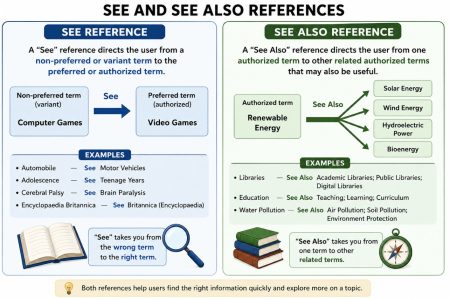
LCSH also incorporates additional tools to help users navigate its extensive list of subject headings. Two important types of references are see references and see also references.
-
- See References: A see reference directs users from a synonym, variation, or less preferred term to the standardized or preferred subject heading. For example, a user searching for materials related to “Electronic Libraries” may encounter a see reference directing them to the preferred term “Digital Libraries.” This ensures that users find the most appropriate subject heading, even if they are not familiar with the exact term used in the system.
- See Also References: The see also reference provides guidance to related subject headings. It suggests areas that users may want to explore in addition to their current search. For instance, if a user is browsing under “Digital Libraries,” they might encounter a see also reference directing them to related subjects like “Information Retrieval” or “Library Automation.” These references facilitate broader exploration of related topics and help users make connections between concepts they may not have initially considered.
c. The Role of Specificity and Broadness
A key feature of LCSH is the balance it maintains between specificity and breadth. While main subject headings provide broad categories, subheadings, and sub-subheadings allow for finer distinctions within those categories. This hierarchical structure enables a wide range of library materials to be organized in a way that makes sense across various domains. The more specific the subject, the more refined the subheadings become, helping to ensure that resources are organized and cataloged in a manner that reflects the diverse nature of topics in the world of research and scholarship.
d. Updating and Expanding the LCSH System
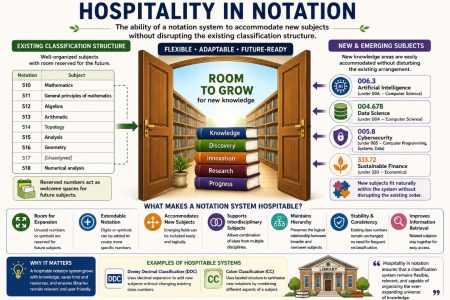
One of the advantages of LCSH is its flexibility. As new topics emerge and new fields of study develop, the system is continuously updated and expanded to reflect these changes. The Library of Congress regularly revises and adds new subject headings to accommodate evolving disciplines, terminology, and research areas. This adaptability ensures that LCSH remains relevant and can continue to serve libraries as a tool for cataloging and indexing an ever-growing body of knowledge.
The organization of subject headings in the Library of Congress Subject Headings (LCSH) is a meticulous and thoughtful process that ensures library materials are classified in a way that is both precise and accessible. Through its hierarchical structure, which includes main subject headings, subheadings, and sub-subheadings, LCSH allows for the categorization of a wide range of materials, from general topics to highly specific subjects. The inclusion of see references and see also references further aids users in navigating related terms and exploring other relevant areas of study. Together, these organizational principles make LCSH an indispensable tool for libraries and a powerful system for improving information retrieval. By adhering to a consistent structure, LCSH continues to play a crucial role in ensuring that library materials are well-organized, discoverable, and easy to access.
What Are the Different Types of Headings Used in LCSH?
The Library of Congress Subject Headings (LCSH) is a widely used system for organizing and categorizing library materials by subject. One of the key features of LCSH is the variety of subject heading types it employs, which ensures that library resources are classified and indexed in a way that makes them easy to discover and access. These headings are critical for organizing vast amounts of information across diverse fields of knowledge. The primary types of headings in LCSH include:
- Topical Headings: These are the most common type of subject headings and represent specific topics or subjects. Topical headings are used to describe the main subject matter of a resource. Examples include terms like “Digital libraries,” “Machine learning,” or “Climate change.” These headings can be broad or specific and are the starting points for categorizing materials within a particular area of knowledge.
- Geographic Headings: These headings represent places or geographic regions and are used to classify materials based on location or geography. Geographic headings can refer to countries, cities, regions, or even continents. For example, “United States”, “Africa”, or “Paris (France)” are all geographic headings used to organize resources that focus on specific places or areas.
- Chronological Headings: Chronological headings are used to classify materials based on a specific time period or era. These headings help to organize resources that deal with a particular historical period or moment in time. Examples of chronological headings include terms like “19th century”, “Middle Ages”, or “World War, 1939-1945.” These headings are used for materials that focus on events, cultures, or movements from particular timeframes.
- Form Headings: Form headings are used to categorize resources based on their format, medium, or type. These headings help identify the nature of the resource itself rather than its content. Common form headings include terms such as “Bibliography”, “Dictionaries”, “Periodicals”, or “Exhibitions.” These are particularly useful for identifying the type of material being described, regardless of its subject matter.
- Genre/Form Headings: Genre/form headings classify resources by their content or artistic form rather than their subject matter or format. These headings are often used to identify works of art, literature, or other creative expressions. For example, “Science fiction,” “Poetry,” or “Drama” are genre/form headings that categorize materials based on the genre or type of content they represent.
- Corporate Name Headings: Corporate name headings are used to categorize materials based on the names of organizations, institutions, or corporate bodies. These headings are used when resources focus on a specific corporation, governmental organization, nonprofit, or other formal entity. Examples include “United Nations”, “Harvard University”, or “NASA.”
- Personal Name Headings: Personal name headings are used to catalog materials that are specifically about individuals, whether they are authors, historical figures, or prominent public personalities. These headings represent the names of people, such as “Shakespeare, William,” “Einstein, Albert,” or “Obama, Barack.” Personal name headings help to organize works based on the individual or person associated with the resource.
- Uniform Titles: A uniform title is a heading used to represent a work that has been published under various titles or that has multiple versions. It ensures that all versions of a work are grouped under a single heading, regardless of the title used. For example, the works of “Shakespeare’s Hamlet” might have multiple translations or editions, but all would fall under the uniform title “Hamlet (Shakespeare)” for consistency.
- Relator Terms: Relator terms are used to describe the role or function of an individual or organization in relation to a work. These terms help specify the relationship of a person or group to the resource. For example, a person might be classified as the “Author”, “Editor”, “Translator”, or “Illustrator” of a work. These terms help clarify the roles individuals or organizations have in the creation or dissemination of a resource.
- See References and See Also References:
- See References: These are used when a term is synonymous with or related to another, directing users to the preferred or correct heading. For instance, a “See reference” might direct users from “Electronic libraries” to the more standardized term “Digital libraries.”
- See Also References: These references direct users to related subject headings, encouraging broader exploration. For example, under “Digital libraries,” a “See also reference” might lead to “Information retrieval” or “Library automation.”
LCSH uses a variety of subject heading types to ensure that resources are cataloged accurately and can be easily located by users. These different headings—ranging from topical and geographic to chronological, form, and personal name headings—serve to classify materials across multiple dimensions. The variety of heading types helps librarians maintain an organized and comprehensive system that allows users to navigate vast amounts of information in a meaningful and efficient way. By using these diverse heading categories, LCSH ensures that every resource can be found under the appropriate subject, facilitating better access to knowledge and improving the overall user experience in library systems.
How Does LCSH Handle Synonyms and Related Terms?
The Library of Congress Subject Headings (LCSH) system uses specific mechanisms to handle synonyms and related terms, ensuring that materials are categorized consistently and that users can easily find resources even if they use different terminology. This is essential for effective information retrieval, as people may use various terms to describe the same concept or related ideas. LCSH addresses this challenge through see references and see also references, which guide users from less common or synonymous terms to the preferred subject heading and suggest related subjects that might be of interest.
1. See References (Synonyms)
LCSH employs see references to manage synonyms and alternative phrases. A see reference is used when there is a less common or alternative term for a subject that points to the preferred or standard term. This ensures that even if a user searches for a non-preferred term, they are redirected to the correct heading. For example, if a user searches for “Electronic Libraries,” they may encounter a see reference that directs them to the more widely accepted heading, “Digital Libraries.”
This system helps maintain uniformity and consistency in cataloging, avoiding confusion caused by multiple terms for the same concept. It ensures that all resources related to a particular subject are indexed under the preferred heading, regardless of the variations in how the subject might be described in the literature.
Example:
-
- See reference: “Electronic Libraries” → Digital Libraries
This ensures that users searching for “Electronic Libraries” are directed to the proper subject heading “Digital Libraries.”
- See reference: “Electronic Libraries” → Digital Libraries
2. See Also References (Related Terms)
In addition to see references, LCSH uses see also references to manage related terms. These references guide users to subjects that are not synonymous but are closely related or connected in some way. When a user searches for a term, a see also reference suggests other topics they may want to explore, helping to broaden their search and introduce them to related areas of interest.
For example, if a user searches under the heading “Digital Libraries,” a see also reference might point them to related subjects such as “Information Retrieval,” “Library Automation,” or “Electronic Publishing.” This encourages users to explore interconnected concepts and can help them discover additional relevant resources that they might not have initially considered.
Example:
-
- See also reference: “Digital Libraries” → Information Retrieval
This suggests that users interested in Digital Libraries might also want to explore resources related to Information Retrieval.
- See also reference: “Digital Libraries” → Information Retrieval
3. Broad and Narrower Terms (Hierarchical Relationships)
Another way LCSH handles related terms is through its hierarchical structure, where broader and narrower terms are used to show the relationship between related concepts. A broader term (BT) represents a general category, while a narrower term (NT) refers to more specific concepts within that category. This relationship helps users see how terms relate to each other in terms of scope and specificity.
For instance, “Digital Libraries” is a narrower term under the broader category of “Libraries”, and specific aspects of digital libraries, like “Digital Libraries—Preservation” or “Digital Libraries—Access Control,” would be narrower terms within the broader category.
Conclusion: LCSH handles synonyms and related terms through the use of see references (to direct users to the preferred term for a subject) and see also references (to suggest related subjects that users may want to explore). These mechanisms ensure that users can find the appropriate resources regardless of the specific terminology they use. By managing synonyms and related terms in this way, LCSH maintains consistency in subject cataloging while also encouraging the exploration of related topics, enhancing the overall information retrieval process.
How Is LCSH Used in Library Cataloguing?
The Library of Congress Subject Headings (LCSH) is an essential tool for organizing and categorizing materials in libraries. It provides a standardized vocabulary for cataloging resources, ensuring that similar items are classified consistently across libraries worldwide. LCSH is used in library cataloguing to enhance information retrieval, making it easier for library users to discover relevant resources by subject. Here’s how LCSH is used in library cataloguing:
- Assigning Subject Headings to Library Materials: When cataloging a resource (e.g., a book, article, or audiovisual material), librarians assign appropriate LCSH subject headings to describe the content of the work. These headings represent the primary topics or themes covered by the resource. By using a controlled vocabulary of subject terms, LCSH ensures that materials on the same subject are consistently classified under the same headings, regardless of how different libraries describe them. This uniformity is critical for effective information retrieval.
For example, a book about the impact of climate change on agriculture would be assigned the subject heading “Climate change—Environmental aspects” or a similar LCSH term that reflects the content of the resource. The subject heading(s) serve as keywords that describe the subject matter of the item, allowing users to search for resources on that topic in the library’s catalog. - Ensuring Consistency Across Libraries: One of the main benefits of using LCSH in library cataloging is that it helps standardize the way libraries describe the content of their collections. Since LCSH is widely adopted across libraries, subject headings are used consistently across different institutions. This consistency allows users to search for materials in any participating library and retrieve relevant results based on the same subject terms. Whether users are in a library in the United States, Europe, or elsewhere, they will encounter familiar subject headings, making it easier to locate materials on similar topics across different systems.
- Supporting Information Retrieval: LCSH plays a crucial role in enhancing information retrieval within library catalogs. By assigning precise and descriptive subject headings to materials, LCSH ensures that users can easily find relevant resources by searching for specific topics. For example, if a researcher is looking for resources on “Digital libraries“, they can search using the subject heading “Digital libraries” in a catalog, and the system will retrieve all relevant works categorized under that term. This allows users to quickly access materials that are specifically related to their research area.
Additionally, LCSH includes see references (for synonyms) and see also references (for related terms), which help guide users toward the most appropriate terms for their searches. For instance, a see reference might redirect a user from “Electronic libraries” to “Digital libraries,” and a see also reference might point users to other related topics like “Information retrieval” or “Library automation.” These features help improve search accuracy and discoverability. - Facilitating Cross-Referencing and Broader Exploration: In cataloging, LCSH subject headings are often linked to each other through hierarchical relationships. For example, broader terms (BT) represent general categories, and narrower terms (NT) represent more specific subtopics. For instance, under the broader term “Libraries,” a narrower term like “Digital libraries” might be assigned to a resource about digital libraries. This hierarchical structure allows users to explore related materials, from general subjects to more specific areas of interest.
In addition, the see also references encourage broader exploration of related subjects. For instance, a catalog entry under “Digital libraries” might also suggest related subjects like “Information retrieval,” “Library automation,” or “Electronic publishing.” These connections allow users to expand their searches and explore a wider range of relevant materials. - Enhancing Catalog Records and Metadata: Subject headings are an important part of the metadata in a library catalog record. In addition to providing a title, author, and other bibliographic details, the inclusion of LCSH subject headings makes the catalogue record richer and more informative. These subject headings improve the overall accuracy and utility of the catalogue, as they allow library users to search for materials based on topic, making the catalog more accessible and user-friendly.
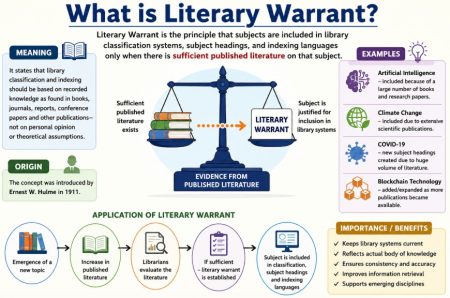
By adding subject headings to catalog records, librarians ensure that the materials are easily discoverable through subject-based searches, rather than just being searchable by title or author. This makes it easier for researchers to find resources on specific topics or themes, improving the efficiency of their search. - Adapting to New Topics and Evolving Fields of Knowledge: LCSH is regularly updated to accommodate new developments in various fields of knowledge. When a new topic or discipline emerges, the Library of Congress adds new subject headings to reflect these changes, ensuring that library catalogues stay current. For example, as technology advances and new areas of study like “Artificial intelligence” or “Digital libraries” emerge, LCSH adds new subject headings to keep up with these evolving fields.
This ability to adapt is essential for maintaining the relevance and accuracy of catalogue records. As libraries continue to collect materials on emerging subjects, LCSH provides a framework for cataloging those materials in a way that allows them to be easily discovered by users.
LCSH is an indispensable tool in library cataloging, allowing librarians to assign standardized subject headings to materials that accurately reflect their content. By using LCSH, libraries ensure consistency in cataloging, facilitate information retrieval, and help users easily find relevant resources based on their subject interests. The system’s hierarchical structure and cross-referencing features further enhance the usability of library catalogs, making LCSH a critical component of efficient and effective library management. As libraries continue to evolve and acquire new materials, LCSH ensures that their catalogs remain accessible and organized, supporting research and learning across diverse fields of knowledge.