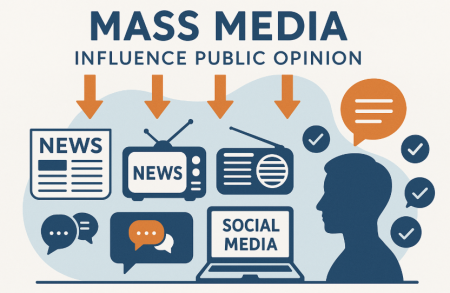
Mass media refers to the broad range of communication platforms designed to reach large, diverse audiences simultaneously, playing a central role in shaping how information, ideas, and culture circulate within society. Traditionally, mass media included newspapers such as The New York Times or The Daily Star, radio broadcasts like the BBC World Service or Bangladesh Betar, and television channels like CNN, BTV, or Discovery channels, which delivered news, entertainment, and educational content to the public through one-to-many communication. Over time, rapid technological advancements have expanded this landscape to include digital platforms such as news websites (BBC News Online, Prothom Alo Online), social media networks like Facebook, YouTube, and X (formerly Twitter), streaming services such as Netflix or Amazon Prime Video, and mobile applications that provide instant access to news, information, and multimedia content.
As a result, the boundaries of mass communication have become far more dynamic and interactive. For example, audiences now not only watch content but also comment, share, and create their own content through platforms like TikTok, YouTube, and blogs. Today, mass media not only disseminates information but also facilitates public discourse during events such as elections, influences social values through entertainment programs or advertising campaigns, supports democratic participation by providing platforms for debate, and connects people across geographical distances through international news and global broadcasting networks. Whether informing citizens about current events, shaping consumer behavior through advertisements, or providing entertainment that reflects cultural identity, mass media remains a powerful force that continually evolves in response to technological, economic, and social change.
The Nature of Mass Media
Mass media represent a complex system of communication channels and technologies designed to reach vast audiences. Its nature is defined by various structural, functional, and technological characteristics that shape how information is produced, distributed, and consumed. The following points provide an in-depth discussion of the core aspects of mass media.
- Wide and Diverse Audience Reach: A fundamental characteristic of mass media is its capacity to reach large and varied audiences across geographical and cultural boundaries. Unlike interpersonal communication, which is limited to individuals or small groups, mass media disseminates information to millions simultaneously. Television broadcasts, online news portals, radio networks, and social media platforms can transmit content globally within seconds. For example, international news networks like BBC or Al Jazeera deliver real-time updates to viewers worldwide, while platforms like YouTube allow creators from diverse backgrounds to reach audiences across continents. This widespread reach demonstrates how mass media operates on a large scale, addressing the diverse needs and interests of heterogeneous audiences.
- One-to-Many Communication Model: Another defining feature of mass media is its one-to-many communication structure, where a single message source, such as a TV station, newspaper, or online publisher, disseminates content to a large audience. This model enables consistent messaging and uniform distribution of information, making it ideal for public announcements, news dissemination, and entertainment broadcasting. For example, when a government issues emergency warnings through television or radio, the same message reaches millions simultaneously. Although digital media has created opportunities for audience feedback through comments and online interactions, the foundational nature of mass media still relies on centralized message production.
- Professional Gatekeeping and Content Regulation: Mass media operate through organized systems of gatekeeping, where professionals decide what information gets published, how it is framed, and which issues receive priority. Editors, journalists, producers, and digital algorithms play significant roles in shaping media content. In traditional media, editorial teams review and verify news reports to ensure accuracy and credibility before they are published. In digital environments, algorithmic systems on platforms like Facebook or Google determine which content appears prominently, based on user preferences and engagement patterns. These gatekeeping processes influence public awareness and perception by selecting which narratives become visible and which remain overlooked.
- Multiple Functions: Information, Education, Entertainment, and Persuasion: The nature of mass media is deeply rooted in its multifunctional role in society. As an information provider, the mass media keep the public updated on political developments, economic trends, scientific discoveries, and social issues. As an educational tool, it supports learning through documentaries, instructional programs, and online courses. Its entertainment role is evident in films, sports broadcasts, music, and drama series that provide relaxation and cultural engagement. Additionally, mass media serve persuasive functions through advertising, political messaging, and public service campaigns. For instance, health awareness campaigns on television encourage vaccination or hygiene practices, demonstrating the media’s power to influence social behavior.
- Use of Technology and Media Convergence: The nature of mass media is significantly shaped by technological advancements. Traditional media forms such as print, radio, and television have merged with digital platforms, creating convergence media environments. News organizations now publish content across multiple platforms, including websites, mobile apps, social media, and broadcast channels, providing audiences with various access points. Streaming services like Netflix combine video-on-demand with personalized recommendations, while online newspapers integrate multimedia elements, such as videos, hyperlinks, and interactive graphics. This convergence not only enhances user experience but also transforms how media companies produce and distribute information in a digital world.
- Standardized and Mass-Produced Content: Mass media rely on standardized formats designed to appeal to broad audiences. Television schedules adhere to fixed time slots, newspapers maintain consistent layout structures, and radio stations employ predetermined programming sequences. This standardization ensures clarity, predictability, and ease of consumption for audiences. In the film and entertainment industries, recurring genres such as action, comedy, or drama follow common patterns to attract mass appeal. Even digital platforms exhibit standardization; for example, YouTube creators often follow recurring styles, themes, or formats to maintain audience engagement. This mass-produced nature allows media organizations to deliver content efficiently and maintain consistent branding.
- Influence on Public Opinion and Social Values: Mass media play a significant role in shaping public attitudes, beliefs, and cultural norms. Through agenda-setting, media organizations highlight certain issues while downplaying others, influencing which topics the public perceives as important. Television debates during elections affect political understanding, while entertainment programs help shape societal views on family, relationships, and morality. Advertising influences consumption patterns by creating aspirational lifestyles. For instance, global marketing campaigns for smartphones or fashion brands can shape cultural preferences and consumer expectations. Thus, the nature of mass media includes its power to influence both individual decision-making and collective social behavior.
- Commercial Orientation and Revenue Generation: Most mass media institutions operate within commercial frameworks designed to generate profit. Television channels, print newspapers, online media, and streaming platforms rely on advertising revenue, subscription fees, sponsorships, or a pay-per-view model to generate revenue. This commercial nature affects media content, sometimes prioritizing sensational stories or entertainment over educational content to attract larger audiences. For example, news organizations may adopt attention-grabbing headlines to increase readership, while online platforms use targeted advertising based on user data. The financial structure of media industries reveals how economic pressures shape the type and style of content produced.
- Interactive and Participatory Dynamics in Digital Media: With the rise of digital technologies, mass media have become more interactive, allowing audiences to engage actively with content. Social media platforms enable users to comment, share, react, and produce their own content, creating two-way communication flows. This participatory culture blurs the distinction between content producers and consumers. For example, citizen journalism, where ordinary individuals report events through smartphones and social platforms, demonstrates how the public now contributes to mass communication processes. User-generated content on YouTube, TikTok, and blogs shows how audiences influence trends, narratives, and media visibility.
- Globalized Communication and Cultural Exchange: Mass media play a crucial role in global communication by facilitating the exchange of culture, ideas, and information across nations. International news channels, global film releases, sports broadcasts, and online streaming platforms allow widespread cultural interaction. People worldwide watch events like the FIFA World Cup or the Olympics through mass media, creating shared global experiences. Similarly, films, music, and television shows produced in one country are consumed internationally through platforms like Netflix or YouTube. This globalized nature promotes cultural awareness but can also raise concerns about cultural homogenization.
The nature of mass media is multidimensional, defined by its large audience reach, technological integration, institutional control, multifunctional roles, and ability to shape public opinion. As media continues to evolve, especially in the digital age, understanding these characteristics becomes essential for appreciating how communication influences society. Mass media remains a powerful force that informs, educates, entertains, and connects people while shaping cultural and social landscapes in profound ways.
The Scope of Mass Media
The scope of mass media is broad, dynamic, and continually expanding with the advancement of communication technologies. It includes all the functions, roles, and activities through which media influence individuals, societies, and global communities. Mass media now encompasses traditional channels, such as newspapers, radio, and television, as well as digital platforms, including social media, online news portals, and streaming services. Through these diverse forms, the media inform audiences, educate the public, entertain viewers, shape opinions, support economic activities, and foster global connections. Understanding this wide-reaching scope reveals how deeply mass media are embedded in modern life.
To begin with, the scope of mass media encompasses its essential role in disseminating information. Media outlets provide timely and relevant news about political events, social issues, economic trends, natural disasters, and global developments. With digital platforms delivering updates in real time through news apps and social media, this information function has become even more immediate and widespread. Alongside information sharing, mass media also has a significant educational scope. Educational programs, documentaries, instructional broadcasts, and online tutorials help expand knowledge and support learning for people of all ages. In many regions, radio and television lessons reach communities where formal education is limited, making media a key tool for public education.
Entertainment also plays a major role in the scope of mass media. Films, music, drama series, sports broadcasts, talk shows, and online streaming content provide relaxation and cultural enjoyment. Platforms like Netflix, YouTube, and Amazon Prime Video have widened access to diverse entertainment, reflecting cultural identity and connecting audiences through shared experiences. Another important dimension is advertising and commercial promotion. Businesses rely on media to promote products and services through television commercials, radio ads, newspaper promotions, and digital marketing campaigns. Targeted ads on social media platforms, such as Facebook and Instagram, illustrate how digital technology has enhanced the commercial reach of mass media.
The scope of mass media extends even further to shaping public opinion. Through news coverage, political debates, editorials, talk shows, and social media discourse, the media influence how people interpret social and political issues. This opinion-shaping role contributes significantly to public understanding and collective decision-making. Closely connected to this is the role of mass media in political communication and governance. Governments utilize media to disseminate policies and announcements, while political parties engage with voters through campaigns, speeches, and advertisements. Media coverage of elections, public debates, and political interviews enhances transparency and civic engagement, reinforcing the media’s role in democratic processes.
Mass media also play a vital role in social integration and cultural exchange by connecting diverse populations. International films, documentaries, and global news broadcasts help different cultures understand one another, while global events such as the Olympics and FIFA World Cup create shared experiences watched by millions. The scope of mass media also includes its contribution to the creative economy through film production, music distribution, journalism, advertising industries, and digital content creation. With platforms like YouTube and TikTok, new creators can reach global audiences and contribute to cultural and economic growth.
In the digital age, the scope of mass media has become increasingly interactive and participatory. Audiences now engage actively with media by commenting, sharing content, creating their own, and participating in online discussions. This shift has led to the rise of citizen journalism, where ordinary people contribute to news reporting through smartphones and social media. Ultimately, the global communication dimension of mass media enables people to connect across nations. International news channels, online platforms, and cross-border media corporations enable the rapid exchange of information and cultural content, fostering global awareness and cooperation.