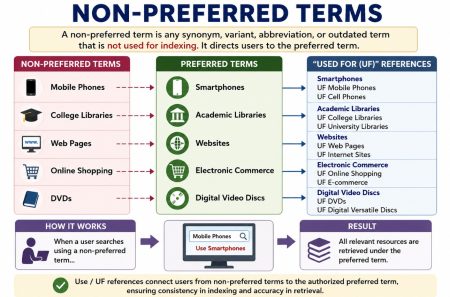
What Is a Non-Preferred Term? A non-preferred term is a word or phrase that is not officially designated as the authorized term to represent a concept…
What Is a Non-Preferred Term? A non-preferred term is a word or phrase that is not officially designated as the authorized term to represent a concept…
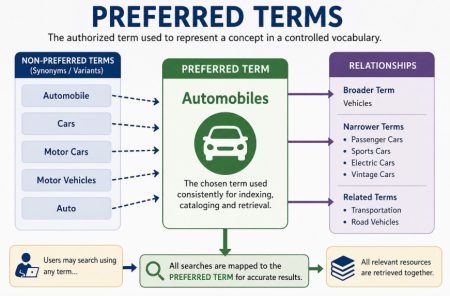
What Is a Preferred Term? A preferred term is a standardized or authorized word or phrase selected from among two or more synonymous or closely related…
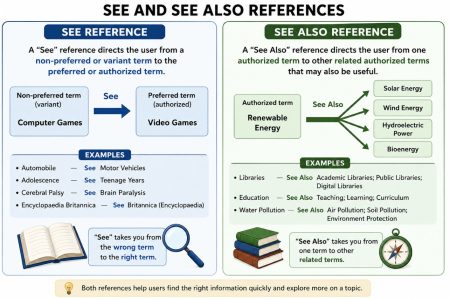
What Is a “See” Reference in Library Cataloging and Indexing? A “See” reference is a type of cross-reference used in library cataloging, indexing, and authority control…
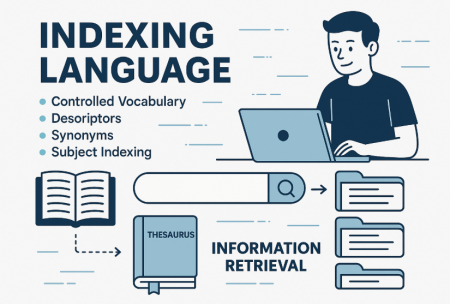
An indexing language is a structured system of terms used to represent the subject content of documents in a consistent and standardized manner for the purpose…
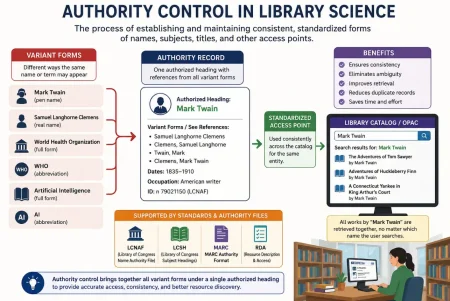
Authority Control in Library and Information Science Authority control is the process of establishing and maintaining consistent, standardized forms of names, subjects, titles, and other access…
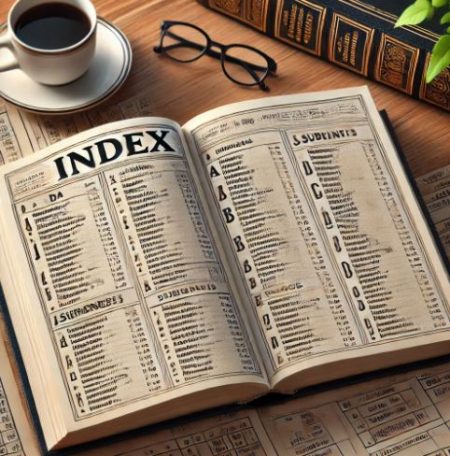
A book index is an organized list of keywords, topics, names, and subjects found within a book, along with the corresponding page numbers where they appear.…

Automatic indexing and manual indexing are two fundamental approaches employed in information retrieval systems to organize and categorize vast amounts of data for efficient retrieval and…

Introduction: An indexing language (IL) stands as an artificially crafted linguistic construct, intertwining a constellation of kernel terms purpose-built to cater to the precise demands of…

Indexing is a fundamental process that empowers efficient access to information within vast collections of documents, books, databases, and digital resources. As a vital component of…

Introduction: In the vast ocean of information, where knowledge is abundant and scattered, cataloguing and indexing serve as the compass and map for navigating the sea…