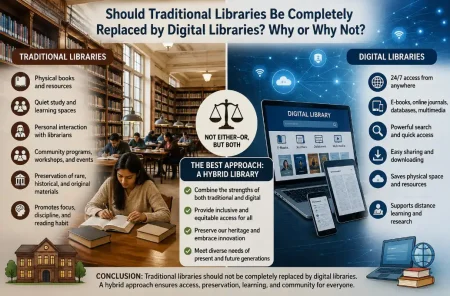
Traditional libraries shouldn’t be completely replaced by digital libraries because each has its own unique strengths that work together. Digital libraries have changed how we access…
Traditional libraries shouldn’t be completely replaced by digital libraries because each has its own unique strengths that work together. Digital libraries have changed how we access…

The Advantages of Using a Traditional Library Traditional libraries provide numerous benefits that make them essential institutions for education, research, and lifelong learning. One of their…
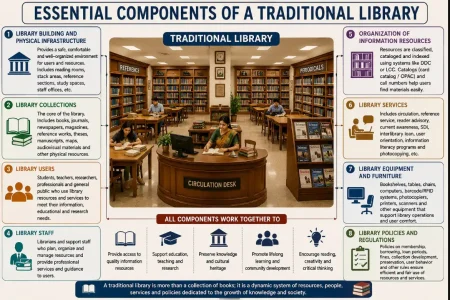
The Essential Components of a Traditional Library A traditional library is a well-structured institution where various interrelated components work together to provide effective access to knowledge,…
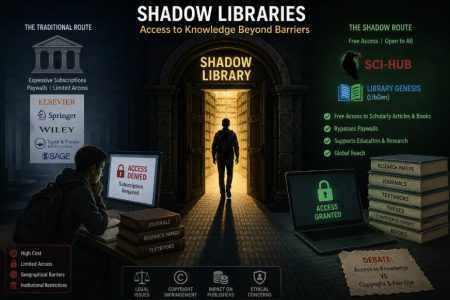
What Is a Shadow Library? A shadow library is an online repository that provides free access to digital copies of books, scholarly articles, journals, and other…

Ready Reference Service is not designed to handle research-level questions because its primary purpose is to provide quick, concise, and factual answers to simple information needs.…

In academic research, a well-prepared bibliography goes beyond being a simple list of sources; it is a crucial element that reflects the quality, depth, and credibility…

Academic writing is fundamentally based on trust, originality, and respect for intellectual contributions, all of which are essential to the concept of academic integrity. In scholarly…

What Is Strategic Planning in Libraries, and What Are Its Key Components? Strategic planning in libraries is a structured yet flexible process that helps define the…

Comparative Librarianship is an important branch of Library and Information Science that focuses on the study and comparison of library systems, services, and practices across different…

What is Comparative Librarianship? Comparative Librarianship is a specialized area within Library and Information Science that focuses on the systematic study and comparison of library systems,…