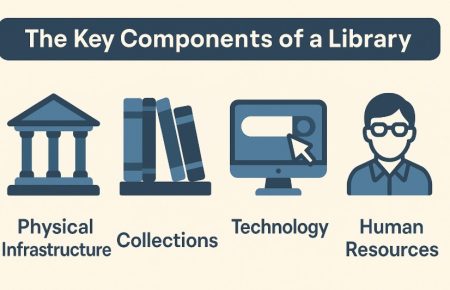
A public library is a community-based institution established to provide free and equal access to information, knowledge, and cultural resources for all members of society, regardless of age, gender, socioeconomic status, educational background, or other factors. For example, a student preparing for public examinations may use textbooks and reference materials available in the library, while a job seeker can access newspapers, career guides, and online job portals through the library’s internet facilities. Public libraries also serve children and young learners by offering storybooks, reading corners, and literacy programs that help develop early reading habits, while senior citizens may benefit from newspapers, magazines, and community discussion sessions.
In addition to serving as centers for reading and learning, public libraries also function as inclusive social spaces that encourage lifelong learning and community engagement. Many public libraries organize activities such as reading clubs, digital literacy training, citizenship awareness programs, and public lectures, which help people acquire new skills and remain informed about social and civic issues. For instance, digital skills workshops enable users to learn basic computer use, email communication, or online government services, especially benefiting individuals who lack access to technology at home. Similarly, access to government publications, policy documents, and local information helps citizens understand public services, their rights, and responsibilities.
Public libraries also play a vital role in strengthening democratic values by promoting free access to information and supporting informed decision-making. By providing unbiased resources such as newspapers representing diverse viewpoints, official reports, and factual reference materials, libraries help users develop critical thinking and form independent opinions. For example, during election periods, libraries may display voter education materials, newspapers, and civic information to help citizens understand electoral processes. In this way, the public library transcends its traditional role as a repository of books and becomes an essential institution for education, social inclusion, and active citizenship.
Public Library for the Success of Democracy.
Democracy depends on informed, aware, and active citizens who can participate meaningfully in social and political life. Access to reliable information, freedom of expression, equality, and civic engagement are fundamental principles of any democratic system. In this context, the public library plays a crucial role as a democratic institution that ensures free and equal access to knowledge for all members of society. By serving as an open, neutral, and inclusive space, the public library strengthens democratic values and contributes directly to the success and sustainability of democracy.
- Free and Equal Access to Information: One of the core contributions of public libraries to democracy is ensuring free and equal access to information. Public libraries provide books, newspapers, journals, government publications, and digital resources without discrimination. This equal access helps reduce information inequality between different social, economic, and educational groups. When citizens have access to accurate and diverse sources of information, they are better equipped to understand public issues, policies, and governance, which is essential for informed democratic participation.
- Promoting Informed and Responsible Citizenship: Democracy requires citizens who can make informed decisions, especially during elections and civic processes. Public libraries support informed citizenship by offering access to reliable news sources, civic education materials, and reference resources. Libraries often provide information on government services, public policies, and citizens’ rights and responsibilities. Through such services, public libraries help individuals understand how democratic institutions function and how they can actively participate in civic life.
- Supporting Freedom of Expression and Intellectual Freedom: Freedom of expression is a cornerstone of democracy, and public libraries actively uphold this principle. By maintaining diverse collections that represent various viewpoints, ideologies, and opinions, libraries foster intellectual freedom and encourage critical thinking. Public libraries do not promote a single narrative; instead, they enable users to explore multiple perspectives and form their own independent opinions. This open access to ideas strengthens democratic discourse and tolerance within society.
- Encouraging Civic Engagement and Community Participation: Public libraries serve as community hubs where people can gather, exchange ideas, and engage in dialogue. Many libraries organize public lectures, discussions, workshops, reading groups, and civic awareness programs. These activities encourage community participation and democratic dialogue at the local level. As neutral public spaces, libraries offer safe environments for respectful discussion, enabling citizens to engage constructively in democratic processes.
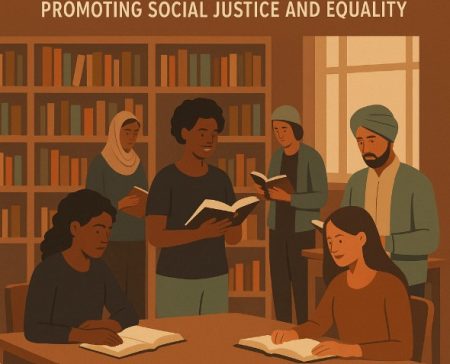
- Promoting Social Inclusion and Equality: Democracy cannot succeed if large segments of the population are excluded from access to information and learning opportunities. Public libraries promote social inclusion by serving marginalized and disadvantaged groups, including people with low income, limited education, disabilities, and rural populations. Services such as free internet access, literacy programs, and accessible reading materials help empower these groups, enabling them to participate more fully in democratic life.
- Strengthening Digital Democracy and Information Literacy: In the digital age, democratic participation increasingly depends on digital skills and media literacy. Public libraries play a vital role in promoting digital literacy by providing access to computers, internet services, and training programs. Libraries help users learn how to critically evaluate online information, identify misinformation, and use digital platforms responsibly. These skills are essential for meaningful participation in modern democratic systems, including e-governance and online civic engagement.
- Supporting Transparency and Accountability: Public libraries contribute to transparency and accountability by providing access to government documents, public records, and official publications. When citizens can easily access such information, they are better able to monitor government actions and hold authorities accountable. Libraries thus support democratic oversight and promote trust in public institutions.
- Lifelong Learning as a Foundation of Democracy: Democracy thrives in societies where citizens continue to learn and adapt throughout their lives. Public libraries support lifelong learning by offering educational resources for all age groups, from children to senior citizens. By fostering continuous learning, critical thinking, and self-education, libraries help create an informed population capable of engaging thoughtfully in democratic processes.
The public library is far more than a place for reading; it is a vital democratic institution that supports informed citizenship, freedom of expression, social inclusion, and civic participation. By ensuring free access to information, promoting literacy and critical thinking, and serving as a neutral space for community engagement, public libraries strengthen the foundations of democracy. For democracy to succeed and endure, sustained investment in public libraries and recognition of their democratic role are essential. In this way, public libraries remain key pillars in building informed, empowered, and participatory democratic societies.
Public Libraries as Pillars of Democratic Institutions
Public libraries can be considered pillars of democratic institutions because they embody and actively promote the fundamental values on which democracy is built, such as equality, freedom of information, participation, and accountability. By providing free and open access to information for all citizens, public libraries ensure that knowledge is not limited to a privileged few but shared equitably across society. This equal access enables individuals from diverse social, economic, and educational backgrounds to stay informed about public affairs, laws, and governance, which is essential for meaningful participation in democratic processes. In this way, libraries support the democratic ideal that all citizens should have an equal opportunity to understand and influence public life.
Moreover, public libraries function as neutral and non-partisan spaces that protect intellectual freedom and freedom of expression. Unlike many other institutions, libraries do not promote a single political ideology or agenda; instead, they provide balanced collections representing multiple viewpoints. This commitment allows citizens to explore different ideas, compare opinions, and form independent judgments based on evidence rather than persuasion or misinformation. Such an environment nurtures critical thinking and respectful dialogue, both of which are essential for sustaining democratic culture and pluralism.
Public libraries also strengthen democratic institutions by encouraging civic engagement and community participation. As accessible community centers, libraries host discussions, educational programs, and awareness activities that help citizens understand civic rights and responsibilities. These interactions promote social cohesion and active participation at the grassroots level, reinforcing democratic practices beyond formal political structures. Additionally, by providing access to government documents and public information, libraries promote transparency and accountability, enabling citizens to monitor public institutions and hold decision-makers accountable. Through these combined roles, public libraries serve not merely as information centers but as enduring pillars that uphold and reinforce democratic institutions and values.
The Importance of Free and Equal Access to Information through Public Libraries for Democracy
Free and equal access to information through public libraries is essential for democracy because informed citizens are the foundation of a democratic society. Democracy depends on people’s ability to understand public issues, evaluate policies, and make reasoned decisions, particularly during elections and civic participation. Public libraries ensure that access to information is not determined by income, education, or social status by providing books, newspapers, digital resources, and internet services without cost. This equality of access helps prevent information from becoming a privilege of the wealthy or powerful and supports the democratic principle that all citizens should have an equal opportunity to participate in public life.
Public libraries promote intellectual freedom and informed choice by offering diverse, reliable, and unbiased information sources. In democratic societies, citizens must be able to explore different viewpoints and access factual information in order to form independent opinions. Public libraries create a trusted environment where individuals can freely seek information, without fear of censorship or discrimination. By supporting information literacy and critical thinking, libraries also help users distinguish credible information from misinformation, which is increasingly important in the digital age. In this way, free and equal access to information through public libraries strengthens informed citizenship, civic engagement, and the overall health and sustainability of democracy.