What is a Book Catalogue?
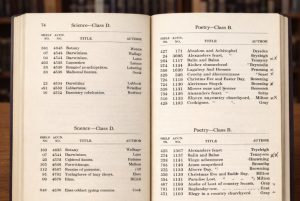 A book catalogue is a printed version of a library’s catalogue, containing bibliographic records of its collection. This catalogue is published in the form of a bound book or volume. Entries are systematically arranged, either alphabetically by author, title, or subject, or in a classified order based on a classification scheme. Each entry typically includes essential bibliographic details, such as the author’s name, the book’s title, edition, place of publication, publisher, year of publication, and call number.
The book catalogue was widely used in libraries before the advent of card catalogues and computerized systems. It was convenient because it was easy to handle, portable, and could be accessed by multiple users if several copies were available. However, a significant limitation of the book catalogue is its difficulty in being updated; whenever new books are added, a new edition or supplementary volume must be published. For this reason, while the book catalogue played an important role in the historical development of library cataloguing, it has largely been replaced in modern libraries by more flexible systems such as card catalogues and Online Public Access Catalogues (OPACs).
Features of a Book Catalogue
A book catalogue has several distinctive characteristics that set it apart from other types of library catalogues. The main features are discussed below:
- Printed in Book Form: The entries are printed and bound as a book or volume, rather than being on separate cards or sheets.
- Contains Complete Bibliographic Details: Each entry includes essential information such as the author, title, edition, publisher, place of publication, year, pagination, and call number.
- Systematic Arrangement: Entries are organized in a specific order, which may be:
- Alphabetical (by author, title, or subject)
- Classified order (according to a classification scheme)
- Published in Volumes or Editions: The catalogue may be issued in one or more volumes, with updates made through revised editions or supplementary volumes.
- Multiple Copies Available: Several copies of the catalogue can be printed, allowing multiple users to consult it at the same time.
- Fixed and Permanent Entries: Once printed, entries cannot be easily altered or rearranged. Any changes require reprinting.
- Suitable for Small or Stable Collections: This format is more appropriate for libraries with collections that do not change frequently.
- Compact and Portable: As it is in book form, it is easy to handle, carry, and store.
Advantages of a Book Catalogue
A book catalogue offers several advantages, especially for libraries with small to moderately sized collections. One of its main benefits is that it is published in a compact and bound format, making it easy to handle, store, and transport. Unlike loose cards, the entries in a book catalogue are permanently fixed in place, which eliminates the risks of misplacement, loss, or damage to individual records.
Another significant advantage is that multiple copies of the catalogue can be printed and distributed, allowing several users to consult it simultaneously without crowding around a single cabinet. The book catalogue is also user-friendly, as the entries are systematically arranged either alphabetically or in classified order, making it convenient for readers to locate the information they need.
Additionally, it does not require special equipment or furniture, such as catalogue cabinets, which makes it more economical in terms of space and maintenance. For libraries with relatively stable collections and limited growth, a book catalogue serves as a practical and reliable reference tool.
Disadvantages of a Book Catalogue
Although book catalogs were useful in earlier library systems, they have several significant disadvantages. One major limitation is the difficulty of updating entries. Since the catalog is printed in book form, any additions, deletions, or corrections require the publication of a new edition or a supplementary volume, which can be time-consuming and costly. As a result, the catalog may quickly become outdated, especially in libraries that frequently add new materials.
Another drawback is the lack of flexibility; once printed, entries cannot be rearranged or inserted in their proper alphabetical or classified order. Space limitations also pose a problem, as additional entries cannot simply be added between existing ones. Moreover, if only a single copy of the catalog is available, only one user can consult it at a time, which can be inconvenient in busy libraries.
Due to these limitations, book catalogs are generally considered unsuitable for large or rapidly growing collections and have largely been replaced by more flexible systems such as card catalogs and Online Public Access Catalogs (OPACs).
Why is a Book Catalogue Considered Less Flexible?
A book catalogue is considered less flexible mainly because it is printed and bound in a fixed format, making updates and modifications difficult. Once the entries are printed, they cannot be easily altered, rearranged, or inserted into their proper alphabetical or classified order. When new books are added to the library collection, it is not simple to insert these new entries in the correct position; instead, a supplementary volume or an entirely new edition must be published. This process is time-consuming, costly, and often results in delays in reflecting the library’s most current holdings. Additionally, correcting errors, changing bibliographic details, or reclassifying materials cannot be done without reprinting. Since modern libraries frequently add, withdraw, or update materials, the rigid structure of a book catalogue makes it unsuitable for dynamic and rapidly growing collections.