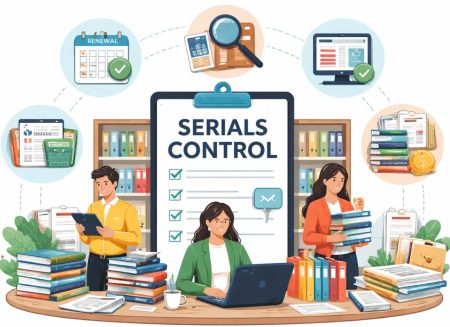
What are Serial Publications?
Serial publications are information resources that are issued in successive parts, usually at regular intervals, and are intended to continue indefinitely. Unlike books, which are published as complete and finite works, serial publications are released over time in separate issues or volumes under the same title. Each issue is linked through numbering, dates, or volume and issue statements. Common examples of serial publications include academic journals such as The Lancet and Journal of Information Science, magazines like The Economist and Forbes, newspapers such as The Guardian and The Washington Post, as well as newsletters, annual reports, conference proceedings, and yearbooks.
Serial publications are essential for the timely communication of new information. For example, research journals publish peer-reviewed articles that report recent studies, experiments, and theoretical developments on a regular basis. A quarterly journal in library and information science may publish articles on research data management or digital preservation, while a weekly magazine such as The Economist analyzes global economic and political trends. Newspapers, published daily, provide up-to-date news, opinions, and public announcements, making them valuable sources of current information.
From a library management perspective, serial publications require continuous monitoring and organization because they do not have a predetermined end. For instance, a library may subscribe to print serials, such as Current Science, and provide access to electronic serials through platforms like Taylor & Francis Online or Wiley Online Library. Each new issue must be received, recorded, and made accessible, while delays or missing issues often require follow-up with publishers or vendors. To ensure accurate identification and control, serials are assigned an International Standard Serial Number (ISSN), which helps libraries distinguish between titles with similar names.
With the growth of digital publishing, serial publications are now widely available in electronic form. E-journals, online newsletters, and open access serials such as DOAJ-indexed journals allow users to access content remotely and instantly. Libraries today manage both print and electronic serials, with a focus on access, licensing, preservation, and long-term availability. Despite changes in format and technology, serial publications remain fundamental resources for providing current, authoritative, and continuously updated information.
Main Characteristics of Serial Publications
Serial publications are one of the most important forms of information resources in libraries and academic institutions. They differ significantly from books due to their ongoing nature and regular flow of information. Understanding the primary characteristics of serial publications is crucial for library professionals, researchers, and students, as these characteristics significantly impact acquisition, organization, access, and use.
- Continuing Nature: The most fundamental characteristic of serial publications is that they are published with the intention of continuing indefinitely. Unlike monographs, serials do not have a fixed or predetermined end. New issues are expected to appear regularly over time. This ongoing nature allows serial publications to provide updated and current information, making them especially valuable in rapidly changing fields such as science, technology, medicine, and the social sciences.
- Successive Issuance: Serial publications are issued in successive parts, such as issues, numbers, or volumes. Each part is published separately but forms part of a larger sequence. For example, a journal may publish Volume 10, Issue 1, followed by Issue 2 and Issue 3 within the same year. This sequential publication helps readers follow developments in a subject area chronologically.
- Frequency of Publication: Another important characteristic of serial publications is their frequency. Serials may be published daily, weekly, monthly, quarterly, annually, or at irregular intervals. Newspapers are usually published daily, magazines may appear weekly or monthly, and scholarly journals are often issued quarterly or biannually. Even when the frequency is irregular, the expectation of future issues remains a defining feature.
- Common and Consistent Title: Serial publications are issued under a common title that links all issues together. Although minor title changes may occur over time, the identity of the serial is generally maintained. To ensure precise identification, serials are assigned an International Standard Serial Number (ISSN). The ISSN plays a crucial role in cataloguing, acquisition, and management of serial publications in libraries.
- Numbering and Dating System: Serial publications use a clear numbering and dating system, such as volume numbers, issue numbers, and publication dates. This system helps libraries organize serials systematically and assists users in locating specific issues or articles. Accurate numbering and dating are also essential for citation and reference purposes in academic research.
- Multiple Authorship and Diverse Content: Unlike books, which usually have one or a few authors, serial publications typically include contributions from multiple authors within a single issue. The content of serials is also diverse. A single issue may contain research articles, editorials, reviews, news items, letters, and reports. This variety of content enhances the usefulness of serials for different types of users.
- Timeliness and Currency of Information: Serial publications are known for providing current and up-to-date information. Because they are published frequently, they allow rapid dissemination of new ideas, research findings, and developments. This characteristic makes serials indispensable for researchers and professionals who need the latest information in their fields.
The main characteristics of serial publications-continuity, successive issuance, regular frequency, common titles, numbering systems, multiple authorship, timeliness, and complex management-clearly distinguish them from other information resources. These features make serial publications dynamic and essential tools for disseminating knowledge, advancing research, and facilitating academic communication. Understanding these characteristics helps libraries and users effectively organize, access, and utilize serial literature.
Major Types of Serial Publications
Serial publications, which appear in successive issues over time, play a vital role in disseminating information, advancing research, and facilitating public communication. Based on content, purpose, and audience, serial publications can be classified into several major types. Each type serves distinct user needs and information functions.
- Scholarly Journals: Scholarly journals are academic serial publications that publish peer-reviewed research articles, review papers, case studies, and theoretical discussions. They are written by experts and researchers and are primarily intended for scholars, researchers, and students. These journals are essential for advancing knowledge and supporting academic research across disciplines such as science, social sciences, medicine, and humanities.
- Magazines: Magazines are serial publications designed for a general or specialized audience. They usually contain articles, features, interviews, photographs, and advertisements written in a non-technical style. Magazines may be published weekly or monthly and often focus on topics such as current affairs, business, lifestyle, science, or culture. Their purpose is to inform, educate, or entertain readers.
- Newspapers: Newspapers are serial publications issued daily or weekly and focus on current news and events. They include news reports, editorials, opinions, advertisements, and public notices. Newspapers serve as important sources of timely information and are widely used for staying informed about local, national, and international developments.
- Trade and Professional Journals: Trade and professional journals are serial publications aimed at members of specific professions or industries. They provide practical information related to professional practice, industry trends, market analysis, and technical developments. These journals are especially useful for professionals who need applied knowledge rather than theoretical research.
- Newsletters: Newsletters are short serial publications issued regularly by organizations, institutions, or associations. They provide updates, announcements, policy changes, and brief reports related to a specific group or community. Newsletters are often distributed in both print and electronic formats and focus on concise and targeted information.
- Annuals and Yearbooks: Annuals and yearbooks are serial publications published once a year. They usually provide summarized information, statistical data, reports, or records of events that occurred during the year. Because they appear regularly on an annual basis, they are considered serial publications despite their low frequency.
- Electronic Serials (E-Serials): Electronic serials are serial publications available in digital format, including e-journals, online magazines, and web-based newsletters. They offer advantages such as remote access, quick searchability, and timely updates. E-serials have become increasingly important in modern libraries due to their accessibility and cost-effectiveness.
The major types of serial publications-scholarly journals, magazines, newspapers, trade and professional journals, newsletters, annuals, yearbooks, and electronic serials-serve diverse information needs and audiences. Together, they form a core component of library collections and play a crucial role in the continuous flow of information in academic, professional, and public domains.
Importance of ISSN in Serial Publications
The International Standard Serial Number (ISSN) plays a crucial role in identifying, organizing, and managing serial publications. An ISSN is a unique eight-digit number assigned to serials and other continuing resources, such as journals, magazines, newspapers, and electronic serials. Because many serial publications may have similar or even identical titles, the ISSN provides a precise and internationally recognized method of identifying each serial publication without ambiguity.
One of the most important contributions of the ISSN is its role in bibliographic control and cataloguing. Libraries use ISSNs to create accurate catalogue records and to distinguish between different serial titles, title changes, and format variations, such as print and electronic versions of the same journal. This ensures consistency in library catalogues, union catalogues, and bibliographic databases, making it easier for users to search for and locate specific serial publications.
The ISSN is also vital for the acquisition and management of serials. Publishers, subscription agents, and libraries rely on ISSNs when ordering, renewing, and claiming serial issues. The use of ISSN reduces errors in subscription handling and helps libraries manage large serials collections more efficiently. In electronic resource management systems and integrated library systems, the ISSN acts as a key identifier that links serial titles across different platforms and services. Additionally, ISSN plays a crucial role in access, linking, and resource sharing. Many abstracting and indexing databases, citation indexes, and link resolver systems use ISSNs to connect users directly to full-text articles or related resources. ISSNs also support interlibrary loan and document delivery services by ensuring that the correct serial title is requested and supplied, especially when multiple publications have similar names.
Ultimately, the ISSN enhances the global visibility and credibility of serial publications. For publishers and editors, obtaining an ISSN enhances the recognition and legitimacy of a serial title in the international publishing community. It facilitates inclusion in databases, directories, and discovery tools, thereby increasing the publication’s reach and impact. Overall, the ISSN is an essential element in the effective management, discovery, and dissemination of serial publications in both print and electronic environments.
Methods of Acquiring Serial Publications
Libraries acquire serial publications through several well-established methods to ensure continuous access to current information. Because serials are ongoing resources, their acquisition requires systematic planning and regular monitoring. The main methods of acquiring serial publications are discussed below.
- Subscription: Subscription is the most common and traditional method of acquiring serial_publications. Under this method, libraries pay publishers or vendors in advance to receive serial issues for a specified period, usually one year. Subscriptions may cover print serials, electronic serials, or both. This method ensures a regular and uninterrupted supply of issues and is widely used for journals, magazines, and newspapers.
- Direct Purchase from Publishers: In this method, libraries acquire serial_publications directly from publishers without using intermediaries. Direct purchase is often preferred for local or national serials and publications produced by academic institutions, research organizations, or government bodies. This method allows better communication with publishers and sometimes reduces cost.
- Subscription through Agents or Vendors: Libraries often use subscription agents or vendors to manage large serials collections. These agents handle ordering, renewal, invoicing, and claiming of missing issues on behalf of libraries. This method is especially useful for libraries that subscribe to a large number of national and international serials, as it reduces administrative workload.
- Gift and Donation: Serial_publications may also be acquired through gifts or donations from individuals, organizations, publishers, or academic institutions. Libraries often receive newsletters, journals, or institutional publications as complimentary copies. Although this method helps save costs, it is not always reliable or consistent for collection development.
- Exchange Programme: Under the exchange method, libraries exchange their own publications—such as journals, newsletters, or annual reports—with other institutions or organizations. This method is common among universities, research institutions, and professional bodies. Exchange programmes help libraries enrich their serial collections at minimal financial cost.
- Open Access and Free Online Sources: With the growth of digital publishing, many serial publications are available through open access platforms. Libraries acquire access to open access journals, online newsletters, and institutional publications without subscription fees. Although no direct payment is involved, libraries still invest effort in selection, evaluation, and access management.
- Consortia-Based Acquisition: Libraries may acquire electronic serials through library consortia. In this method, a group of libraries collaborates with publishers to negotiate access to serial publications at a reduced cost. Consortia-based acquisition is particularly effective for e-journals and large database packages.
The acquisition of serial publications involves multiple methods, including subscription, direct purchase, vendor-based acquisition, gifts, exchange programs, open-access sources, and consortia arrangements. Each method has its advantages and limitations, and libraries often use a combination of these approaches to build and maintain a balanced and cost-effective serials collection.
How Libraries Provide Access to Serial Publications
Serial publications are among the most frequently used information resources in libraries, especially for academic study, research, and professional practice. Because serials are published continuously and appear in multiple formats, libraries must adopt systematic and flexible methods to ensure effective access. Providing access to serial publications involves physical organization, bibliographic control, digital infrastructure, and user support services.
- Access to Print Serial Publications: Libraries traditionally provide access to print serial publications through well-organized physical arrangements. Current issues of journals, magazines, and newspapers are usually displayed in a designated serials or periodicals section, allowing users to browse and consult them easily. Older issues are often bound by volume and stored in stacks or archives, arranged chronologically by title and year. Proper shelving, labelling, and signage help users identify and retrieve specific issues efficiently. In some libraries, older or less-used print serials are preserved in closed stacks and made available on request.
- Access through Library Catalogues and OPAC: One of the most important ways libraries provide access to serial publications is through their catalogues or Online Public Access Catalogues (OPAC). Each serial title is catalogued with detailed bibliographic information, including title, frequency, ISSN, and holdings statements. The catalogue informs users which volumes or issues are available, whether the serial is in print or electronic format, and where it is located. Accurate and up-to-date holdings information is essential for helping users find the required serial literature.
- Access to Electronic Serials: With the growth of digital publishing, libraries now offer extensive access to electronic serials, including e-journals, online magazines, and newsletters. Access to these resources is usually provided through the library’s website or dedicated electronic resource portals. Libraries subscribe to databases or publisher platforms and authenticate users through institutional login systems, enabling on-campus and remote access. Electronic serials allow users to search, read, and download articles quickly, significantly enhancing convenience and accessibility.
- Discovery Tools and Linking Services: Libraries also use discovery tools and indexing services to improve access to serial publications. Abstracting and indexing databases help users identify relevant articles across a wide range of serial titles. Link resolver systems connect citations directly to full-text articles, ensuring seamless access. These tools reduce the time and effort required to locate serial content and improve the overall user experience.
- Interlibrary Loan and Document Delivery: When a required serial publication is not available in a library’s own collection, access is provided through interlibrary loan and document delivery services. Libraries cooperate with other institutions to supply photocopies or digital copies of articles from serial publications. This service ensures that users can access needed information even if the library does not hold the specific title or issue.
- User Education and Support: Libraries also enhance access to serial publications by providing user education and support. Orientation sessions, workshops, research guides, and one-on-one assistance help users understand how to search for and use serials effectively. Librarians play a key role in guiding users through catalogues, databases, and access tools, ensuring maximum use of serial collections.
Libraries provide access to serial publications through a combination of physical organization, cataloguing, electronic platforms, discovery tools, cooperative services, and user support. By integrating these approaches, libraries ensure that serial publications are easily discoverable, accessible, and usable, thereby supporting learning, research, and scholarly communication effectively.