Knowledge
What is a Knowledge Society?
In the 21st century, the world is witnessing a profound transformation driven by the rise of the Knowledge Society. This new…
LEARN. EXPLORE. PUT KNOWLEDGE TO WORK.
Explore library science, research and technology. Find practical guides and free tools for students, teachers and library professionals.
In the 21st century, the world is witnessing a profound transformation driven by the rise of the Knowledge Society. This new…
E-journals in education have revolutionized how academic content is accessed, distributed, and consumed. These digital publications provide a wealth of scholarly…
A special library is a type of library that provides specialized information and resources tailored to the specific needs of a…
The National Library plays a vital and unique role in preserving and promoting a nation’s cultural heritage, knowledge, and history. Serving…
A Knowledge Society is a society in which knowledge creation, dissemination, and utilization are central to its economic, social, and cultural…
Electronic journals (e-journals) are digital versions of academic and professional periodicals that are accessible through the Internet, offering a convenient alternative…
Non-documentary sources of information are forms of knowledge that are not recorded in traditional, tangible formats like books, journals, or official…
Trade literature refers to a specialized category of printed or digital materials businesses use to promote products, services, or industry expertise.…
A patent is a form of intellectual property that grants exclusive rights to an inventor or assignee for a specific period,…
A research report is a detailed, formal document that outlines a research project’s findings, analysis, and conclusions. It serves as a…
A research monograph is an in-depth, comprehensive scholarly work that focuses on a specific research topic or problem within a particular…
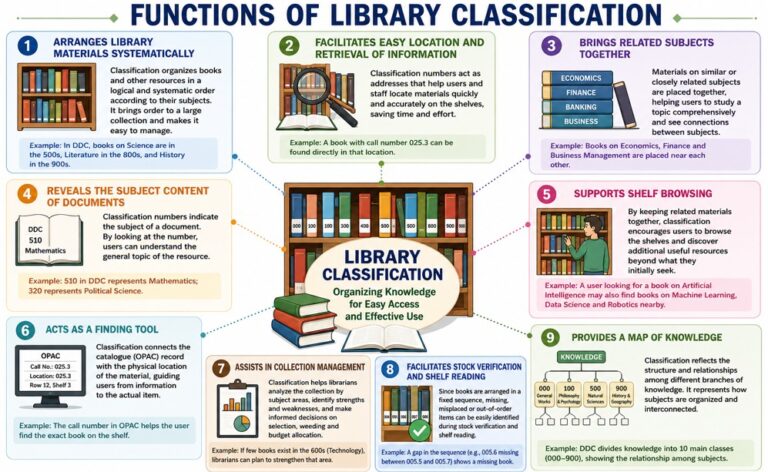
Library classification is a fundamental process in library and information science that enables the systematic organization of knowledge and information resources.…
Primary sources of information are original, first-hand accounts or direct evidence related to a particular topic, event, or phenomenon. They are…