Library Science
The Significance of Bibliography in Ensuring Academic Integrity
Academic writing is fundamentally based on trust, originality, and respect for intellectual contributions, all of which are essential to the concept…
THE READING ROOM
Academic writing is fundamentally based on trust, originality, and respect for intellectual contributions, all of which are essential to the concept…
What Is Strategic Planning in Libraries, and What Are Its Key Components? Strategic planning in libraries is a structured yet flexible…
What Is Book Reservation in the Library? Book reservation, often called a “hold” service, is a user-centered feature in libraries that…
User-Centered Library Services: Meaning, Importance, and Practical Examples in Modern Libraries User-centered library services refer to an approach in which the…
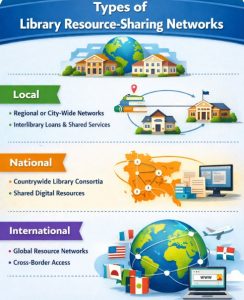
Library Resource-Sharing Networks Library resource-sharing networks are collaborative systems through which libraries cooperate to provide broader access to information resources beyond…
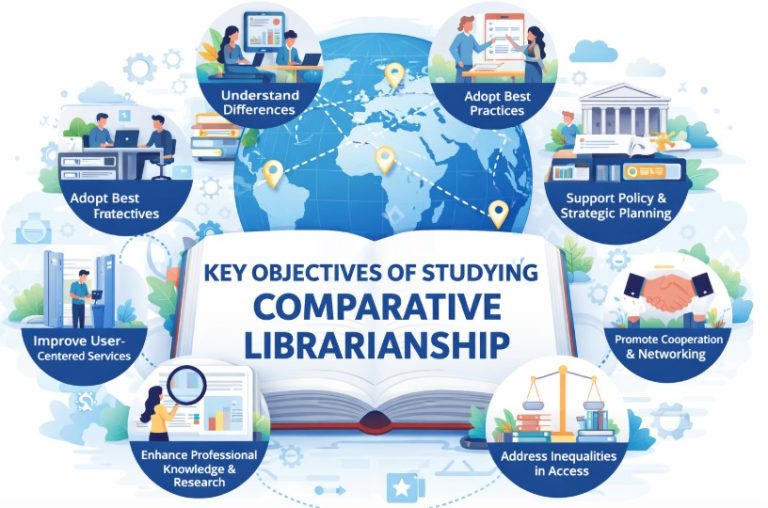
Comparative Librarianship is an important branch of Library and Information Science that focuses on the study and comparison of library systems,…
What is Comparative Librarianship? Comparative Librarianship is a specialized area within Library and Information Science that focuses on the systematic study…
How Does a Library Catalogue Help Users A library catalogue is one of the most essential tools in any modern library.…
A library catalogue is a fundamental component of any library system and serves as the primary gateway through which users access…
What is a Library Catalogue and What Does It Do? A library catalogue is a systematic and organised listing of all…