
Shelf Arrangement in a Library
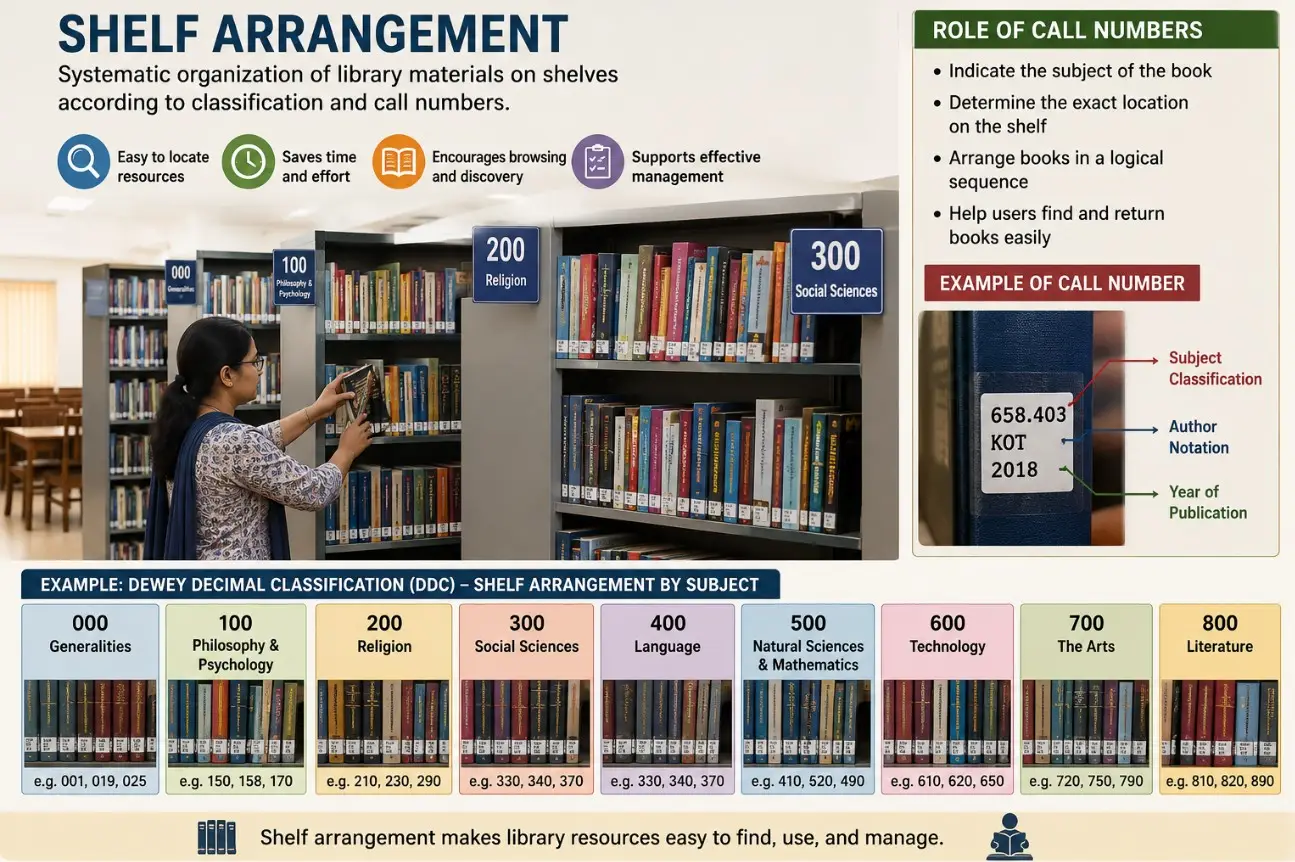
Shelf arrangement is the systematic organization of library materials on shelves according to a predetermined order, typically based on a classification system and call numbers. This process is one of the most important technical operations in a library, as it ensures that books and other resources can be easily located, retrieved, and returned to their proper places. In most libraries, materials are organized according to classification schemes such as the Dewey Decimal Classification (DDC) or the Library of Congress Classification (LCC). These systems assign a unique call number to each item, indicating its subject and exact location on the shelf. For instance, under the DDC system, books on Computer Science are generally categorized in the 000s, books on Religion in the 200s, books on Social Sciences in the 300s, and books on Literature in the 800s. This grouping of similar subjects makes it easier for users to browse related materials.
Proper shelf arrangement plays a crucial role in improving access to information and enhancing the overall efficiency of library services. When materials are systematically organized, users can quickly find the resources they need without unnecessary searching. For example, if a student is looking for a book on Microeconomics with the call number 338.5 MAN, they can go directly to the shelf section for materials in the 330s (Economics) and then locate the book according to its full call number. Similarly, a reader searching for novels by a particular author may find related works nearby due to the logical sequence of call numbers. This organized arrangement not only saves time but also encourages users to discover additional resources on the same topic.
Shelf arrangement also promotes effective browsing and serendipitous discovery. Since books on related subjects are shelved together, users often find useful materials they were not originally seeking. For instance, a researcher looking for a book on library automation might also stumble upon nearby books on digital libraries, information systems, or library technology because these subjects are classified within a similar range. Such an arrangement enhances learning and supports academic research by exposing users to a broader range of relevant resources. Additionally, shelf arrangement supports effective collection management and maintenance. Librarians regularly conduct shelf reading, a process of checking whether materials are in the correct order. For example, if a book with the call number 025.04 SHA is mistakenly placed between 025.1 ALI and 025.2 RAH, it can be identified and returned to its proper location during shelf reading. This practice helps prevent the loss or misplacement of resources, facilitates inventory control, and maintains the physical orderliness of the library.
Different types of library materials may require specialized shelf arrangements. For example, reference books are often placed in a separate reference section, periodicals may be arranged alphabetically by title, and theses or dissertations may be organized by department, year, or accession number. In academic libraries, textbooks, journals, and research reports are frequently shelved in designated areas to improve accessibility and management.
How Does Shelf Arrangement Help Library Users?
Shelf arrangement plays a crucial role in helping library users locate information resources quickly and efficiently. Libraries typically organize their collections using established classification systems such as the Dewey Decimal Classification (DDC) or the Library of Congress Classification (LCC). These systems assign specific call numbers to materials based on their subjects, determining the exact location of each item on the shelves. As a result, users can easily find books, journals, and other resources without needing to search randomly throughout the library. For instance, a student seeking a book on economics can go directly to the 330 section in a DDC-based library, while someone looking for a book on computer science can check the 000 section.
One of the greatest advantages of shelf arrangement is that it saves users time and effort. Instead of relying on library staff for assistance with every search, users can independently locate materials by following the sequence of call numbers. For example, if a book has the call number 658.403 KOT, the user can find the 658 section and then follow the numerical and alphabetical order to locate the exact item. This organized approach makes retrieving information faster and more convenient, especially in large libraries with extensive collections.
Shelf arrangement also enhances browsing and the discovery of related materials. Since books on similar subjects are shelved together, users often encounter additional resources that may be useful for their studies or research. For example, a researcher looking for a book on digital libraries may notice nearby books on library automation, information systems, and knowledge management. Similarly, a student searching for a book on marketing may discover other titles on advertising, consumer behavior, and business management in the same subject area. This opportunity for subject browsing enriches learning and encourages further exploration of a topic. Additionally, shelf arrangement reduces confusion and frustration. Clearly organized shelves help users understand the library’s layout and navigate the collection with confidence. For example, when all history books are grouped together, and all science books are located in their respective sections, users can easily predict where materials on a particular subject are likely to be found. This consistency improves the overall user experience and makes the library more accessible for both new and experienced users.
Finally, shelf arrangement ensures that materials can be found again after they have been used. When books are returned to their designated locations, users can rely on the catalog and call number information to locate them accurately. For instance, if a student finds a useful book on economics and wishes to consult it again later, the organized shelf arrangement ensures that the book remains in its proper place unless it has been borrowed.
What Role Do Call Numbers Play in Shelf Arrangement?
Call numbers are essential for arranging materials on library shelves, as they indicate the specific location of each item. A call number is a unique combination of letters, numbers, and symbols assigned to a library resource based on its subject and other identifying features. It acts as the “address” for a book or other material, helping library users and staff find it easily within the collection. Without call numbers, organizing materials systematically or retrieving them efficiently would be a challenge.
The main purpose of a call number is to categorize materials by subject. Libraries that utilize classification systems like the Dewey Decimal Classification (DDC) or the Library of Congress Classification (LCC) assign call numbers that reflect the subject matter of each item. This system ensures that books on similar topics are grouped together. For instance, in the DDC system, books related to Library and Information Science are typically assigned to the 020 class, while those on Economics are categorized under the 330 class. This subject-based organization allows users to easily locate materials and browse related resources in the same area.
Call numbers also determine the specific order of materials within a subject section. Even among books that share the same subject, their call numbers vary slightly to ensure each holds a unique position on the shelf. For example, consider the following call numbers:
- 025.04 ALI
- 025.04 RAH
- 025.04 SHA
Books in the library are organized by subject classification and arranged alphabetically according to the author’s Cutter number. This system ensures that each item has a specific place, making it easy to locate quickly.
Call numbers play a crucial role in information retrieval. When users search the library catalog, the call number indicates exactly where the item can be found. For example, if a catalog record lists the call number 658.403 KOT, the user can go to the 658 section and navigate through the shelves until they reach the correct book. This process saves time and reduces confusion, especially in large libraries with extensive collections.
Call numbers also assist librarians in maintaining accurate shelf arrangements and collection management. During shelving, shelf reading, and inventory activities, staff use call numbers to ensure materials are placed in the correct order. For instance, if a book with the call number 330.15 SEN is mistakenly shelved among books numbered 510, the error can be easily spotted and corrected, helping to prevent the loss or misplacement of library materials. Additionally, call numbers support browsing and discovery. Because books with similar call numbers are usually related in subject matter, users often come across additional valuable resources while searching for a specific item. For example, a student looking for a book on management may find nearby books on leadership, marketing, and organizational behavior that are located within the same classification range.
Problems May Arise from Improper Shelf Arrangement
Shelf arrangement is an essential aspect of library management that organizes materials systematically based on their classification and call numbers. A well-organized collection allows users to locate resources quickly and efficiently. However, incorrect shelving of library materials can lead to numerous issues that affect users, library staff, and the overall efficiency of library services. Improper shelf arrangement not only hinders access to information but also creates challenges in collection management, inventory control, and user satisfaction.
- Difficulty in Locating Materials:One of the most common problems caused by improper shelf arrangement is the difficulty users face in finding library materials. When books are shelved in the wrong location, users may spend considerable time searching for resources that appear to be available in the catalog but cannot be found on the shelves. For example, a book on Economics classified under 330 may be mistakenly placed among books on Literature in the 800 section, making it difficult for users to locate.
- Wasted Time and Effort:Improper shelf arrangement increases the amount of time required to find materials. Both users and library staff may have to conduct lengthy searches for misplaced items. This reduces productivity and creates unnecessary frustration, especially in busy academic and research libraries where quick access to information is essential.
- User Frustration and Dissatisfaction:When users repeatedly fail to locate needed materials, they may become frustrated and lose confidence in the library’s services. A poorly organized collection can create the impression that the library is inefficient or unreliable, which may discourage users from visiting the library or using its resources.
- Reduced Access to Information:Misplaced materials effectively become inaccessible, even though they are physically present in the library. As a result, users may miss important information that could support their studies, teaching, or research. This undermines one of the primary purposes of the library—providing access to knowledge and information.
- Loss of Browsing Opportunities:A major advantage of shelf arrangement is that books on related subjects are grouped together. Improper arrangement disrupts this relationship. For example, a student searching for books on Digital Libraries may expect to find related materials on Library Automation and Information Systems nearby. If these books are misplaced, valuable opportunities for browsing and discovering additional resources are lost.
- Increased Workload for Library Staff:Library staff must spend additional time identifying, locating, and reshelving misplaced materials. Routine activities such as shelf reading, inventory checking, and collection maintenance become more difficult and time-consuming. This increased workload can reduce the time available for other important library services.
- Errors in Inventory and Stock Verification:During inventory or stock verification, misplaced books may be incorrectly recorded as missing. This can result in inaccurate collection records and unnecessary efforts to replace materials that are actually present but incorrectly shelved.
- Underutilization of Library Resources:Resources that cannot be easily found are less likely to be used. As a result, valuable books, journals, and other materials may remain unnoticed on the shelves. This reduces the effectiveness of the library collection and limits the return on investment in information resources.
- Difficulty in Collection Management:Improper shelf arrangement makes collection development and maintenance more challenging. Librarians may find it difficult to evaluate subject strengths, identify gaps in the collection, or carry out weeding activities when materials are not arranged correctly.
- Increased Risk of Permanent Loss:Books that remain misplaced for extended periods may eventually be considered lost. If an item is repeatedly shelved in the wrong location, it becomes increasingly difficult to recover. In some cases, valuable or rare materials may remain undiscovered for years.
- Negative Impact on Library Appearance:Disorganized shelves create an untidy and unprofessional appearance. A cluttered or poorly maintained collection can negatively affect users’ perceptions of the library and reduce the overall quality of the learning environment.
Improper shelf arrangement can have serious consequences for library operations and user services. It can make materials difficult to locate, waste time, reduce access to information, increase staff workload, and negatively affect user satisfaction. For example, if a book with the call number 025.04 RAH is mistakenly shelved among books classified under 510 Mathematics, users searching in the Library Science section may never find it. Therefore, maintaining accurate shelf arrangement through proper shelving practices and regular shelf reading is essential for ensuring efficient access to information and effective library management.
