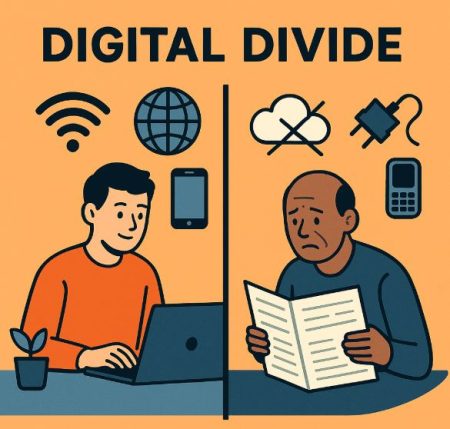
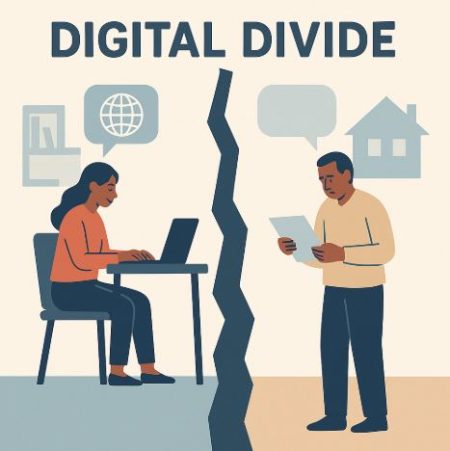
The digital divide refers to the gap between individuals, communities, and countries who have access to modern information and communication technologies (ICT) and those who do not. This divide can be influenced by factors such as socioeconomic status, geographic location, education, and infrastructure development. In today’s increasingly digital world, access to the internet and digital technologies is not merely a matter of convenience but a fundamental human right. The digital divide, when left unaddressed, exacerbates existing inequalities, limiting individuals’ ability to fully participate in educational, economic, social, and civic life. As technology continues to shape every aspect of modern existence, from access to information and healthcare to employment opportunities and political participation, the lack of digital access creates significant barriers for marginalized populations. The absence of digital inclusion thus undermines the very essence of human rights, which encompass the right to education, health, freedom of expression, and participation in society. Consequently, bridging the digital divide has become a critical priority in advancing human rights globally, ensuring that everyone—regardless of their background or location—can exercise their fundamental freedoms in the digital age.
Understanding Human Rights in the Digital Age
Human rights, as defined by international law, are the basic rights and freedoms to which all individuals are entitled, regardless of their nationality, ethnicity, religion, or other status. These rights are enshrined in key documents like the Universal Declaration of Human Rights (UDHR) and the International Covenant on Civil and Political Rights (ICCPR), which outline the protection of freedoms such as education, health, privacy, expression, and participation in the political and cultural life of society. However, as society becomes increasingly digital, the understanding and application of human rights must evolve to reflect the growing importance of technology in everyday life.
In the digital age, the concept of human rights is no longer limited to physical, face-to-face interactions. The rise of the internet, social media, mobile technology, and other digital platforms has reshaped how people access information, communicate, and exercise their rights. As such, human rights must now be understood in a way that incorporates digital access and participation. Access to information, for example, is no longer just about physical books or newspapers; it is now deeply tied to access to the internet, digital databases, and online platforms where much of today’s knowledge and communication take place.
The digital age also introduces new challenges to existing human rights frameworks. Issues of privacy, data protection, and digital surveillance have emerged as critical concerns. The right to privacy, a core human right, is increasingly threatened by the extensive data collection and monitoring practices of both governments and private companies. Similarly, the right to freedom of expression must be safeguarded in digital spaces, where censorship, misinformation, and online hate speech can hinder open discourse. Furthermore, the digital divide, disparities in access to digital technologies—poses a significant challenge to ensuring equitable human rights for all. Without digital access, individuals are excluded from essential services such as education, healthcare, and financial services, which are increasingly mediated through digital technologies. Therefore, access to digital tools, the internet, and digital literacy are now seen as extensions of fundamental human rights. Bridging the digital divide has become a key issue for global human rights advocacy, as it directly impacts individuals’ ability to fully participate in society and enjoy their human rights in the digital age.
The Digital Divide as a Human Rights Issue
The digital divide refers to the gap between individuals, communities, and countries that have access to modern information and communication technologies (ICT) and those that do not. In today’s world, where digital tools and the internet are integral to nearly every aspect of life, this divide has profound implications on people’s ability to fully participate in education, healthcare, economic activities, and society. It is increasingly recognized that the digital divide is not just a technological issue but a human rights issue. Access to digital technologies is now seen as essential to the realization of fundamental human rights, including the rights to education, health, economic opportunities, and the ability to participate in democratic processes. Without access to the internet or digital tools, individuals are excluded from these essential services, which deepens existing inequalities and limits their opportunities for social and economic advancement.
As human rights frameworks evolve in the digital age, it has become clear that the right to access information and communicate freely, both online and offline, is a vital part of the modern understanding of human rights. The United Nations, in 2016, declared that internet access is a human right, emphasizing the need for governments to promote universal digital access. The right to education, health, and economic participation is increasingly dependent on digital tools, as many services and opportunities are moving online. For instance, in education, students without access to digital tools face severe disadvantages, especially as online learning has become a standard method of education, particularly during the COVID-19 pandemic. Similarly, healthcare has shifted toward telemedicine and digital health platforms, leaving individuals without digital access at risk of being excluded from crucial medical information and services.
The digital divide also has economic consequences. In an increasingly digital economy, many job applications, interviews, and work tasks now require digital access. Those without reliable internet or access to devices face barriers to employment, which directly impacts their economic rights. This exclusion from the digital economy perpetuates cycles of poverty, as individuals cannot access job opportunities or even basic economic services like online banking. Furthermore, marginalized groups, including women, the elderly, refugees, and people with disabilities, are disproportionately affected by the digital divide, further deepening social inequalities.
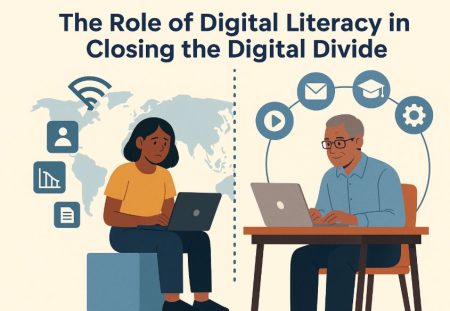
Addressing the digital divide requires a multi-faceted approach. Governments, international organizations, and the private sector must collaborate to ensure that digital access is seen as a fundamental human right and a key component of sustainable development. Investments in infrastructure, particularly in rural and underserved areas, are essential to expanding broadband access and reducing the cost of digital devices. Additionally, efforts must be made to improve digital literacy, ensuring that all individuals have the skills necessary to navigate the digital world. Tech companies also have a role to play in providing affordable, accessible technology and supporting initiatives that promote digital education and training.
Ultimately, the digital divide is not just about technology; it is about ensuring that every individual, regardless of their socio-economic status or geographic location, has the opportunity to access the essential services and rights that modern society provides. Bridging the digital divide is key to achieving greater social equity and ensuring that everyone can participate fully in the opportunities and rights afforded by the digital age. By addressing this issue as a human rights priority, we can create a more just and inclusive society where no one is left behind in the digital revolution.