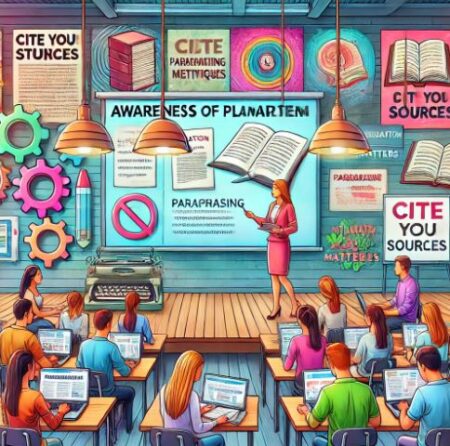
Plagiarism in higher education and academic writing refers to the unethical practice of using someone else’s ideas, words, or research without proper acknowledgment, presenting them as one’s own work. In the academic context, where originality, intellectual honesty, and critical thinking are fundamental, plagiarism undermines the integrity of scholarly work. It is a serious violation of academic ethics and can have significant consequences, ranging from academic penalties to reputational damage. Plagiarism can take many forms, including direct copying of text, paraphrasing without citation, and presenting someone else’s ideas or research findings as one’s own. The rise of digital technologies and easy access to online resources has made it easier for students to commit plagiarism, but it has also led to the development of various tools and strategies to detect and prevent it. In higher education, the importance of cultivating an understanding of academic integrity is paramount, as students must learn how to properly attribute sources, respect intellectual property, and produce original work that contributes to the scholarly community. Addressing plagiarism requires a comprehensive approach, involving education, clear institutional policies, and the promotion of a culture of academic honesty.
What Are the Causes of Plagiarism in Higher Education?
Plagiarism in higher education is an issue that continues to challenge academic integrity across universities and colleges globally. It involves the act of using someone else’s work, ideas, or intellectual property without proper acknowledgment and presenting it as one’s own. While plagiarism is commonly viewed as an unethical act, its causes are more complex and often stem from various psychological, institutional, and social factors. Understanding these causes is essential for developing effective strategies to prevent plagiarism and promote academic honesty. Here are the primary causes of plagiarism in higher education, shedding light on why it occurs and how it can be addressed.
- Pressure to Achieve Academic Success: One of the most significant causes of plagiarism in higher education is the intense pressure that students face to perform academically. Many students experience a high level of stress due to the expectations placed on them to achieve high grades. This pressure can be external, from family or professors, or internal, where students feel the need to prove themselves. In competitive academic environments, the fear of failure or not meeting expectations may lead students to view plagiarism as a way to ensure high grades or avoid poor academic performance. The emphasis on grades over learning can encourage shortcuts, and plagiarism may seem like an easy way out when the pressure becomes overwhelming.
- Time Constraints and Poor Time Management: Another significant cause of plagiarism is poor time management. University life often involves juggling multiple responsibilities—coursework, exams, extracurricular activities, and sometimes part-time jobs. This can result in students delaying assignments or research projects until the last minute. Faced with an impending deadline, students may feel overwhelmed by the amount of work required and, as a result, resort to plagiarism to meet the deadline. Rather than taking the time to research and produce original content, students may turn to online sources, copying and pasting material without proper citation, believing it to be the quickest way to complete their work.
- Lack of Understanding of Citation Practices: Many students may not fully understand the importance of citation and referencing in academic writing. In some cases, students may not have received adequate training in how to properly cite sources or may be unfamiliar with the citation styles required by their institution. This lack of understanding can lead to unintentional plagiarism, where students fail to give proper credit to the original author for their ideas or work. Students from different educational systems, especially international students, may not be accustomed to the academic standards of their new institutions, leading to confusion about citation practices. Without clear instructions, students may inadvertently commit plagiarism simply because they do not know how to correctly attribute sources.
- Fear of Failure and Lack of Confidence: Fear of failure is another powerful motivator behind plagiarism. Some students may lack confidence in their own writing or research abilities and fear that their work will not meet academic standards. This fear can be particularly intense when students are faced with complex assignments or unfamiliar topics. Rather than risk submitting work they perceive as inadequate, students may opt to plagiarize, using someone else’s work to guarantee a passing grade. The lack of confidence in their academic abilities can lead students to believe that plagiarizing is a safer option, as it provides a perceived assurance of success without the risk of failure.
- Easy Access to Online Resources: The internet has made vast amounts of information readily available to students, but it has also facilitated plagiarism. With just a few clicks, students can access academic papers, essays, articles, and other resources that they can copy and paste into their assignments. The ease with which information is accessible online has made it tempting for students to take shortcuts by using existing content rather than engaging in independent research. The convenience of copying and pasting material, especially from websites that are difficult to trace or from academic sources that do not require much effort to access, makes plagiarism a seemingly easy solution to assignment completion.
- Cultural Differences and Misunderstanding of Intellectual Property: Cultural differences can play a significant role in students’ understanding of plagiarism, especially among international students. In some countries, the concept of intellectual property and the strict rules surrounding it may not be emphasized as much as it is in Western academic settings. In cultures where knowledge-sharing is more collaborative and less formalized, students may not fully grasp the importance of citing sources or may not be familiar with the concept of plagiarism in the same way as students from other educational systems. This cultural gap can lead to unintentional plagiarism, as students may not realize that certain academic practices are considered unethical or dishonest in their host institutions.
- Lack of Institutional Support and Training: A lack of institutional support in terms of academic guidance and resources is another cause of plagiarism. Many students may enter higher education without being properly equipped to handle research and academic writing tasks. If institutions do not provide sufficient training on research methodologies, citation practices, and academic integrity, students may struggle to understand how to produce original work. This lack of support can lead to frustration and confusion, especially when students are expected to independently research and write academic papers. Without proper resources such as writing workshops, tutoring services, and plagiarism prevention tools, students may resort to plagiarism as an easy way out.
- Inconsistent Enforcement of Plagiarism Policies: The inconsistent enforcement of plagiarism policies within academic institutions can contribute to the prevalence of plagiarism. If institutions fail to implement clear and consistent anti-plagiarism measures, students may perceive that plagiarism carries little risk. When faculty members do not consistently check for plagiarism or fail to communicate the importance of academic integrity, students may feel emboldened to cheat. The absence of clear consequences for plagiarism can contribute to an environment where dishonesty is tolerated or overlooked, making students more likely to engage in plagiarism without fear of repercussions.
- Over-Reliance on External Help: Some students may also rely excessively on external help, such as tutoring services or online writing platforms, to complete their assignments. While seeking help is essential to academic learning, some students may cross ethical boundaries by asking tutors or peers to write or significantly alter their work. This over-reliance on academic assistance can lead to plagiarism if the help provided goes beyond guidance and results in the submission of someone else’s work. When academic support is misused, it not only harms the student’s academic development but also fosters an environment where plagiarism becomes more acceptable.
Plagiarism in higher education is a multifaceted problem that arises from various factors, including pressure to succeed, poor time management, lack of understanding of citation practices, and cultural differences. By understanding the underlying causes of plagiarism, educational institutions can develop strategies to address the issue effectively. This includes providing clear instructions on academic integrity, offering support for research and writing skills, enforcing consistent plagiarism policies, and fostering a culture of honesty and originality. Through a comprehensive approach, higher education institutions can reduce the incidence of plagiarism and encourage students to uphold the values of academic honesty and integrity.
What Are the Causes of Plagiarism in Scholarly Writings?
Plagiarism in scholarly writing is a pervasive issue that continues to challenge academic institutions, publishers, and researchers alike. It occurs when an individual uses someone else’s intellectual property—whether it be ideas, words, or research findings—without appropriate acknowledgment. While plagiarism is often seen as a deliberate act of dishonesty, it is, in fact, driven by a variety of complex factors that range from personal pressures to institutional practices. Understanding the underlying causes of plagiarism is crucial for addressing the problem and fostering a culture of academic integrity in scholarly writing. Let’s delve into the primary causes of plagiarism in scholarly writings, providing insights into why it occurs and how it can be mitigated.
- Lack of Understanding of Citation and Referencing Practices: One of the most common and significant causes of plagiarism is a lack of understanding regarding proper citation and referencing practices. Scholars, especially those new to academic writing or those transitioning between fields, may not be familiar with the specific citation requirements for different disciplines. Citation is essential in scholarly writing to attribute credit to original authors and provide readers with the tools to trace the sources of information. However, not all scholars have received adequate training in citation techniques. Misunderstanding citation norms, such as when to paraphrase, quote, or cite a source, can lead to inadvertent plagiarism. Furthermore, inconsistent understanding of citation styles (e.g., APA, MLA, Chicago) across different academic settings can lead to confusion and mistakes in properly crediting sources.
- Pressure to Publish and Meet Deadlines: The “publish or perish” culture in academia, particularly in research-focused institutions, plays a significant role in the occurrence of plagiarism. Scholars, especially those in early-career stages, are under immense pressure to publish frequently to advance their academic careers or secure funding. The competitive nature of academia and the need for continuous publication can lead to a race against time. Deadlines for research papers, journal submissions, and grant proposals can be tight, leaving researchers with little time to produce original work. In these high-pressure situations, some may feel compelled to plagiarize in order to meet deadlines and achieve publication targets. Rather than investing the time to properly cite sources or create original content, some researchers may resort to shortcuts, using existing work from other scholars without proper attribution.
- Over-Reliance on Secondary Sources: Over-reliance on secondary sources is another contributing factor to plagiarism in scholarly writing. Secondary sources, which summarize or analyze primary research, are valuable for understanding a topic and gaining insights from existing research. However, relying too heavily on secondary sources without engaging with primary materials can lead to plagiarism. Researchers may paraphrase or summarize someone else’s analysis or synthesis of primary research without realizing the need for proper citation. In some cases, the lines between an original contribution and someone else’s work become blurred, leading scholars to inadvertently present secondary research as their own. This failure to critically engage with primary sources and properly attribute secondary analyses can result in plagiarism.
- Inadequate Research Skills: Effective scholarly writing requires strong research skills, including the ability to evaluate, synthesize, and integrate information from various sources. However, not all scholars have developed the necessary research skills to conduct thorough and independent research. For some, the lack of these skills can lead to plagiarism. Instead of engaging with the literature and synthesizing their own ideas, they may rely on copying and pasting text from existing sources. This happens particularly when researchers feel overwhelmed or lack confidence in their ability to synthesize information and contribute original insights. In such cases, plagiarism may be viewed as an easier and faster way to produce work, even if it means sacrificing academic integrity.
- Fear of Failure and Lack of Confidence: Fear of failure and a lack of self-confidence are powerful motivators behind plagiarism in scholarly writing. Many scholars, particularly those early in their careers or working in highly competitive fields, may feel that their own ideas are not valuable or original enough to contribute to the academic discourse. The fear that their work will not meet the standards expected by journals or conferences can push them to plagiarize in order to avoid failure. This lack of confidence can result in a reliance on the work of others to make their own research appear more polished and credible. Rather than risk submitting an incomplete or subpar paper, some scholars may choose to plagiarize, believing it will lead to a more successful outcome.
- Easy Access to Online Resources: The internet has revolutionized access to academic research, making it easier than ever to find and use scholarly materials. However, this accessibility also increases the temptation to plagiarize. With vast amounts of information available through academic databases, online journals, and open-access platforms, researchers are often tempted to copy and paste text directly from these sources. This ease of access makes it more likely that scholars will engage in plagiarism, particularly when they believe the content is freely available and unlikely to be flagged by plagiarism detection tools. Additionally, the sheer volume of online content can blur the lines between what constitutes common knowledge and what requires citation, leading to inadvertent plagiarism.
- Cultural Differences and Misunderstanding of Intellectual Property: Cultural differences in understanding intellectual property and plagiarism can contribute to plagiarism in scholarly writing, particularly among international researchers. In some cultures, the concept of intellectual property and the strict rules regarding citation and attribution may not be as emphasized as it is in Western academic settings. Scholars from these cultures may not fully understand the importance of giving credit to the original authors, and what may be considered acceptable in their home countries could be seen as plagiarism in the host academic environment. This lack of awareness and understanding of academic standards can lead to unintentional plagiarism, especially among international researchers who may not be familiar with the specific expectations of the institution they are working with.
- Inconsistent Enforcement of Anti-Plagiarism Policies: The inconsistent enforcement of plagiarism policies across academic institutions can exacerbate the problem. In some cases, researchers may feel that plagiarism detection measures are not sufficiently robust or that the risk of getting caught is low. When academic integrity policies are not clearly communicated or consistently enforced, scholars may perceive plagiarism as an acceptable risk. The lack of immediate consequences for plagiarized work, coupled with inadequate tools to detect it, can create an environment where plagiarism is tolerated or overlooked. In such settings, researchers may be more likely to plagiarize, particularly if they believe the chances of being caught are minimal.
- The Temptation to Cut Corners: In highly competitive academic environments, there may be a temptation to cut corners in order to keep up with the demands of publishing and research. Researchers may feel that producing high-quality, original work is time-consuming and labor-intensive. Faced with tight deadlines, a heavy workload, or the pressure to publish, some scholars may resort to plagiarizing as a way to bypass these challenges. The temptation to take shortcuts, while appealing in the short term, can undermine the integrity of the scholarly writing process and contribute to the spread of plagiarized work in academic literature.
Plagiarism in scholarly writing is a multifaceted issue with various causes, ranging from inadequate research skills and pressure to publish to cultural misunderstandings and easy access to online resources. Academic institutions, publishers, and researchers need to recognize the underlying factors contributing to plagiarism to develop effective strategies to prevent it. By providing proper training on citation practices, fostering a culture of academic integrity, and consistently enforcing anti-plagiarism policies, the academic community can reduce the incidence of plagiarism and maintain the credibility and trustworthiness of scholarly work. Through education, support, and a commitment to ethical research practices, it is possible to ensure that scholarly writing remains a reflection of original thought and academic honesty.
Reference Articles:
- Abbasi, P., Yoosefi-Lebni, J., Jalali, A., Ziapour, A., & Nouri, P. (2021). Causes of the plagiarism: A grounded theory study. Nursing Ethics, 28(2), 282–296. https://doi.org/10.1177/0969733020945753
- Babaii, E., & and Nejadghanbar, H. (2017). Plagiarism Among Iranian Graduate Students of Language Studies: Perspectives and Causes. Ethics & Behavior, 27(3), 240–258. https://doi.org/10.1080/10508422.2016.1138864
- Comas-Forgas, R., & Sureda-Negre, J. (2010). Academic Plagiarism: Explanatory Factors from Students’ Perspective. Journal of Academic Ethics, 8(3), 217–232. https://doi.org/10.1007/s10805-010-9121-0
- Horbach, S. P. J. M. (Serge), & Halffman, W. (Willem). (2019). The extent and causes of academic text recycling or ‘self-plagiarism.’ Research Policy, 48(2), 492–502. https://doi.org/10.1016/j.respol.2017.09.004
- Husain, F. M., Al-Shaibani, G. K. S., & Mahfoodh, O. H. A. (2017). Perceptions of and Attitudes toward Plagiarism and Factors Contributing to Plagiarism: A Review of Studies. Journal of Academic Ethics, 15(2), 167–195. https://doi.org/10.1007/s10805-017-9274-1
- Moss, S. A., White, B., & Lee, J. (2018). A Systematic Review Into the Psychological Causes and Correlates of Plagiarism. Ethics & Behavior. https://www.tandfonline.com/doi/abs/10.1080/10508422.2017.1341837
- Robles, V. C., Rivas, M. R., & Campos, J. A. S. (2020). Study of the reasons for and measures to avoid plagiarism in young students of education. Profesorado, Revista de Currículum y Formación Del Profesorado, 24(1), Article 1. https://doi.org/10.30827/profesorado.v24i1.8572
- Roka, Y. B. (2017). Plagiarism: Types, Causes and How to Avoid This Worldwide Problem. Nepal Journal of Neuroscience, 14(3), Article 3. https://doi.org/10.3126/njn.v14i3.20517
- Sadruddin, M. M. (2021). Exploring the Causes of Plagiarism among Post Graduate Research Students—A Phenomenological Case Study Approach. Journal of Education and Educational Development, 8(2), 296–318.
- Shashok, K. (2011). Authors, editors, and the signs, symptoms and causes of plagiarism. Saudi Journal of Anaesthesia, 5(3), 303. https://doi.org/10.4103/1658-354X.84107
- Sibomana, E., Ndayambaje, I., & Uwambayinema, E. (2018). Plagiarism in higher education environment: Causes and solutions. Rwandan Journal of Education, 4(2), Article 2.
- Sulaiman, R., & Sulastri. (2018). Types and Factors Causing Plagiarism in Papers of English Education Students. Inspiring: English Education Journal, 1(1), Article 1. https://doi.org/10.35905/inspiring.v1i1.836
- Vázquez-Recio, R., Calvo-García, G., López-Gil, M., Picazo-Gutiérrez, M., Ruiz-Bejarano, A. M., & Calvo-Gutiérrez, P. (2016). CONCEPTIONS AND CAUSES OF PLAGIARISM AMONG UNIVERSITY STUDENTS OF THE DEGREE IN INFANT AND PRIMARY EDUCATION. INTED2016 Proceedings, 5705–5713. 10th International Technology, Education and Development Conference. https://doi.org/10.21125/inted.2016.0366
- Zarfsaz, E., & Ahmadi, R. (2017). Investigating Some Main Causes and Reasons of Writing Plagiarism in an EFL Context. International Journal of Applied Linguistics and English Literature, 6(5), 214–223. https://doi.org/10.7575/aiac.ijalel.v.6n.5p.214