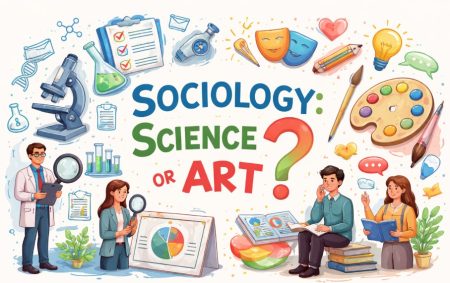
Sociology is the scientific study of society, human behavior, and the various social structures that shape our lives. It is a discipline that seeks to understand the complex dynamics of human societies and the factors that influence them. At its core, sociology explores the connections between individuals, groups, institutions, and the broader societal forces that impact our lives. It provides a unique lens through which to examine the social world, helping us make sense of the patterns, norms, and structures underlying human interactions.
1.1 What is Sociology?
Sociology is the scientific study of society, human behavior, and the various social structures and institutions that shape our lives. It is a discipline that seeks to understand the complex dynamics of human societies and the factors that influence them. Sociology examines how individuals, groups, and institutions interact, and it explores the underlying patterns, norms, values, and structures that govern human interactions within the larger context of society.
Sociology focuses on society as a whole and recognizes that the behavior and experiences of individuals are influenced by their social environment. It explores how societies function, evolve, and change over time. Key areas of study within sociology include social institutions (such as family, education, government, and religion), social norms and values, social inequality, social change, and social conflict.
Sociologists use various research methods to collect and analyze data, including surveys, interviews, observations, and statistical analysis. The goal is to generate insights into the social world, to identify patterns of behavior and social relationships, and to contribute to our understanding of the complex web of human interactions in different societies and cultures.
Sociology is a valuable field of study because it helps us gain a deeper understanding of the social forces that shape our lives and the challenges and opportunities within society. It plays a crucial role in addressing social issues, promoting positive social change, and fostering empathy and open-mindedness by helping individuals understand the experiences of people from diverse backgrounds and cultures. Sociology is a versatile discipline that offers valuable insights into the human condition and the structures that influence our behavior and beliefs.
1.2 The Focus of Sociology:
At the heart of sociology is the understanding that society is more than just a collection of individuals. It is a vast, interconnected web of relationships, norms, values, and institutions. Here are some critical aspects of sociology’s focus:
- Society as the Unit of Analysis: Sociology places society at the center of its inquiries. It seeks to explore how individuals are influenced by their social environment and, in turn, how they contribute to the formation of society. By looking at the collective, sociology aims to reveal patterns and behaviors that may not be evident when studying individuals in isolation.
- The Sociological Imagination: The sociological imagination, a concept introduced by C. Wright Mills, encourages us to think beyond our personal experiences and consider the broader social context. It challenges us to connect our individual lives to larger societal issues, recognizing that personal troubles often have social causes.
1.3 Key Concepts and Principles in Sociology:
To navigate the complexities of human society, sociology employs several fundamental concepts and principles:
- Social Structures: Societies are built upon social structures, enduring patterns of social relationships and institutions. Examples of social structures include families, schools, governments, and economies. Sociologists examine how these structures function and how they influence individual behavior.
- Social Norms and Values: Norms are the shared expectations and rules that guide human behavior in different social contexts. Values represent the collective beliefs about right and wrong, good and bad. Sociology investigates how these norms and values shape our actions and interactions.
- Social Change: Societies are not static; they evolve and change over time. Sociology delves into the causes and consequences of social change, studying the factors that drive progress and those that lead to resistance or regression.
- Social Conflict: Differences in values, interests, and power can give rise to social conflict. Sociology analyzes the conflicts that emerge within societies and how they are resolved or perpetuated.
1.4 The Significance of Sociology:
Sociology, often dubbed the “science of society,” is a discipline that profoundly impacts our understanding of the world in which we live. It delves into the intricate web of human interactions, behaviors, and the societal structures that shape our lives. The significance of sociology lies in its ability to reveal the underlying patterns, norms, and forces that drive human society and address crucial social issues. Let’s explore the key aspects of the discipline and why it matters in our ever-evolving world.
- Understanding Society: At its core, sociology serves as a lens through which we can understand the complexities of human society. It helps us make sense of the interactions, behaviors, and institutions that form the fabric of our communities. By examining the collective behavior of individuals, sociology uncovers patterns and trends that might be hidden when looking at individual experiences in isolation.
- Social Problem Solving: One of the most practical applications of sociology is its role in identifying and addressing social issues. Sociologists investigate poverty, inequality, crime, and discrimination, offering critical insights that inform policies and interventions. Their research and analysis are invaluable tools for society to tackle pressing challenges and create a more equitable world.
- Promoting Social Change: Sociologists are often at the forefront of advocating for social change. They can influence public opinion and inspire action by conducting research and raising awareness about societal injustices. The impact of sociology extends beyond academia, as sociologists actively engage in activism and advocacy to bring about positive social change.
- Shaping Public Policy: Government bodies and organizations frequently turn to sociological research to make informed policy and resource allocation decisions. Sociologists provide valuable data and analysis to guide public policy in various areas, including education, healthcare, criminal justice, and environmental sustainability.
- Fostering Self-awareness and Empathy: Studying sociology deepens our understanding of society and enhances self-awareness and empathy. It encourages individuals to explore different perspectives and experiences, fostering a greater sense of empathy and open-mindedness. Through the lens of sociology, we become more attuned to the experiences of people from diverse backgrounds and cultures.
Sociology is a dynamic and indispensable discipline that enriches our understanding of the intricate tapestry of human society. It empowers us to analyze and address social issues, promotes positive social change, and fosters a deeper awareness of our world. By studying sociology, we gain valuable insights into the complex web of human interactions, behaviors, and institutions that shape our lives. Sociology is not merely an academic pursuit; it is a science that enlightens us about the social world and equips us with the knowledge and tools to contribute positively to making it a better place for all. Its significance lies in its ability to uncover the hidden threads of society, empower individuals to make informed decisions, and inspire collective action toward a more just and equitable world.
1.5 Specializations within Sociology:
Sociology is a diverse field encompassing many specializations, each focusing on specific aspects of society and human behavior. These specializations allow sociologists to delve deeply into specific areas of interest and expertise. Here are some of the notable specializations within sociology:
- Criminology: Criminology studies crime, criminal behavior, and the criminal justice system. Criminologists investigate the causes of crime, patterns of criminal behavior, and the effectiveness of law enforcement and correctional systems.
- Sociology of Gender: This specialization explores how gender influences social roles, relationships, and inequalities. It examines the social construction of gender, gender identity, and the impact of gender on various aspects of society, including education, work, and family life.
- Medical Sociology: Medical sociology examines the social aspects of health, illness, and healthcare systems. It investigates how social factors, such as socioeconomic status and access to healthcare, influence health outcomes and healthcare delivery.
- Environmental Sociology: Environmental sociology focuses on the interaction between society and the environment. It explores how human activities and social structures impact the natural world and the consequences of environmental changes on society.
- Sociology of Education: This specialization studies education systems, policies, and their impact on individuals and society. It examines issues related to educational access, achievement gaps, curriculum development, and the social dynamics within educational institutions.
- Urban Sociology: Urban sociology explores urbanization, cities, and their social dynamics. It investigates urban planning, housing, migration, and the social issues in urban environments.
- Sociology of Religion: This specialization delves into the role of religion in society. It examines religious beliefs, practices, and their influence on culture, politics, and social norms.
- Social Psychology: Social psychology combines insights from sociology and psychology to study how individuals’ thoughts, feelings, and behaviors are influenced by their social environment. It explores group dynamics, social influence, and interpersonal relationships.
- Sociology of Deviance: This field investigates behaviors that deviate from societal norms and expectations. Sociologists of deviance study topics such as crime, addiction, mental illness, and social reactions to non-conforming behaviors.
- Sociology of Family and Marriage: This specialization focuses on the structure and dynamics of families and intimate relationships. It explores marriage, divorce, parenting, and changing family patterns.
- Political Sociology: Political sociology examines the relationship between society and politics. It investigates political institutions, power, social movements, and political behavior.
- Sociology of Culture: This field explores how society shapes and shapes culture. It includes the study of cultural norms, symbols, language, art, and the impact of popular culture on social behavior.
- Economic Sociology: Economic sociology investigates the relationship between economic systems and society. It examines the influence of social factors on economic behavior, markets, and the distribution of resources.
- Sociology of Globalization: This specialization focuses on the social, cultural, and economic aspects of globalization, including issues related to transnational corporations, migration, and the global flow of information.
- Rural Sociology: Rural sociology is concerned with rural areas’ social dynamics and challenges. It examines issues related to agriculture, rural development, and the well-being of rural communities.
These specializations within sociology allow researchers to explore and address specific social issues and phenomena, contributing to our broader understanding of the complex and diverse world in which we live. Each specialization provides valuable insights into the multifaceted nature of society and its many dimensions.
1.6 Understanding the Fundamental Goal of Sociology and Its Distinction from Other Social Sciences.
Sociology, often called the “science of society,” is a unique and dynamic field set out to understand and explain the complex tapestry of human interactions, behaviors, and social structures. At its core, the fundamental goal of sociology is to shed light on the underlying patterns, norms, values, and forces that drive human society. While it shares some commonalities with other social sciences, such as psychology, anthropology, and economics, sociology stands apart due to its distinct focus and objectives.
1.6.1The Fundamental Goal of Sociology:
The fundamental goal of sociology can be summarized in several key aspects:
- Understanding Society: Sociology seeks to unravel the dynamics of society. It examines the intricate web of relationships, institutions, and norms that shape how individuals and groups interact. By studying society, sociology offers insights into collective behavior, which may not be apparent when analyzing individual experiences in isolation.
- Social Patterns and Trends: Sociology identifies, analyzes, and explains social patterns and trends. This involves exploring how people’s behaviors and attitudes are influenced by their social environment and by larger societal forces. Sociologists aim to uncover recurring social phenomena, from family dynamics to global cultural shifts.
- Social Problem Solving: A prominent sociology objective is to address social issues and challenges. Sociologists investigate poverty, inequality, crime, and discrimination, offering crucial insights that inform policies and interventions. The ultimate aim is to contribute to the resolution of these issues and the improvement of societal well-being.
- Promoting Social Change: Sociology plays a role in promoting positive social change. Sociologists can influence public opinion and inspire action by conducting research, raising awareness about societal injustices, and advocating for reform. They actively work towards making society more just, equitable, and inclusive.
1.6.2How Sociology Differs from Other Social Sciences
While sociology shares common ground with other social sciences, it distinguishes itself in several ways:
- Focus on Society: Sociology places society at the center of its inquiries. It explores how individuals are influenced by their social environment and, in turn, how they contribute to shaping that environment. In contrast, psychology concentrates on individual behavior and mental processes, while anthropology often emphasizes the study of cultures and their origins.
- Societal Perspective: Sociology adopts a societal perspective, analyzing behavior and phenomena within a broader social context. It explores the collective aspects of human life, emphasizing the importance of social institutions, norms, and values. On the other hand, economics typically examines individual and market behaviors through the lens of scarcity and resource allocation.
- Emphasis on Social Issues: Sociology significantly emphasizes addressing social issues. It actively seeks to identify and solve societal problems, including poverty, inequality, and discrimination. While anthropology and psychology may address societal concerns, their primary focus lies elsewhere, such as cultural understanding or individual mental health.
- The Sociological Imagination: Sociology encourages the development of the “sociological imagination,” a concept introduced by C. Wright Mills. This perspective encourages individuals to connect their personal experiences with larger social issues, fostering a holistic understanding of the world. Such a broad perspective is less common in other social sciences, where the primary focus is often narrower.
The fundamental goal of sociology is to provide insights into the complex web of human interactions, behaviors, and institutions that shape our lives. It actively addresses social issues, promotes positive social change, and fosters empathy and open-mindedness. While sociology shares some commonalities with other social sciences, its distinct focus on society, societal perspective, and emphasis on social issues set it apart. Through its unique lens, sociology enriches our understanding of the social world, offering valuable insights into the multifaceted nature of human society. It is a discipline that informs our understanding of society and empowers us to actively contribute to making it a better place for all.
1.7 What are the key theoretical perspectives in sociology, such as functionalism, conflict theory, and symbolic interactionism? How do they help us understand society?
Sociology, often dubbed the “science of society,” employs various theoretical perspectives to understand and analyze the intricate tapestry of human interactions, behaviors, and social structures. Among the many theoretical lenses through which sociologists view the world, three foundational perspectives stand out: functionalism, conflict theory, and symbolic interactionism. These perspectives offer distinct viewpoints on the workings of society and contribute to our more profound understanding of the complex social world.
1.7.1 Functionalism: Understanding Society as a System
Core Idea: Functionalism, rooted in the works of early sociologists like Emile Durkheim, perceives society as a complex system of interrelated parts. It posits that these parts work together to maintain stability and equilibrium. Functionalism emphasizes the roles and functions of social institutions in preserving social order and cohesion.
How It Helps Us Understand Society: Functionalism provides a framework for comprehending how different aspects of society, such as family, education, government, and the economy, serve vital functions. It underscores the idea that these institutions fulfill roles necessary for the survival and well-being of society. By highlighting the interdependence of social institutions and their functions, functionalism offers insights into the mechanisms that maintain social stability.
1.7.2 Conflict Theory: Examining Inequality and Power Dynamics
Core Idea: Conflict theory, associated with Karl Marx and later thinkers like Max Weber, focuses on society’s inherent inequalities and power struggles. It accentuates the role of conflict, competition, and social stratification in shaping social dynamics. Conflict theory recognizes that power imbalances influence social structures and relationships.
How It Helps Us Understand Society: Conflict theory is instrumental in illuminating how societal resources and opportunities are distributed unequally, leading to conflicts between dominant and subordinate groups. It underscores how power imbalances can perpetuate inequality and social divisions. This perspective offers a critical lens through which to analyze class, race, and social justice issues, helping us understand the roots of social conflicts and disparities.
1.7.3 Symbolic Interactionism: Decoding the Language of Social Interaction
Core Idea: Symbolic interactionism, developed by sociologists like George Herbert Mead and Herbert Blumer, delves into the micro-level interactions between individuals. It highlights the role of symbols, meanings, and communication in shaping social life. Symbolic interactionism emphasizes the importance of symbols and language in understanding society.
How It Helps Us Understand Society: Symbolic interactionism offers valuable insights into how individuals create and interpret symbols and meanings in their interactions with others. It explores the intricate world of symbols and shared meanings, showing how these elements influence social behavior and identity formation. This perspective enables us to decipher the significance of everyday gestures, language, and the construction of social reality.
Synthesizing Perspectives for a Holistic Understanding
While these three theoretical perspectives provide unique societal viewpoints, they are not mutually exclusive. Sociologists often draw from multiple perspectives to comprehensively understand complex social phenomena. By applying functionalism, conflict theory, and symbolic interactionism in tandem, sociologists can explore various aspects of society, including social change, cooperation, conflict, inequality, identity formation, and socialization.
Functionalism helps us recognize the structure and stability of society, conflict theory sheds light on social inequalities and power dynamics, and symbolic interactionism allows us to delve into the world of everyday interactions and the role of symbols in shaping our social reality. Together, these perspectives contribute to a holistic understanding of human society’s multifaceted and dynamic nature.
In the ever-evolving landscape of sociology, these theoretical lenses remain indispensable tools for sociologists seeking to navigate the intricate web of human interactions, behaviors, and social structures. They enrich our understanding of society, empower us to analyze social phenomena, and inspire us to explore the ever-evolving dynamics of the social world.