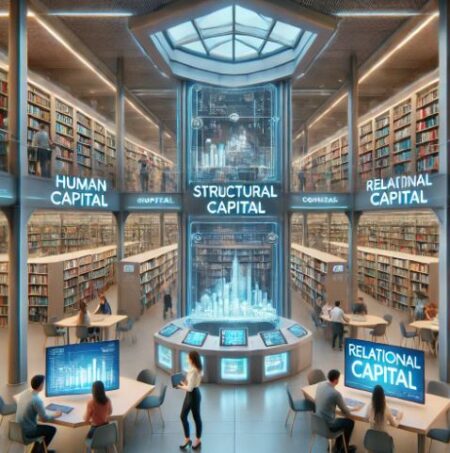
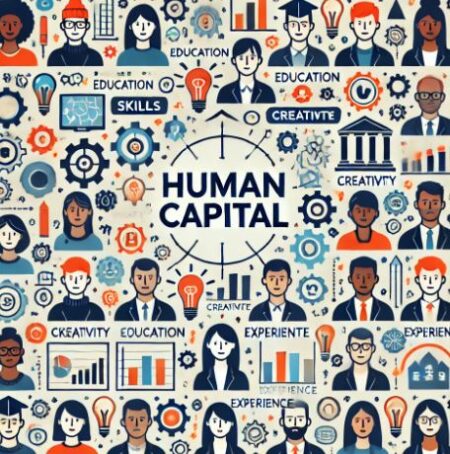
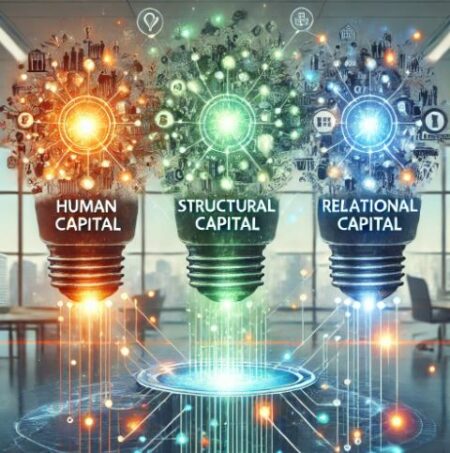
Intellectual capital (IC) is pivotal in driving growth and innovation in a knowledge-based economy. Unlike traditional economies that rely on physical resources and manufacturing, knowledge-based economies are fueled by intangible assets such as knowledge, expertise, innovation, and relationships. Intellectual capital, which encompasses human capital (skills and knowledge of employees), structural capital (processes, systems, intellectual property), and relational capital (customer relationships and partnerships), forms the foundation of this economic model.
Managing intellectual capital is essential in a knowledge-driven world because it enables organizations to create unique value, maintain a competitive edge, and foster continuous innovation. Companies that prioritize developing, utilizing, and protecting intellectual capital are better positioned to adapt to changing market demands, sustain long-term success, and contribute to overall economic growth. Intellectual capital becomes the primary driver of productivity and organizational advancement in this economy.
What is Intellectual Capital?
Intellectual capital refers to the intangible assets and resources contributing to an organization’s value and competitive advantage. It encompasses three main components: human capital (the skills, expertise, and creativity of employees), structural capital (the organization’s processes, systems, and intellectual property like patents and trademarks), and relational capital (the relationships and networks with customers, partners, and other stakeholders). Unlike physical assets, intellectual capital is often difficult to quantify, yet it plays a crucial role in driving innovation, improving efficiency, and fostering growth. Effectively managing and leveraging intellectual capital allows organizations to create and sustain unique value in today’s knowledge-based economy.
What is a Knowledge-Based Economy?
A knowledge-based economy is an economic system in which growth, productivity, and competitiveness are primarily driven by the generation, dissemination, and use of knowledge. In contrast to traditional economies, which rely on physical resources like land, labor, and capital, a knowledge-based economy places a higher value on intangible assets such as innovation, information, skills, and expertise. The advancement of technology, particularly in information and communication technologies (ICT), has accelerated the shift toward this economic model, enabling the rapid transfer and utilization of knowledge across global markets.
In a knowledge-based economy, businesses, governments, and individuals rely on intellectual capital—comprising human expertise, organizational systems, and relationships—to create value and maintain a competitive edge. Sectors such as information technology, research and development, education, and high-tech industries are particularly prominent in these economies. As knowledge becomes the key driver of economic growth, investment in education, lifelong learning, and research becomes crucial for individuals and organizations. Additionally, innovation is central to the knowledge-based economy, as continuous improvements in processes, products, and services fuel economic progress and create new market opportunities.
This economic model also emphasizes the importance of collaboration and networking as organizations increasingly leverage knowledge sharing across industries and countries. However, the knowledge-based economy also brings challenges, such as protecting intellectual property, ensuring equal access to information, and addressing the digital divide. In essence, a knowledge-based economy transforms how value is created and emphasizes the critical role of intellectual capital in shaping future growth.
The Importance of Intellectual Capital in the Knowledge-Based Economy
In today’s rapidly evolving business landscape, the knowledge-based economy has emerged as a dominant force, placing a premium on intellectual assets rather than traditional physical resources. Intellectual capital is Central to organizations’ success in this economy—the intangible assets such as employee knowledge, innovation, organizational processes, and customer relationships that drive value creation and competitive advantage. As businesses increasingly rely on information, creativity, and innovation to thrive, the importance of intellectual capital cannot be overstated. It is the foundation for innovation, operational efficiency, and long-term sustainability.
- Fueling Innovation and Growth: One of the most critical roles of intellectual capital in the knowledge-based economy is its ability to fuel innovation. Human capital—comprising employees’ skills, expertise, and creativity—is the driving force behind new ideas, products, and services. Organizations that invest in developing their human capital are better equipped to stay ahead of industry trends and create disruptive innovations. For instance, tech giants like Google and Apple leverage their intellectual capital to continuously introduce new technologies and solutions, allowing them to dominate their markets and outpace competitors.
In this knowledge-driven economy, where technological advancements and creative solutions are the primary drivers of growth, intellectual capital serves as the engine for future success. Companies that manage and develop this asset effectively can foster a culture of continuous innovation, leading to new revenue streams, market opportunities, and sustained growth. - Gaining Competitive Advantage: Intellectual capital offers companies a sustainable competitive advantage in a highly competitive business environment. Unlike physical assets, which can be easily replicated or replaced, intellectual capital—such as proprietary knowledge, patents, brand reputation, and customer loyalty—is much harder for competitors to duplicate. This uniqueness helps organizations differentiate themselves and maintain leadership in their respective industries.
For example, companies that develop strong relational capital, such as trusted customer relationships and strategic partnerships, can build loyalty and ensure repeat business. Similarly, organizations that cultivate structural capital through robust processes, patented technologies, and a positive organizational culture gain operational efficiency and innovation capabilities that are difficult for competitors to match. - Supporting Long-Term Sustainability: Intellectual capital is not just about immediate success; it is also critical for ensuring long-term sustainability in a rapidly changing economy. Unlike physical assets, which can depreciate over time, intellectual capital—such as employee expertise, process improvements, and brand relationships—can appreciate and grow as organizations invest in them. Human capital, for example, becomes more valuable as employees gain experience, undergo training, and collaborate to create new solutions.
Organizations that actively manage and develop their intellectual capital are more adaptable and resilient to market changes. By fostering a culture of learning, innovation, and relationship-building, these businesses can pivot quickly in response to industry shifts and continue to thrive despite economic uncertainty. - Enhancing Operational Efficiency: Intellectual capital, particularly structural capital, is key in enhancing operational efficiency. Structural capital includes an organization’s internal systems, processes, databases, and intellectual property that support productivity and scalability. Well-designed processes and efficient knowledge management systems allow businesses to streamline operations, reduce costs, and improve service delivery.
For example, companies that develop advanced technological systems and knowledge-sharing platforms can increase employee productivity by ensuring that information flows freely across departments. This helps eliminate redundancies, improve decision-making, and optimize the use of resources. In this way, intellectual capital not only drives innovation but also ensures that operations run smoothly, contributing to the organization’s overall success. - Building Stronger Customer and Stakeholder Relationships: Relational capital, another key component of intellectual capital, refers to the value derived from relationships with customers, partners, and other stakeholders. Customer loyalty, trust, and brand reputation are invaluable assets in the knowledge-based economy. Strong relationships with customers foster repeat business, positive word-of-mouth marketing, and long-term profitability.
Similarly, strategic partnerships and collaborations with other businesses or institutions enhance an organization’s ability to innovate and expand. By leveraging relational capital, organizations can access new markets, share resources, and drive joint innovation, all of which are critical to staying competitive in the modern business environment. - Increasing Company Valuation: Intellectual capital directly impacts a company’s market valuation in the knowledge-based economy. Investors and stakeholders increasingly recognize that the true value of a company lies in its intangible assets, such as intellectual property, human expertise, and brand reputation, rather than its physical assets. This shift means that companies with strong intellectual capital are often valued more highly in the market.
For example, technology companies like Microsoft or Facebook may have relatively few physical assets compared to their market value, yet they are worth billions due to their intellectual capital, which includes cutting-edge innovations, strong customer networks, and skilled workforces. By investing in and protecting intellectual capital, organizations can enhance their overall valuation, making them more attractive to investors and potential business partners. - Adapting to the Knowledge-Based Economy: Adaptability is key to survival and success in the knowledge-based economy. Intellectual capital enables organizations to remain agile and responsive to technological changes, consumer behavior, and market dynamics. Human capital, emphasizing continuous learning and skill development, allows companies to adapt to new challenges and opportunities quickly.
Structural capital, including organizational processes and intellectual property, provides the necessary infrastructure to implement changes efficiently. Relational capital helps organizations stay connected with market trends, customer needs, and industry partnerships, ensuring that they are well-positioned to capitalize on new opportunities.
In the knowledge-based economy, intellectual capital has become an indispensable asset for organizations seeking to innovate, remain competitive, and ensure long-term sustainability. By effectively managing and investing in human capital, structural capital, and relational capital, businesses can unlock new opportunities, improve operational efficiency, and enhance their market valuation. Organizations that recognize the importance of intellectual capital and prioritize its development and protection will be better equipped to navigate the complexities of today’s business environment. As the global economy continues to evolve, intellectual capital will remain a critical driver of success in shaping the future of business.
The Role of Intellectual Capital in a Knowledge-based Economy
The knowledge-based economy has emerged as a key driver of innovation, competitiveness, and long-term growth in the modern business landscape. In this type of economy, the primary source of value is not physical assets like land, machinery, or raw materials but rather the intangible assets collectively known as intellectual capital. Intellectual capital includes human expertise, innovation, organizational knowledge, and the strength of relationships with customers and stakeholders. As organizations rely more on knowledge, creativity, and technology, the role of intellectual capital in shaping their success has become paramount. Let’s explore the key roles that intellectual capital plays in a knowledge-based economy.
- Driving Innovation and Creativity: Intellectual capital is the foundation of innovation, particularly in industries that depend on creativity, research, and technology. Human capital, the knowledge, skills, and creative abilities of employees are the main drivers of new ideas, product development, and problem-solving. Companies like Apple, Google, and Tesla have built their global success on their ability to continuously innovate and introduce revolutionary products, services, and business models. This is possible because of the intellectual capital embedded in their workforce and their focus on nurturing talent and creativity.
In a knowledge-based economy, organizations that prioritize intellectual capital can stay ahead of competitors by quickly responding to market demands and technological shifts. Innovation is no longer optional, but a necessity for survival, and intellectual capital plays a pivotal role in ensuring that companies remain competitive and relevant. - Creating Sustainable Competitive Advantage: In the knowledge-based economy, where competition is fierce, and products and services can be replicated quickly, intellectual capital offers organizations a sustainable competitive advantage. Unlike physical assets, which can be easily copied or replaced, intellectual capital—especially in the form of human expertise, proprietary processes, or customer loyalty—is unique and hard to replicate.
For example, a company with strong structural capital, such as proprietary technologies, patents, and efficient organizational systems, can operate more efficiently and provide unique solutions that competitors may find difficult to emulate. Similarly, relational capital, which encompasses strong relationships with customers, suppliers, and business partners, creates a loyal network that adds further competitive strength. This relational trust is built over time and cannot be quickly replicated by competitors, providing a long-term edge. - Enhancing Organizational Efficiency: Intellectual capital is crucial in improving organizational efficiency. Structural capital, which includes processes, databases, patents, and IT systems, allows organizations to standardize operations, streamline workflows, and maximize resource utilization. Efficient internal systems ensure that knowledge flows smoothly across departments, enabling employees to access critical information, make informed decisions, and execute tasks with greater precision.
For instance, companies with strong knowledge management systems can quickly share insights and best practices, ensuring that organizational knowledge is not lost and can be leveraged for operational improvements. This efficiency enables businesses to reduce costs, improve productivity, and adapt quickly to changes, making intellectual capital a valuable asset for sustaining growth. - Building Strong Customer and Stakeholder Relationships: Relational capital—the relationships an organization builds with its customers, suppliers, partners, and other stakeholders—is an essential component of intellectual capital in the knowledge-based economy. Trust, loyalty, and reputation are key drivers of success, especially in markets where customer preferences are evolving and competition is fierce.
Companies that focus on building long-term customer relationships through personalized service, quality interactions, and consistent delivery of value often have a significant competitive advantage. Strong relational capital also enables businesses to form strategic partnerships that open new avenues for growth and innovation. For example, collaborating with academic institutions, research organizations, or industry partners can help organizations gain access to new knowledge, technologies, and markets. - Supporting Long-Term Value Creation: Intellectual capital is instrumental in creating long-term value for organizations. Human capital, with its focus on employee knowledge and skills, grows over time as employees gain experience and refine their abilities. Organizations that invest in training, professional development, and fostering a culture of continuous learning can build a highly skilled workforce that contributes to sustained innovation and growth.
Similarly, structural capital—such as patents, proprietary technology, and organizational processes—creates long-term value by giving companies the means to improve their offerings and stay competitive continually. Organizations that cultivate these intangible assets build a foundation for future success and resilience, even in the face of economic shifts or market disruptions. - Enabling Adaptability in a Rapidly Changing Environment: In a knowledge-based economy, change is constant. Markets evolve, technologies advance, and customer demands shift rapidly. Intellectual capital allows organizations to remain agile and adapt to these changes. Human capital enables businesses to continuously learn and innovate, while structural capital ensures that systems and processes can quickly adjust to new realities.
For instance, companies with strong intellectual capital can pivot faster in response to technological advancements, regulatory changes, or disruptions in the marketplace. This adaptability is a significant advantage in industries where being first to market with new innovations can be the difference between success and failure. - Increasing Market Valuation: As the knowledge-based economy grows, intellectual capital increasingly contributes to a company’s market valuation. Investors and stakeholders now recognize that a company’s true value often lies not in its physical assets but in its intangible ones, such as intellectual property, brand equity, and employee expertise. Companies with strong intellectual capital, such as Microsoft or Facebook, are highly valued not just for their products but for the innovation, customer loyalty, and market influence they command.
Managing and growing intellectual capital effectively can significantly boost a company’s valuation, making it more attractive to investors and increasing its financial stability in the long run.
In conclusion, the role of intellectual capital in the knowledge-based economy is fundamental to the long-term success and sustainability of modern organizations. As the global economy continues to shift towards information, technology, and knowledge as the key drivers of value, the importance of intellectual capital cannot be overstated. It is the foundation for innovation, allowing businesses to develop new products, improve services, and stay ahead of industry trends. Intellectual capital, particularly human capital, provides the expertise, creativity, and problem-solving capabilities needed to maintain a competitive edge in an increasingly dynamic marketplace.
Moreover, structural capital, such as organizational processes, knowledge systems, and intellectual property, enhances operational efficiency and scalability, enabling companies to streamline their operations while maintaining agility. At the same time, relational capital—the trust and relationships built with customers, partners, and other stakeholders—fosters loyalty and long-term growth.
Intellectual capital offers a unique and lasting competitive advantage in a world where physical assets alone are no longer sufficient for sustained success. Organizations that recognize the critical role of intellectual capital in driving growth, adaptability, and innovation are better positioned to thrive in the knowledge-based economy. As the economy continues to evolve, managing and cultivating intellectual capital will be essential for businesses seeking to remain relevant, innovative, and resilient.