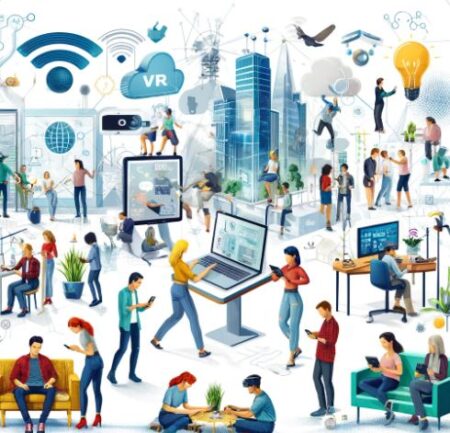
Information and Communication Technology (ICT) refers to the various technologies used for managing and communicating information. It encompasses a wide range of tools and systems, including computers, software, the internet, telecommunications, and digital devices, all of which facilitate the creation, storage, retrieval, sharing, and exchange of data. ICT has become a cornerstone of modern life in today’s interconnected world, affecting nearly every aspect of daily living.
From the way we work, communicate, learn, and entertain ourselves to how we manage businesses, healthcare, and government services, ICT is at the heart of every sector. The proliferation of smartphones, high-speed internet, cloud computing, and social media platforms has transformed the global landscape, making information more accessible and communication faster and more efficient. With the rapid advancements in digital technologies, ICT has not only enhanced personal and professional lives but also reshaped economies, enabling greater productivity, innovation, and social interaction. As economies become increasingly digital, the role of ICT in shaping economic growth, promoting educational opportunities, and driving advancements in healthcare and governance is undeniable. Whether it’s through e-commerce, remote work, online education, or digital banking, ICT has made the world more interconnected, offering immense opportunities for individuals and societies to thrive in the digital age.
What is ICT?
Information and Communication Technology (ICT) refers to the diverse set of technologies used to manage and communicate information. It includes all devices, systems, and applications that facilitate creating, storing, sharing, and exchanging data and information. At its core, ICT integrates computing technology with telecommunications systems, enabling people to connect, collaborate, and access vast amounts of information. This broad field encompasses hardware, software, networks, and various other digital tools that allow individuals, businesses, and organizations to communicate effectively and manage data efficiently.
Examples of ICT tools include personal computers, smartphones, tablets, the internet, and cloud computing platforms, which collectively enable people to access information, communicate, and perform a wide range of activities. For instance, email and instant messaging apps are common examples of ICT systems used for communication. In businesses, tools such as enterprise resource planning (ERP) systems, customer relationship management (CRM) software, and digital marketing platforms help streamline operations, enhance productivity, and improve customer engagement. In education, ICT is used in e-learning platforms, where students can access online courses and educational resources, thus making learning more flexible and accessible.
In healthcare, ICT is revolutionizing patient care through telemedicine, allowing remote consultations and improving access to medical services, especially in rural or underserved areas. Additionally, the advent of cloud computing enables businesses to store and access data remotely, making it easier to collaborate, scale operations, and manage resources. These examples show how ICT has become a pivotal part of modern life, reshaping how we interact, work, learn, and access essential services in a rapidly digitizing world.
What is the Digital Divide?
The Digital Divide refers to the gap between individuals, communities, or regions that have access to modern information and communication technologies (ICT) and those who do not. This divide is characterized by inequalities in access to technology, digital skills, and the ability to use technology effectively for social, economic, and educational purposes. The digital divide is not just about the availability of technology; it also involves factors such as the quality of access, digital literacy, and the affordability of ICT services.
For example, in many developing countries, people in rural or remote areas may lack reliable internet connections, computers, or smartphones, limiting their ability to access online resources, education, or even healthcare services. In contrast, individuals in urban centers may have widespread access to high-speed internet, advanced digital devices, and the necessary skills to use them effectively. This digital gap results in unequal opportunities for education, employment, and participation in the digital economy. A concrete example of the digital divide can be seen in the disparity between urban and rural students’ ability to engage in online learning, especially during the COVID-19 pandemic, where students with limited access to technology faced significant educational setbacks.
On the other hand, Information and Communication Technology (ICT) refers to the various technologies that enable the creation, storage, management, sharing, and communication of information. ICT includes a wide range of tools such as computers, smartphones, the internet, software applications, and telecommunications systems, all of which facilitate the exchange of information and communication. In today’s world, ICT is integral to many aspects of life, from business and education to healthcare and government.
For example, in education, ICT has enabled e-learning platforms where students can access lessons, videos, and assignments from anywhere in the world, democratizing access to education. Similarly, in business, ICT tools like cloud computing and enterprise software streamline processes, enhance collaboration, and boost productivity. However, the digital divide means that not everyone has equal access to these ICT tools. In developing regions, individuals may not have access to affordable internet or mobile phones, which limits their ability to leverage the benefits of ICT for economic or educational advancement.
The Relationship Between ICT and the Digital Divide
Information and Communication Technology (ICT) has brought about groundbreaking advancements in how we communicate, access information, and participate in the global economy. ICT plays a central role in modern life, from mobile phones and computers to the internet and cloud computing. However, as much as it has transformed society, it has also highlighted the significant digital divide—the gap between individuals, communities, or regions that have access to modern technology and those that do not. While ICT has the potential to bridge gaps and provide opportunities for all, it can also exacerbate inequalities, particularly for disadvantaged groups.
- Unequal Access to Technology and Infrastructure: One of the most significant ways ICT exacerbates the digital divide is through unequal access to technology. In developed countries and urban centers, people have access to high-speed internet, affordable smartphones, and other essential devices. Conversely, in rural or underdeveloped regions, access to these technologies is often limited. In many parts of Sub-Saharan Africa, Southeast Asia, and even rural areas of Europe and the United States, reliable internet infrastructure is either unavailable or prohibitively expensive. For example, in rural areas of India, internet speeds are often slow, and broadband connections are either sparse or non-existent. As a result, people living in these areas are unable to access educational resources, telemedicine, e-commerce, and other services that are increasingly digital. These individuals remain excluded from the global digital economy, which reduces their ability to improve their living standards and limits their future opportunities.
- Affordability and Economic Barriers: Another critical factor contributing to the digital divide is the high cost of technology. While the prices of smartphones, computers, and internet services have decreased over time, they remain out of reach for many low-income households. In developing nations, where the average income is low, spending on digital devices and internet services is often not a priority. Consequently, those who cannot afford the latest technology are excluded from digital opportunities, further entrenching existing social and economic inequalities. For instance, while middle-class families in urban areas may have access to the latest smartphones and unlimited internet, people in rural communities often make do with outdated devices or limited data plans, making it difficult to access important services. This disparity affects the ability to participate in digital education, remote work, online job applications, and other critical activities that require access to modern technology.
- Lack of Digital Literacy and Skills: Even when people have access to digital tools, the lack of digital literacy remains a major barrier that exacerbates the digital divide. Digital literacy involves more than just the ability to use a device; it also requires the skills to navigate the internet, evaluate information, use digital tools effectively, and understand online safety. In many developing countries, there is a significant gap in digital literacy, particularly among older generations, women, and marginalized communities.
In places like rural China or parts of the Middle East, older populations may not have the skills to use smartphones or computers beyond basic functions, even though these devices are available. Without the ability to navigate online platforms, individuals are excluded from digital services such as online banking, government services, e-commerce, and educational platforms, thus limiting their access to essential resources. Moreover, even when people do have access to the internet, a lack of digital skills prevents them from maximizing the benefits that technology offers. Without proper education and training, they cannot compete in the digital job market, access professional development, or improve their financial literacy, making it harder for them to break the cycle of poverty. - Gender Inequality and Social Barriers: Gender inequality plays a significant role in exacerbating the digital divide, especially in developing countries. In many regions, women are less likely to own mobile phones or have access to the internet compared to men, primarily due to cultural, economic, and social factors. In countries like India and Afghanistan, social norms dictate that women should be less engaged with technology, limiting their opportunities to access online resources and services.
In some societies, the lack of access to technology among women can also be attributed to financial constraints. Women in low-income households may not have the economic freedom to purchase smartphones or pay for internet services. This gendered divide in technology access limits women’s opportunities for education, business, healthcare, and employment. As a result, women are often excluded from participating in the growing digital economy, reinforcing existing gender inequalities. - Exclusion from the Digital Economy: The digital economy is becoming increasingly important as more business operations, services, and education move online. However, those without access to ICT are increasingly excluded from participating in this evolving economic landscape. In countries where internet access is scarce or unreliable, individuals and small businesses face significant challenges in engaging with e-commerce platforms, participating in online job markets, or accessing digital training programs. For example, a small business owner in a remote area with limited internet access cannot effectively advertise their products online or use digital tools to expand their reach. They may miss out on opportunities to access global markets, participate in digital transactions, or improve their business operations using cloud-based services. This exclusion from the digital economy hampers growth opportunities for these individuals and businesses, perpetuating the cycle of poverty and hindering broader economic development.
- Regional Disparities in ICT Access: The regional disparities in ICT access between developed and developing countries contribute to the global digital divide. While countries like the United States, South Korea, and Japan have advanced technological infrastructures and extensive internet penetration, many developing nations are still struggling to establish basic ICT access for their populations. In some countries, the government’s inability to provide widespread internet access or the high costs of ICT services has led to uneven development, with urban centers experiencing rapid digital growth while rural regions remain underserved. For instance, while cities like Lagos in Nigeria are seeing the expansion of digital infrastructure and services, remote villages in the country still struggle with access to reliable electricity and the internet. These regional differences create an uneven playing field, further deepening the divide between urban and rural populations.
While ICT has the potential to drive innovation and economic growth, it also exacerbates the digital divide by creating barriers that disproportionately affect disadvantaged populations. The unequal access to technology, high costs of digital devices, lack of digital literacy, gender inequality, and regional disparities all contribute to the widening gap between those who benefit from the digital economy and those who are left behind. Bridging the digital divide requires a concerted effort from governments, the private sector, and international organizations to provide affordable and equitable access to ICT, promote digital literacy, and ensure that technology is accessible to all members of society. Only then can ICT truly become a tool for inclusion and development.
How Access to ICT Infrastructure Contributes to the Digital Divide
Access to ICT infrastructure, such as internet connectivity and digital devices, plays a significant role in contributing to the digital divide, which refers to the gap between individuals and communities that have access to modern technology and those that do not. The availability and quality of ICT infrastructure directly impact the ability of individuals to participate in the digital economy, access educational resources, and engage with essential services. When access to this infrastructure is uneven, it exacerbates social and economic inequalities, leaving many people disadvantaged.
Internet connectivity is a primary example of how disparities in ICT infrastructure contribute to the digital divide. In many urban areas, high-speed internet is readily available, enabling residents to access a wide range of online services, including e-commerce, remote work, and online education. However, in rural areas and many developing countries, internet connectivity remains slow, unreliable, or completely absent. For example, regions in Sub-Saharan Africa and rural parts of India often struggle with limited or no access to fast internet, which prevents individuals in these areas from fully engaging in the digital world. Without reliable internet access, people miss out on opportunities for education, job training, and economic advancement, thus widening the digital divide.
The lack of digital devices also contributes to this divide. While smartphones and computers have become more affordable over time, they are still out of reach for many individuals in low-income communities, particularly in developing nations. Access to digital devices is essential for participating in online services, whether for accessing government services, health information, or educational resources. For instance, many students in rural areas or low-income households do not have access to a computer or even a smartphone capable of supporting online learning platforms. As education increasingly moves online, this lack of access to devices creates a barrier for these students, further limiting their future opportunities and contributing to a cycle of inequality.
The quality of infrastructure plays a crucial role in exacerbating the digital divide. Even in urban centers, where internet connectivity may be more widely available, the quality of the service can vary greatly. In some regions, people may have access to broadband, but if the service is slow or unreliable, it hinders their ability to engage in digital activities effectively. For example, remote work, video conferencing, and e-commerce require stable and high-speed internet, and without this, people may struggle to take advantage of these opportunities.
In conclusion, access to ICT infrastructure, particularly reliable internet connectivity, and digital devices, is critical in bridging or deepening the digital divide. Unequal access to these resources prevents many individuals from participating fully in the digital world, limiting their access to education, employment, healthcare, and other essential services. To reduce the digital divide, it is essential to invest in expanding ICT infrastructure, ensuring that internet connectivity and devices are accessible and affordable to all, particularly in underserved and rural areas.
How the Lack of Digital Literacy and Skills Exacerbates the Digital Divide in Both Developed and Developing Countries
The lack of digital literacy and skills is a critical factor that exacerbates the digital divide in both developed and developing countries. Digital literacy refers to the ability to effectively and critically navigate digital tools and platforms, including understanding how to use computers, the internet, mobile devices, and other technologies to access, evaluate, and communicate information. Without adequate digital skills, individuals are unable to fully utilize the opportunities presented by ICT, leaving them marginalized in both personal and professional spheres. This skills gap significantly widens the divide, limiting social and economic participation, especially as the world becomes increasingly digital.
- Limited Access to Educational and Economic Opportunities: In both developed and developing countries, digital literacy is increasingly a prerequisite for educational success and access to job opportunities. In developing countries, where access to technology may be more limited, a lack of digital skills severely restricts individuals’ ability to engage with online education, e-learning platforms, and digital job markets. For example, students in rural parts of Africa or Asia may have access to smartphones or computers but lack the skills to use them for online learning or research. As educational resources increasingly move online, these students are left behind, exacerbating inequality in access to quality education.
In developed countries, even though technology is more widespread, many people still face barriers due to a lack of digital skills. For instance, older adults or those from economically disadvantaged backgrounds may have access to devices but lack the knowledge to use them effectively. As more jobs require digital skills—such as using software, conducting research online, or managing digital communications—individuals who cannot use these tools are increasingly excluded from the workforce. This results in unemployment or underemployment, further entrenching social and economic inequalities within developed nations. - Barriers to Participation in the Digital Economy: As economies become more digital, with e-commerce, remote work, and online services taking center stage, digital literacy becomes a key determinant of participation in the workforce. Without the necessary digital skills, people in both developed and developing countries cannot take full advantage of the opportunities available in the digital economy. In developing countries, this gap may manifest in the inability of workers to use basic tools like email or spreadsheets or engage in more advanced functions like online sales or remote freelance work.
In developed nations, the problem might be less about access to technology and more about keeping up with rapid technological advancements. As technology evolves, digital skills must be updated, and those who lack access to training or the ability to learn new technologies are left behind. For example, individuals who are unable to learn how to use e-commerce platforms or digital payment systems cannot engage in the growing gig economy or run online businesses. This limits economic opportunities, particularly for individuals in sectors that have already seen digital disruption, like retail or customer service. - Increased Vulnerability to Misinformation and Cybersecurity Threats: The lack of digital literacy also increases individuals’ vulnerability to misinformation, fraud, and cybersecurity threats. In both developed and developing countries, people without the skills to critically assess information found online are more susceptible to scams, fake news, and online fraud. In countries with lower levels of digital literacy, people may be more likely to click on phishing links, disclose personal information to untrustworthy websites, or fall victim to online scams. Moreover, without an understanding of cybersecurity best practices, individuals are at risk of having their personal information stolen, leading to identity theft or financial loss. In the context of developing nations, where there may be limited access to education about online safety, people are often unaware of how to protect their personal data. In developed countries, despite greater awareness, people who are less digitally literate may still neglect cybersecurity practices, putting them at risk in an increasingly digital world.
- Social Exclusion and Isolation: In both developed and developing countries, a lack of digital literacy contributes to social exclusion and isolation. As digital platforms become the primary means of communication, people who are unable to use these platforms are cut off from important social networks, support systems, and community events. This is particularly evident among older adults, who may not have grown up using technology and, as a result, may be less confident or willing to engage with digital platforms. In developed countries, this social isolation is often seen in elderly populations who cannot use social media, video calls, or other communication tools that keep them connected to family and friends.
In developing countries, where access to digital tools is often a privilege, the lack of digital literacy can also contribute to social exclusion. For example, individuals in rural or underserved communities may lack the skills to engage with government portals, online banking systems, or community networks, making it difficult for them to access essential services or stay informed about important social issues. - Widening the Gap Between Urban and Rural Populations: The digital divide is often most pronounced between urban and rural populations, with urban areas generally having better access to digital infrastructure and digital literacy training. In rural areas, where internet access might be poor and digital skills training programs are scarce, people are often left without the tools needed to improve their economic or educational prospects. This deepens the divide between rural and urban populations, as those in rural areas are unable to compete with their urban counterparts in a digital world.
Even when digital tools are available in rural areas, the lack of training means people are unable to utilize these tools to their full potential. For example, farmers in rural regions may have access to mobile phones but may not know how to use them for business transactions, accessing weather information, or connecting with buyers. This limits their ability to take advantage of digital solutions that could improve their productivity and income.
The lack of digital literacy and skills is pivotal in exacerbating the digital divide in developed and developing countries. Without the ability to use technology effectively, individuals are excluded from educational opportunities, the digital economy, and essential social services. Whether in rural communities in Africa or low-income neighborhoods in developed countries, the inability to navigate the digital world leaves people at a significant disadvantage, deepening social and economic inequalities. To bridge this divide, it is crucial to invest in digital literacy programs and ensure that people of all ages, backgrounds, and locations have access to the skills necessary to thrive in the digital age.
The Role of Government Policies and Investments in Bridging the Digital Divide
Government policies and investments are pivotal in bridging the digital divide and ensuring universal access to Information and Communication Technology (ICT). The digital divide is a significant barrier to social and economic inclusion, as unequal access to ICT limits opportunities for education, employment, healthcare, and civic participation. Governments play a crucial role in closing this gap by implementing policies that promote infrastructure development, improve affordability, enhance digital literacy, and ensure equitable access to technology for all citizens.
- Infrastructure Development: A key role for governments is investing in the development of ICT infrastructure, especially in underserved and rural areas. Without reliable internet connectivity, mobile networks, and electricity, individuals in these regions cannot participate in the digital world. Governments must prioritize expanding broadband networks and ensuring that high-speed internet is available at affordable prices, even in remote areas.
For instance, the United States’ Federal Communications Commission (FCC) has worked on expanding broadband access in rural areas through initiatives such as the Connect America Fund. Similarly, in India, the government’s BharatNet project aims to provide high-speed internet access to rural and remote areas across the country, enhancing connectivity and promoting digital inclusion. - Affordable Access to Technology: In many parts of the world, the cost of ICT infrastructure and devices remains prohibitively high for low-income individuals. Government intervention is essential to making technology more affordable. Policies that support the reduction of taxes or tariffs on digital devices, subsidies for internet services, or the provision of low-cost or free devices can enable broader access.
For example, Kenya’s government has partnered with mobile companies to provide affordable mobile broadband services through projects like Konza Techno City, which aims to bring ICT services to rural areas. In Mexico, the Red Compartida Project aims to provide nationwide mobile broadband coverage at affordable rates, especially to underserved communities. - Digital Literacy and Skills Development: Government policies must also focus on digital literacy and skills development. Without the necessary skills, even those who have access to technology cannot fully benefit from ICT. Governments can implement nationwide digital literacy programs, integrate ICT education into schools, and support community-based training initiatives to enhance the skills of marginalized populations.
For example, the UK government’s National Digital Inclusion Strategy focuses on increasing digital literacy among disadvantaged groups, including the elderly and low-income families. South Korea has invested heavily in digital literacy programs to ensure that all citizens, regardless of age or background, can navigate the digital world. This has contributed to the country’s success as one of the world’s leading digital economies. - Encouraging Public-Private Partnerships: Governments can also facilitate public-private partnerships (PPPs) to bridge the digital divide. By collaborating with private sector companies, governments can leverage their expertise, resources, and innovation to expand ICT access. Through such collaborations, governments can encourage the private sector to invest in underserved areas while also ensuring that services are affordable and equitable.
An example of this is the M-Pesa mobile banking service in Kenya, which was developed through a partnership between the government and telecommunications companies. M-Pesa has revolutionized financial inclusion by enabling millions of unbanked Kenyans to access mobile money services. Government support for such innovations ensures that ICT solutions are tailored to local needs and widely accessible. - Regulation and Policy Frameworks: Governments also play a critical role in creating a regulatory environment that promotes equitable access to ICT. This includes implementing policies that encourage competition in the telecom industry, ensuring fair pricing, and preventing monopolistic practices that could limit access for consumers. Additionally, governments must establish policies to protect data privacy and cybersecurity and ensure that digital services are accessible to people with disabilities.
For instance, the European Union’s Digital Single Market strategy aims to create a unified digital market across all EU member states, promoting access to digital services and content while ensuring fair competition and consumer protection. Similarly, in Brazil, the Marco Civil da Internet, or the “Brazilian Internet Bill of Rights,” ensures net neutrality, privacy protection, and access to the Internet as a fundamental right. - Support for Innovation and Local Solutions: Governments can also support local solutions to the digital divide by investing in innovation and research, particularly for technologies that are suitable for local contexts. This includes funding initiatives that create low-cost, high-impact digital solutions for communities with specific needs, such as remote education tools or affordable healthcare technologies.
An example of this is India’s Digital India program, which aims to transform the country into a digitally empowered society. Through this program, the government has launched initiatives like eHealth and eGov platforms, which make government services and healthcare accessible through digital means, particularly in rural areas.
Government policies and investments are essential in bridging the digital divide and ensuring universal access to ICT. By focusing on infrastructure development, affordability, digital literacy, public-private partnerships, regulation, and innovation, governments can create a more inclusive digital ecosystem where everyone has equal opportunities to benefit from ICT. The role of governments is not only to provide the necessary resources and policies but also to ensure that ICT is accessible, affordable, and inclusive for all segments of society, particularly those who are most disadvantaged. Through concerted efforts, governments can play a pivotal role in closing the digital divide and fostering an inclusive digital future.