Colon classification is one of the most systematic schemes of library classification used in many libraries in India and abroad. The late Dr. S.R. Ranganathan devised…
Colon classification is one of the most systematic schemes of library classification used in many libraries in India and abroad. The late Dr. S.R. Ranganathan devised…
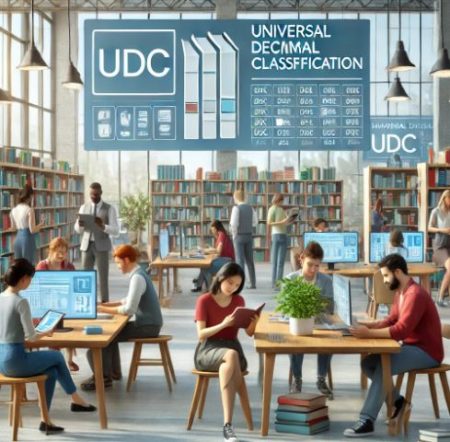
The Universal Decimal Classification (UDC) system is a comprehensive and highly detailed method for organizing and classifying knowledge across various fields. Developed in the late 19th…
The Classification Research Group (CRG) was an influential and pioneering organization in the field of library and information science, established in the early 1960s in the…
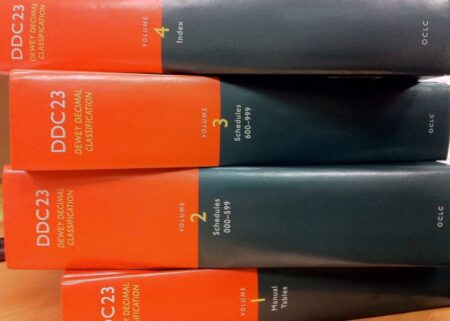
The Dewey Decimal Classification (DDC) is an influential system for organizing and categorizing knowledge. Developed by Melvil Dewey in the late 19th century, the DDC provides…
The Universal Decimal Classification (UDC) is a highly detailed and flexible system used for organizing and classifying knowledge across a wide range of subjects. Developed in…

A library classification scheme is a systematic method used to organize and arrange library materials based on their subject matter. The purpose of these schemes is…

The Colon Classification (CC) is a faceted classification system developed by Dr. S.R. Ranganathan, an Indian mathematician and librarian, in 1933. It was designed to systematically…

Natural and artificial library classifications represent two distinct approaches to organizing information, each serving unique purposes in different contexts. Natural classification, grounded in the inherent relationships…

Knowledge and book classifications represent integral aspects of organizing information in academia, libraries, and information management. Knowledge classification involves systematically arranging information based on inherent relationships,…

Document classification is the process of organizing and categorizing documents into predefined groups or categories based on their content, structure, or other relevant characteristics. It plays…